Lake Pleasant Roundup, Day 16

The incident started on February 5.  Results through February 20:

  • Scope: Lake Pleasant HMA
  • Target: Burros
  • Type: Planned
  • Method: Bait trap
  • Goals: Gather 400, remove 400
  • Captured: 101, up from 55 on Day 10
  • Shipped: 93, up from 28 on Day 10
  • Released: None
  • Deaths: 4, up from zero on Day 10
  • Average daily take: 6.3
  • Unaccounted-for animals: 4

The figures above are based on the daily reports.

Activity has been occurring almost every day but updates are not.

Two deaths were reported on Day 15 and two on Day 16.  Two were accidental and two were intentional.  The sidebar only shows two deaths.

The death rate is 4%.

The capture total includes 46 jacks, 42 jennies and 13 foals.

Youngsters represented 12.9% of the animals gathered.

Of the adults, 52.3% were male and 47.7% were female.

The HA and HMA are the same size.  The area is subject to permitted grazing.

  • Forage liberated to date: 606 AUMs per year
  • Water liberated to date: 505 gallons per day

There are no plans to treat any of the jennies with fertility control pesticides and return them to the HMA.

The roundup will remove animals that are damaging private property and creating a public safety hazard, purposes for which PZP was not authorized.

The incident supports three tenets of rangeland management.

RELATED: Lake Pleasant Roundup, Day 10.

Lake Pleasant HMA with Allotments 02-06-23

How Many Wild Horses Can the Kiger HMA Support?

The HMA covers 30,305 total acres in eastern Oregon, including 19,998 public acres, according to the 2023 HA/HMA Report.

The 82 horses allowed by plan receive 984 AUMs per year.

The stocking rate allowed by plan is 4.1 wild horses per thousand public acres, four times higher than the target rate across all HMAs of one wild horse per thousand acres.

There are three layers of forage demand in the HMA: Wildlife, wild horses and privately owned livestock.

To estimate the carrying capacity, calculate the forage assigned to livestock, add the result to the allocation above and convert the total to wild horses.

In their zeal to install humane management wherever possible, the advocates ignore the livestock layer because it’s incompatible with the overpopulation narrative, which they ratify with their darting programs.

Chapter IIIB in a 2011 EA for pest control and resource enforcement discusses two allotments that overlap the HMA: Smyth-Kiger and Happy Valley.

Table 2 indicates that 77% of Smyth-Kiger falls within the HMA, which seems reasonable based on the arrangement in the National Data Viewer.

The table indicates that 32% of Happy Valley is inside the HMA but the NDV suggests it’s closer to 60% so that figure will be used in the calculations.

The Allotment Master Report provides management status, acreage and active AUMs.

Kiger Allotment Calcs 02-21-24

Both allotments are in the Improve category.

The estimated forage assigned to livestock inside the HMA is 3,031 AUMs per year, equivalent to 252 wild horses.

The True AML would be 82 + 252 = 334, the number of horses the HMA could support if it was managed principally for them as specified in the original statute, to be achieved by confining the ranchers to their base properties in a year-round off season.

The stocking rate at the new AML would be 16.7 wild horses per thousand public acres.

This brings more embarrassment to the bureaucrats who claim that public lands in the western U.S. can only support one wild horse per thousand acres as noted above.

The BLM collects 3,031 × 1.35 = $4,092 per year from ranching activity inside the HMA while it spends 5 × 252 × 365 = $459,900 per year to care for horses displaced thereby.

Would you say that’s a wise use of the public lands?

RELATED: Pest Control Plan for Kiger and Riddle Mountain HMAs Stalled?

Kiger HMA with Allotments 02-18-24

Comments Invited on DNA for White Mountain Roundup

The incident is on the latest schedule with a start date of August 15.

The capture and removal goals are 586 each.

There are no plans to treat any of the mares with fertility control pesticides and return them to the HMA, which differs slightly from the action authorized in 2021.

In that scenario, 478 wild horses would be captured, 358 would be removed and 120 would be treated with pesticides and returned to the HMA.

Western Horse Watchers suspects the deviation from the original plan triggered the NEPA review.

Comments will be accepted through March 22 according to today’s news release.

The DNA worksheet was copied to the project folder in ePlanning.

The HMA, home of the Pilot Butte Wild Horse Loop, is subject to permitted grazing.

The roundup supports three tenets of rangeland management.

Pest Control Plan for Kiger and Riddle Mountain HMAs Stalled?

The scoping period closed four years ago.

As of today, the project folder contains only the scoping letter.

The previous plan was approved in 2011.

The two HMAs are on the February 1 roundup schedule with start dates of September 1 and September 10.

They are subject to permitted grazing.

The last roundup was in 2015.

RELATED: Kiger Scoping Period Comes and Goes, No News Release.

How to Interpret Sex Data from WHB Roundups

The BLM reported that 16 jacks and 26 jennies had been captured through Day 10 of the Lake Pleasant roundup.

Do those results look like they came from a population that’s 50% males / 50% females?

The observed proportions are 38.1% male and 61.9% female.

The answer must be determined by calculation, using a basic statistical formula that accounts for random variation.

How to Compute p-chart Limits 02-10-22

In this example p-bar = .5 and n = 42.

The calculated range of variation is .269 (26.9%) to .731 (73.1%), which includes the observed values, so there is no evidence that the population is not 50% males / 50% females.

The East Pershing roundup took 1,082 stallions and 1,245 mares off the range (as well as 365 foals).

Do those data look like they came from a herd that’s 50% males / 50% females?

The observed proportions are .465 and .535, and the calculated limits are .469 and .531, so there is some evidence of an abnormal sex ratio.

The problem often occurs in herds subject to the Montana Solution, which the advocates dismiss as mares living longer.

Lake Pleasant Roundup, Day 10

The incident started on February 5.  Results through February 14:

  • Scope: Lake Pleasant HMA
  • Target: Burros
  • Type: Planned
  • Method: Bait trap
  • Goals: Gather 400, remove 400
  • Captured: 55, up from 29 on Day 6
  • Shipped: 28, up from zero on Day 6
  • Released: None
  • Deaths: None
  • Average daily take: 5.5
  • Unaccounted-for animals: 27

The figures above are based on the daily reports.

The capture total included 16 jacks, 26 jennies and 13 foals.

Youngsters represented 23.6% of the animals gathered.

Of the adults, 38.1% were male and 61.9% were female.

The HA and HMA are the same size.  The area is subject to permitted grazing.

  • Forage liberated to date: 330 AUMs per year
  • Water liberated to date: 275 gallons per day

Data quality has been good.

There are no plans to treat any of the jennies with fertility control pesticides and return them to the HMA.

The roundup will remove animals that are damaging private property and creating a public safety hazard, purposes for which PZP was not authorized.

The incident supports three tenets of rangeland management.

RELATED: Lake Pleasant Roundup, Day 6.

Lake Pleasant HMA with Allotments 02-06-23

BLM Extends Nomination Period for WHBAB

The original solicitation dated October 2 produced insufficient applications for the natural resources position so a second call for nominations will appear tomorrow in the Federal Register, according to an unofficial pre-publication notice.

The Wild Horse and Burro Advisory Board meets one to four times per year and members serve without compensation.

RELATED: Another WHBAB Nomination Cycle Begins.

Currituck Herd Adds One

WARNING: This post will be disturbing to most advocates.

A new foal has been spotted according to a report dated February 13 by OBX Today.

His name is Eros and he’s about a week old.

His mom had a filly in 2021.

Offspring since then are not known.

The status of the darting program is not known.

The number of viable mares and the size of the breeding population are not known.

Birth rates and breeding patterns had been determined by the advocates, not the horses.

The herd was the subject of last week’s Foal-Free Friday.

BLM Takes Overpopulation Narrative to Elementary School

A WHB Specialist used candy to show students at Duckwater Shoshone Elementary School the dangers of overgrazing by wild horses and burros, according to a story dated February 10 by KOLO News.

The herds increase every year, he told the class, and the amount of available forage, represented by Kit Kat bars, does not.  Too many animals degrade the range, impairing herd health.

The article follows a BLM news release dated February 8.

What he didn’t tell the kids was that there is another box of Kit Kats under the table that belongs to the horses but has been shifted by his co-workers to public-lands ranchers.

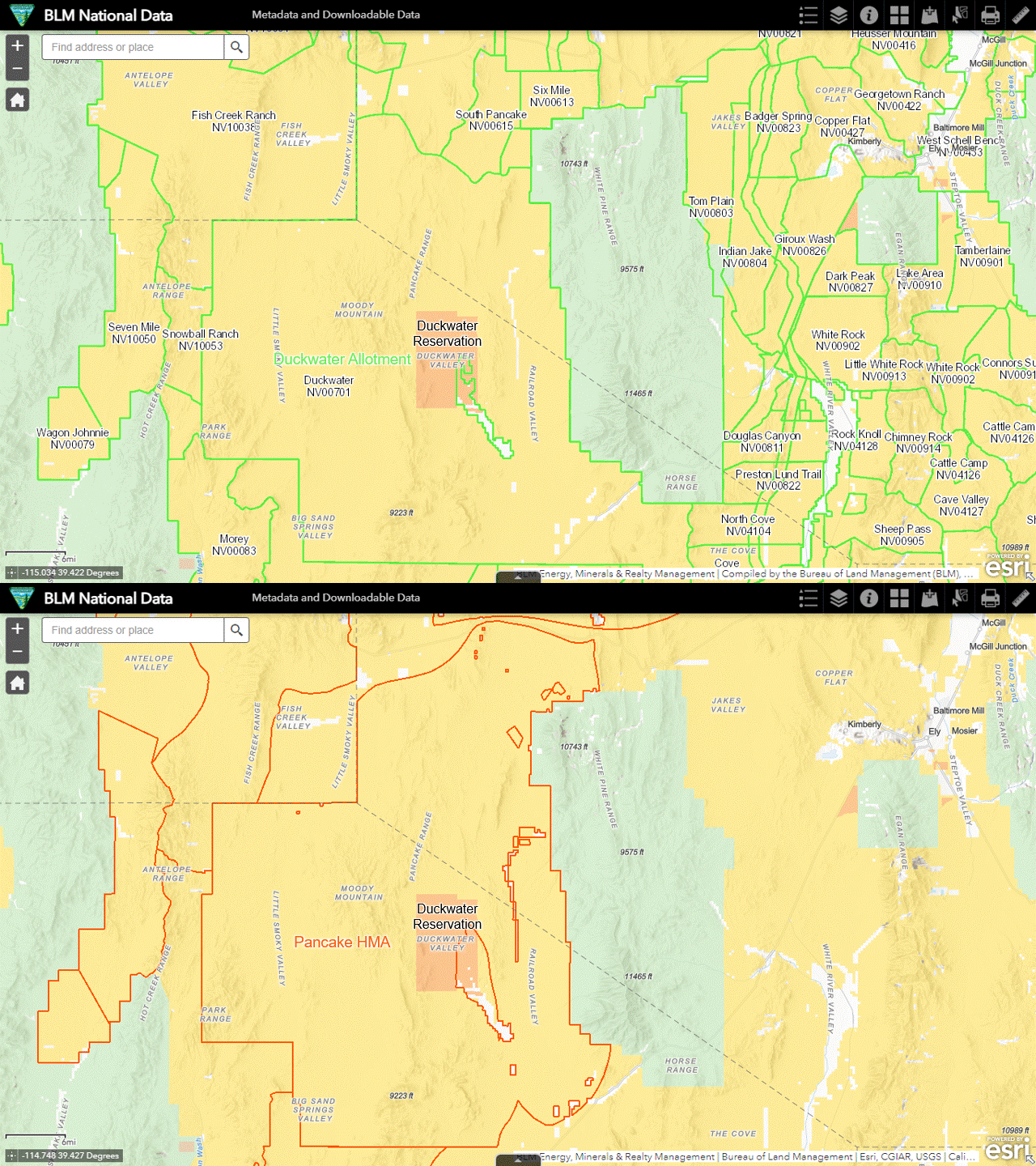
That might be good news to the kids because the Duckwater Reservation lies within the Duckwater Allotment and the tribe holds 24% of the active AUMs.

Also not mentioned in the article is that the reservation lies within the Pancake HMA, and there is considerable overlap between it and the allotment, so the discussion about overpopulation may be rooted in a conflict between horses and livestock.

Duckwater Reservation with HMAs and Allotments 02-13-24

McCullough Roundup, Day 20

The incident started on January 22.  Results through February 10:

  • Scope: McCullough Peaks HMA
  • Target: Horses
  • Method: Bait
  • Type: Planned
  • Goals: Gather 80, remove 35
  • Captured: 14, up from 11 on Day 5
  • Shipped: 3, no change from Day 5
  • Released: 10, up from 7 on Day 5
  • Deaths: 1, no change from Day 5
  • Average daily take: 0.7
  • Unaccounted-for animals: 0

The figures above are based on the daily reports.

Activity since Day 5 consisted of three stallions captured and released.

The death rate is 7.1%.

The location of the trap site was not disclosed.

The HMA is subject to permitted grazing.

  • Forage liberated to date: 48 AUMs per year
  • Water liberated to date: 40 gallons per day

The National Data Viewer shows habitat loss and overlapping allotments.  Click on map to open in new tab.

An estimated 535 wild horses have been displaced from their lawful home by permitted grazing, making the True AML almost five times higher than the current AML.

The roundup supports three tenets of rangeland management.

RELATED: McCullough Roundup, Day 5.

McCullough Peaks HMA with Allotments 07-14-23

Lake Pleasant Roundup, Day 6

The incident started on February 5.  Results through February 10:

  • Scope: Lake Pleasant HMA
  • Target: Burros
  • Type: Planned
  • Method: Bait trap
  • Goals: Gather 400, remove 400
  • Captured: 29, up from 10 on Day 1
  • Shipped: None
  • Released: None
  • Deaths: None
  • Average daily take: 4.8
  • Unaccounted-for animals: 29

The figures above are based on the daily reports.

Youngsters represented 24.1% of the animals gathered.

Of the adults, 50% were male and 50% were female.

The HA and HMA are the same size.  The area is subject to permitted grazing.

  • Forage liberated to date: 174 AUMs per year
  • Water liberated to date: 145 gallons per day

The roundup supports three tenets of rangeland management.

RELATED: Lake Pleasant Roundup Begins, No News Release.

Lake Pleasant HMA with Allotments 02-06-23

East Pershing Roundup Cut Short

The incident concluded on February 9, not just gather operations but processing as well, based on the totals in the sidebar.

The numbers don’t balance but they tell you there are no unaccounted-for animals, no horses in pens awaiting shipment.

Horses captured: 2,692

Horses processed: 2,664 + 3 + 26 = 2,693

The capture and removal goals were 2,875 each.

The death rate was 1.0%.  Four horses died accidentally, 22 were killed intentionally.

The capture total included 1,082 stallions, 1,245 mares and 365 foals.

Youngsters represented 13.6% of the animals gathered, consistent with a herd growth rate of eight to nine percent per year.

Of the adults, 46.5% were male and 53.5% were female, no clear evidence of an abnormal sex ratio.

There were no plans to treat any of the captured mares with fertility control pesticides and return them to the range.

Video of a horse dragged on a skid sparked advocate outrage.

A Nevada politician used the roundup to push nonmotorized removal.

The BLM paid a very low price for the work.

The incident supported three tenets of rangeland management.

RELATED: East Pershing Roundup Starts Next Week.

UPDATE: BLM issued news release marking end of incident on February 13.

No Change to Federal Grazing Fee in 2024

Ranchers will continue to pay pennies on the dollar to feed their animals on public lands this year, including areas identified for wild horses and burros.

The price remains at $1.35 per AUM for the new grazing season, which begins on March 1.

The fee applies to nearly 18,000 grazing permits and leases administered by the BLM and nearly 6,250 permits administered by the Forest Service according to a news release dated January 31.

For comparison, the price of hay now stands at $170 per AUM.

The new fee ensures that the American people will not receive a fair return on the use of their public lands in 2024.

RELATED: New Grazing Fee Untouched by Inflation.

East Pershing Roundup, Day 43

The incident began on December 28.  Results through February 8:

The figures above are based on the daily reports, not the totals posted by the BLM.

The death rate is 1.0%.  Four horses died accidentally, 22 were killed intentionally.

The capture total includes 1,084 stallions, 1,251 mares and 363 foals.  The sidebar at the gather page says 1,082/1,245/365.

Youngsters represented 13.5% of the animals gathered, consistent with a herd growth rate of eight percent per year.

Of the adults, 46.4% were male and 53.6% were female, no evidence of an abnormal sex ratio.

Body condition scores ranged from 3 to 4 on Days 42 and 43.

The location of the trap site was not disclosed.

The Complex is managed primarily for animal agriculture.  The National Data Viewer shows habitat loss and grazing allotments.  Click on image to open in new tab.

*According to advocates.

East Pershing Complex with Allotments 12-30-23

Day 43 ended with 80 unaccounted-for animals.

There are no plans to treat any of the captured mares with fertility control pesticides and return them to the range.

With 2,589 horses shipped, and a pre-gather population in Winnemucca of 958, give or take, the off-range corrals should be at 89% of capacity.

Other statistics:

  • Forage liberated to date: 32,340 AUMs per year
  • Water liberated to date: 26,950 gallons per day
  • Horses allowed by plan: 555
  • Pre-gather population: 3,375
  • Forage assigned to horses: 6,660 AUMs per year
  • Forage assigned to livestock: Not determined
  • Horses displaced from Complex by permitted grazing: Not determined
  • True AML: Not determined
  • Stocking rate at new AML: Not determined
  • Horses displaced by drilling and mining: Ask the advocates

Overpopulation means more horses than allowed by plan, not necessarily more horses than the land can support.

The ability of the Complex to sustain wild horses has been limited by the bureaucrats, who have assigned most of their food to the public-lands ranchers.

Refer to these reports for an indication of the problem:

RELATED: East Pershing Roundup, Day 41.

Lake Pleasant Roundup Begins, No News Release

The incident started on February 5 as scheduled, with ten burros captured, none shipped, none released and no deaths.

It’s not open to public observation.

The capture and removal goals are identical at 400 each.

The pre-gather population was not specified.

The reason for removal is private property damage and public safety.

The HMA covers 103,000 acres north of Phoenix and is subject to permitted grazing.

Lake Pleasant HMA with Allotments 02-06-23

East Pershing Roundup, Day 41

The incident began on December 28.  Results through February 6:

The figures above are based on the daily reports, not the totals posted by the BLM.

Helicopters could not fly on Day 41 due to fog.

The death rate is 1.0%.  Four horses died accidentally, 22 were killed intentionally.

The capture total includes 1,029 stallions, 1,186 mares and 345 foals.  The sidebar at the gather page says 1,027/1,180/347.

Youngsters represented 13.5% of the animals gathered, consistent with a herd growth rate of eight percent per year.

Of the adults, 46.5% were male and 53.5% were female, no evidence of an abnormal sex ratio.

Body condition scores ranged from 3 to 4 on Day 40.

The location of the trap site was not disclosed.

The Complex is managed primarily for animal agriculture.  The National Data Viewer shows habitat loss and grazing allotments.  Click on image to open in new tab.

*According to advocates.

East Pershing Complex with Allotments 12-30-23

Day 41 ended with 26 unaccounted-for animals.

There are no plans to treat any of the captured mares with fertility control pesticides and return them to the range.

With 2,505 horses shipped, and a pre-gather population in Winnemucca of 958, give or take, the off-range corrals should be at 86% of capacity.

Other statistics:

  • Forage liberated to date: 30,684 AUMs per year
  • Water liberated to date: 25,570 gallons per day
  • Horses allowed by plan: 555
  • Pre-gather population: 3,375
  • Forage assigned to horses: 6,660 AUMs per year
  • Forage assigned to livestock: Not determined
  • Horses displaced from Complex by permitted grazing: Not determined
  • True AML: Not determined
  • Stocking rate at new AML: Not determined
  • Horses displaced by drilling and mining: Ask the advocates

Overpopulation means more horses than allowed by plan, not necessarily more horses than the land can support.

The ability of the Complex to sustain wild horses has been limited by the bureaucrats, who have assigned most of their food to the public-lands ranchers.

Refer to these reports for an indication of the problem:

RELATED: East Pershing Roundup, Day 39.

Litchfield Corrals Temporarily Closed to Public

Conditions inside the pens are not posing any danger to the horses and burros, according to today’s news release, but a partial ceiling collapse in the office lobby and unsafe conditions for moving animals to loading areas has necessitated the closure.

The damage was likely caused by the so-called bomb cyclone that tore through California starting on February 4.

The adoption facility covers about 80 acres east of Susanville on Highway 395 and has a capacity of 1,000 animals according to the November 2023 facility report.