SOWH Releases Videos from Reno Conference

If the keynote address is any indication, you didn’t miss much.

Instead of condemning the Campaign Against America’s Wild Horses and its mass sterilization program on the Virginia Range, there was praise for its good work (19:33).

Instead of trying to change the system (22:24), change the statute, restoring it to its original form.

Regarding the Veterans for Pesticides Act (25:00), you can reduce the need for helicopters by clearing the land of privately owned livestock, allowing the herds to fill their niche and manage themselves. Funny how the advocates won’t talk about that.

As of today, the channel contains eleven videos.

RELATED: SHOCKER: Advocates Don’t Know What to Do.

Putting Wild Horses on Par with Privately Owned Livestock

The BLM allows 23,866 wild horses and 2,919 wild burros on 26,917,766 public acres according to the 2024 population dataset.

That’s equivalent to 23,866 + 2,919 ÷ 2 = 25,326 wild horses on 26,917,766 public acres.

As reported on April 22, the agency authorizes privately owned livestock equivalent to 1,023,481 wild horses on 145,895,940 public acres.

To match the stocking rate and resource loading of the grazing program, the wild horse and burro program would have to satisfy the following relationship:

x ÷ 26,917,766 = 1,023,481 ÷ 145,895,940

Solving for x, the new AML would be 188,832.

The current wild horse and burro population, equivalent to 66,236 wild horses, is well within this limit.

Why are the advocates working with the bureaucrats to take the numbers lower?

  • They have a shared vision
  • They view these animals as pests
  • They want the ranchers to win

Why are you still giving them money?

RELATED: New Report Ties Poor Rangeland Health to Permitted Grazing.

Thriving Ecological Balance-3

New Report Ties Poor Rangeland Health to Permitted Grazing

Today’s news release indicates that 44 million acres do not meet BLM’s minimum standards, with livestock being the primary cause, either in whole or in part.

PEER Rocky Mountain Director Chandra Rosenthal noted that an estimated 1.5 million cattle forage BLM lands compared to fewer than 75,000 wild horses.

As reported by Western Horse Watchers on April 22, the agency authorizes livestock equivalent to 1,023,481 wild horses on 145,895,940 public acres in ten western states, or seven wild horses per thousand public acres.

The agency allows 26,785 wild horses and burros on 26,917,766 public acres, according to the 2024 population dataset, or one such animal per thousand public acres.

Which species has the larger footprint and potential for rangeland degradation?

The current wild horse and burro population is equivalent to 66,236 wild horses, or 2.5 wild horses per thousand public acres.

You’d need to increase the wild horse population to 188,424 to have the same resource loading as privately owned livestock.

Caliente Roundup, Day 43

The incident started on April 16.  Results through May 23:

  • Scope: Caliente Complex
  • Target: Horses
  • Type: Planned
  • Method: Bait
  • Goals: Gather 350, remove 350
  • Captured: 252, up from 224 on Day 38
  • Shipped: 207, no change from Day 38
  • Released: None
  • Deaths: 9, up from 7 on Day 38
  • Average daily take: 5.9
  • Unaccounted-for animals: 36

The figures above are based on the daily reports.

A stallion was dispatched on Day 39 due to blindness.

Another stallion was dispatched on Day 42 due to injuries sustained in capture, sorting or holding, boosting the death rate to 3.6%.

The capture total includes 102 stallions, 110 mares and 40 foals.

Youngsters represented 15.9% of the animals gathered, consistent with a herd growth rate of eleven percent per year.

Of the adults, 48.1% were male and 51.9% were female.

Body condition scores were not given.

The location of the trap site is not known.

The Complex is subject to permitted grazing.  Resources liberated to date:

  • Forage: 3,024 AUMs per year
  • Water: 2,520 gallons per day

There are no plans to treat any of the mares with fertility control pesticides and return them to the range.

The roundup supports three tenets of rangeland management.

RELATED: Caliente Roundup, Day 38.

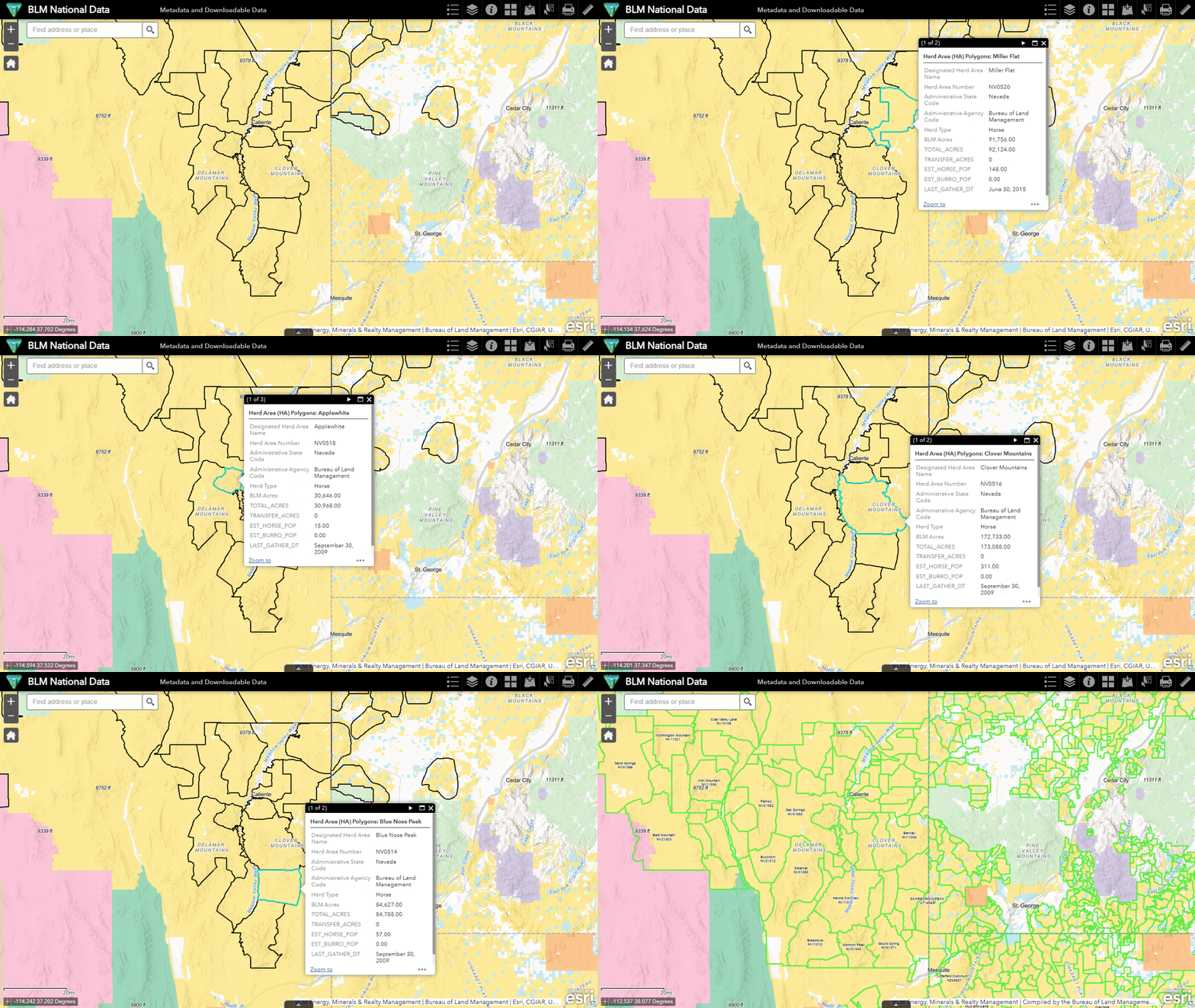
Caliente Complex with Allotments 03-28-24

Bordo Atravesado Roundup, Day 28

The incident started on May 1.  Results through May 28:

  • Scope: Bordo Atravesado HMA
  • Target: Horses
  • Type: Planned
  • Method: Bait
  • AML: 60
  • Estimated population: 276
  • Goals: Gather 235, remove 225
  • Captured: 213, up from 173 on Day 24
  • Shipped: None
  • Released: None
  • Deaths: 7, up from 5 on Day 24
  • Average daily take: 7.6
  • Unaccounted-for animals: 206

The figures above are based on the daily reports.

Two horses died on Day 27 due to injuries sustained in capture, sorting or holding, lifting the death rate to 3.3%.  No details were given.

To date, only one death has been attributed to pre-existing conditions.

The capture total includes 106 stallions, 81 mares and 26 foals.

Youngsters represented 12.2% of the animals gathered, consistent with a herd growth rate of seven percent per year.

Of the adults, 56.7% were male and 43.3% were female.

Body condition scores were not given.

The location of the trap site is not known.

The status of captured animals has not been disclosed.

The HMA is subject to permitted grazing.  Resources liberated to date:

  • Forage: 2,556 AUMs per year
  • Water: 2,130 gallons per day

Ten mares will be treated with GonaCon Equine, a fertility control pesticide, and be returned to the range according to the latest schedule.

The roundup supports three tenets of rangeland management.

RELATED: Bordo Atravesado Roundup, Day 24.

Bordo Atravesado HMA with Allotments 11-17-23

Montgomery Pass EA Out for Public Review

The Proposed Action, discussed in Section 2.2 of the Draft EA, would immediately remove wild horses outside the WHT, using helicopters and/or baited traps.

The current population is thought to be 699 according to today’s news release.

The project area covers BLM and Forest Service lands around Mono Lake, some of which are subject to permitted grazing.

Although the announcement seeks comments on the Environmental Assessment, the project ties them to a cover letter dated May 28.

The participation period closes June 26.

RELATED: Scoping Begins for Montgomery Pass Wild Horse Removal.

Montgomery Pass HMA with Allotments 11-07-23

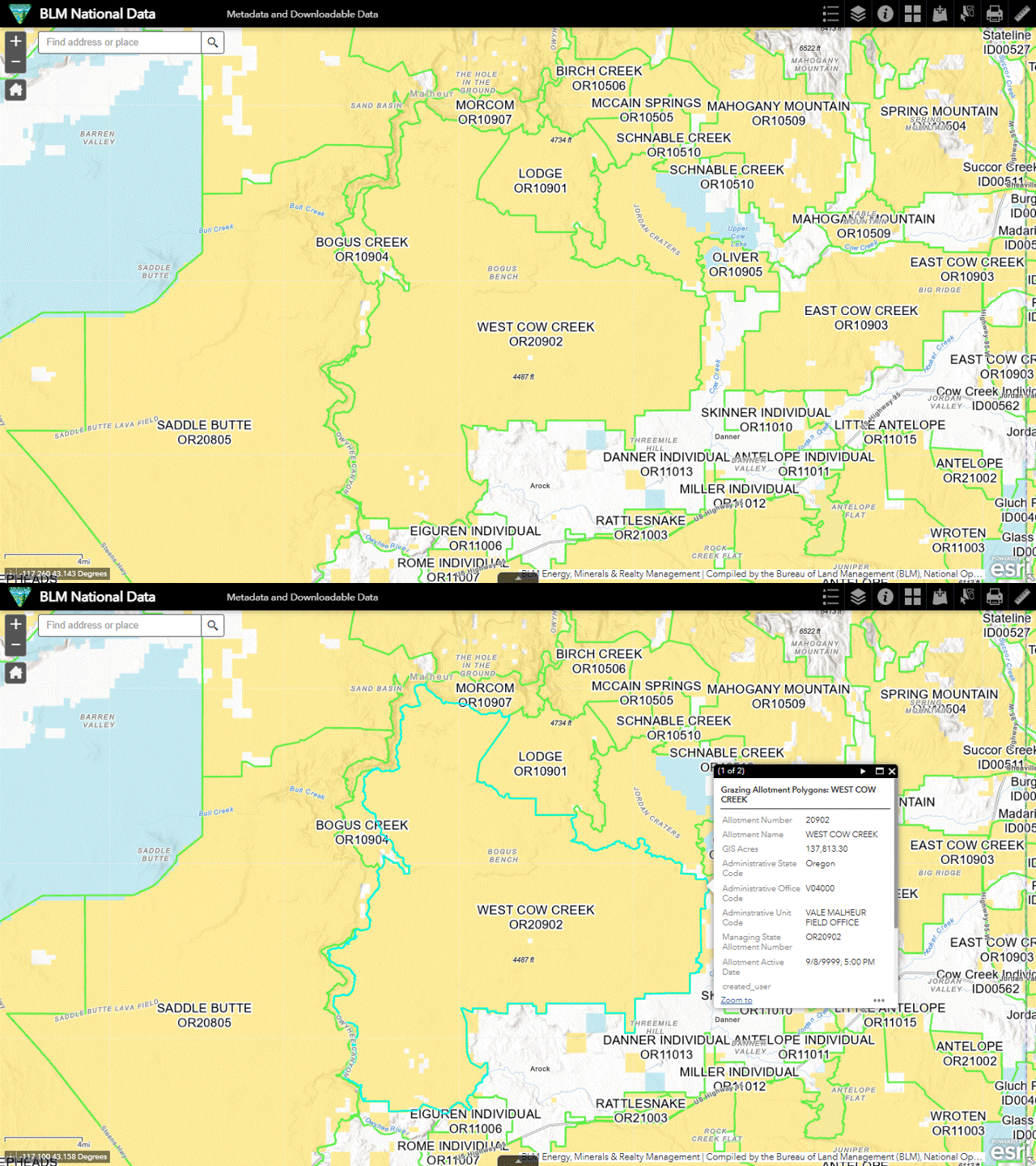
If Wild Horses Had Principal Use of West Cow Creek

The allotment, on the east side of Sand Springs HMA in Oregon, offers 9,594 active AUMs on 139,885 public acres, according to the Allotment Master Report.

The forage assigned to horses is zero.

How many wild horses could live there?

Using the principle of forage interchangeability, the True AML would be 9,594 ÷ 12 = 800, the number of horses the land could support if it was managed principally for them as specified in the original statute.

The stocking rate would be 800 ÷ 139,885 × 1,000 = 5.7 wild horses per thousand public acres.

Why is this important?

The bureaucrats and ranchers claim that public lands in the western U.S. can only support one wild horse per thousand acres (27,000 animals on 27 million acres).

The advocates reinforce the fairy tale with their darting programs.

If the allotment was an HMA, the AML would be 140, and 800 – 140 = 660 horses would be consigned to off-range holding because of permitted grazing.

BLM allotments in the state carry livestock equivalent to 87,934 wild horses on 13,130,302 public acres, or 6.7 wild horses per thousand public acres.

RELATED: The Allotments Tell the Story: They’re Lying, All of Them.

West Cow Creek Allotment 05-28-24

Daily Mail Misleads Readers About Advocates, Wild Horses

The article is silent about permitted grazing, lopsided forage allocations that favor the ranchers and confiscation of lands identified for wild horses in 1971.

Instead of clearing these areas of privately owned livestock and giving principal use to the horses—as specified in the original statute—the BLM should use fertility control to limit the numbers according to the advocates.

The writer says nothing about its harmful effects, which the advocates conveniently ignore, evident on the Maryland side of Assateague Island and soon to appear at the Salt River and Virginia Range.

They don’t want to rock the boat.

They don’t want changes that actually help the horses.

They are allies of the bureaucrats and ranchers, defenders of the status quo.

RELATED: How Wild Horse Advocacy Really Works.

Pesticide Pushers 07-17-23

Caliente Roundup, Day 38

The incident started on April 16.  Results through May 23:

  • Scope: Caliente Complex
  • Target: Horses
  • Type: Planned
  • Method: Bait
  • Goals: Gather 350, remove 350
  • Captured: 224, up from 185 on Day 35
  • Shipped: 207, up from 171 on Day 35
  • Released: None
  • Deaths: 7, up from 6 on Day 35
  • Average daily take: 5.9
  • Unaccounted-for animals: 10

The figures above are based on the daily reports.

A mare was dispatched on Day 36 due to a fractured neck, bringing the death rate to 3.1%.

The capture total includes 93 stallions, 96 mares and 35 foals.

Youngsters represented 15.6% of the animals gathered, consistent with a herd growth rate of ten percent per year.

Of the adults, 49.2% were male and 50.8% were female.

Body condition scores were not given.

The location of the trap site is not known.

The Complex is subject to permitted grazing.  Resources liberated to date:

  • Forage: 2,688 AUMs per year
  • Water: 2,240 gallons per day

There are no plans to treat any of the mares with fertility control pesticides and return them to the range.

The roundup supports three tenets of rangeland management.

RELATED: Caliente Roundup, Day 35.

Caliente Complex with Allotments 03-28-24

Bordo Atravesado Roundup, Day 24

The incident started on May 1.  Results through May 24:

  • Scope: Bordo Atravesado HMA
  • Target: Horses
  • Type: Planned
  • Method: Bait
  • AML: 60
  • Estimated population: 276
  • Goals: Gather 235, remove 225
  • Captured: 173, up from 143 on Day 21
  • Shipped: None
  • Released: None
  • Deaths: 5, no change from Day 21
  • Average daily take: 7.2
  • Unaccounted-for animals: 168

The figures above are based on the daily reports.

The death rate is 2.9%.

The capture total includes 86 stallions, 64 mares and 23 foals.

Youngsters represented 13.3% of the animals gathered.

Of the adults, 57.3% were male and 42.7% were female.

Body condition scores are not known.

The location of the trap site is not known.

The destination of captured animals is not known.

The HMA is subject to permitted grazing.  Resources liberated to date:

  • Forage: 2,076 AUMs per year
  • Water: 1,730 gallons per day

Ten mares will be treated with GonaCon Equine, a fertility control pesticide, and be returned to the range according to the latest schedule.

The roundup supports three tenets of rangeland management.

RELATED: Bordo Atravesado Roundup, Day 21.

Bordo Atravesado HMA with Allotments 11-17-23

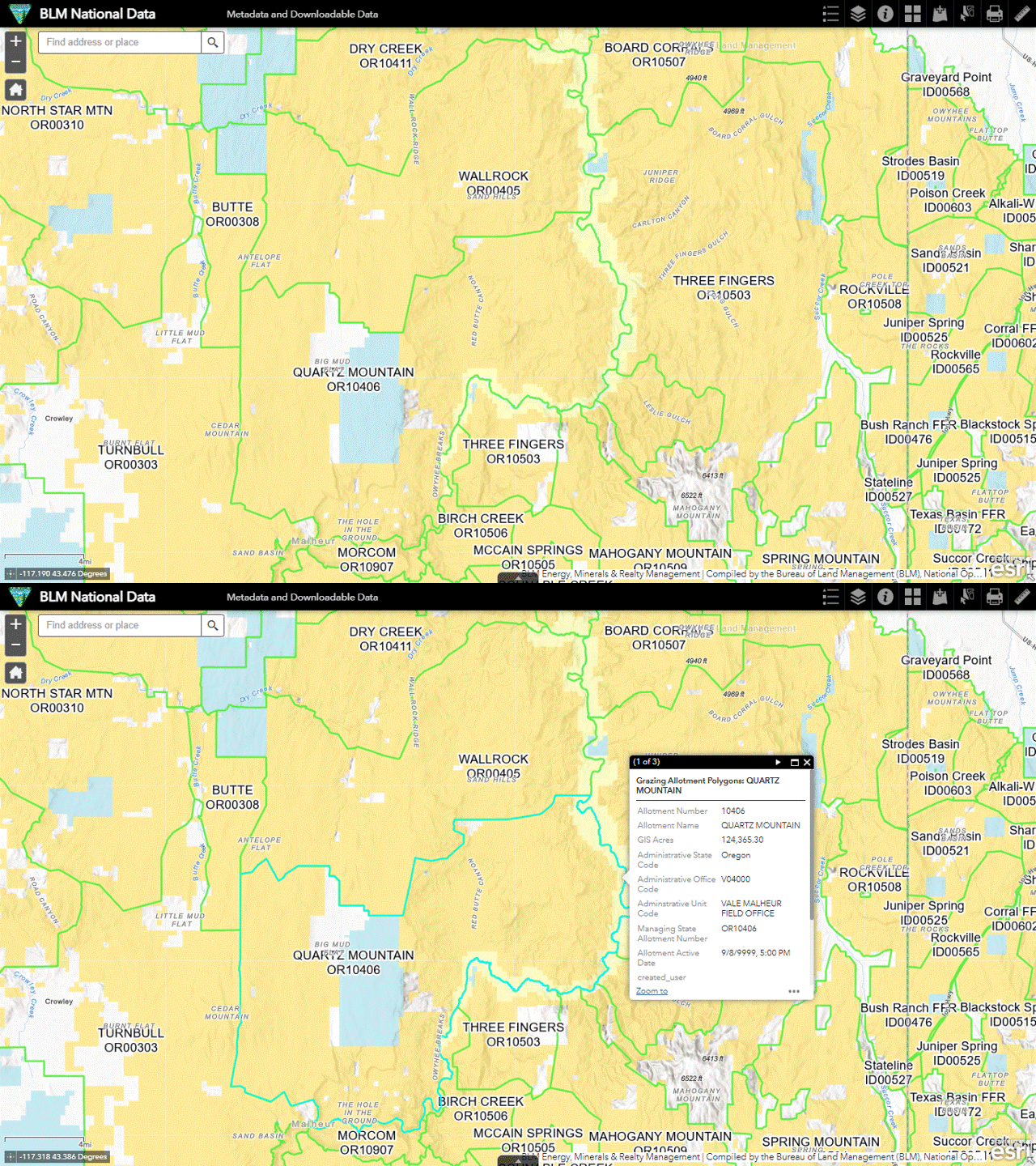
If Wild Horses Had Principal Use of Quartz Mountain

The allotment, on the west side of Three Fingers HMA in Oregon, offers 7,472 active AUMs on 89,550 public acres, according to the Allotment Master Report.

The forage assigned to horses is zero.

How many wild horses could live there?

Using the principle of forage interchangeability, the True AML would be 7,472 ÷ 12 = 623, the number of horses the land could support if it was managed principally for them as specified in the original statute.

The stocking rate would be 623 ÷ 89,550 × 1,000 = 7.0 wild horses per thousand public acres.

Why is this important?

The bureaucrats and ranchers claim that public lands in the western U.S. can only support one wild horse per thousand acres (27,000 animals on 27 million acres).

The advocates reinforce the narrative with their darting programs.

If the allotment was an HMA, the AML would be 90, and 623 – 90 = 533 horses would be consigned to off-range holding because of permitted grazing.

BLM allotments in the state carry livestock equivalent to 87,934 wild horses on 13,130,302 public acres, or 6.7 wild horses per thousand public acres.

RELATED: The Allotments Tell the Story: They’re Lying, All of Them.

Quartz Mountain Allotment 05-23-24

AIP Turns 5

With the price of hay 80 percent higher than it was three years ago, the incentive offers little help to wild horse adopters, despite claims to the contrary in this BLM blog post.

Saving taxpayer money?  Liberals control the bureaucracy and spending taxpayer money is always the goal, the more the better.  As long as there’s a private sector, the government isn’t big enough.

Healthy herds on public lands?  These are codewords for ranching superiority in the lawful homes of wild horses.

Placing animals into loving homes?  The only thing that matters is getting them off the range in favor of privately owned livestock.

Curiously, the birthday coincides with the release of a report by PERC calling for an increase in the payout.

RELATED: New Rules for AIP Announced.

Bordo Atravesado Roundup, Day 21

The incident started on May 1.  Results through May 21:

  • Scope: Bordo Atravesado HMA
  • Target: Horses
  • Type: Planned
  • Method: Bait
  • AML: 60
  • Estimated population: 276
  • Goals: Gather 235, remove 225
  • Captured: 143, up from 140 on Day 16
  • Shipped: None
  • Released: None
  • Deaths: 5, up from 2 on Day 16
  • Average daily take: 6.8
  • Unaccounted-for animals: 138

The figures above are based on the daily reports.

Two horses were lost on Day 20, followed by another on Day 21, boosting the death rate to 3.5%.  No details were given.

The capture total includes 72 stallions, 53 mares and 18 foals.

Youngsters represented 12.6% of the animals gathered.

Of the adults, 57.6% were male and 42.4% were female.

Body condition scores are not known.

The location of the trap site is not known.

The destination of captured animals is not known.

The HMA is subject to permitted grazing.  Resources liberated to date:

  • Forage: 1,716 AUMs per year
  • Water: 1,430 gallons per day

Ten mares will be treated with GonaCon Equine, a fertility control pesticide, and be returned to the range according to the latest schedule.

The roundup supports three tenets of rangeland management.

RELATED: Bordo Atravesado Roundup, Day 16.

Bordo Atravesado HMA with Allotments 11-17-23