Little Book Cliffs Roundup, Day 5

The incident started on September 11.  Results through September 15:

  • Scope: Little Book Cliffs HMA
  • Target: Horses
  • AML: 150
  • Pre-gather population: Unknown (not stated in news release)
  • True AML: N/A (no livestock grazing)
  • Type: Planned
  • Method: Helicopter
  • Goals: Gather 130, remove 100
  • Captured: 116, up from 26 on Day 3
  • Shipped: 38, up from zero on Day 3
  • Released: None
  • Deaths: None
  • Average daily take: 23.2
  • Unaccounted-for animals: 78

The figures above are based on the daily reports.

The capture total includes 31 stallions, 66 mares and 19 foals.

Youngsters represented 16.4% of the animals gathered, consistent with a herd growth rate of 11% per year.

Of the adults, 32.0% were male and 68.0% were female, outside the range of variation expected from a random process centered at 50% males / 50% females.

Body condition scores were not given.

The location of the trap site is not known.

Up to 20 mares will be treated with fertility control pesticides and be returned to the HMA with up to ten stallions.

The Draft EA for management actions in the HMA indicated on page 6 that the herd consisted of 203 horses, including 22 foals, as of September 2023.  Of the 181 adults, 33% were male and 67% were female.

The Final EA states on page 6 that the population in July 2024 was 222, including 29 foals, and that the 193 adults consisted of 42% males and 58% females.

RELATED: Little Book Cliffs Roundup, Day 3.

Little Book Cliffs WHR with Allotments 04-28-24

Little Book Cliffs Roundup, Day 3

The incident started on September 11.  Results through September 13:

  • Scope: Little Book Cliffs HMA
  • Target: Horses
  • AML: 150
  • Pre-gather population: Unknown (not stated in news release)
  • True AML: N/A (no livestock grazing)
  • Type: Planned
  • Method: Helicopter
  • Goals: Gather 130, remove 100
  • Captured: 26, up from 10 on Day 1
  • Shipped: None
  • Released: None
  • Deaths: None
  • Average daily take: 8.7
  • Unaccounted-for animals: 26

The figures above are based on the daily reports.

The capture total includes 7 stallions, 15 mares and 4 foals.

Youngsters represented 15.4% of the animals gathered.

Of the adults, 31.8% were male and 68.2% were female.

Body condition scores were not given.

The location of the trap site is not known.

Up to 20 mares will be treated with fertility control pesticides and be returned to the range with up to ten stallions.

The Draft EA for management actions in the HMA indicated on page 6 that the herd consisted of 203 horses, including 22 foals, as of September 2023.  Of the 181 adults, 33% were male and 67% were female.

The Final EA states on page 6 that the population in July 2024 was 222, including 29 foals, and that the 193 adults consisted of 42% males and 58% females.

Abnormal sex ratios are a long-term consequence of PZP darting programs, in addition to female sterilization, conditions that the advocates gloss over with euphemisms such as “mares living longer” and “self-boosting mares.”

RELATED: Little Book Cliffs Roundup in Progress.

Little Book Cliffs WHR with Allotments 04-28-24

Twin Peaks Roundup Announced

The incident will begin on October 1 according to today’s news release.

The capture and removal goals are 940 and 870, respectively.

The announcement does not indicate the method of capture but the FY25 schedule, just out, suggests helicopter.

Operations will be open to public observation.

The destination of animals identified for removal is not known.

A link to the daily reports was not provided.

The HMA covers 758,128 total acres on the CA-NV state line, including 635,356 public acres, and the management plan allows 758 horses and 116 burros.

The current population is thought to be around 1,800 wild horses and 140 wild burros.

The news release said that the horses were using more than their allocated share of the forage but did not say who gets the remainder.

Section 3.2.2 in the Final EA for management actions in the HMA indicates that cattle and sheep receive 26,644 AUMs per year while the horses and burros receive 9,792 AUMs per year according to section 1.2.

Thus the HMA supports livestock equivalent to 2,220 wild horses.

The True AML is 2,978, so it’s far from overpopulated.

The announcement should have said that the horses are trying to reclaim some of their food from the government dependents.

Twin Peaks HMA with Allotments 09-13-24

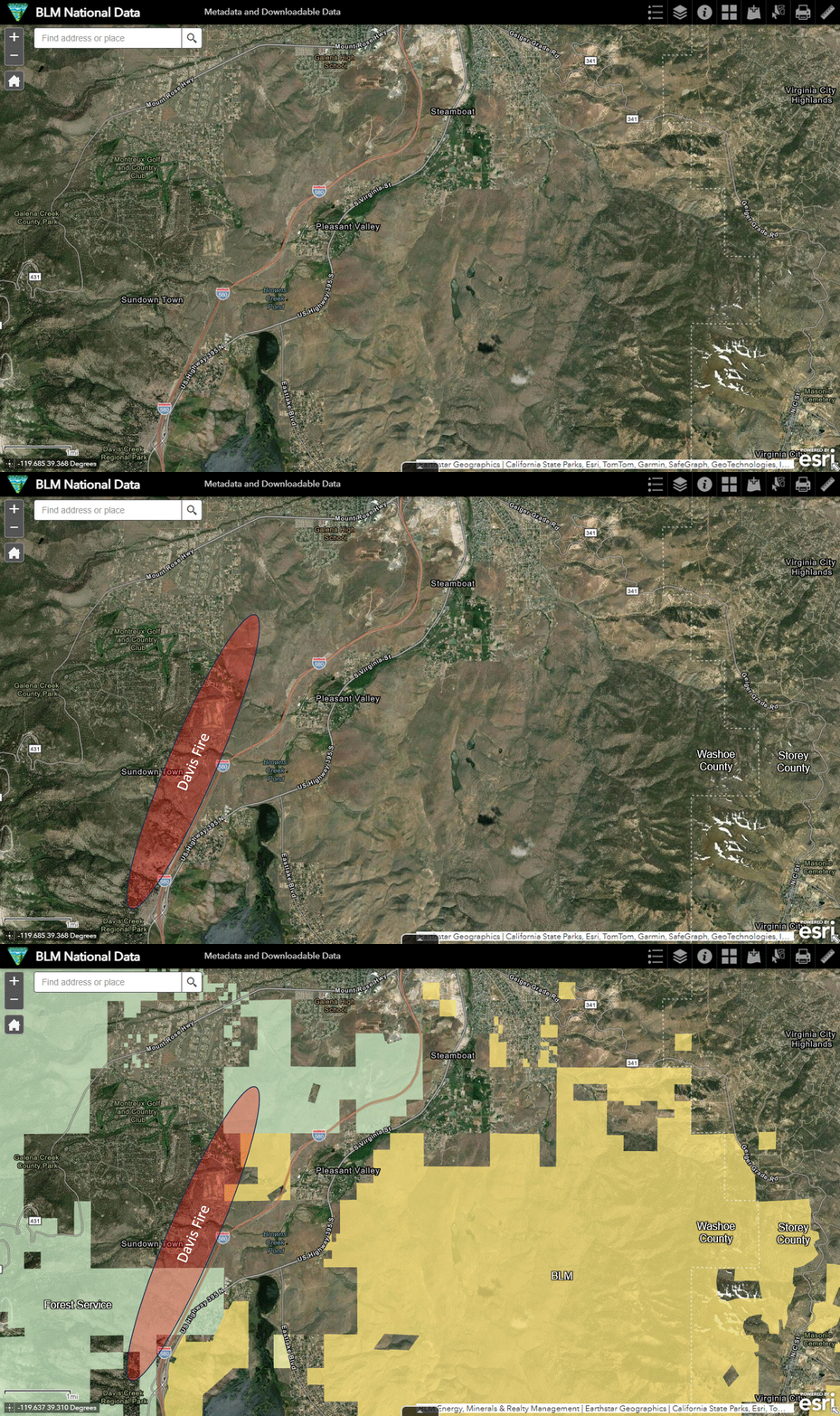
Davis Fire Grows Slightly, Risk to Virginia Range Decreasing

The September 13 update at InciWeb puts the size at 5,824 acres with 56% containment.

The east side, shown with a black border, has been contained according to the map.

This takes a little pressure off the horses and residents in that area.

The BLM land supports the Jumbo Allotment.

The Allotment Master Report puts it in the Custodial category with 755 active AUMs.

The Authorization Use Report shows a two-month grazing season and the livestock type is sheep.

RELATED: Crews Keep Davis Fire in Check.

Davis Fire Map 09-13-24

Foal-Free Friday, Abandoning Principal Use Edition

The advocates are some of the most outspoken opponents of principal use, a condition in the original statute regarding areas identified for wild horses and burros.

Today, roughly half of their land is managed primarily for livestock and the other half is managed principally for livestock.

The distinction is in the forage allocations.

In the HMAs, livestock receive around 80% of the authorized AUMs while in the HAs they receive almost all of them, allowing a small percentage for wildlife.

Like HMAPs and roundups, fertility control pesticides don’t change these numbers, they enforce them.

Thus, it is true that the advocates do not protect wild horses and burros, they protect the bureaucrats and ranchers.

RELATED: Foal-Free Friday, Spiking the Pesticides Edition.

Advocates Love Wild Horses 09-12-24

Seventh Annual Devil’s Garden Roundup Announced

The incident will begin on October 28 according to a September 10 news release by the Modoc National Forest.

The capture goal is 500.  The removal goal was not stated.

The current population is somewhere between 651 and 998 wild horses.

Operations will be open to public observation on a limited basis.

The Forest Service hired the contractor who abused a horse in the Blue Wing roundup.

The WHT covers about 258,000 acres and is subject to permitted grazing.

Davis Fire Expected to Grow to North, West

Conditions will be favorable today for movement of up to seven miles according to a story by the Reno Gazette Journal.

As of yesterday, the fire had burned around 5,700 acres and was 31% contained.

The projected track, parallel to the Virginia Range, does not appear to increase or decrease the threat to the mustangs.

The impact on the PZP darters, who are trying to convince the bureaucrats and ranchers that mass sterilization is a practical alternative to motorized removal, is not known.

RELATED; Davis Fire Shrinks?

Davis Fire Not Growing Despite Zero Percent Containment

Some reports, such as this one from KOLO News, say the size has been trimmed to approximately 4,700 acres but InciWeb still says 6,500.

One way to tell if videos of running horses were filmed near the Virginia Range is the absence of youngsters, thanks to the Campaign Against America’s Wild Horses and its army of nitwits.

RELATED: Davis Fire Jumps I-580, Grows to 6,500 Acres.

Davis Fire Now on InciWeb

The site initiated coverage last night.

  • Cause not determined
  • Zero percent contained
  • 1,500 acres burned

A report by Carson Now indicates wild horses moving near Geiger Grade, the main road from south Reno up to the Highlands.

Your host received another email from NV Energy saying that power had been restored, hopefully to the entire area.

RELATED: Davis Fire Threatens Virginia Range Mustangs?