Fish Creek Decision Issued

The DNA asserts that the 2015 analysis fully covers the Proposed Action, which is to capture and remove wild horses in and around the HMA.

Mares returned to the area would be treated with fertility control.

The document is not searchable in Edge.  You can’t select lines of text or copy everything into a text editor (CTRL+A > CTRL+C > CTRL+V).

But you can open it in Word and search from there.

There were no matches for “gona” but several for “zona.”

A roundup appears on the latest schedule with a start date of January 6, not mentioned in today’s news release.

The pesticide of choice has been changed from GonaCon to PZP.

The DNA was copied to the project folder with the DR and cover letter.

RELATED: Fish Creek DNA Out for Review.

USDA to Receive $100K for Wild Horse Fertility Control

The State of Colorado will pay $100,000 to USDA Wildlife Services to train four two-person teams to administer fertility-control pesticides alongside volunteers with BLM’s partner organizations in the state’s four HMAs according to today’s news release.

Given that they chose USDA over the Science and Conservation Center, the pesticide of choice is likely GonaCon Equine, not Zonastat-H.

RELATED: Colorado Wild Horse Working Group Meets Next Week.

Sand Wash Advocates 01-17-22

San Bernadino County Removing Reche Canyon Burros

The method of capture was not identified in this report by KTLA News but as of today 68 animals have been taken into custody.

The next step may be a trip to Peaceful Valley Donkey Rescue in Texas.

The reporter said they’re federally protected but if that was true management actions would be preceded by a NEPA review and carried out by the BLM or Forest Service.

RELATED: New State Law Threatens Reche Canyon Burros?

Murderer’s Creek Roundup, Day 17

The incident started on November 29.  Results through December 15:

  • Scope: Murderer’s Creek HMA, WHT
  • Target: Wild horses
  • AML: 140
  • Pre-gather population: 650
  • True AML: TBD
  • Type: Emergency
  • Method: Bait
  • Capture goal: 350 – 400
  • Removal goal: 350 – 400
  • Captured: 144, up from 116 on Day 13
  • Shipped: 129, up from 102 on Day 13
  • Released: None
  • Deaths: 4, up from 2 on Day 13
  • Average daily take: 8.5
  • Unaccounted-for animals: 11
  • Snippet from statute: It is the policy of Congress that wild free-roaming horses and burros shall be protected from capture, branding, harassment, or death
  • Snippet from manual: To protect wild horses and burros from unauthorized capture, branding, harassment or death

Results for Days 15, 16 and 17 were posted today.  No report was given for Day 14.

A stallion was put down on Day 15 for poor body condition, followed by a mare on Day 16 for a fractured leg, lifting the death rate to 2.8%.

The capture total includes 55 stallions, 60 mares and 29 foals.

Youngsters represented 20.1% of the animals gathered, consistent with a herd growth rate of 15% per year.  The Rule of 72 says the herd size will double in 4.8 years.

Of the adults, 47.8% were male and 52.2% were female, no indication of an abnormal sex ratio.

Body condition scores were not given.

The location of the trap site was not disclosed.

The name of the contractor was not provided.

There are no plans to treat any of the mares with fertility control pesticides and return them to the range.

No decisions have made regarding the long-term disposition of horses, which means they could be treated or altered in off range holding, including the stallions.

The status of livestock grazing in the burned area is not known.

RELATED: Murderer’s Creek Roundup, Day 13.

Murderers Creek HMA with Allotments 10-24-24

If Wild Horses Had Principal Use of Louse Canyon

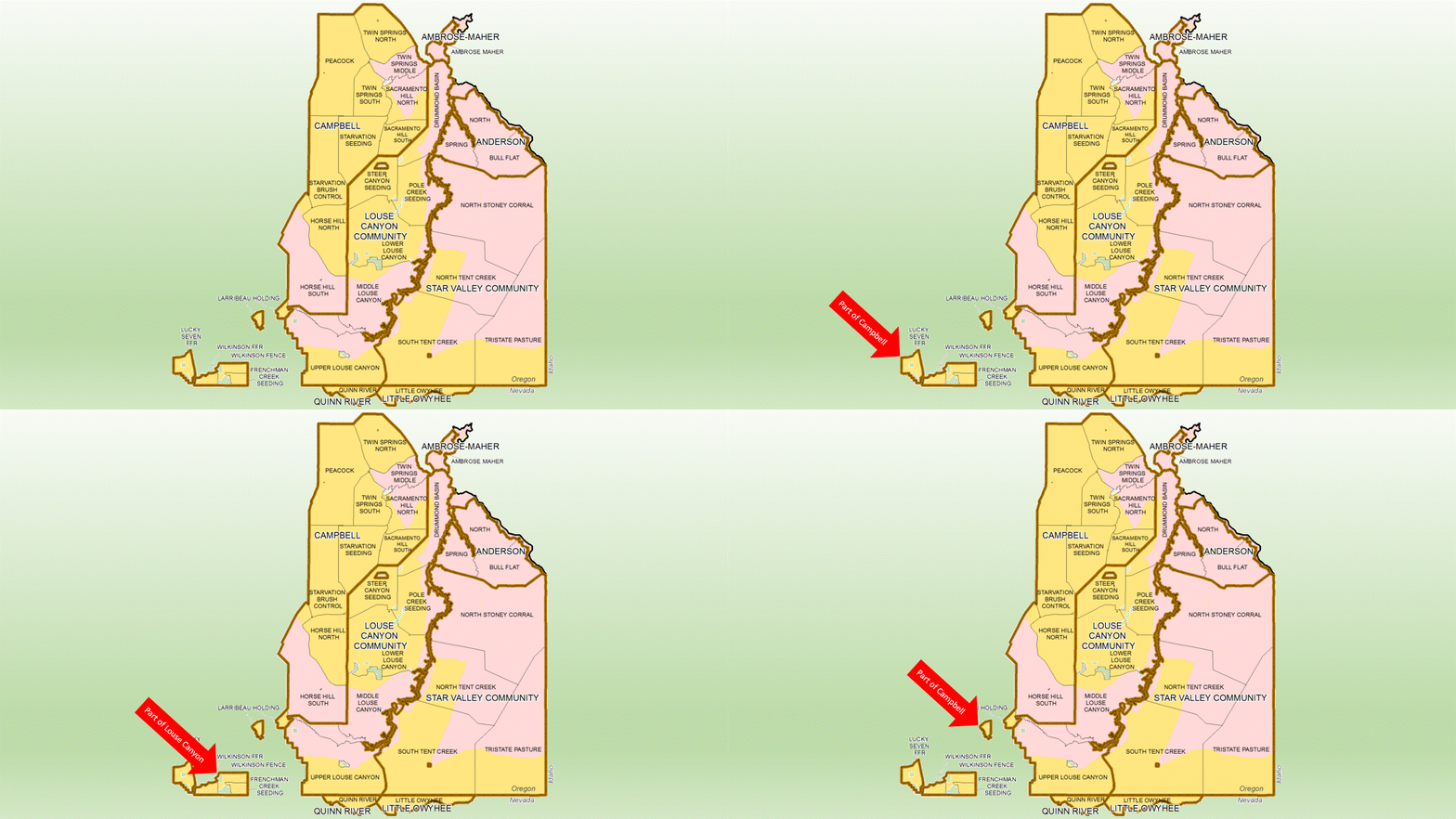
The project area covers five allotments in southeastern Oregon and two in northern Nevada, as discussed previously.

The forage assigned to wild horses is zero.

How many wild horses could live there?

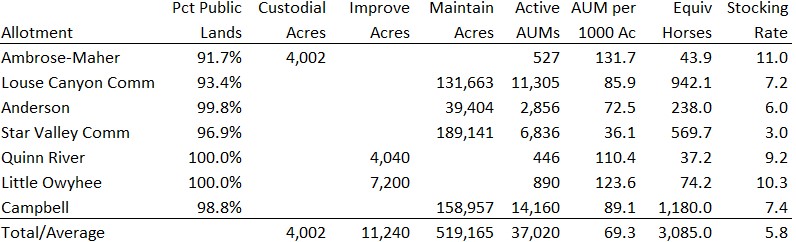
The Allotment Master Report provides management status, acreage and active AUMs.

Louse Canyon Allotmment Calcs 12-16-24

The allotments support livestock equivalent to 3,085 wild horses on 534,407 public acres.

Approximately 97% of the land is in the Maintain category.

The stocking rate at the True AML would be 5.8 wild horses per thousand public acres.

Why is this important?

The bureaucrats and ranchers claim that public lands in the western U.S. can only support one wild horse per thousand acres (27,000 animals on 27 million acres).

The advocates bolster the narrative with their darting programs.

If the allotments were a Complex, the AML would be 534 and 2,551 horses would be consigned to off-range holding because of permitted grazing.

BLM allotments in Oregon carry livestock equivalent to 87,934 wild horses on 13,130,302 public acres, or 6.7 wild horses per thousand public acres.

Wild horses can be placed on public lands not identified for their use by acquiring base properties associated with grazing allotments and flipping the preference to horses, as American Prairie did for bison in Montana.

RELATED: The Allotments Tell the Story: They’re Lying, All of Them.

Louse Canyon Allotments 12-16-24

Louse Canyon EIS Tries to Restore Rangeland Health

Another case of wild horse overpopulation?

Nope.  This one involves our stewards of the public lands.

A 2018 assessment found five allotments in southeastern Oregon and two in northern Nevada that did not meet standards for rangeland health, according to Sections 1.1 and 1.2 of the Final Scoping Report.

The map on page M-3 of Appendix M shows the arrangement.

The November 27 news release said the EIS considers a range of actions to meet those standards.

Curiously, Alternative D reflects proposals submitted by the permittees—the persons responsible for current conditions.

The Scoping Report said there were no HMAs in the project area.

The EIS was copied to the project folder with other supporting documents.

Comments will be accepted through January 13.

The base property associated with the Campbell Allotment, one of the five in Oregon, was listed for sale earlier this year.

Foal-Free Friday, Hypocrisy and Lies Edition

Nobody inflicts more pain and suffering than those who say wild horses have a right to live free of pain and suffering.

Pain and Suffering 12-11-24

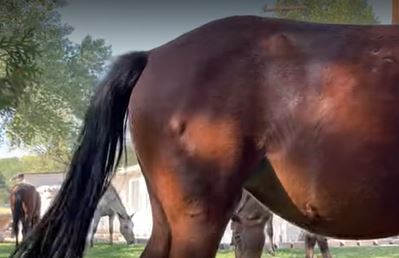
Imagine being hit with a pesticide-laced dart at 40 yards.

A powder charge ignites upon impact, driving the payload into the animal.

The injury may last for weeks.

VR Darting Injury 09-15-21

The advocates say it’s harmless.  They peddle the practice as humane management but it’s nothing of the sort.

They are phonies, leaders of the blind, and don’t deserve a penny of your support.

RELATED: Foal-Free Friday, Spending Wisely Edition.

Pneu-Dart Impact 01-03-22

Murderer’s Creek Roundup, Day 13

The incident started on November 29.  Results through December 11:

  • Scope: Murderer’s Creek HMA, WHT
  • Target: Wild horses
  • AML: 140
  • Pre-gather population: 650
  • True AML: TBD
  • Type: Emergency
  • Method: Bait
  • Capture goal: 350 – 400
  • Removal goal: 350 – 400
  • Captured: 116, up from 105 on Day 11
  • Shipped: 102, up from 83 on Day 11
  • Released: None
  • Deaths: 2, no change from Day 11
  • Average daily take: 8.9
  • Unaccounted-for animals: 12
  • Snippet from statute: It is the policy of Congress that wild free-roaming horses and burros shall be protected from capture, branding, harassment, or death
  • Snippet from manual: To protect wild horses and burros from unauthorized capture, branding, harassment or death

The figures above are based on the daily reports.

No horses were caught on Day 12.

The death rate is 1.7%.

The capture total includes 46 stallions, 48 mares and 22 foals.

Youngsters represented 19.0% of the animals gathered, consistent with a herd growth rate of 14% per year.

Of the adults, 48.9% were male and 51.1% were female, no indication of an abnormal sex ratio.

Body condition scores were not given.

The location of the trap site was not disclosed.

The name of the contractor was not provided.

There are no plans to treat any of the mares with fertility control pesticides and return them to the range.

No decisions have made regarding the long-term disposition of horses, which means they could be treated or altered in off range holding, including the stallions.

The status of livestock grazing in the burned area is not known.

RELATED: Murderer’s Creek Roundup, Day 11.

Murderers Creek HMA with Allotments 10-24-24

Murderer’s Creek Roundup, Day 11

The incident started on November 29.  Results through December 9:

  • Scope: Murderer’s Creek HMA, WHT
  • Target: Wild horses
  • AML: 140
  • Pre-gather population: 650
  • True AML: TBD
  • Type: Emergency
  • Method: Bait
  • Capture goal: 350 – 400
  • Removal goal: 350 – 400
  • Captured: 105, up from 99 on Day 9
  • Shipped: 83, up from 56 on Day 9
  • Released: None
  • Deaths: 2, no change from Day 9
  • Average daily take: 9.5
  • Unaccounted-for animals: 20
  • Snippet from statute: It is the policy of Congress that wild free-roaming horses and burros shall be protected from capture, branding, harassment, or death
  • Snippet from manual: To protect wild horses and burros from unauthorized capture, branding, harassment or death

The figures above are based on the daily reports.

The Day 8 results were changed from 3 stallions, 6 mares and 1 foal to 4/5/1.

The death rate is 1.9%.

The capture total includes 40 stallions, 45 mares and 20 foals.

Youngsters represented 19.0% of the animals gathered, consistent with a herd growth rate of 14% per year.

Of the adults, 47.1% were male and 52.9% were female, no indication of an abnormal sex ratio.

Body condition scores were not given.

The location of the trap site was not disclosed.

The name of the contractor was not provided.

There are no plans to treat any of the mares with fertility control pesticides and return them to the range.

No decisions have made regarding the long-term disposition of horses, which means they could be treated or altered in off range holding, including the stallions.

The status of livestock grazing in the burned area is not known.

RELATED: Murderer’s Creek Roundup, Day 9.

Murderers Creek HMA with Allotments 10-24-24

Murderer’s Creek Roundup, Day 9

The incident started on November 29.  Results through December 7:

  • Scope: Murderer’s Creek HMA, WHT
  • Target: Wild horses
  • AML: 140
  • Pre-gather population: 650
  • True AML: TBD
  • Type: Emergency
  • Method: Bait
  • Capture goal: 350 – 400
  • Removal goal: 350 – 400
  • Captured: 99, up from 89 on Day 7
  • Shipped: 56, no change from Day 7
  • Released: None
  • Deaths: 2, no change from Day 7
  • Average daily take: 11.0
  • Unaccounted-for animals: 41
  • Snippet from statute: It is the policy of Congress that wild free-roaming horses and burros shall be protected from capture, branding, harassment, or death
  • Snippet from manual: To protect wild horses and burros from unauthorized capture, branding, harassment or death

The figures above are based on the daily reports.

No horses were caught on Day 9.

The death rate is 2.0%.

The capture total includes 34 stallions, 45 mares and 20 foals.

Youngsters represented 20.2% of the animals gathered, consistent with a herd growth rate of 15% per year.

Of the adults, 43.0% were male and 57.0% were female, no indication of an abnormal sex ratio.

Body condition scores were not given.

The location of the trap site was not disclosed.

The name of the contractor was not provided.

There are no plans to treat any of the mares with fertility control pesticides and return them to the range.

No decisions have made regarding the long-term disposition of horses, which means they could be treated or altered in off range holding, including the stallions.

The status of livestock grazing in the burned area is not known.

RELATED: Murderer’s Creek Roundup, Day 7.

Murderers Creek HMA with Allotments 10-24-24

Who Has Grazing Preference on the Buckeye Allotment?

The Allotment Master Report indicates BORDA LAND AND SHEEP, with 481 active AUMs, and BENTLY FAMILY LIMITED PARTNERSHIP with 1,471.

However, a 2022 project in ePlanning transferred Bently’s preference from one base property to another.

The CX said the grazing preference moved from SE1/4, NW1/4, S13, T13N, R20E, a parcel of approximately 40 acres, to SW1/4, SW1/4, S27, T13N, R22E, another parcel of approximately 40 acres, with no change in grazing authorization.  (To understand these callouts, watch this video.)

Normally this would not be a problem if both parcels had the same owner.

Douglas County does not recognize the destination as a standalone parcel.

It’s part of APN 1322-00-002-067, a 944-acre tract in the CAAWH land trust.

The transfer occurred before Bently sold the land to CAAWH.

If the intent was to shift the preference from Bently to CAAWH, and a 2023 article by The Record-Courier suggests it was, it’s not reflected in the BLM documentation.

The Authorization Use Report shows the AUMs are still assigned to livestock.

Buckeye Base Property 12-09-24

Lahontan Roundup in the Works?

A new project was opened in ePlanning on December 6 but no documents were posted.

The scoping period would run from December 11 to January 10.

The project was placed under Rangeland Management, not Wild Horses and Burros.

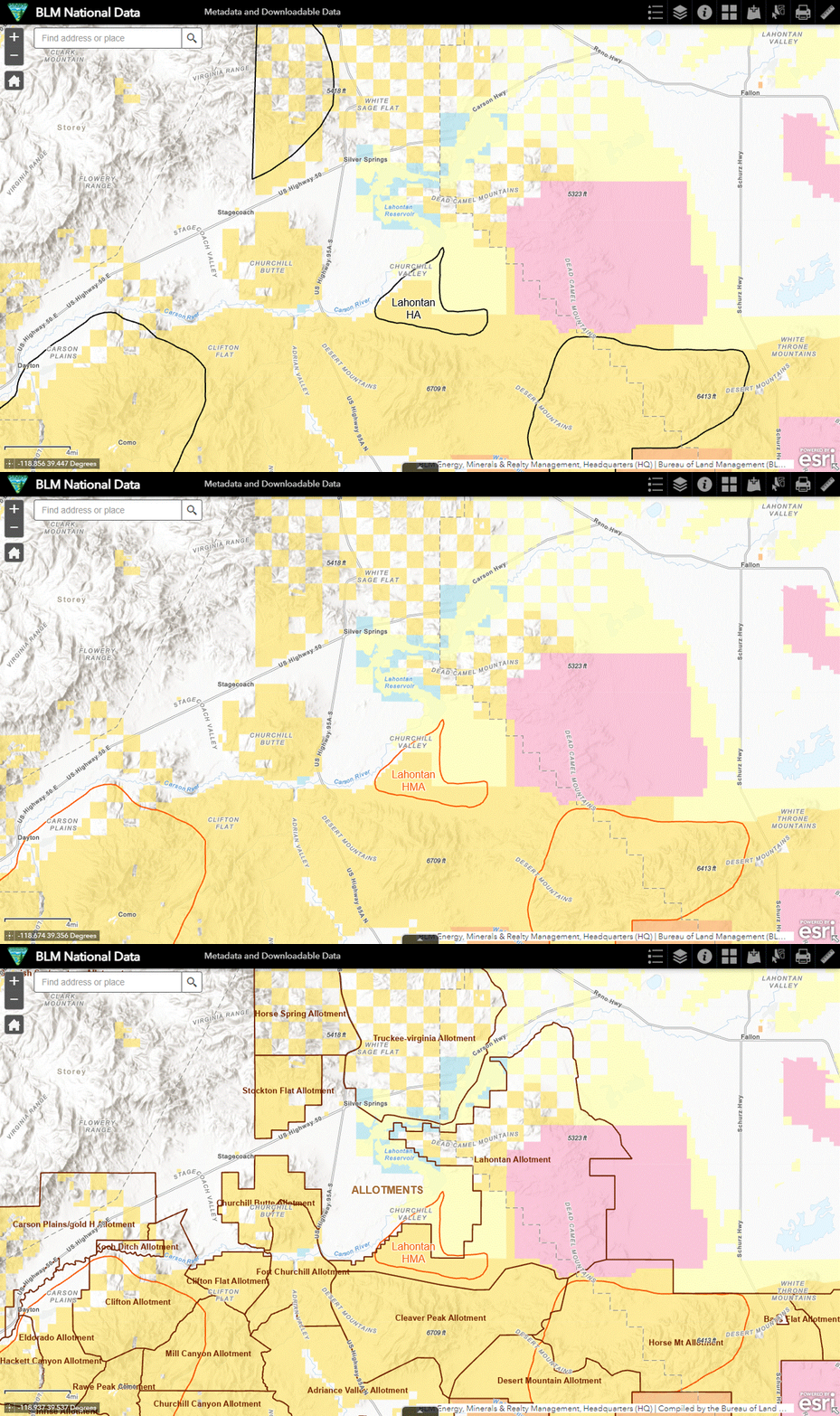
The HMA covers 9,578 total acres near Silver Springs, NV, including 6,937 public acres, and has an AML of ten.

The National Data Viewer shows most of the acreage in the Lahontan Allotment but the portion beyond is on BOR land.

The 2024 population dataset puts the herd size at 353.

Lahontan HMA with Allotments 12-08-24

Devil’s Garden Roundup Over?

Aerial operations concluded on November 30 according to the gather page but the status of bait trapping was not provided.

No updates have been posted since.

The capture total was 341 with three deaths.

The number of horses shipped was not specified.

The number of unaccounted-for animals is not known.

There were no plans to treat any of the mares with fertility control pesticides and return them to the range.

The roundup liberated 4,092 AUMs per year, assuming all horses were removed, giving new hope to the Devil’s Garden permittees.

RELATED: Seventh Annual Devil’s Garden Roundup Announced.

Murderer’s Creek Roundup, Day 7

The incident started on November 29.  Results through December 5:

  • Scope: Murderer’s Creek HMA, WHT
  • Target: Wild horses
  • AML: 140
  • Pre-gather population: 650
  • True AML: TBD
  • Type: Emergency
  • Method: Bait
  • Capture goal: 350 – 400
  • Removal goal: 350 – 400
  • Captured: 89, up from 68 on Day 5
  • Shipped: 56, no change from Day 5
  • Released: None
  • Deaths: 2, no change from Day 5
  • Average daily take: 12.7
  • Unaccounted-for animals: 31
  • Snippet from statute: It is the policy of Congress that wild free-roaming horses and burros shall be protected from capture, branding, harassment, or death
  • Snippet from manual: To protect wild horses and burros from unauthorized capture, branding, harassment or death

The figures above are based on the daily reports.

The death rate is 2.2%.

The capture total includes 31 stallions, 39 mares and 19 foals.

Youngsters represented 21.3% of the animals gathered.

Of the adults, 44.3% were male and 55.7% were female.

Body condition scores were not given.

The location of the trap site was not disclosed.

The name of the contractor was not provided.

There are no plans to treat any of the mares with fertility control pesticides and return them to the range.

No decisions have made regarding the long-term disposition of horses, which means they could be treated or altered in off range holding, including the stallions.

The status of livestock grazing in the burned area is not known.

RELATED: Murderer’s Creek Roundup, Day 5.

Murderers Creek HMA with Allotments 10-24-24