The resolution was read the first time and referred to the Agriculture Committee according to the February 18 update.
RELATED: SCR 4006 Moves to House.

Western Horse Watchers Association
Exposing the Hypocrisy, Lies and Incompetence of the Wild Horse Advocates
On the range
The resolution was read the first time and referred to the Agriculture Committee according to the February 18 update.
RELATED: SCR 4006 Moves to House.
Ideally, you’d like to see forage availability above 60 and the stocking rate exceed five, as discussed previously.
| Forage availability (AUMs per thousand public acres) | Rating | Stocking rate (Wild horses per thousand public acres) |
|---|---|---|
| Less than 36 | Poor | Less than 3 |
| 36 t0 60 | Fair | 3 to 5 |
| More than 60 | Good | More than 5 |
You also want a land ratio above three.
| Land ratio (public acres to deeded acres) | Percent public lands | Rating |
|---|---|---|
| Zero | Zero | Unacceptable |
| 1:1 | 50 | Unacceptable |
| 2:1 | 67 | Unacceptable |
| 3:1 | 75 | Barely acceptable |
| 4:1 | 80 | Good |
| 5:1 | 83 | Better |
| 6:1 or more | 86 or more | Best |
Sanctuaries consisting of deeded acreage only (no public lands) represent victory for the ranchers and failure for the horses.
RELATED: Scoping Out a New Wild Horse Refuge.
Horses have the day off. At Lake Pleasant HMA with Deb Moye.
A first-pass assessment can be carried out if you know the forage availability or stocking rate, both of which can be determined from the Allotment Master Report at RAS.
Forage availability = Active AUMs ÷ Public acres × 1,000
Stocking rate = Forage availability ÷ 12
| Forage availability (AUMs per thousand public acres) | Rating | Stocking rate (Wild horses per thousand public acres) |
|---|---|---|
| Less than 36 | Poor | Less than 3 |
| 36 t0 60 | Fair | 3 to 5 |
| More than 60 | Good | More than 5 |
For example, the Wallrock Allotment in Oregon offers 6,656 active AUMs on 100,167 public acres according to the report.
That’s 66.4 AUMs per thousand public acres or 5.5 wild horses per thousand public acres, putting it in the Good category.
If the base property tied to the allotment was on the market, you might want to take a closer look.
The allotment supports livestock equivalent to 555 wild horses, which would be the carrying capacity of the new refuge, assuming no on-site hay production.
RELATED: Scoping Out a New Wild Horse Refuge.
A new project has been created in ePlanning but no documents have been posted.
The facility is in Needles, CA and the target is probably burros.
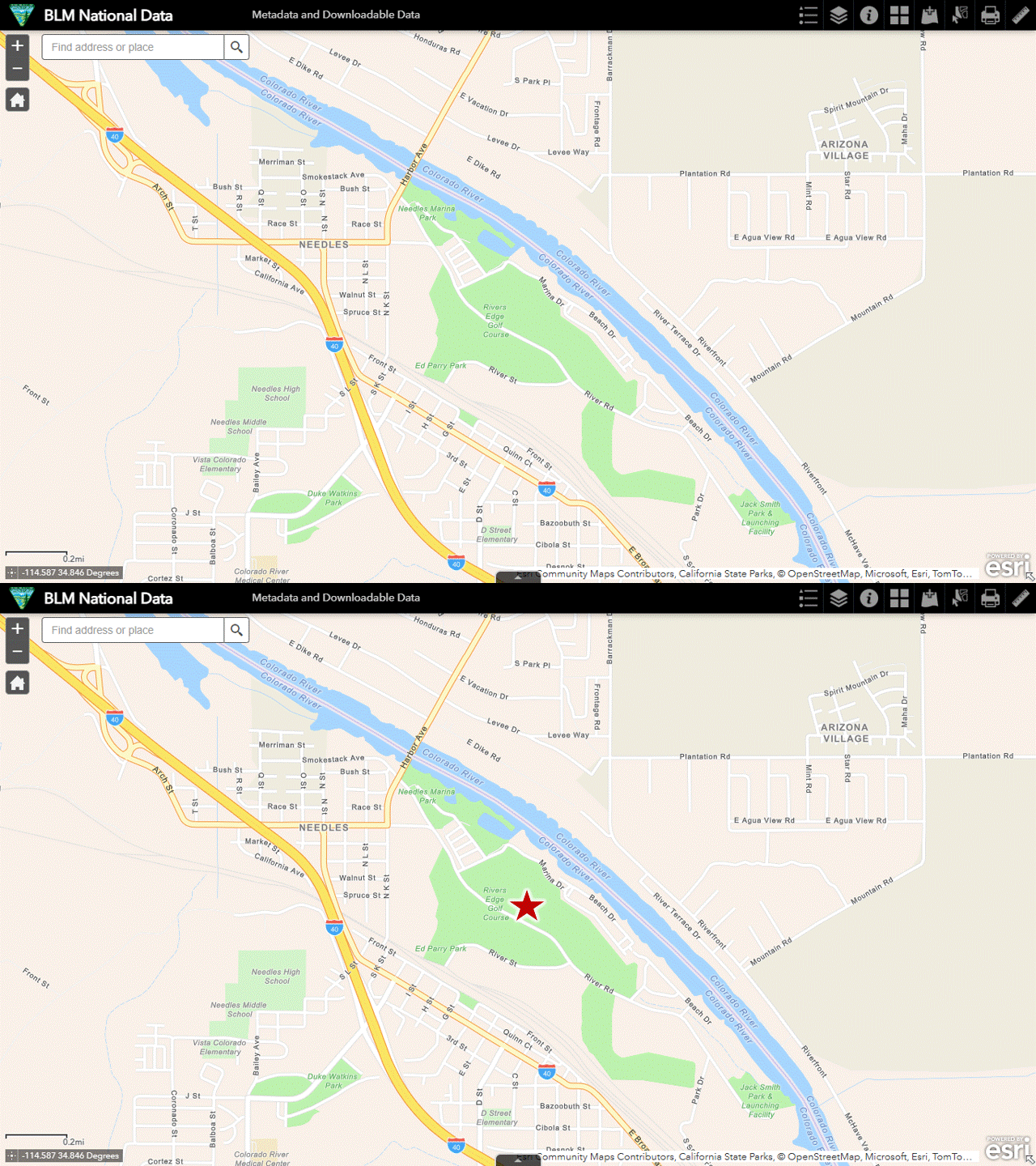
The URL of the news release puts it at the BLM Announcements page but as of this evening it’s not there. Very strange.
The incident will begin on February 24 as scheduled.
The capture and removal goals are 100 each.
A helicopter will push the animals into the trap and operations will be open to public observation.
Burros identified for removal will be taken to the Axtell off-range corrals.
Daily reports will be posted to the gather page.
There are no plans to treat any of the jennies with fertility control pesticides and return them to the range.
The HMA can only support 100 burros on 77,311 public acres, equivalent to 50 wild horses or 0.6 wild horses per thousand public acres. The target stocking rate across all HMAs is one wild horse per thousand acres.
The roundup supports three tenets of rangeland management.
A one-day roundup last year took 46 burros off the range.
RELATED: Canyonlands Roundup Begins, Ends on Same Day.

The app appears to be a streamlined version of the National Data Viewer, with a subset of its features, but real-time plotting of your position.
Refer to the news release for installation instructions.
Supported layers include:
Only the Navigation basemap is available.
The app does not show allotments, HMAs or WHTs, which would be nice if you’re exploring, trying to find wild horses or do your own land health assessments.
The incident started on November 29. Results through February 9:
Results for Days 68, 71, 72 and 73 were posted today. No reports were given for Days 67, 69 and 70.
The low end of the capture goal has been reached.
A stallion died of colic on Day 68, lifting the death rate to 1.6%.
The capture total includes 135 stallions, 148 mares and 90 foals. The gather page says 135/153/85.
Youngsters represented 24.1% of the animals gathered, consistent with a herd growth rate of 19% per year. The Rule of 72 says the herd size would double in 3.8 years.
Of the adults, 47.7% were male and 52.3% were female, no indication of an abnormal sex ratio in the population at large.
Body condition scores were not given.
The location of the trap site was not disclosed.
The name of the contractor was not provided.
There are no plans to treat any of the mares with fertility control pesticides and return them to the range.
No decisions have made regarding the long-term disposition of horses, which means they could be treated or altered in off range holding, including the stallions.
The status of livestock grazing in the burned area is not known.
RELATED: Murderer’s Creek Roundup, Day 66.

Horses have the day off. In Reche Canyon with Vespa Diaries.
Organizers of the Wild Horse Summit said they’d arm with you with knowledge to effectively advocate so let’s put that theory to the test.
The allotment, on the north side of I-40 near Dinosaur, CO, offers 3,664 active AUMs on 43,242 public acres according to the allotment master report.
The forage assigned to horses is zero.
How many could live there?
The forage assigned to livestock is equivalent to 305 wild horses, or 7.1 animals per thousand public acres.
Why is this important?
Your faithful public servants claim that public lands in the western U.S. can only support one wild horse per thousand acres (27,000 animals on 27 million acres).
The advocates bolster the narrative with their darting programs.
If the allotment was an HMA, the AML would be 43 and 262 horses would be consigned to off-range holding because of permitted grazing.
What’s that? You didn’t learn any of this at the summit?
You can’t get blood from a stone and you won’t get the required knowledge from conferences organized by ranching sympathizers.
BLM allotments in Colorado support livestock equivalent to 49,546 wild horses on 7,448,367 public acres, or 6.7 wild horses per thousand public acres.
Wild horses can be placed on public lands not identified for their use by acquiring base properties associated with grazing allotments and flipping the preference to horses.
RELATED: The Allotments Tell the Story: They’re Lying, All of Them.
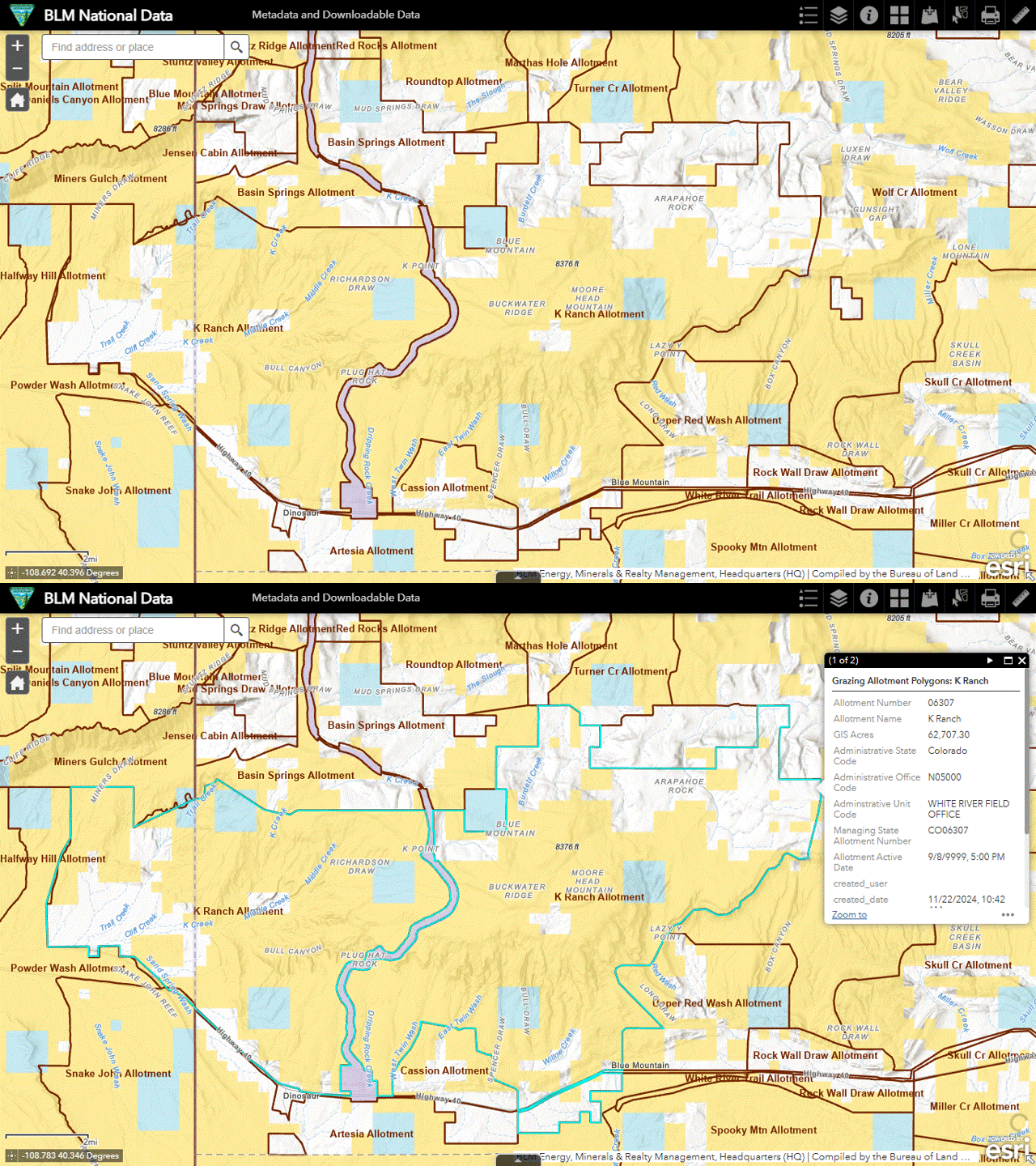
K Ranch covers 14,367 deeded acres on the north side of I-40 near Dinosaur, CO, with access to 45,140 BLM acres and 3,200 state acres according to the agent’s listing.
The National Data Viewer shows the arrangement. Click on image to open in new tab.
The Allotment Master Report puts it in the Improve category, with 3,664 active AUMs on 43,242 public acres, equivalent to 305 wild horses or 7.1 wild horses per thousand public acres.
Your faithful public servants claim that public lands in the western U.S. can only support one wild horse per thousand acres (27,000 on 27 million acres).
The land ratio is, using the agent’s data, is 3.1 public acres for every deeded acre.
The ranch does not overlap any areas identified for wild horses.
The legislature expects the Colorado Wild Horse Working Group to identify and pursue long-term solutions for wild horses removed from federal horse management areas or held in federal facilities, the best of which is to put them back on public lands at the expense of privately owned livestock.
This can be accomplished by acquiring base properties such as this one and flipping the grazing preference to horses.

The investment ratio would be $39,016 per rescued horse if the ranch was operated in self-sustaining mode.
On-site hay production would increase capacity, driving the investment ratio down.
The listing says the ranch supports a year-round cattle operation of approximately 530 cows, plus 75 yearling heifers and 15 bulls, equivalent to roughly 600 wild horses.
RELATED: Starting a Nonprofit That Actually Helps Wild Horses.
A management evaluation has been copied to the project folder.
Comments will be accepted through March 10 according to the news release.
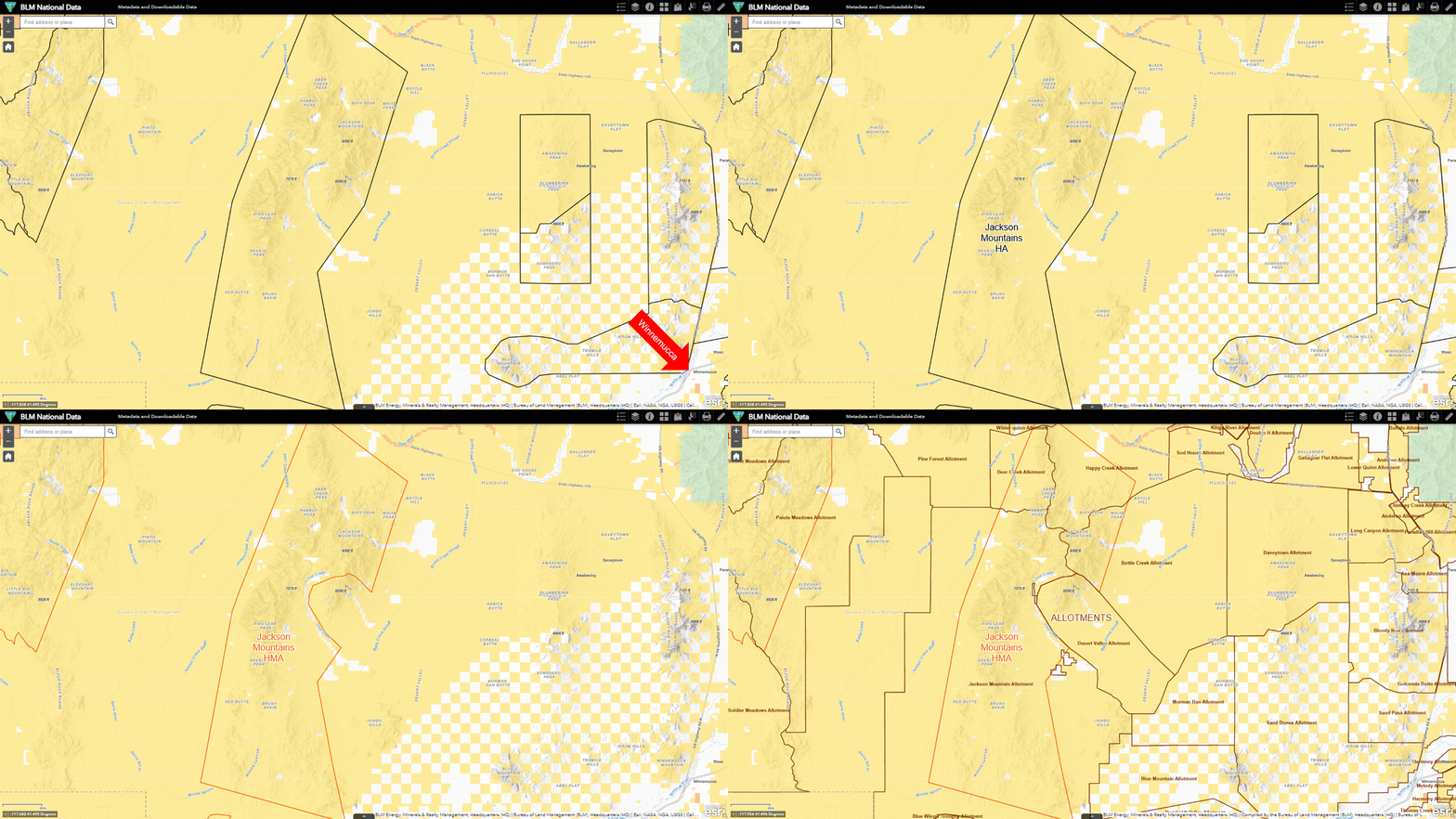
Three HMAs are affected. The map shows the arrangement.
The HMAP will affirm the current AMLs and forage allocations, and authorize methods such as roundups, fertility control, castration and sex ratio skewing to enforce them.
An amendment was adopted but a motion to not pass as amended carried 4-2.
Videos of the hearing have been posted to the bill’s home page.
L Cross Ranch covers 6,581 deeded acres in southern Colorado, with access to 11,460 BLM acres, 26,140 Forest Service acres and 15,844 state acres, according to the agent’s listing.
The National Data Viewer identifies the BLM allotments as East Carnero Creek, South Carnero, Rio Grande Canal and Hellgate.
The Allotment Master Report gives management status, public acres and active AUMs.
The Western Watersheds map identifies the Forest Service allotments as Pasture and Cave.
The land ratio, neglecting state acreage, is 5.7 public acres per deeded acre.
The ranch does not overlap any areas identified for wild horses.
The legislature expects the Colorado Wild Horse Working Group to identify and pursue long-term solutions for wild horses that are removed from federal horse management areas or held in federal facilities, the best of which is to put them back on public lands at the expense of privately owned livestock.
This can be accomplished by acquiring base properties such as this one and flipping the grazing preference to horses.

The BLM acreage offers 706 active AUMs, equivalent to 59 wild horses, which is not great for the required investment.
On-site hay production will increase that number. The listing says the ranch supports 850 to 900 head year around.
The authorized forage in the Forest Service and state lands is not known.

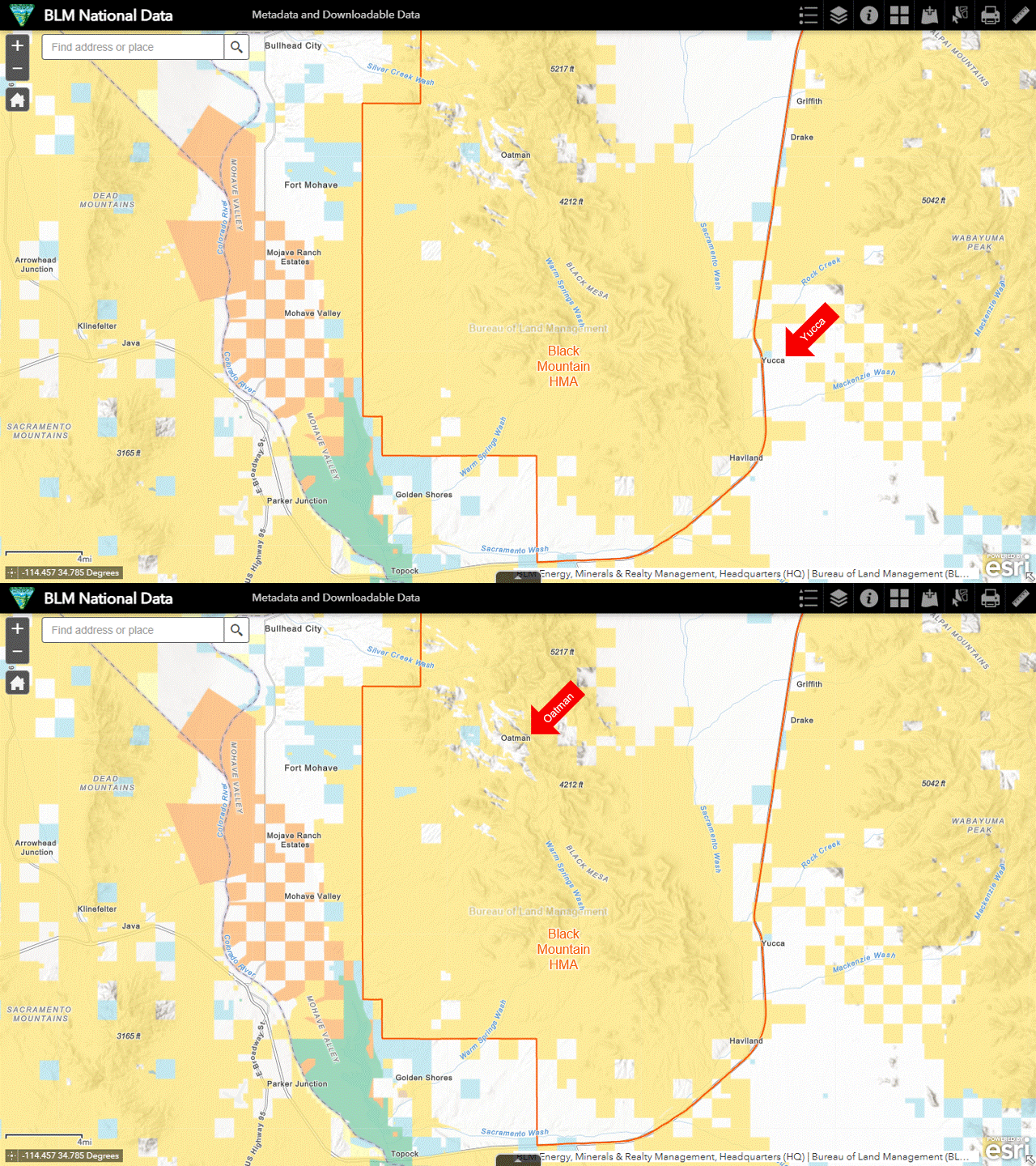
The story takes place on the west side of I-40 in Yucca, AZ, putting the store in the Black Mountain HMA, an area identified for wild burros.
The old mining town of Oatman, known for its furry panhandlers, is about 20 miles to the northwest.
A scoping statement and management evaluation have been copied to the project folder.
Comments will be accepted through March 4 according to the news release.
The HMAP will affirm the current AML and forage allocations, and authorize methods such as forcible removal, fertility control pesticides and sex ratio skewing to achieve them on a long-term basis.
RELATED: New HMAP for Jackson Mountains HMA?
The incident started on November 29. Results through February 2:
The figures above are based on the daily reports.
The low end of the capture goal has been reached.
The death rate is 1.4%.
The capture total includes 123 stallions, 143 mares and 84 foals. The gather page says 123/148/79.
Youngsters represented 24.0% of the animals gathered, consistent with a herd growth rate of 19% per year. The Rule of 72 says the herd size would double in 3.8 years.
Of the adults, 46.2% were male and 53.8% were female, no indication of an abnormal sex ratio in the population at large.
Body condition scores were not given.
The location of the trap site was not disclosed.
The name of the contractor was not provided.
There are no plans to treat any of the mares with fertility control pesticides and return them to the range.
No decisions have made regarding the long-term disposition of horses, which means they could be treated or altered in off range holding, including the stallions.
The status of livestock grazing in the burned area is not known.
RELATED: Murderer’s Creek Roundup, Day 60.
The December 12 schedule has been replaced by the January 28 edition.
At Little Book Cliffs with Tom Zimmerman.
 Western Horse Watchers Association