Are people finally waking up to these frauds or is Google now in the business of fabricating search results?
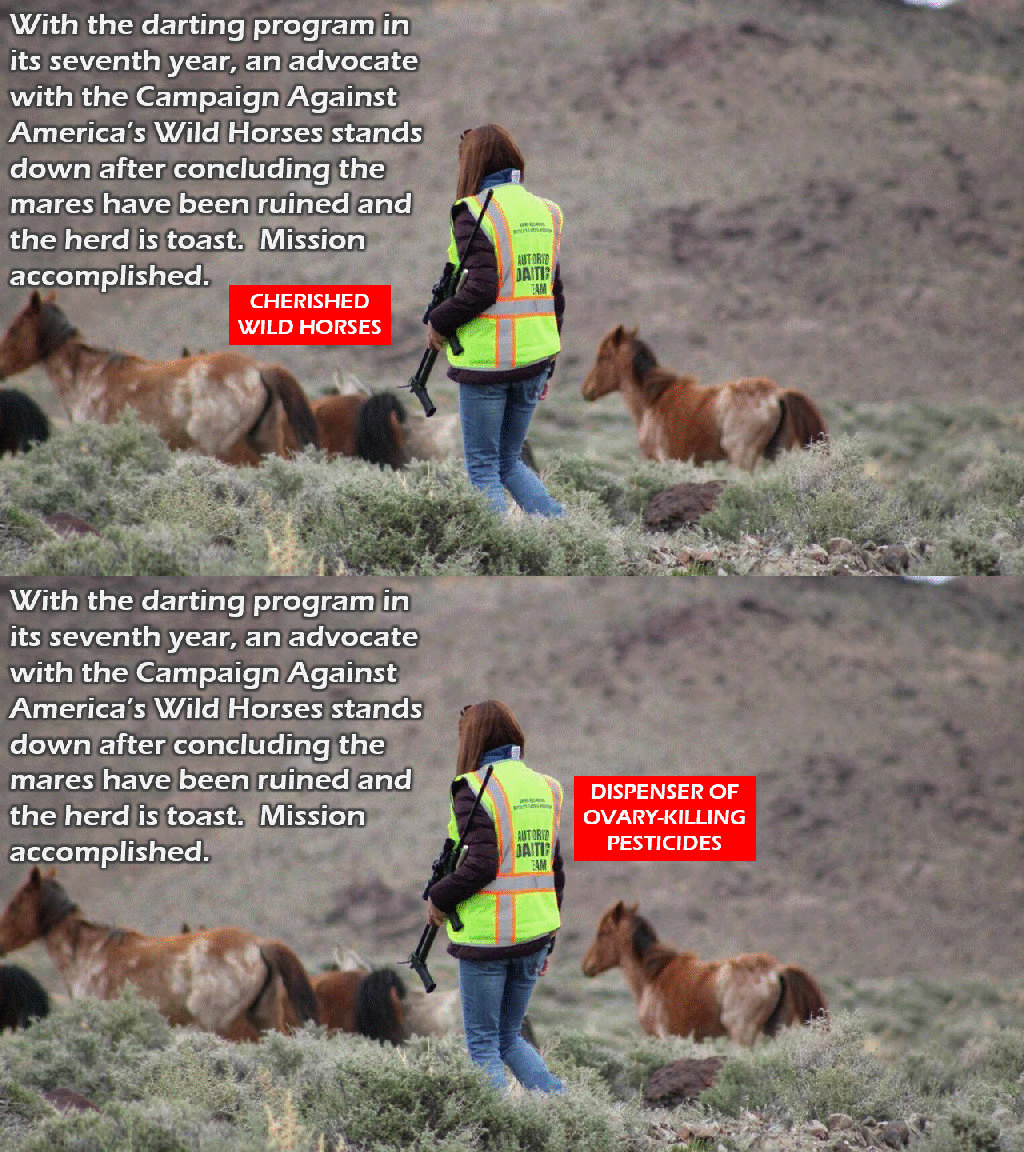
The Campaign Against America’s Wild Horses not only peddles mass sterilization as a humane alternative to motorized removal, but its volunteers have put it into practice on the Virginia Range.
Same for its partners at the Salt River and Pine Nut Mountains.
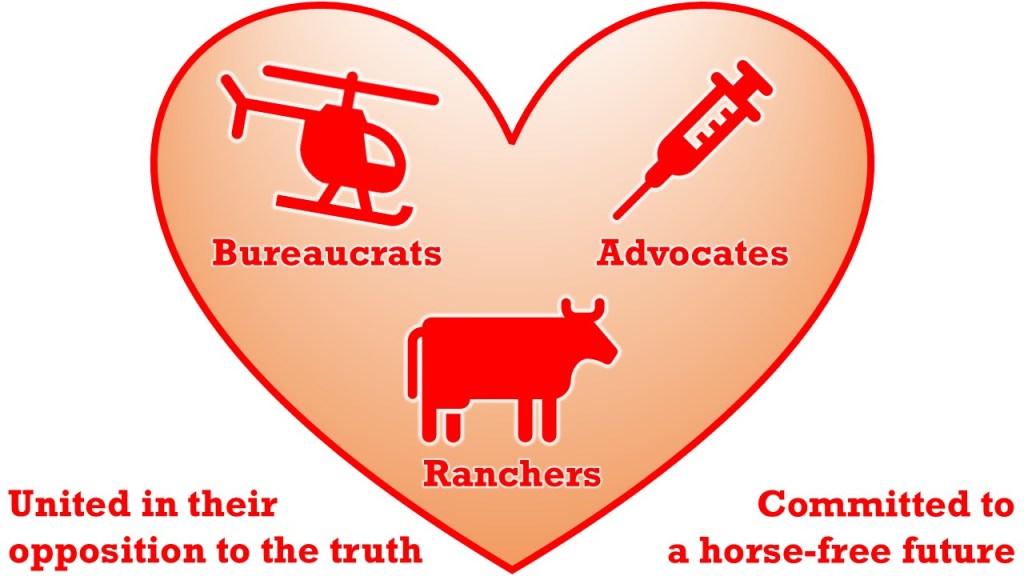
Can you think of a better way to win the support of the bureaucrats and ranchers?
Western Horse Watchers is such a potent threat to the Love Triangle that its players have gone all out to hide it from their supporters.
Normally the site does not appear in searches for “wild horse” and “wild horses.”
But today it did, even without personalization. (In the old days they called it shadow banning—your site appears when you run the search but nobody else sees it.)
There has been no traffic from socialist media in 45 days, suggesting that the site has been banned therefrom.
Maybe the advocates are worried that their pesticide businesses will suffer as a result of commentary by Western Horse Watchers.
The filtering option gives the following breakdown:
Stallions – 22
Mares – 34
Colts – 11
Fillies – 11
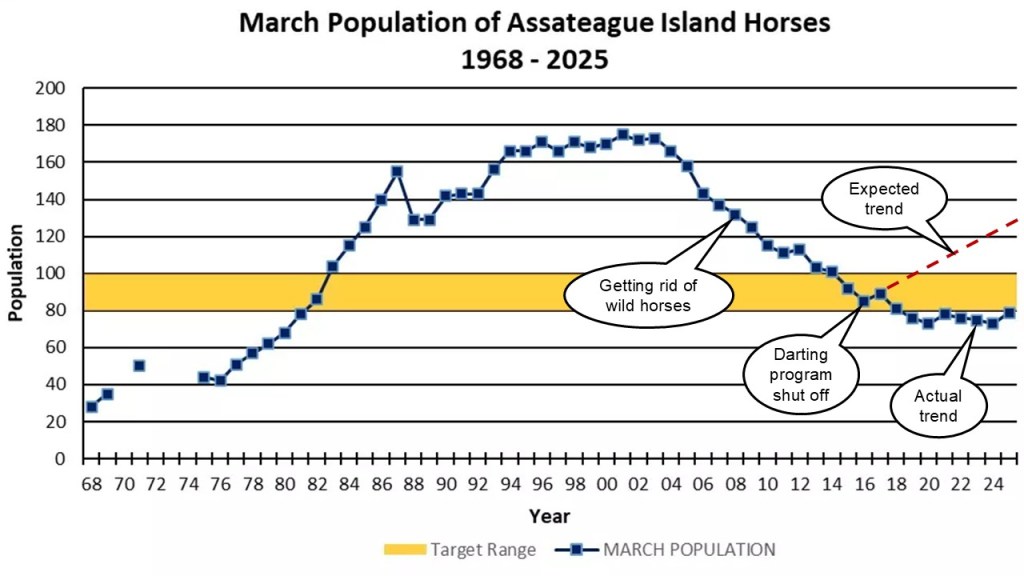
The island was a proving ground for mass sterilization with PZP.
The darting program was shut off in 2016 and since then the population has gone sideways, proving that the pesticide is not reversible as the advocates claim.
A few years ago they pointed to the island as a paragon of wild horse management but now that the results are public, they’ve lost interest.
They know you know they’ve been lying.
Note the abnormal sex ratio—1.5 mares for every stallion—a well-known side effect the advocates dismiss as “mares living longer.”
Some of the parcels are in areas identified for wild horses.
The news release, dated October 16 but not published until yesterday due to the partial government shutdown, said the date of sale will be announced separately along with details such as the location and fair market value of each parcel.
A draft environmental assessment was not issued for public review. The project jumped from scoping to decision in six months.
The allotment master report puts it in the Improve category, suggesting that your stewards of the public lands are not taking their responsibilities seriously.
Note that there are more AUMs in the suspended column than active.
The Mustang permittees receive 1,134 active AUMs on 23,877 public acres, equivalent to 95 wild horses or four wild horses per thousand public acres.
Your faithful public servants claim that public lands in the western U.S. can only support one wild horse per thousand acres (25,600 animals on 25.6 million acres according to the last page of the 2025 population dataset).
The advocates support the narrative with their darting programs.
If the allotment was an HMA, the AML would be 24 and 71 wild horses would be consigned to off-range holding because of permitted grazing.
The area would be held to a small fraction of carrying capacity to accommodate large numbers of cattle or sheep, placed there by high-net-worth individuals who pay almost nothing for the resources they consume and the services rendered on their behalf by the government.
Wild horses can be placed on public lands not identified for their use by acquiring base properties associated with grazing allotments and flipping the preference to horses.
A November 5 article by The Hill suggests that he’s not on board with the ruinous carbon-is-a-pollutant-men-can-be-women-and-water-flows-uphill agenda.
The choice must be confirmed by the Senate.
The BLM leadership page indicates that Bill Groffy currently serves as acting director.
The position of Division Chief for the Wild Horse and Burro Program is filled internally and not subject to Senate confirmation.
The 2025 population dataset indicated 78 horses in the HMA, a bit short of the 150 to 200 animals needed for genetic diversity (refer to 4.4.6.3 in H-4700-1).
If you deduct the number of mares ruined by Holmes, the breeding population is likely in the single digits, completely inadequate for long-term viability.
The people of Arizona made clear nine years ago that they wanted approximately 450 wild horses living in freedom at the Salt River.
Today, the population is somewhere around 280 thanks to the mass sterilization program inflicted on the herd by the Salt River Wild Horse Darting Group in cooperation with the Campaign Against America’s Wild Horses.
That means the advocates have no assurance that the agency will devote more resources to their mass sterilization programs in lieu of motorized removal.
Three allotments in Pathfinder’s Stewart Creek Unit offer a combined 2,288 active AUMs on 21,183 public acres, equivalent to 191 wild horses or nine wild horses per thousand public acres.
Your faithful public servants claim that public lands in the western U.S. can only support one wild horse per thousand acres (25,600 animals on 25.6 million acres according to the last page of the 2025 population dataset).
The advocates, defeated a long time ago and now in the tank for the ranchers, bolster the narrative with their darting programs.
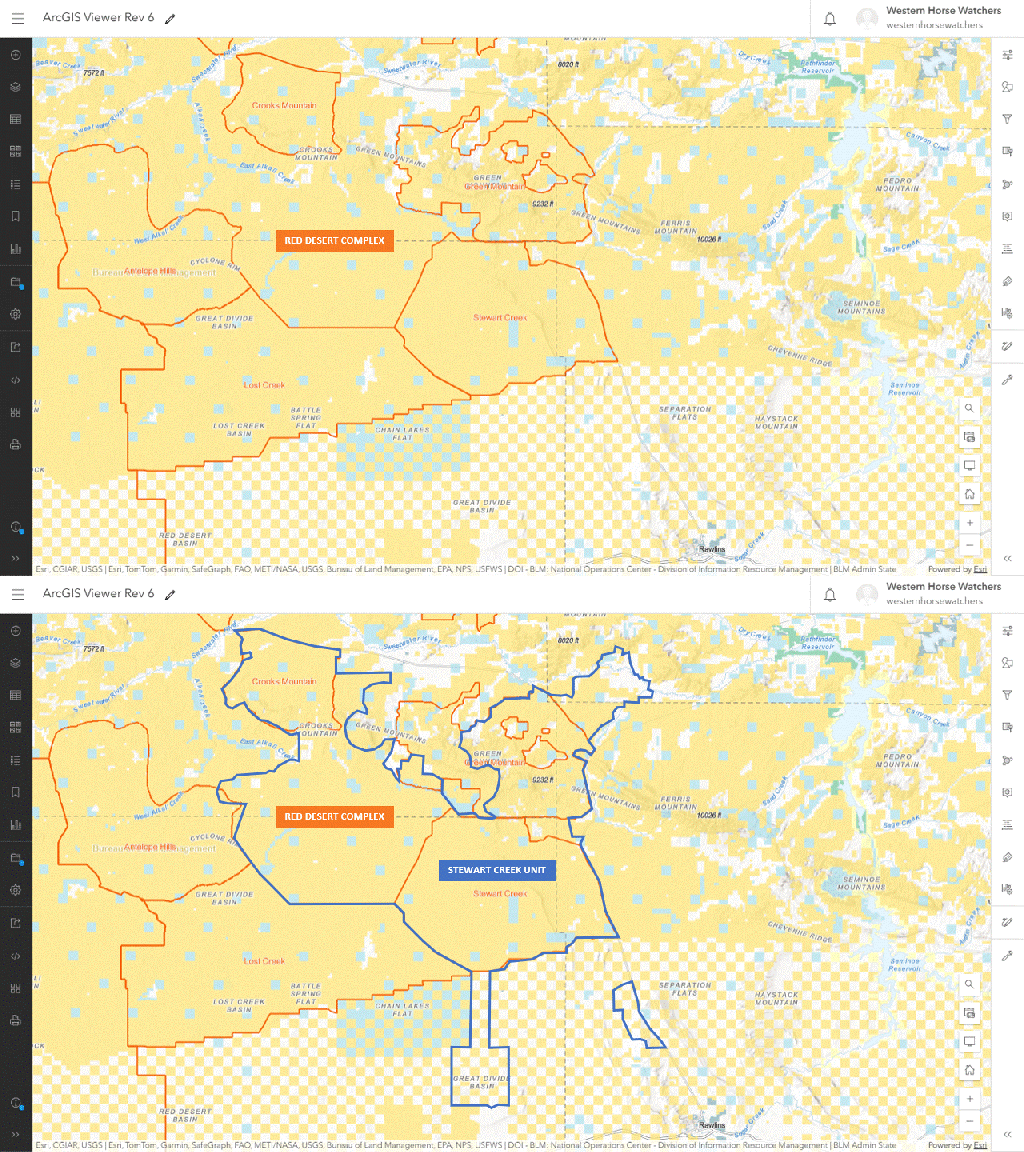
If you plot the outline of the Stewart Creek Unit on a map of the allotments, you’ll find that it overlaps Turkey Track, Rawlins Draw, Whiskey Peak, Arapahoe Creek, Stewart Creek, Larson Knolls, Jawbone and Bell Springs.
Turkey Track, not labeled, is in the northeast corner. Click on image to enlarge.
STEWART CREEK GRAZING ASSOCIATION appears in a first-pass review of the allotment master reports at RAS.
The operator information report gives three authorizations for SCGA:
4900602 – JAWBONE, BELL SPRINGS, LARSON KNOLLS and STEWART CREEK (in the Rawlins Field Office)
4900388 – ARAPAHOE CREEK (Lander Field Office)
4900649 – RAWLINS DRAW, TURKEY TRACK, NORTH WILLOW CREEK, WHISKEY PEAK and COOPER CREEK (Lander Field Office)
Western Horse Watchers was unable to find North Willow Creek and Cooper Creek on the map but their namesakes are inside the blue boundary.
The allotment master report for Lander indicates that SCGA holds all of the active AUMs in Rawlins Draw, Turkey Track, North Willow Creek and Cooper Creek, suggesting that it’s a legal entity owned or controlled by Pathfinder Ranches.
SCGA holds all of the active AUMs in Bell Springs, Jawbone and Larson Knolls according to the report for Rawlins.
In the Stewart Creek Allotment, where the Wyoming Wild Horse Improvement Project poisons the mares with PZP, SCGA holds 60% of the active AUMs, suggesting that WYWHIP co-founder Christie Chapman cares far more about ranching interests, especially those of Pathfinder, than she does about wild horses.
You’d think the advocates would have special funds devoted to the purchase of base properties, so wild horses could be placed on public lands at the expense of privately owned livestock.
Instead, they use your donations to buy pesticides, so they can beat the horse populations down in favor of livestock.
They are frauds and don’t deserve a penny of your support.
Stocking rate would be 27.3 wild horses per thousand BLM acres
Beulah Belle
98,357 total acres
23,146 deeded
7,962 state
67,248 BLM
2.9 BLM acres per deeded acre
19,810 AUMs
Equivalent to 1,651 wild horses
Stocking rate would be 24.6 wild horses per thousand BLM acres
Stewart Creek
569,053 total acres
22,470 deeded
8,999 state
537,584 BLM
23.9 BLM acres per deeded acre
23,734 AUMs
Equivalent to 1,978 wild horses
Stocking rate would be 3.7 wild horses per thousand BLM acres
Wooden Rifle
68,606 total acres
14,537 deeded
6,797 state
47,272 BLM
3.3 BLM acres per deeded acre
8,991 AUMs
Equivalent to 749 wild horses
Stocking rate would be 15.8 wild horses per thousand BLM acres
Your faithful public servants claim that public lands in the western U.S. can only support one wild horse per thousand BLM acres.
Stewart Creek, the unit with the best land ratio but lowest stocking rate, overlaps three of the five HMAs in the Red Desert Complex. Not disclosed by the agent.
If the operation was repurposed as a refuge, it would support 7,500 wild horses, saving taxpayers an estimated $13.7 million per year and paying for itself in six years.
The project would likely face stiff opposition from ranchers, farm bureaus and stock grower’s associations.
Wild horses can be placed on public lands not identified for their use by acquiring base properties associated with grazing allotments and flipping the preference to horses.