An administrative order issued by the Arizona Department of Agriculture says on page 3 that a six to seven year old deceased stallion displaying symptoms had been sampled and results were pending.
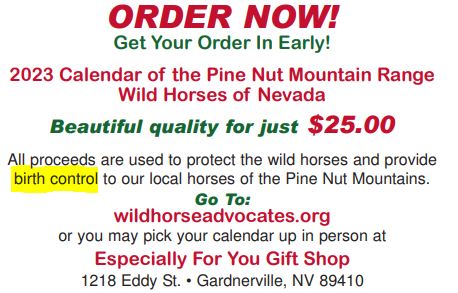
The turncoats at the Campaign Against America’s Wild Horses think you’re malleable, dumber than a bag of hammers, and can be easily persuaded to finance their mass sterilization programs.
The indigenous peoples who might be affected by wild horse migration into their communities come in two varieties: Ranchers who graze BLM allotments and ranchers who graze Forest Service allotments.
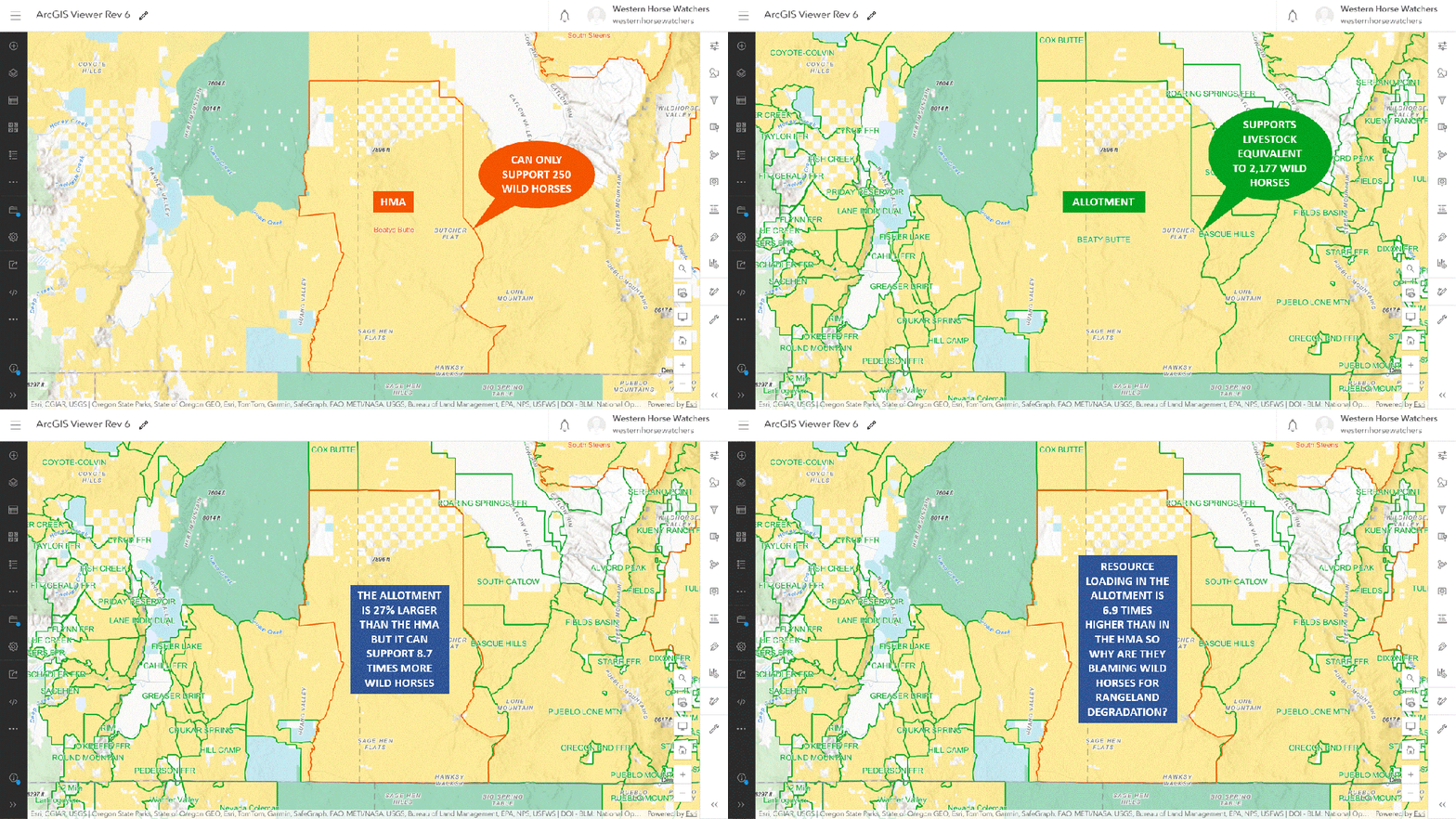
The ArcGIS Viewer shows the arrangement. Click on image to enlarge.
They want you to think that genetic diversity correlates with herd size, which is not true when the mares have been ruined, or are in the process of being ruined, with PZP.
An ad in the November edition of Horse Tales puts the value of forage in a rented pasture at $125 per AUM, assuming a horse can survive without supplemental feed.
Why pay the going rate when you can graze the public lands for $1.35 per AUM?
The grazing fee, which does not give the American people a fair price for the use of their public lands, is set by a formula in the Public Rangelands Improvement Act.
Allotment – Livestock equivalent to 689 wild horses
Resource loading
HMA – 1.1 wild horses per thousand public acres
Allotment – Equivalent to 4.2 wild horses per thousand public acres
The HMA would be well over 3X AML with no wild horses.
Livestock exert 3.8 times more grazing pressure than horses.
If the land can only support 1.1 wild horses per thousand acres but routinely carries the equivalent of 5.3 wild horses per thousand acres, then rangeland degradation must be a goal, not a defect of permitted grazing.
Another possibility is that the land can support more wild horses than the bureaucrats admit.
The advocates won’t talk about it because it undermines the rationale for their darting programs.
The allotment, about 30 miles southeast of Roswell, sustains cattle and horses in a 12-month grazing season according to the authorization use report. (The figures in the report are not correct. Twenty horses would require 240 AUMs per year not 127.)
The allotment master report puts it in the Improve category, suggesting that your stewards of the public lands are not taking their responsibilities seriously.
The permittee receives 15,106 active AUMs on 126,373 public acres, equivalent to 1,259 wild horses or ten wild horses per thousand public acres.
Your faithful public servants claim that public lands in the western U.S. can only support one wild horse per thousand acres (25,600 animals on 25.6 million acres according to the last page of the 2025 population dataset).
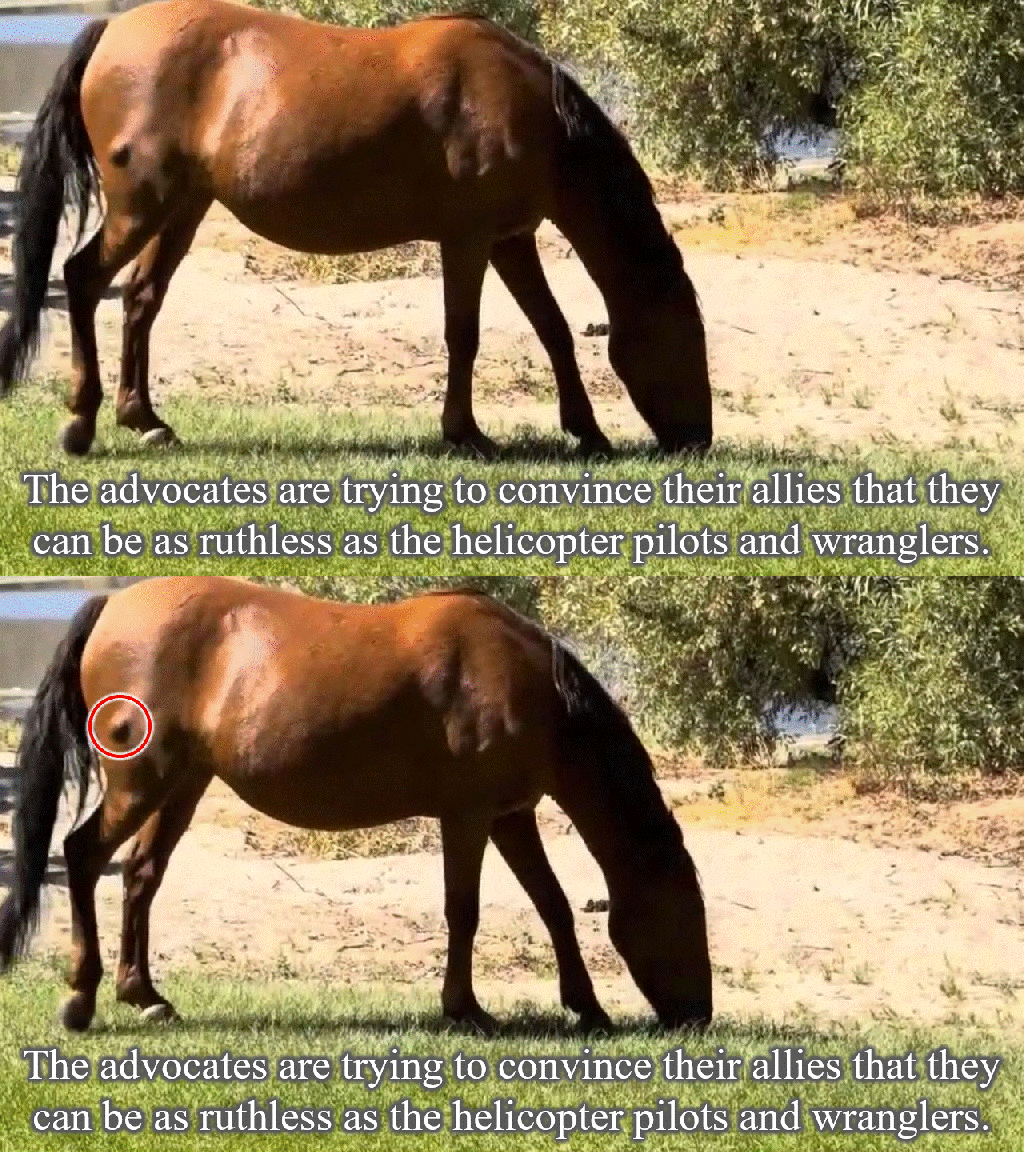
The advocates ratify and reinforce the narrative with their darting programs.
If the allotment was an HMA, the AML would be 126 and 1,133 wild horses would be consigned to off-range holding because of permitted grazing.
The area would be held to a small fraction of carrying capacity to accommodate large numbers of livestock, placed there by high-net-worth individuals who pay almost nothing for the resources they consume and the services rendered on their behalf by the government.
Wild horses can be placed on public lands not identified for their use by acquiring base properties associated with grazing allotments and flipping the preference to horses.
If the land can only support 0.6 wild horses per thousand acres and the bureaucrats pack it with livestock equivalent to 4.3 wild horses per thousand acres, then rangeland degradation must be a goal, not an unintended consequence of permitted grazing.
Another possibility is that your faithful public servants are lying about the carrying capacity of public lands.
His channel documents, perhaps unwittingly, the mass sterilization program inflicted on the herd by the Campaign Against America’s Wild Horses at the behest of the Nevada Department of Agriculture.
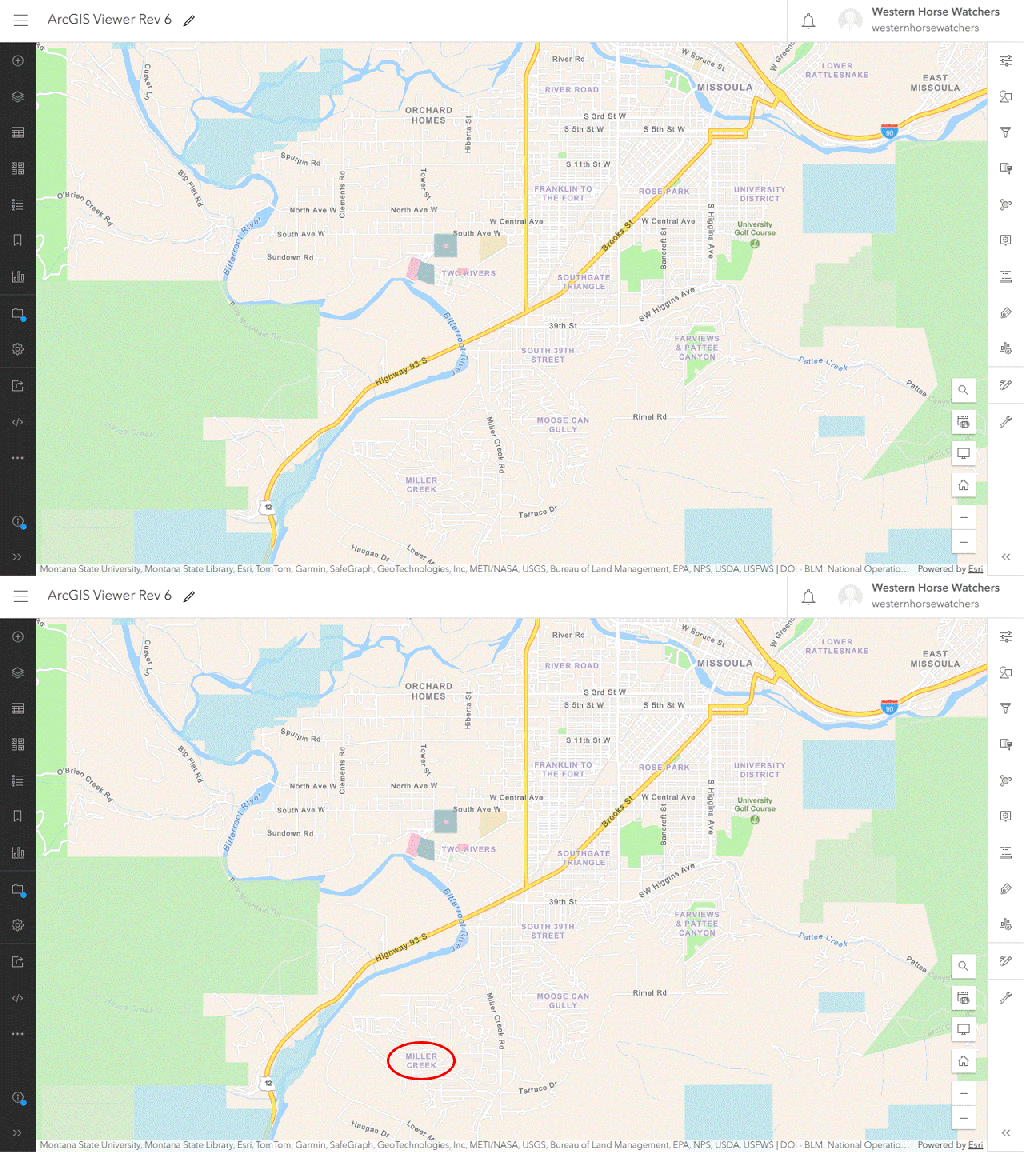
It’s not clear if any state agency has the authority to manage wild horses in Montana, but Missoula County officials plan to bring together experts in land and livestock management, ecology and law enforcement to explore potential options for managing the herd and provide staff with recommendations.
A story by KPAX News said the situation is unique, as the animals roam freely in neighborhoods and parks, which may be true for Montana but not Nevada.
The Virginia Range, where residents have front-row seats to the largest attempted eradication of wild horses, is one example.