At the Heber WHT with AZ Places Camping.
► Get the truth about wild horses and the wild horse advocates at westernhorsewatchers.com.

Western Horse Watchers Association
Exposing the Hypocrisy, Lies and Incompetence of the Wild Horse Advocates
On the range
At the Heber WHT with AZ Places Camping.
► Get the truth about wild horses and the wild horse advocates at westernhorsewatchers.com.
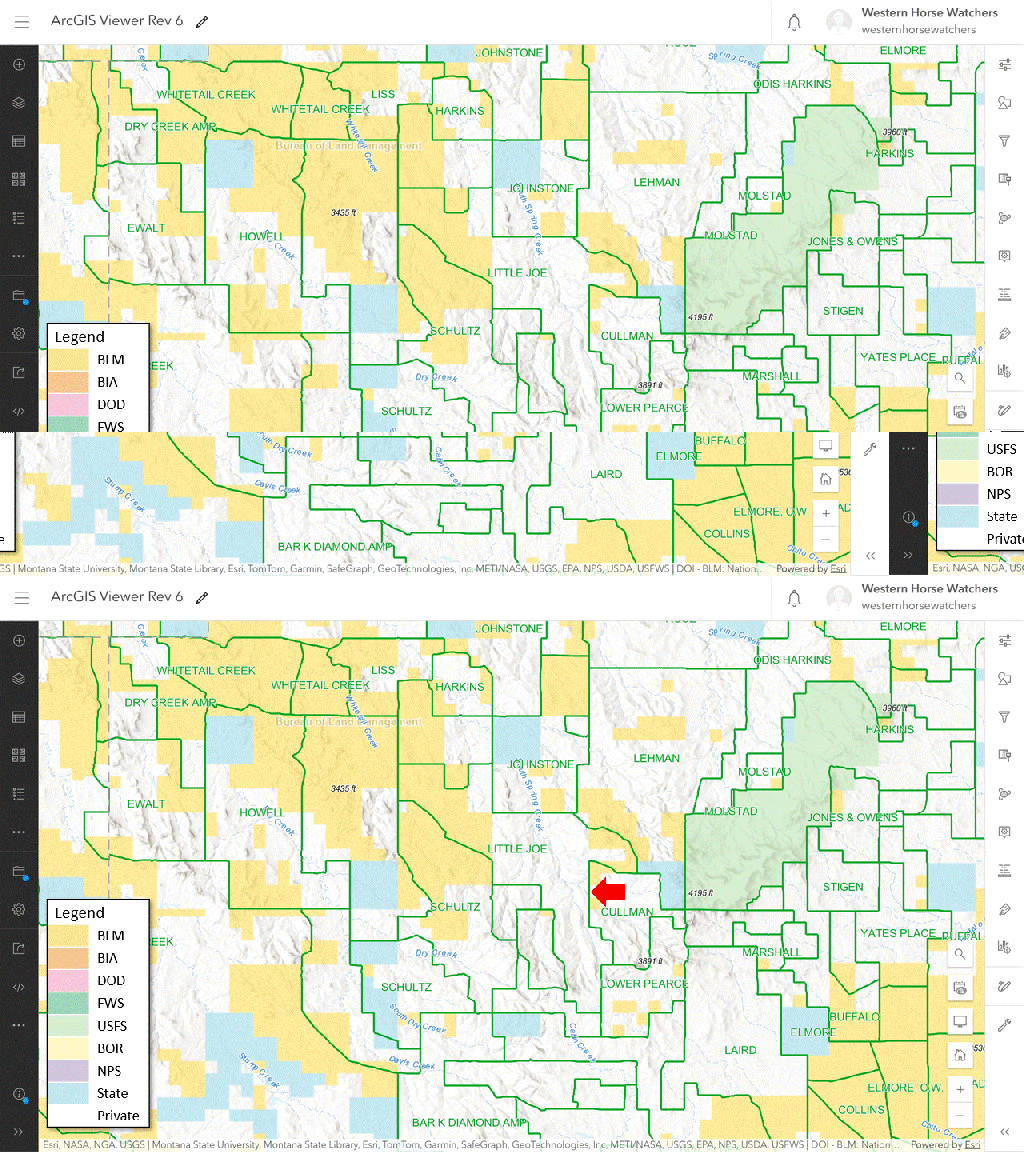
The project would combine the Blair and Stange allotments into the Little Joe allotment.
The ArcGIS Viewer shows the outline for Little Joe but not Blair and Stange.
Blair offers 61 active AUMs on 246 public acres according to the allotment master report, equivalent to 20.7 wild horses per thousand public acres.
Stange offers 360 active AUMs on 1,285 public acres, equivalent to 23.3 wild horses per thousand public acres.
Your faithful public servants claim that public lands in the western U.S. can only support one wild horse per thousand acres.
If resources on the deeded acreage were added to the mix, Little Joe would support livestock equivalent to 127 wild horses on 5,358 total acres, or 23.7 wild horses per thousand acres.
The deadline for submitting comments is January 5.
► Get the truth about wild horses and the wild horse advocates at westernhorsewatchers.com.
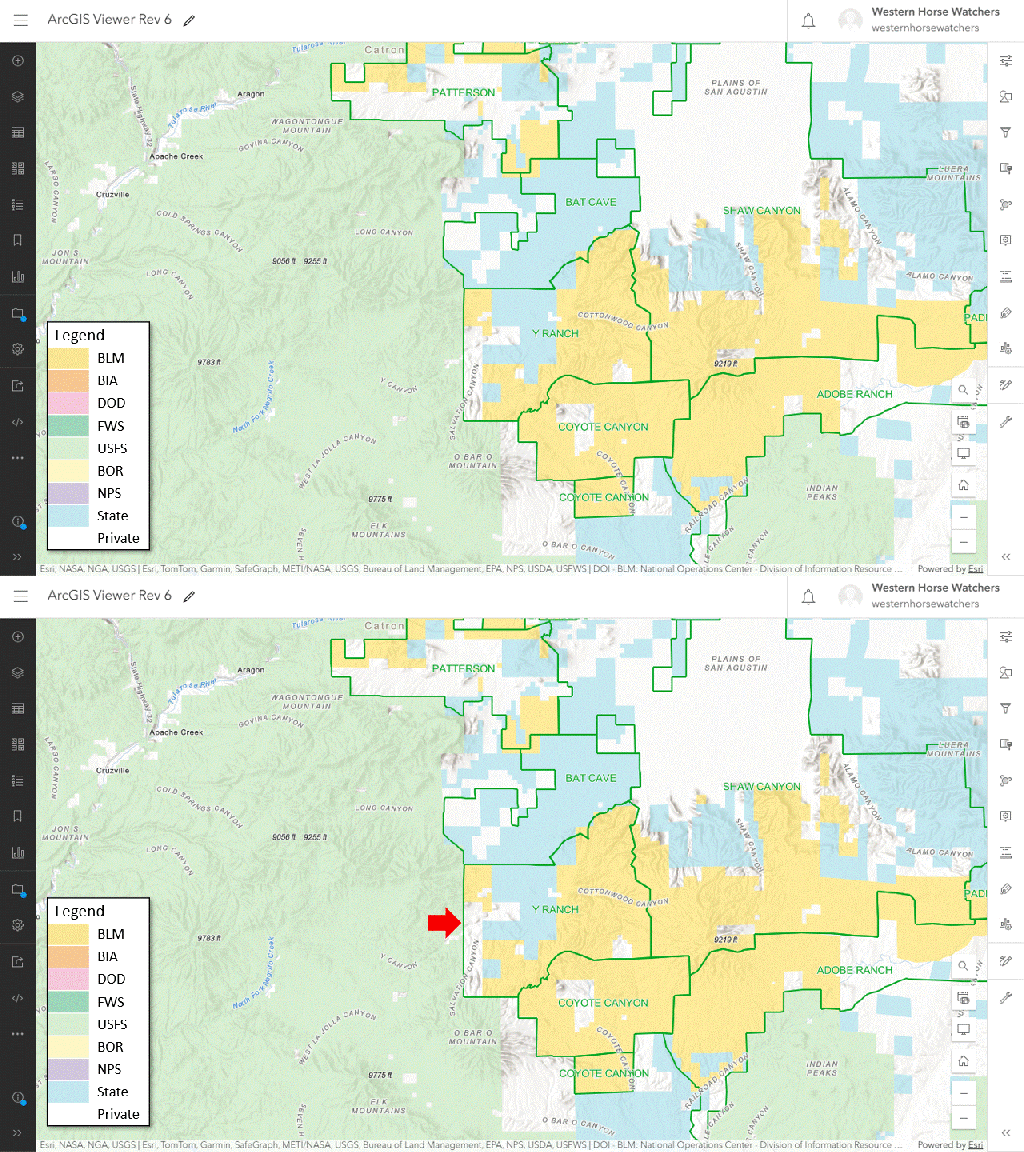
The allotment, due for permit renewal, offers 4,317 active AUMs on 26,099 public acres, equivalent to 360 wild horses or 13.8 wild horses per thousand public acres.
The grazing season is 12 months according to Table 1 of the CX.
The allotment master report puts it in the Improve category.
Your faithful public servants claim that public lands in the western U.S. can only support one wild horse per thousand acres, so it seems like a good deal.
There is one authorization tied to the allotment, so you’d only need to acquire or control one base property to secure all of the active AUMs.
The allotment includes 9,963 state acres, offering an additional 1,778 AUMs, but there is no assurance the resource would transfer to you—the new permittee.
The 1,960 private acres may correspond to some or all of the base property.
Proceed with caution.
RELATED: Key Indicators for New Wild Horse Preserves.
► Get the truth about wild horses and the wild horse advocates at westernhorsewatchers.com.
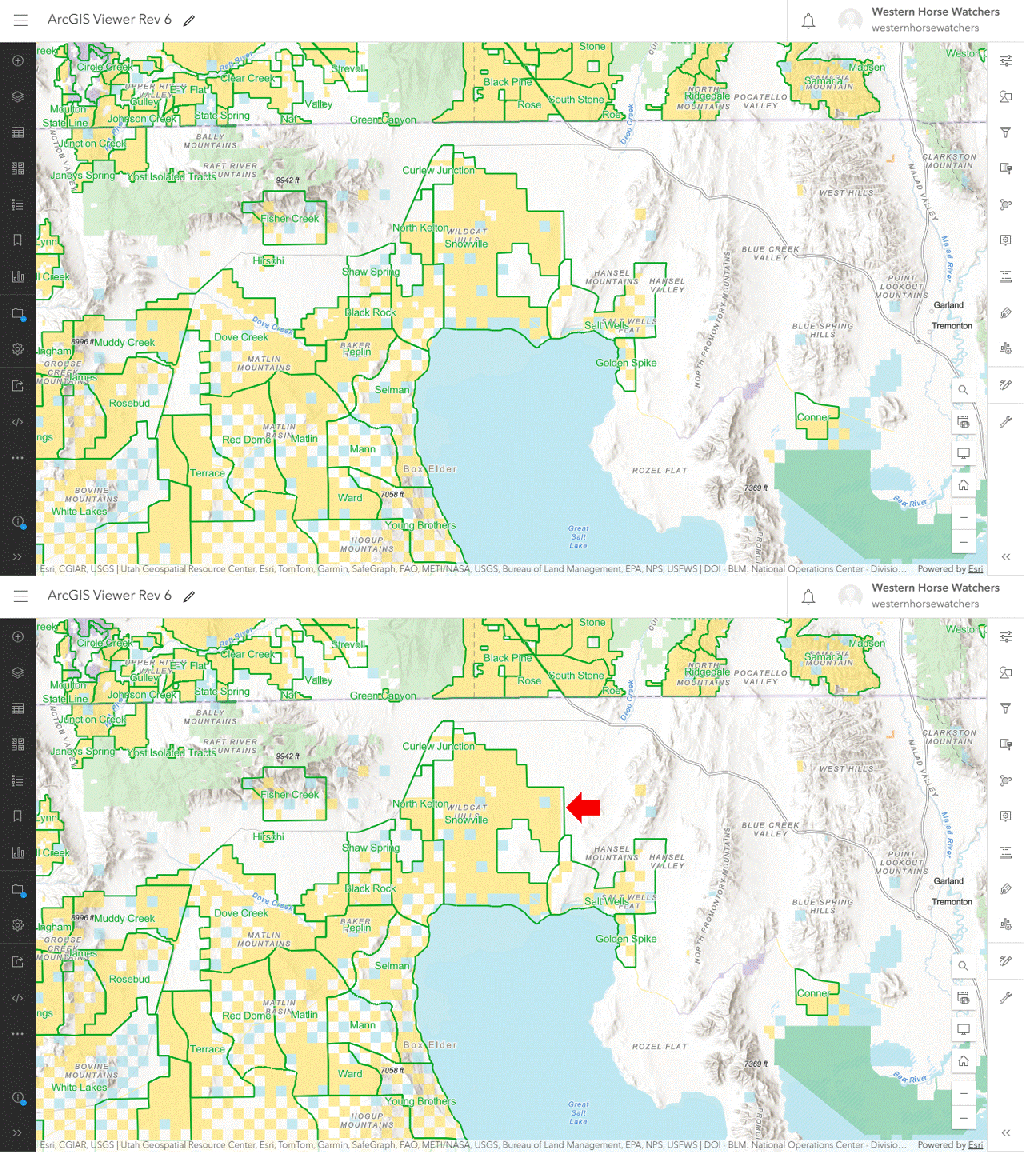
The allotment, at the north end of the Great Salt Lake, offers 7,707 active AUMs on 71,308 public acres, equivalent to 642 wild horses or nine wild horses per thousand public acres.
The allotment master report puts it in the Maintain category.
Your faithful public servants claim that public lands in the western U.S. can only support one wild horse per thousand acres, so it seems like a good deal.
But there are ten authorizations tied to the allotment, which means you may have to acquire ten base properties to secure all of the active AUMs.
Probably not a good idea.
RELATED: Key Indicators for New Wild Horse Preserves.
► Get the truth about wild horses and the wild horse advocates at westernhorsewatchers.com.
The herd grew by six between 2021 and 2024 according to data in the 2025 update to the Colorado Wild Horse Eradication Plan.
There were no new foals.
The mare population increased by five.
The number of treatable mares decreased by nine, accounting for just one third of the mares in 2024.
What’s the status of the other 29? Ruined by the advocates?
The breeding population does not meet the requirements of 4.4.6.3 in H-4700-1 and the outlook for genetic diversity is poor.
This is what the advocates are doing to your free-roaming horses with the blessing of your faithful public servants.
RELATED: Colorado Wild Horse Working Group Updates Eradication Plan.

► Get the truth about wild horses and the wild horse advocates at westernhorsewatchers.com.
They went off the reservation and displayed aggressive behavior toward domestic horses on private property according to the news release.
The CX indicates they were corralled by the landowner, who submitted a written request to the BLM to remove them.
The agency retrieved the horses and took them to corrals at Britton Springs.
The paperwork and NEPA review may have been completed after the fact.
► Get the truth about wild horses and the wild horse advocates at westernhorsewatchers.com.
At Paynes Prairie State Park with Lisa Mills.
► Get the truth about wild horses and the wild horse advocates at westernhorsewatchers.com.
As of November 21, there were 60,283 wild horses and 3,750 wild burros in off-range holding, liberating 745,896 AUMs per year for “other mandated uses” of public lands.
The advocates will point to the report, and costs associated therewith, as justification for their mass sterilization programs.
The populations at Axtell and Wheatland increased after the inmate training program at Cañon City was cancelled.
Allotments managed by the BLM carry livestock equivalent to one million wild horses.
► Get the truth about wild horses and the wild horse advocates at westernhorsewatchers.com.
The bill would limit public comments to citizens of the United States and establish a process to deter attempts at public involvement by artificial intelligence.
The measure received a favorable review on December 17 by the Senate Energy & Natural Resources Committee and now joins S1377 on the chamber floor.
RELATED: S1377 Passes Out of Committee on Voice Vote.
► Get the truth about wild horses and the wild horse advocates at westernhorsewatchers.com.
Duplicity rules the day in the wild horse world.
Publicly, the advocates celebrate the birth of filly or colt but privately they hold the animal in contempt because he’s an embarrassment in the face of their allies, a blot on their mass sterilization program and an impediment to their herd reduction goal.
Likewise, they want you to think they’re saddened by the death of a stallion or mare but privately they couldn’t be happier because it moves them a step closer to the goal.
They don’t care about the horses. They care about pesticides and putting the legacy contractors out of business.
They deserve your ire, not your support.
PREVIOUS: Foal-Free Friday, Magic Numbers Edition.

► Get the truth about wild horses and the wild horse advocates at westernhorsewatchers.com.
The environmental assessment looks at the effects of a proposed update to the Herd Management Area Plan and a new AML, according to the news release.
Other actions include removal of excess animals and implementation of fertility control.
The Proposed Action is discussed in section 2.2.
The pesticides of choice are GonaCon-Equine, ZonaStat-H and PZP-22.
The new AML, discussed in Appendix C, ranges from 140 to 250.
The current AML is 166 to 208.
The EA was copied to the project folder with other supporting documents.
The deadline to submit comments is January 21.
The HMA is managed for wild burros.
RELATED: BLM Updating Lake Pleasant Pest Control Plan?
► Get the truth about wild horses and the wild horse advocates at westernhorsewatchers.com.
The bill was item 5 on the agenda. There was one dissenting vote.
RELATED: Senate Committee to Consider S1377 This Week.
► Get the truth about wild horses and the wild horse advocates at westernhorsewatchers.com.
At the Pokegama HMA with Dancing Cranes Adventures.
Where are the youngsters?
► Get the truth about wild horses and the wild horse advocates at westernhorsewatchers.com.
The Committee on Energy & Natural Resources will meet on December 17 to consider pending legislation.
S1377 is item 5 on the agenda.
The announcement did not indicate if any votes would be taken.
RELATED: Senate Subcommittee Hears Testimony on S1377.
► Get the truth about wild horses and the wild horse advocates at westernhorsewatchers.com.
The park is in the Little Missouri National Grassland, a territory of the Dakota Prairie Grasslands, according to the map.
The horses live in the South Unit.
Now you know why the Campaign Against America’s Wild Horses, a leader in mass sterilization and servant of the public-lands ranchers, was eager to establish a beachhead in the area, which it did through Chasing Horses Wild Horse Advocates.
The Annual Operating Instructions for the allotments may provide data on forage availability, to assess the proposed stocking rate in the South Unit.
Unfortunately, the Forest Service did not post them to the Rangeland and Grazing page.
RELATED: How to Fix S1377.

► Get the truth about wild horses and the wild horse advocates at westernhorsewatchers.com.
Paragraph 5(b)(1) should direct the Secretary of the Interior to maintain a genetically diverse herd in the South Unit with a population of at least 150 horses untouched by fertility control pesticides.
Breeding, not mass sterilization, assures genetic diversity.
What about a provision for returning the original wild horses to the park?
The South Unit covers 46,158 acres according to park statistics.
The proposed stocking rate would be 3.2 wild horses per thousand acres.
Has anybody looked at forage supply to see if that’s feasible?
The land would need to produce 3.2 × 12 × 2 = 76.8 AUMs per year per thousand acres to support the herd, at 50% utilization (safety factor of two).
RELATED: TRNP Wild Horse Protection Act Cannot Achieve Stated Goals.
► Get the truth about wild horses and the wild horse advocates at westernhorsewatchers.com.
The breeding population in a wild horse herd should consist of at least 50 animals to maintain genetic diversity according to section 4.4.6.3 in H-4700-1.
This can be accomplished in populations ranging from 150 to 200 animals or more.
The advocates are telling their political allies that genetic diversity will be satisfactory if the herd contains at least 150 animals, evident in S1377.
This is a subtle but critical deviation from the recommendation.
The guideline applies to reproducing populations.
The advocates think reproduction is a defect of nature, to be cured with fertility control pesticides.
Breeding, not mass sterilization, assures genetic diversity, which disappears as they ruin the mares with their phony vaccines.
A herd of 500 would not be large enough.
Stay away from the advocates, they’re not who they say they are.
PREVIOUS: Foal-Free Friday, Humane Conservation Edition.
► Get the truth about wild horses and the wild horse advocates at westernhorsewatchers.com.
The wild horse habitat is now classified as a confirmed positive equine premise according to a December 9 sitrep.
The report did not identify any confirmed or presumptive positive bovine premises in the area.
RELATED: Salt River Stallion First Victim of Virus?

► Get the truth about wild horses and the wild horse advocates at westernhorsewatchers.com.
A minimum herd size of 150 wild horses, as specified in S1377, will not assure genetic diversity if the mares have been ruined or are in the process of being ruined by fertility control pesticides.
In a December 7 news flash distributed by Lucky Three Ranch, the Campaign Against America’s Wild Horses refers to Chasing Horses Wild Horse Advocates as a partner.
That is an albatross, the kiss of death for the nonprofit.
It means Kman is an acolyte of Roy, the queen of equine pesticides, and they’re probably drafting a proposal to destroy the breeding population with PZP.
Don’t give them a penny.
RELATED: Senate Subcommittee Hears Testimony on S1377.
► Get the truth about wild horses and the wild horse advocates at westernhorsewatchers.com.
Mike Caldwell, Associate Director of Park Planning, Facilities and Lands for the National Park Service, appeared before the National Park Subcommittee on December 9 to answer questions about the Theodore Roosevelt Wild Horse Protection Act.
His responses indicated support for the bill.
Was the dialogue scripted?
Not mentioned in the discussion were the original wild horses of TRNP, thought to be descendants of Sitting Bull’s ponies, and if they would be returned to the park.
RELATED: Legislation to Protect TRNP Wild Horses Introduced in Senate.
► Get the truth about wild horses and the wild horse advocates at westernhorsewatchers.com.

