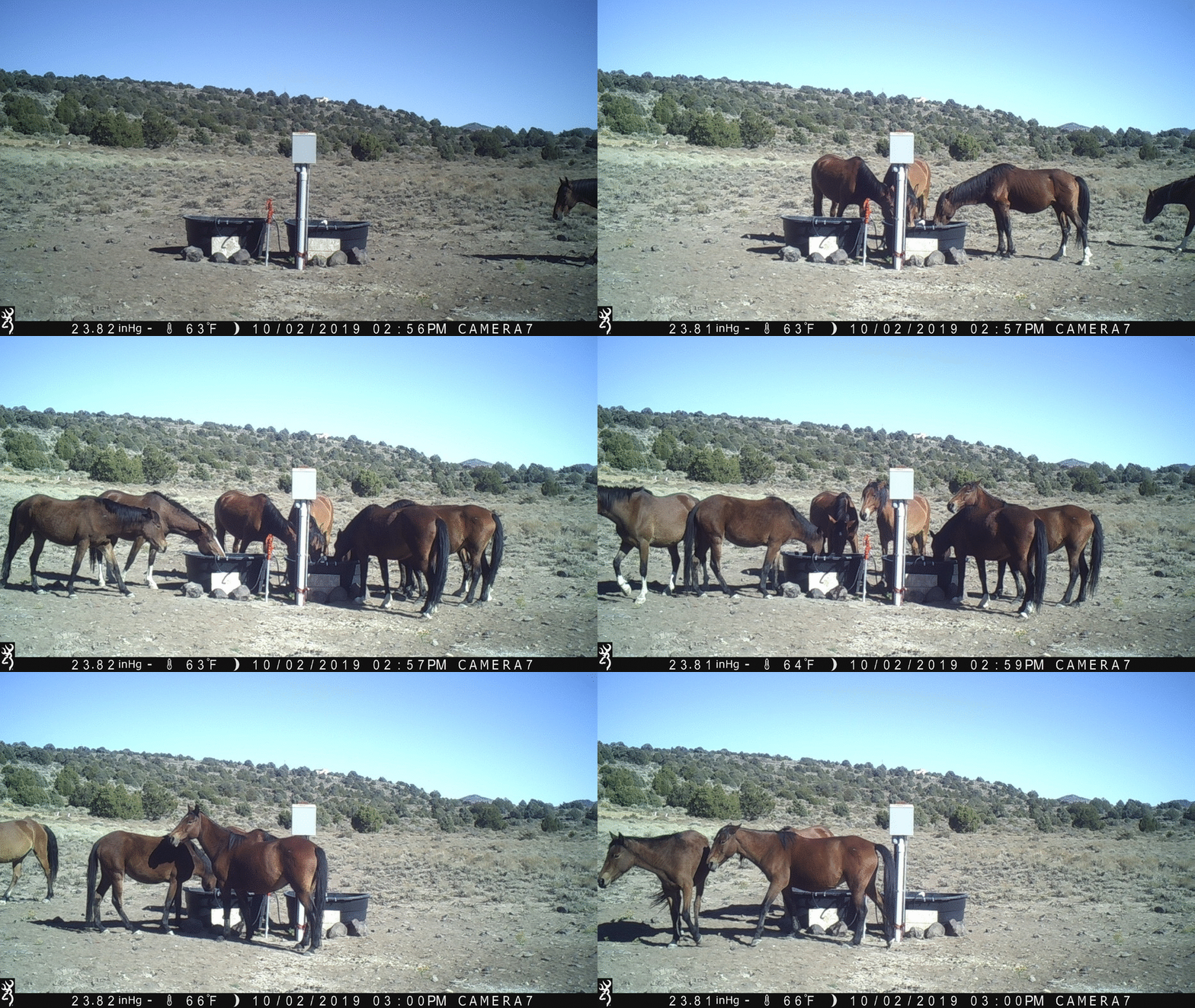
Some Virginia Range mustangs gather briefly at the water tanks on 10-02-19.

Western Horse Watchers Association
Exposing the Hypocrisy, Lies and Incompetence of the Wild Horse Advocates
On the range
Some Virginia Range mustangs gather briefly at the water tanks on 10-02-19.
The roundup ended 10-02-19, with 154 wild horses removed from the HMA. One death was reported and no horses were returned to their home range.
A filly was put down on 09-30-19 due to injuries sustained during the roundup.
Body condition scores were 4’s.
Captured animals were taken to an off-range facility in Axtell, UT.
RELATED: Range Creek Gather This Month.
On the Pine Nut Mountains Herd Area with Lauri Duke.
Some Virginia Range mustangs make a pit stop on 10-02-19.

The gather ended on September 30, with 690 excess burros removed from their home range. One death was reported (0.1%) and no animals were returned to the HMA.
A 20+ year old jack was put down due to a qualifying defect. Survivors were taken to the off-range corrals in Axtell, UT.
RELATED: Bullfrog Gather in Progress.
The operation concluded on October 12, with 100 excess horses and 176 excess burros removed from their home range. Four deaths occurred (1.4%), according to the daily reports, and no animals were released back to the HMAs.
One nine year old mare died of a broken neck and three other horses, older, were put down due to qualifying defects.
Helicopter roundups, prohibited by the original WHB Act, allow these operations to be carried out with brutal efficiency. The wranglers hired for the work refer to the on-range casualties as ‘capture shock.’
RELATED: Buffalo Hills / Granite Range Roundups Begin Next Week.
Scuffle at Sand Wash Basin HMA, by Susan Hutchinson. Bachelors?
UPDATE: How many people will look at this and say “OMG they’re going to kill each other!” Nonsense. The wild horse hate groups know most people don’t understand horses and use imagery like this to gin up support for their removal from public lands in the western U.S. The opening scene in Horse Rich & Dirt Poor is one example.
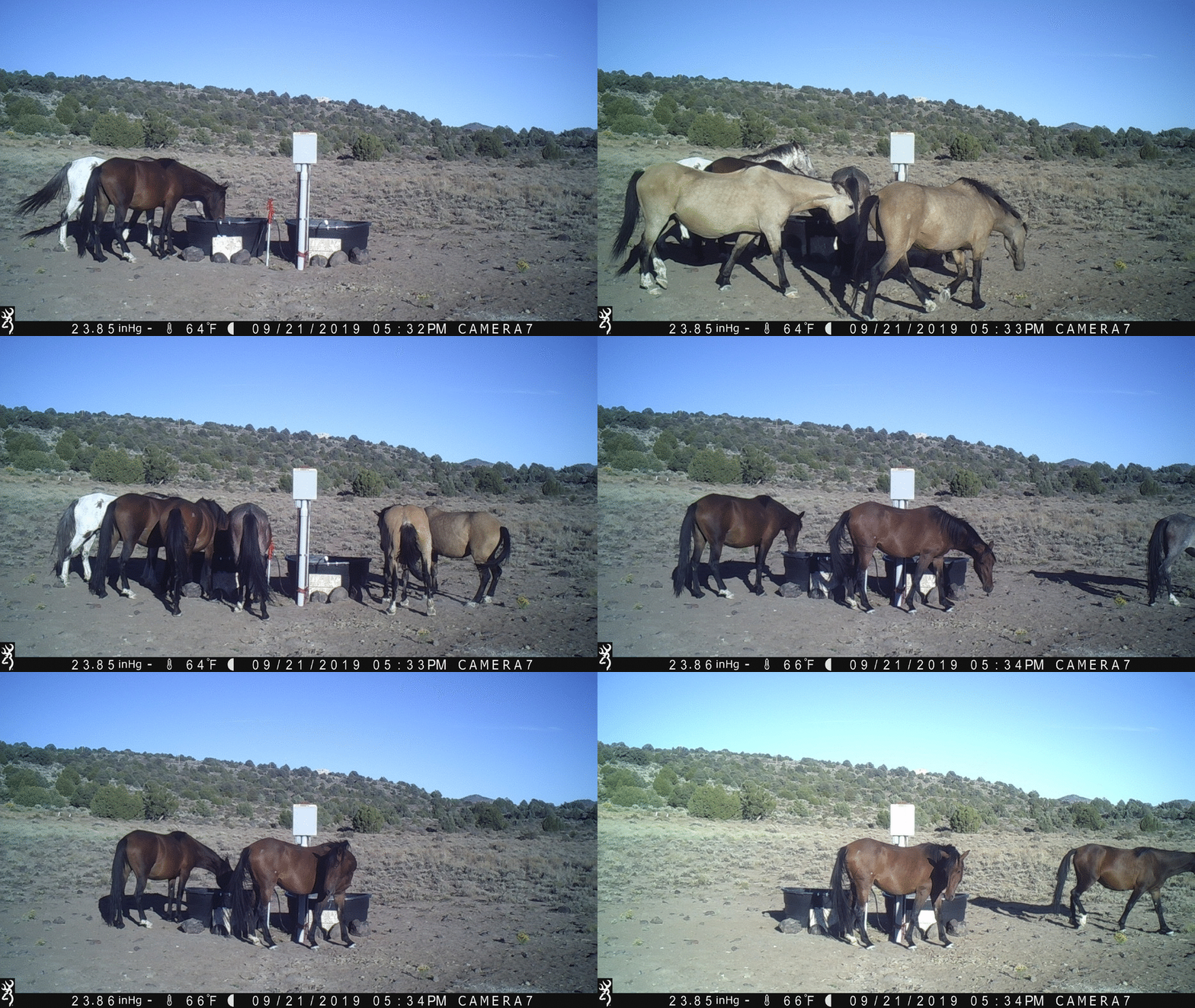
Trailcam photos of some Virginia Range mustangs coming in for a drink of 09-21-19.
Privately owned livestock on a 475,000 acre parcel set aside for wild horses receive eight times as much forage as the horses. The AML represents 11% of the capacity of the land.
(a) Should the next roundup be carried out with helicopters or bait traps?
(b) How many of the mares should be darted with contraceptives?
(c) What percentage of the herd should be shipped off to private sanctuaries?
If you tried to answer those questions, you’re part of the problem. If you said “This is nuts!” you’re part of the solution.
This film will be screened next week at the Nevada Museum of Art, according to a story posted yesterday by Carson Now. A panel discussion involving land managers, wildlife scientists and wild horse advocates will follow.
Wild horses and burros have lost around 40% of the land that was set aside for them by the WHB Act of 1971. The Act has been amended several times by ranching interests and no longer affords the protections sought by Velma. The roundups and off-range holding facilities seen in the video reflect that reality.
The White Mountain Independent of Show Low, AZ is reporting that a nineteen year old man has been taken into custody in connection with the shooting of two ranch horses near the Heber WHT.
Additional arrests are possible, according to the report.
A relationship to the Heber wild horse shootings has not been established and the investigation of that case is still in progress.
RELATED: Ranch Horses Found Dead Near Heber WHT.
UPDATE: Added video.
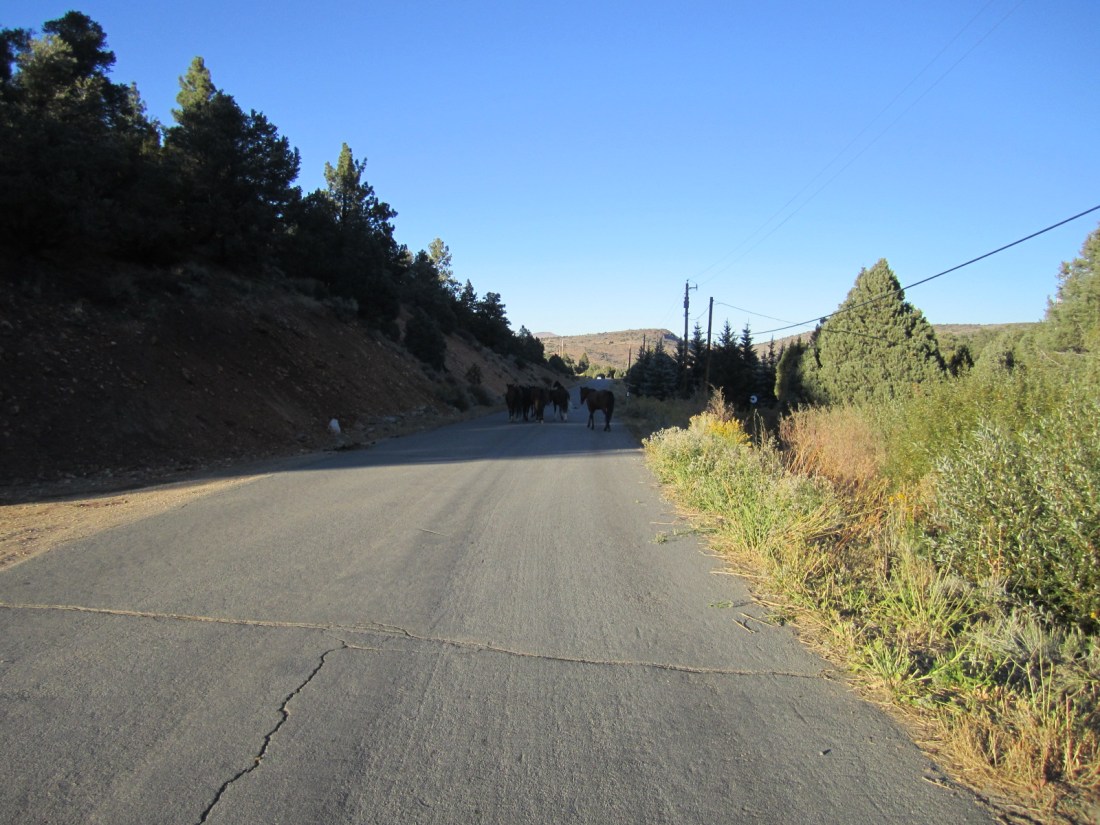
Be careful going around curves near sunset, the shadows may conceal wild horses.
Return to Freedom said in a news release yesterday that additional funds have been pledged for information leading to the arrest and conviction of the person(s) responsible for the shooting deaths of the Clark Mountain burros, bringing the reward to $100,500.
The latest pledge was made by the Roy Dunlap Spay & Neuter Foundation for $32,000.
The remains of 42 wild burros had been found on the Herd Area when the story broke in August, but since then four more dead animals have been discovered (not new, missed in the original count).
RELATED: Did the Clark Mountain Reward Yield Any Useful Information?
BLM said today that two new members were appointed to the national Wild Horse and Burro Advisory Board, in the areas of wildlife management and humane advocacy, and a third person was reappointed to a position representing livestock management.
Refer to the news release for biographical details.
The group will meet in Washington, DC later this month.
RELATED: Nominations Sought for WHBAB.
The compartments under the tables may keep food away from the horses but there’s not much room for your feet. Refer to this story by WBOC News of Salisbury, MD.
UPDATE: See also this news release from NPS.
Consider these data from Warm Springs HMA in southeast Oregon:

What can you infer from these figures, omitting the portion for wildlife?
You don’t have a horse problem at Warm Springs HMA, you have a ranching problem.
RELATED: Warm Springs Horses Get Short End of Stick.

The gather ended on 09-19-19, according to the daily reports, with 241 excess horses removed from their home range. Two deaths were reported (0.8%) and no animals were returned to the HMA.
Most of the body condition scores were fours and fives, not exactly what you’d expect for a herd that’s overpopulated. A more plausible explanation is that they were robbing too much forage from the public-lands ranchers—on territory set aside for them.
RELATED: Onaqui Mountain Gather Starts on 9/11.

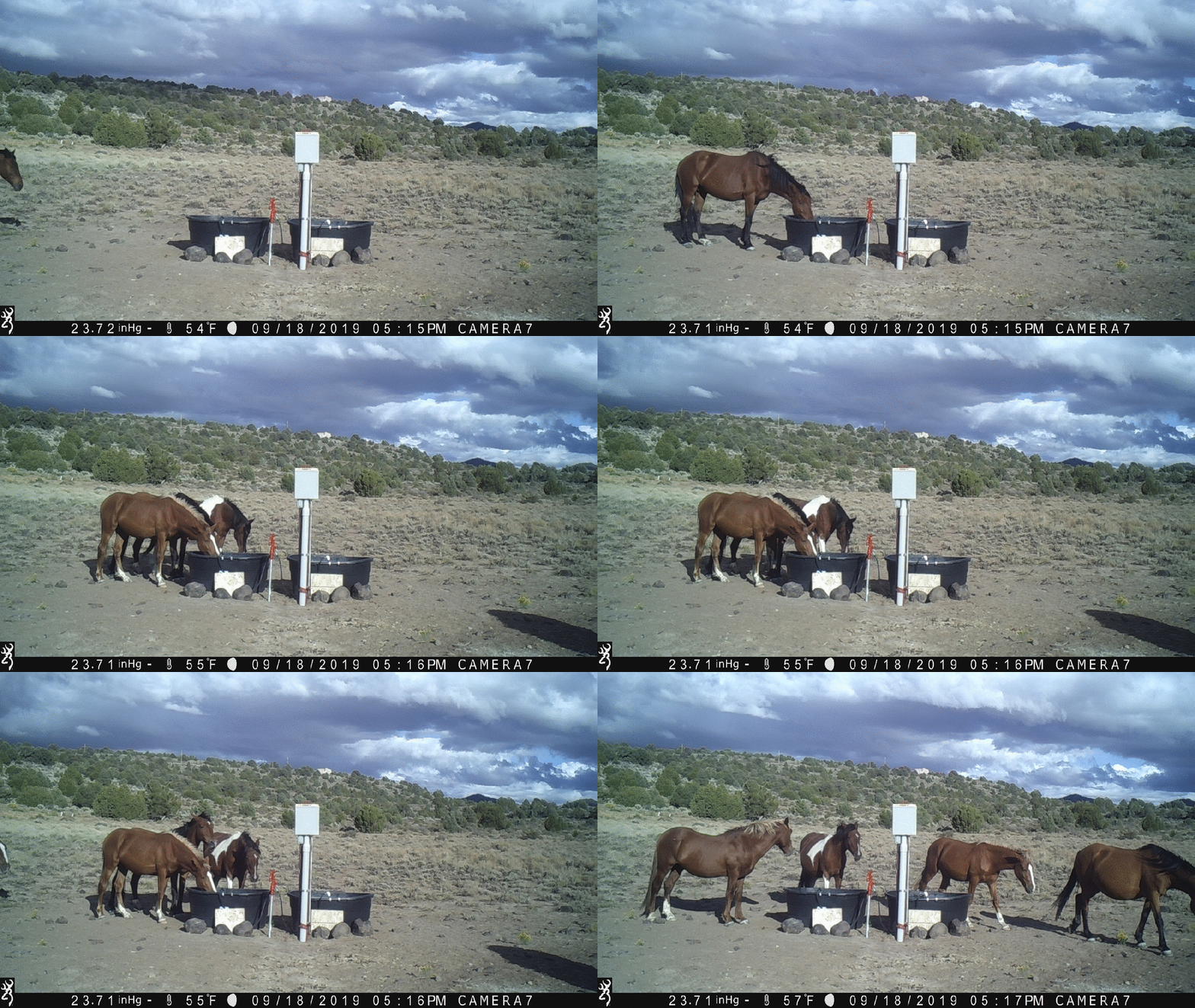
No, not the rock stars in your neighbor’s garage, your friendly neighborhood mustangs.
The Animal Welfare Institute said today in a news release that 77% of Americans oppose sterilization experiments on wild horses by the BLM.
However, the disclaimer at the end of the announcement said the poll was not based on a probability sample, taken to mean that the persons responding were not selected at random from the population to which the inference was drawn.
What the study did establish is that 77% of 2,027 U.S. adults who responded to the survey oppose the BLM’s sterilization research.

