If Wild Horses Had Principal Use of Horse Creek

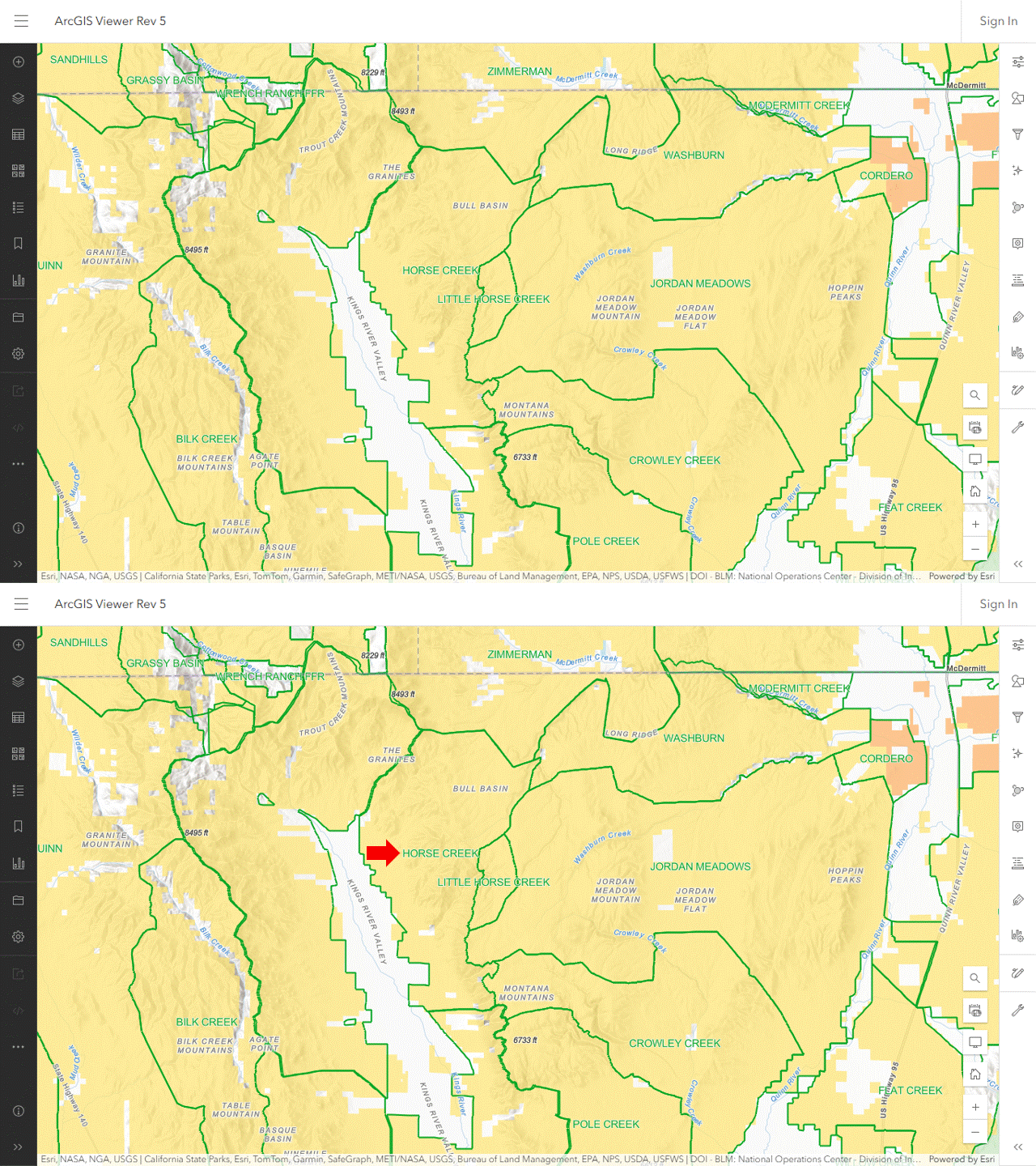
The allotment, site of a spring exclosure project north of Winnemucca, NV, offers 3,600 active AUMs on 38,859 public acres according to the Allotment Master Report.

It’s in the Improve category, one or more standards for rangeland health not met.

The management plan assigns no forage to wild horses.

How many could live there?

The forage assigned to livestock is equivalent to 300 wild horses, or 7.7 per thousand public acres.

Why is this important?

Your faithful public servants claim that rangelands in the western U.S. can only support one wild horse per thousand acres (25,500 animals on 25.6 million acres).

The advocates, defeated a long time ago, prop up the fairy tale with their darting programs.

If the allotment was an HMA, the AML would be 39 and 261 wild horses would be consigned to off-range holding because of permitted grazing.

BLM allotments in Nevada support livestock equivalent to 173,144 wild horses on 40,194,360 public acres, or 4.3 wild horses per thousand public acres.

Wild horses can be placed on public lands not identified for their use by acquiring base properties associated with grazing allotments and flipping the preference to horses.

RELATED: The Allotments Tell the Story: They’re Lying, All of Them.
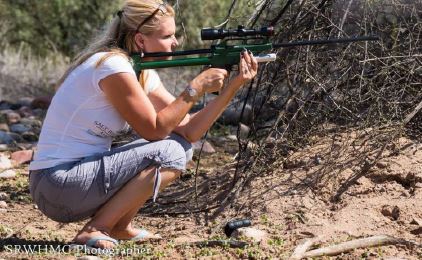
Acolyte Praises Salt River Wild Horse Darting Group

They have been doing a great job of managing the horses according to the writer of a letter to Tuscon dot com.

They administer birth control and provide water troughs and feeding programs at no cost to the government.

Much to her dismay, the Forest Service wants to reduce the herd to 100 or 150 horses, which is the next stop on the tour.

Environmental groups that want it cut to 50 or less will get their wish.

Those who want it wiped out altogether will be gratified.

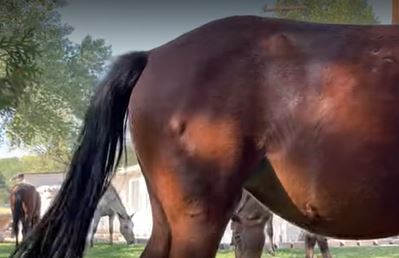
There is no need to continue the charade.  Most of the mares have been ruined by the advocates, which the writer ignores.

Other characteristics omitted from the letter:

  • Injuries and infections
  • Elevated death rate
  • Abnormal sex ratio
  • Loss of genetic diversity
  • Selection for faulty immune systems

The writer wants you to send letters to the governor and other officials to keep the herd in the Tonto National Forest even though her buddies are doing the opposite.

RELATED: Salt River Advocates Achieve Nine Percent Death Rate.

Salt River Advocates Achieve Nine Percent Death Rate

The death rate in wild horse herds typically ranges from five to six percent per year.

But the Salt River advocates have exceeded that by 50%!

Data from report by KPHO News:

  • Initial population: 460
  • Current population: 260
  • Duration of darting program: 6 years

460(1 – .09)6 = 261

The average age of the herd is increasing because few if any new foals are hitting the ground, which should increase the death rate, but not by this much.

Are they spiking the PZP with some other toxin?

RELATED: Remember This Roundup?

State Not Happy with Salt River Sterilization Program?

The contract with the Salt River Wild Horse Darting Group expires in May and the new agreement states that for every horse born, three other horses must be removed or adopted out according to a report by KPHO News.

SRWHDG ringleader Simone Netherlands said “We want every horse born on the Salt River to be able to live out their lives on the river” but that doesn’t happen very often thanks to her and her band of merrymen.

Mares that do bear fruit probably have faulty immune systems and the advocates rely on predators to fix those uh-ohs.

Other benefits of PZP darting programs, besides shrinking herds, include abnormal sex ratios, injuries and infections, tiny breeding populations and loss of genetic diversity.

But the crème de la crème, which the advocates deny, is mass sterilization and the Arizona Department of Agriculture apparently doesn’t understand that.

The herd has likely reached the tipping point and will continue to decline, contract or no contract.

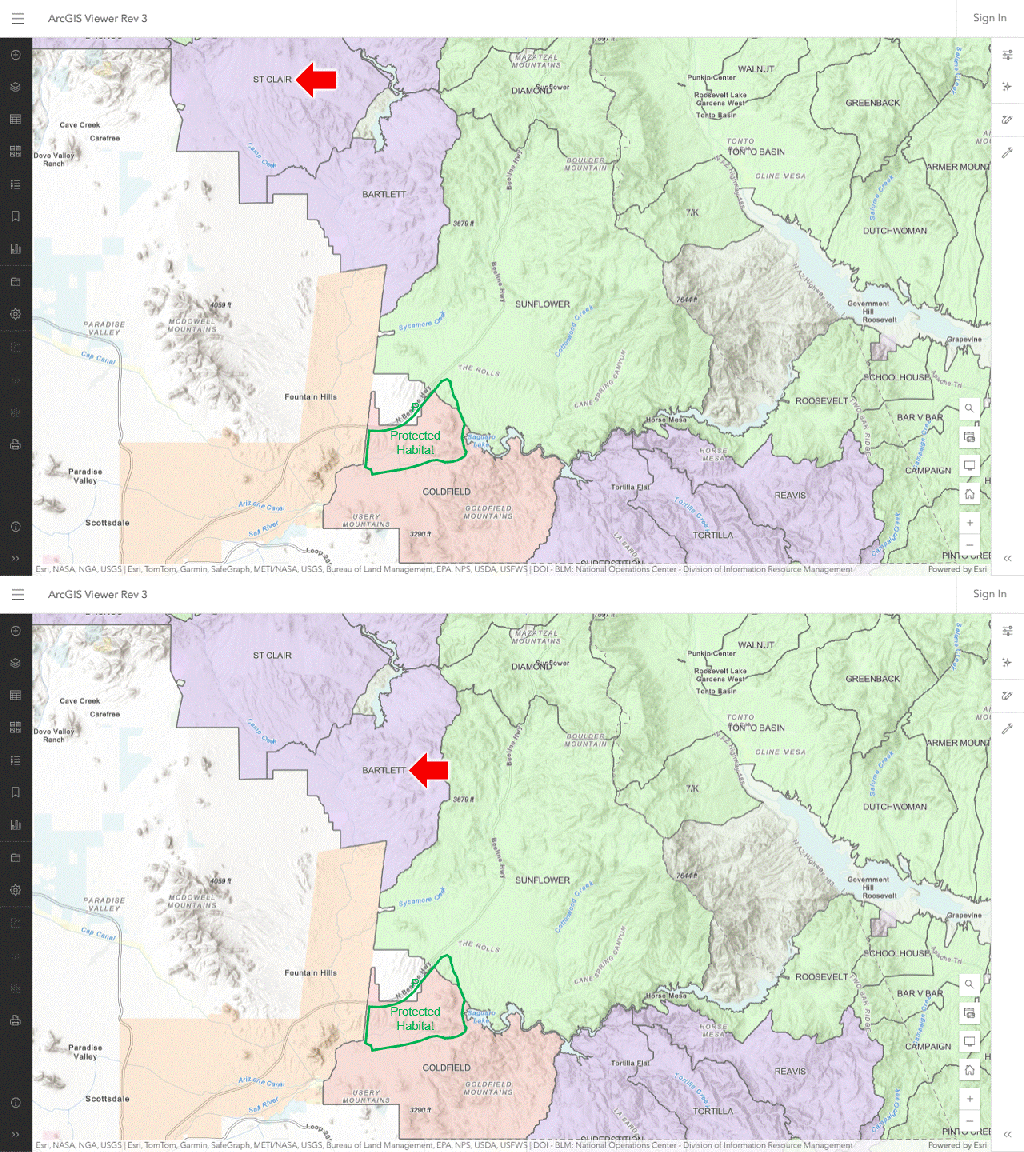
A better option would be to acquire land that meets the requirements of a base property, attach it to one or more vacant allotments in the Tonto National Forest, such as Bartlett or St. Clair, and move the horses from the contested area into a much larger home.

RELATED: Leadership Needed at Salt River.

Rawlins Base Property Available for $15 Million

Here’s your chance to place wild horses in the Wyoming checkerboard!

Haystack River Ranch covers over 92,000 acres, including 25,000 deeded acres, 41,000 BLM acres, a private lease of 23,500 acres and a state lease according to the listing.

The land produces over 9,000 AUMs (per year), equivalent to 750 wild horses.

The overall stocking rate would be 8.1 wild horses per thousand acres.

Your faithful public servants claim that public lands in the western U.S. can only support one wild horse per thousand acres (25,500 animals on 25.6 million acres).

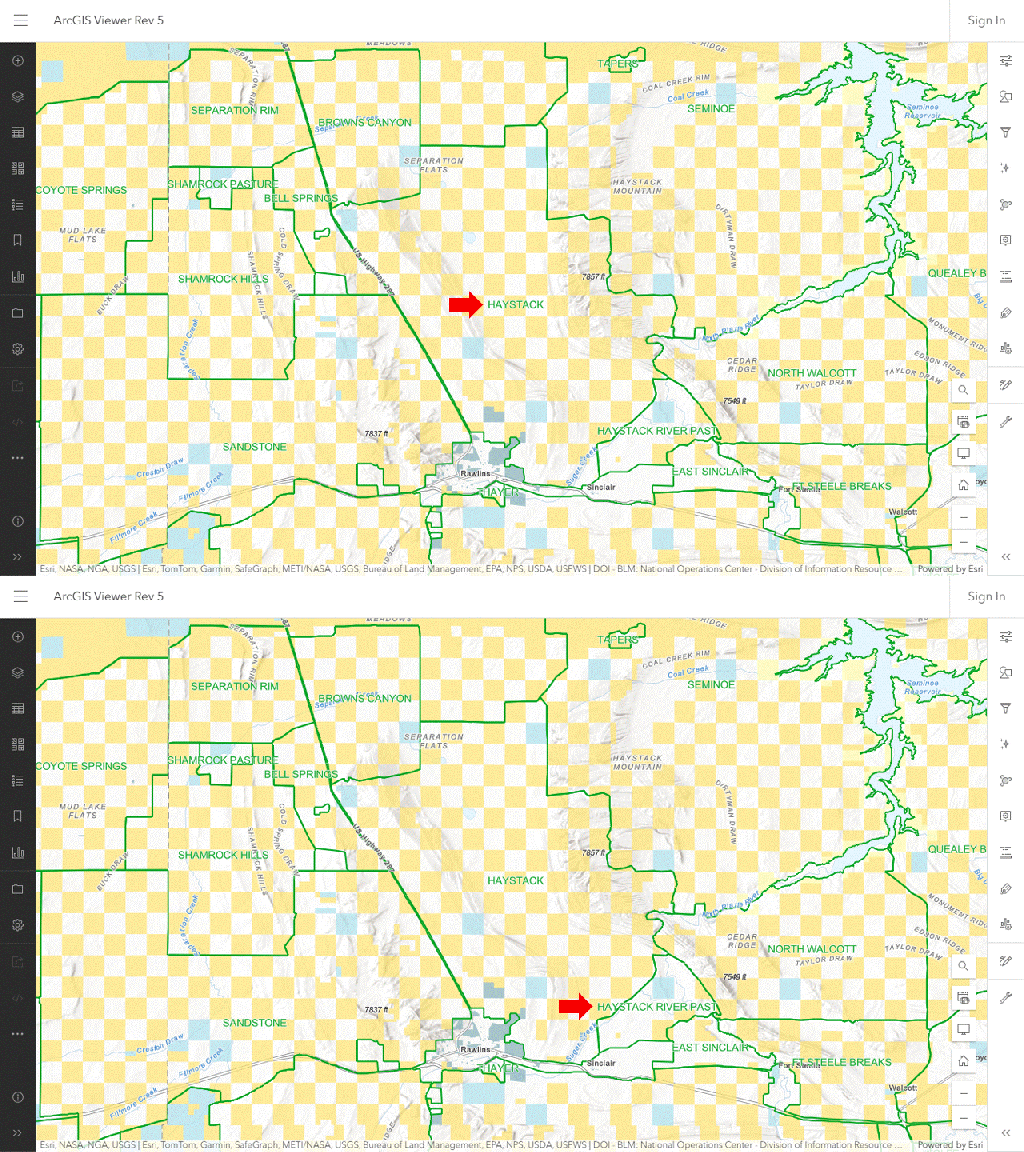
The agent’s map puts the deeded acreage, shown in white, on the east side of the ranch and the private lease on the west.

BLM parcels of approximately 640 acres each, shown in yellow, appear on both sides.

The property description says the leased acreage, also shown in white, belongs to Anadarko, which may correspond to Orion Mine Finance today.

The ranch meets three out of four requirements for a wild horse refuge.

Following successful negotiations with the parties involved, wild horses would be able to roam freely on public and private lands as cattle do today.

The ArcGIS Viewer identifies the overlapping allotments as Haystack and Haystack River Pasture.

The Allotment Master Report puts Haystack in the Maintain category and Haystack River in Custodial, condition unknown.

Wild horses can be placed on public lands not identified for their use by acquiring base properties tied to grazing allotments and flipping the preference to horses.

RELATED: Key Indicators for New Wild Horse Preserves.

Maybell Base Property Available for $8 Million

Juniper Mountain Ranch covers approximately 5,900 deeded acres southeast of Maybell, CO, with grazing preference on 5,800 BLM acres and 640 state acres according to the agent’s listing.

The deeded acreage lies within the allotment boundary.

The BLM allotment offers 800 active AUMs, equivalent to 66 wild horses or 11.4 wild horses per thousand public acres.

Your faithful public servants claim that public lands in the western U.S. can only support one wild horse per thousand acres (25,500 animals on 25.6 million acres).

If the deeded acreage offers the same level of forage as the public acreage, the ranch should be able to support around 130 wild horses.

The property meets three out of four requirements for refuges.

Wild horses can be placed on public lands not identified for their use by acquiring base properties tied to grazing allotments and flipping the preference to horses.

NEPA reviews would likely be required.

RELATED: Key Indicators for New Wild Horse Preserves.

Montana Allotment Split Reveals Abundant Forage

The project description says the Decker Unit Allotment will contain 626 acres of public domain and 137 public AUMs, while the South Crosby Unit Place Allotment will contain 80 acres of public domain and 24 public AUMs.

That works out to 219 AUMs per thousand public acres in Decker, equivalent to 18 wild horses per thousand public acres, and 300 AUMs per thousand public acres in Crosby, equivalent to 25 wild horses per thousand public acres.

The state offers some of the finest grazing land in the American West, apparently.

Your faithful public servants claim that western rangelands can only support one wild horse per thousand acres (25,500 animals on 25.6 million acres).

RELATED: How Many Wild Horses Can Public Lands Really Support?

If Wild Horses Had Principal Use of Easter

The tiny allotment, consisting of several parcels north of McAllister, MT, offers 137 active AUMs on 1.012 public acres according to the allotment master report.

It’s in the Custodial category, condition unknown.

The management plan assigns zero AUMs to wild horses.

How many could live there?

The forage assigned to livestock is equivalent to 11 wild horses, or 10.9 per thousand public acres.

Why is this important?

Your faithful public servants claim that rangelands in the western U.S. can only support one wild horse per thousand acres (25,500 animals on 25.6 million acres).

The advocates bolster the narrative with their darting programs.

The allotment is too small and too fragmented to be an HMA (or refuge), but if it was, the AML would be 1 and 10 wild horses would be consigned to off-range holding because of permitted grazing.

BLM allotments in Montana support livestock equivalent to 112,120 wild horses on 7,991,479 public acres, or 14.0 wild horses per thousand public acres.

Wild horses can be placed on public lands not identified for their use by acquiring base properties associated with grazing allotments and flipping the preference to horses.

RELATED: The Allotments Tell the Story: They’re Lying, All of Them.