Assateague Sex Ratio Still Favors Mares

NPS said there were 22 males (29.3%) and 53 females (70.7%) on the Maryland side of the island in November, according to a story posted today by WMDT News of Salisbury.

The observed sex ratio of a wild horse herd will rarely be 50/50, but how far must it deviate from that value to indicate problems?

The answer must be found by calculation, using basic statistical formulas, where p-bar = .5 and n = 75.  The range of variation between males and females attributable to natural causes is therefore .327 (32.7%) to .673 (67.3%).

Assateague Census Nov 2019-1

The observed proportions fall outside those limits, so an explanation should be sought.

If the observed proportions fell inside the limits, there would be no clear indication of trouble and an investigation would be a waste of time.  The herd would be treated as if its sex ratio was 50/50, even though the observed value was, say, 38/62.

RELATED: Latest Assateague Census Shows No Improvement.

WHBAB Rubber-Stamps ‘Path Forward?’

At the end of the public comments in last week’s meeting of the WHBAB, the Chair admonished the Board about discussing the ill-conceived management plan for wild horses and burros:

“I want to make this perfectly clear that the BLM Wild Horse and Burro Advisory Board is not part of, has not and do not plan to discuss the Path Forward plan that had been mentioned so many times here.  It was not presented to the board.  It was not presented to BLM.  It was presented to Congress.  And it’s up to Congress to act on it, not this board.  And we will not talk about it.”

Yet the Board’s recommendations to the BLM are nearly identical to those in the plan, according to a story by United Press International.  The number of wild horses and burros on western rangelands must be drastically reduced, with more roundups, more adoptions and something new: Sterilization.

The population target stated in the report—26,715—does not represent the number of wild horses and burros the land can support—it’s not even close—but rather the forage loss the government and its ranching cronies are willing to tolerate.

Whenever you see references in an article to ‘humane management,’ ‘healthy horses’ and ‘healthy rangelands,’ you know you’re being lied to.

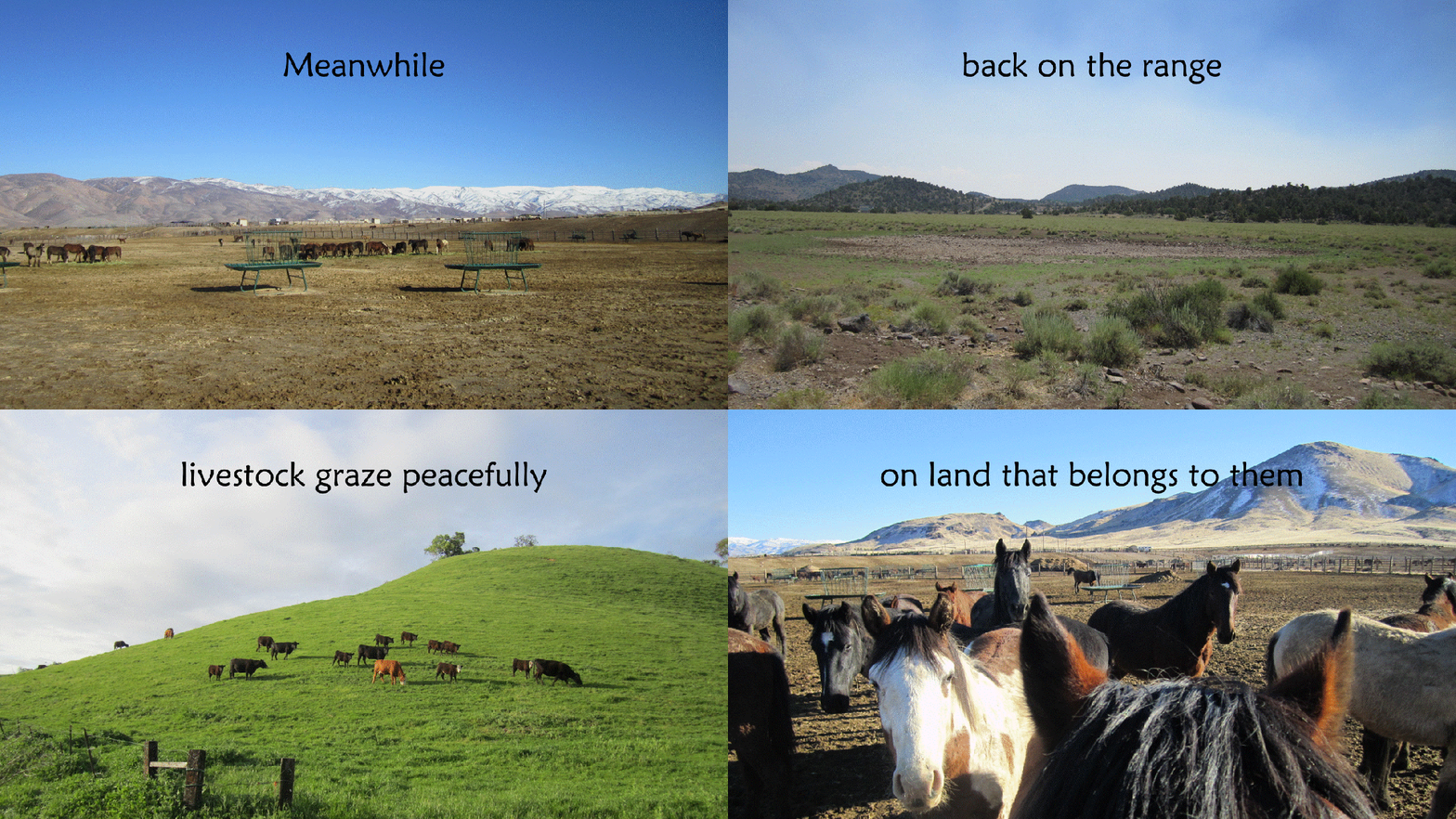
PSA_178-1

New WHBAB Member Says ‘Approach Must Change’

Refer to this story by the Daily Miner of Kingman, AZ.  If that means they’ll stop having conversations about wild horses and burros without having conversations about public-lands ranching, then it’s definitely a step in the right direction.

The newly appointed member, who serves in the area of humane advocacy, said there are 50,000 wild horses in federal care and another 88,000 on ranches, according to the report.

Don’t quit your day job, dear.

RELATED: WHBAB Open Positions Filled.

Seaman Range and White River Herds to Be Downsized

BLM said today that wild horses in and around the Seaman Range and White River Herd Areas—lands no longer designated for them—will be removed, starting next week.

The gathers will be carried out with helicopters and will be open to public observation, according to the news release.

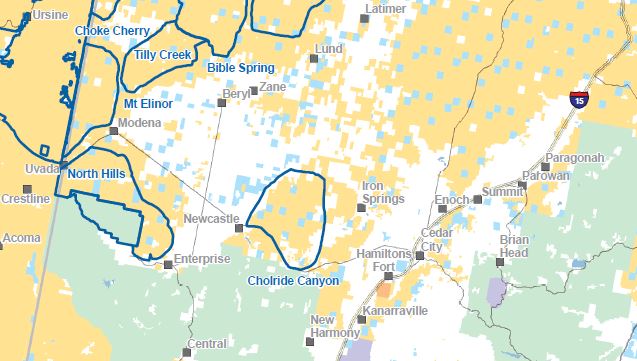
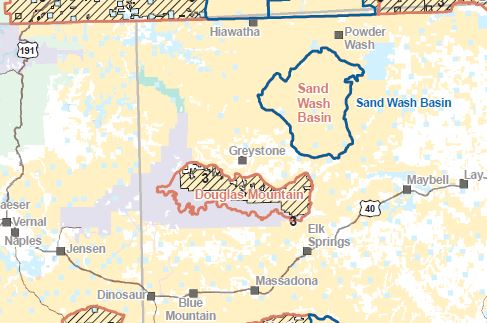
The two former HMAs contain about 475,100 acres in eastern Nevada, south of Ely.

The Golden Gate and Seaman Range HAs were combined in the 1980s and are referred to as the Seaman Range HA in the Final Environmental Assessment for the roundups.

Seaman Range White River HA Map-1

Captured animals will be taken to the off-range corrals in Ridgecrest, CA.

The two HAs have no AMLs and are not managed for wild horses, supposedly because they don’t have sufficient resources.  But the horses are there.

So are thousands of privately owned cattle and sheep.  Refer to Tables 2 and 3 in the EA.

The 31,000 AUMs per year offered to the public-lands ranchers would support 2,583 wild horses, but they are to be swept aside in favor of the crony capitalists.

Gather stats and daily reports will be posted to this page.

GIGO in the Wild Horse World

You can’t look at the numbers and then agree with the premise of this story, namely, that WHB populations are outpacing what the range can support—not when there are many more cow/calf pairs on the same land.

The Antelope Complex and Silver King HMA are just two examples (listed in the sidebar on the right under Short End of Stick).

What about policies and programs derived from a faulty premise?

Garbage in, garbage out.

Path Forward: Doing What’s Best for the Ranchers

Refer to this opinion piece in The Hill by a representative of the ASPCA, one of the signatories to the ill-conceived management plan for wild horses.

Forcing wild horses off their home range will ensure they’re not killed and sold for their meat—allowing ranchers to replace them with other animals that will be killed and sold for their meat.  Brilliant.

RELATED: The ‘Path Forward’ is Wrong.

Twin Peaks Herd to Be Thinned

BLM announced today that a Decision Record and Finding of No Significant Impact have been issued for the Twin Peaks HMA on the CA/NV border near Susanville.

The move clears the way for a wild horse roundup, but a date for that has not been set, according to the news release.

As of today, the gather does not appear on the preliminary schedule for FY 2020.

RELATED: BLM Invites Comments on Twin Peaks Gather Plan.

How to Convert AUMs to Cow/Calf Pairs and Vice Versa

How many cow/calf pairs are needed to graze off 3,226 AUMs in 4.5 months?  Easy, just divide the available forage (AUMs) by the grazing season (months):

Cow/calf pairs = AUMs ÷ Grazing season

If you don’t know the grazing season, assume it’s six months.

To compute the annual forage requirement for a given number of cow/calf pairs, just reverse the math:

AUMs = Cow/calf pairs × Grazing season

Although wild horses and cow/calf pairs are said to be equivalent in terms of their forage consumption, their AUM budgets differ because of their grazing seasons.

RELATED: How to Convert AMLs to AUMs and Vice Versa.

Challis Wild Horses to Experience ‘Thriving Ecological Balance’

Section 4.2.2 in the environmental assessment for the roundup states that 15,794 AUMs per year have been allocated to thirteen livestock operators on seven allotments within the HMA.  The EA also states in section 1.1 that the AML is 185 – 253 wild horses.

The roundup, which starts next week, will bring the HMA to the low end of the AML, meaning that:

  • Wild horses will receive 2,220 AUMs per year
  • Livestock will receive seven times as much forage as the horses
  • The HMA could support an additional 1,316 horses
  • The AML represents 12% of the capacity of the land

There’s not enough forage to sustain the pre-gather population of 429 wild horses (5,148 AUMs per year), but there’s three times that amount for domestic livestock.

RELATED: Challis Herd to Be Thinned Next Month.

Fifteenmile Roundup Ends, No News Release

The operation no longer appears on the list of ongoing gathers.  The daily reports stopped on 10-25-19, with 607 horses gathered from the HMA.  Eleven deaths occurred and 95 animals were returned to their home range.

All but twelve horses were gathered, according to a footnote, suggesting that returned mares were to be treated with contraceptives, but that was not indicated in the reports.

RELATED: Fifteenmile Roundup Begins Mid Month.

Outside the Box

Much of the conversation recently about wild horses revolves around the ‘Path Forward’ and the $35 million down payment on the plan approved by the Senate Appropriations Committee in September.

But a report posted yesterday by Horse Network offers a new approach (new if you haven’t been reading these pages): Get some of the livestock off the range.

Yep, somebody tried to distinguish between cause and effect.  Somebody asked why the problem occurs.

There are real reasons and stated reasons.  You have cut through the obfuscation and propaganda.

Public-lands ranching drives the roundups and warehousing of wild horses.

You can’t have two competing interests trying to occupy the same territory, especially when the other side wants you wiped off the map.

What do you want to see on western rangelands?  Privately owned cattle and sheep or free-roaming horses and burros?

RELATED: The ‘Path Forward’ is Wrong.

PSA_178-1