They are trying to develop it into a controlled-release formulation that induces long-lasting infertility with a single injection according to a March 3 news release.
Humane World for Animals, formerly the Humane Society of the United States, provided financial support for the research.
The BLM has funded a three-year project to test it on horses.
What’s the difference between long-term infertility and sterility?
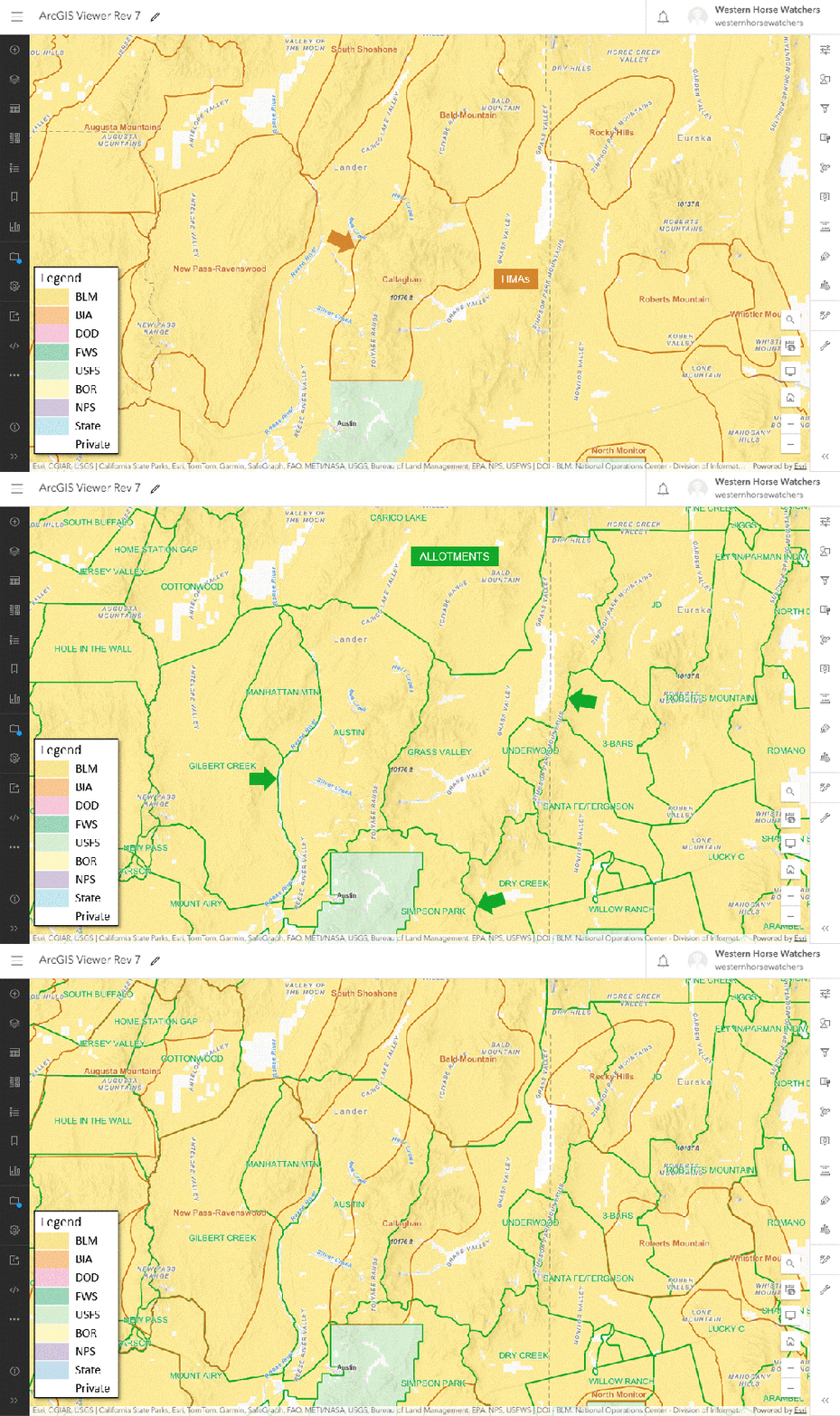
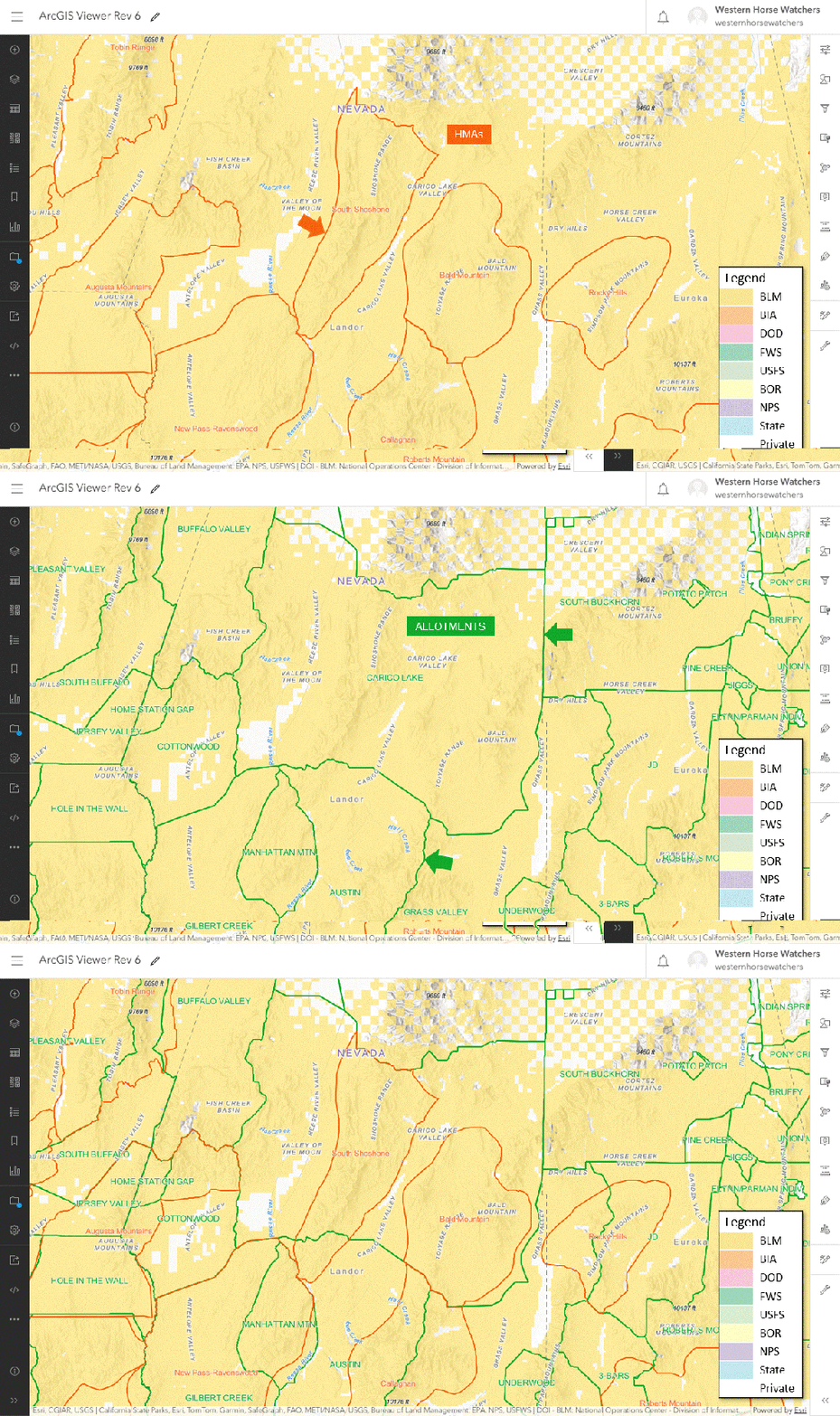
The HMA overlaps the Austin, Grass Valley and Simpson Park allotments, with 51% in Austin, 42% in Grass Valley and 7% in Simpson Park according to Table 5 of the Final EA for the Callaghan Complex.
The 237 wild horses allowed by plan require 2,844 AUMs per year.
Austin offers 14,478 active AUMs on 235,185 public acres, equivalent to 5.1 wild horses per thousand public acres.
Grass Valley offers 17,701 active AUMs on 267,201 public acres, equivalent to 5.5 wild horses per thousand public acres.
Simpson Park offers 3,406 active AUMs on 96,818 public acres, equivalent to 2.9 wild horses per thousand public acres.
These resources are present in the HMA, assuming they’re evenly distributed across the allotments, but they’ve been assigned to livestock.
To estimate the carrying capacity, shift them back to the horses. Forage assigned to wildlife stays with wildlife.
The HMA covers 152,726 public acres so the forage allocated to the Austin permittees inside the HMA should support 152,726 × .51 × 5.1 ÷ 1,000 = 397 wild horses.
The forage allocated to the Grass Valley ranchers should support 152,726 × .42 × 5.5 ÷ 1,000 = 353 wild horses.
The forage assigned to the Simpson Park ranchers should support 152,726 × .07 × 2.9 ÷ 1,000 = 31 wild horses.
The HMA should be able to sustain 237 + 397 + 353 + 31 = 1,018 wild horses (4X AML) if it was managed principally for them as specified in the original statute.
The new stocking rate would be 1,018 ÷ 152,726 × 1,000 = 6.7 wild horses per thousand public acres.
Your faithful public servants claim that public lands in the western U.S. can only support one wild horse per thousand acres.
Austin has more AUMs in the suspended column than active, while everything is active at Simpson Park.
The allotments would not make a good wild horse preserve because they overlap areas identified for wild horses and there is more than one authorization attached to each, so you’d have to acquire or control several base properties to access all of the AUMs.
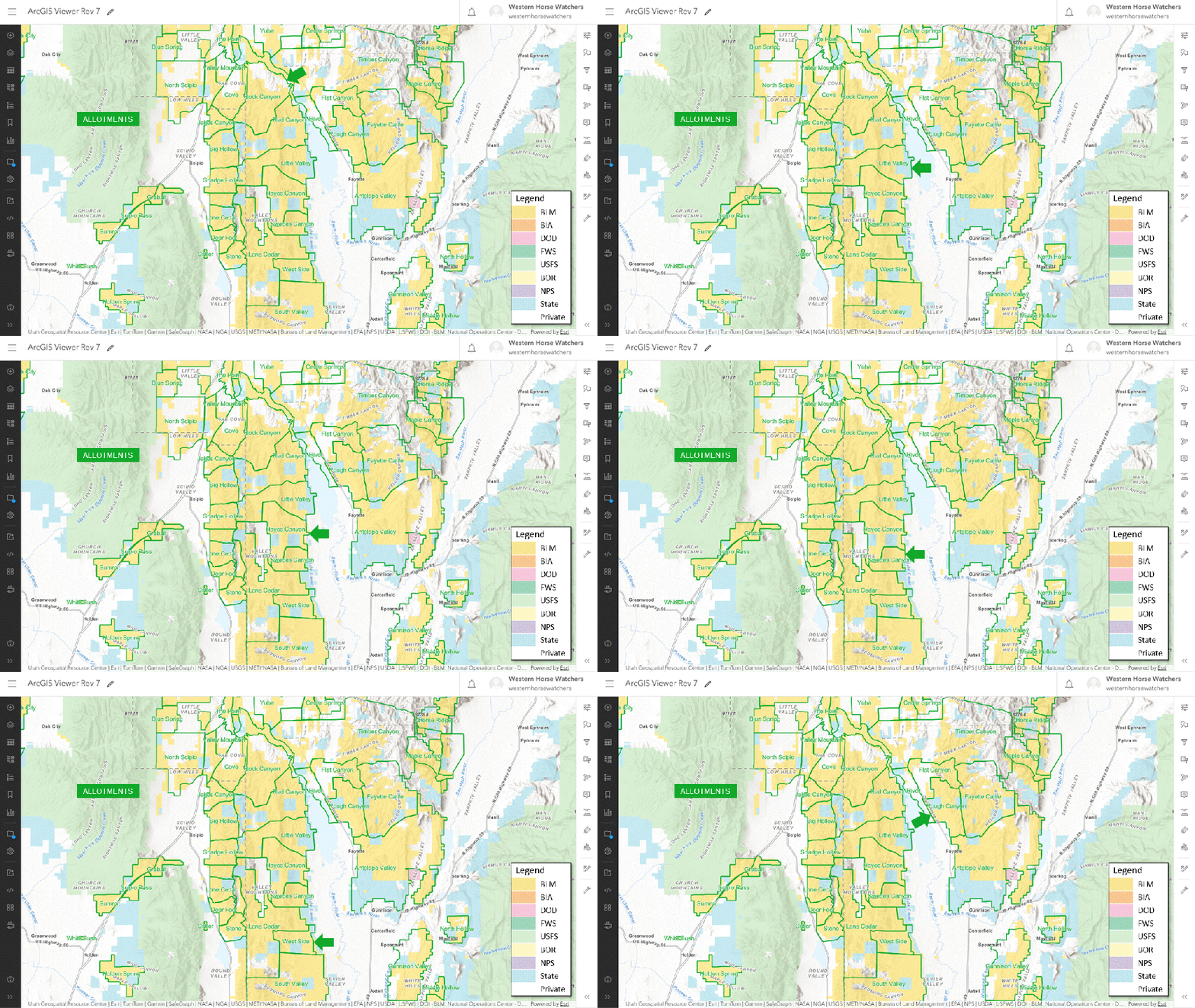
They’re on the small side and not contiguous but the permits are up for renewal with comments due by March 4.
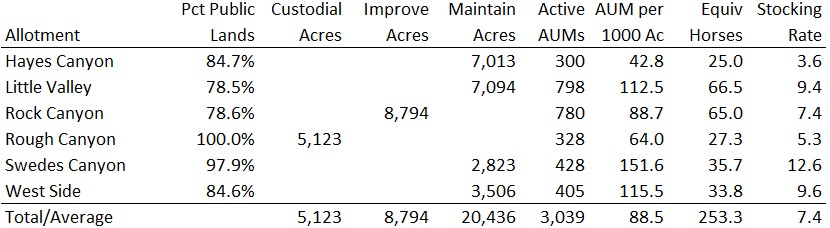
The allotment master report puts Hayes Canyon, Little Valley, Swedes Canyon and West Side in the Maintain category with equivalent stocking rates ranging from 3.6 to 12.6 wild horses per thousand public acres.
Your faithful public servants claim that rangeland health will suffer if wild horse stocking rates exceed one animal per thousand acres.
If a lying contest was held next week, who would win? The bureaucrats or advocates?
The news release says it’s now authorized to operate on 8,058 total acres, including 1,601 public acres.
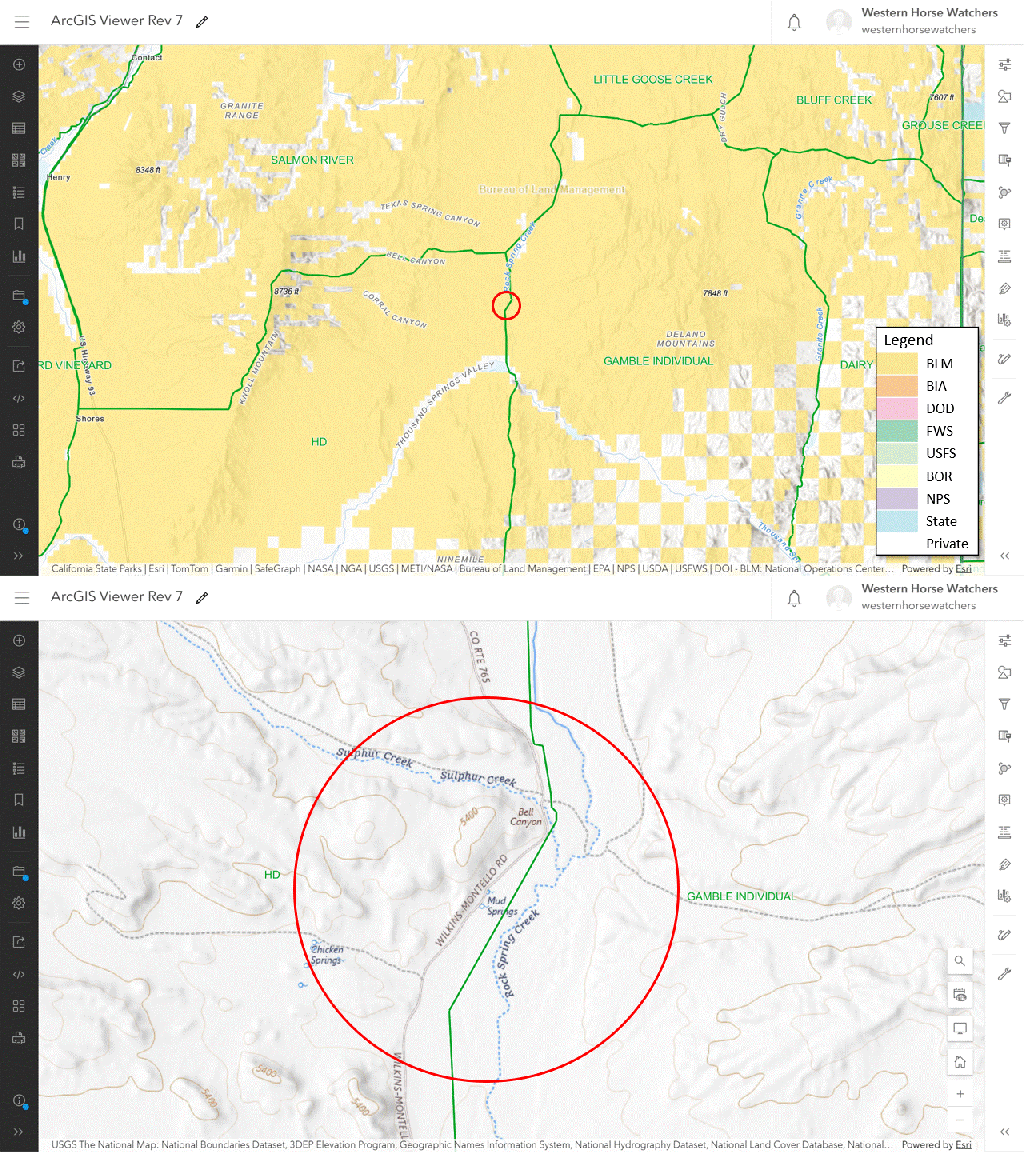
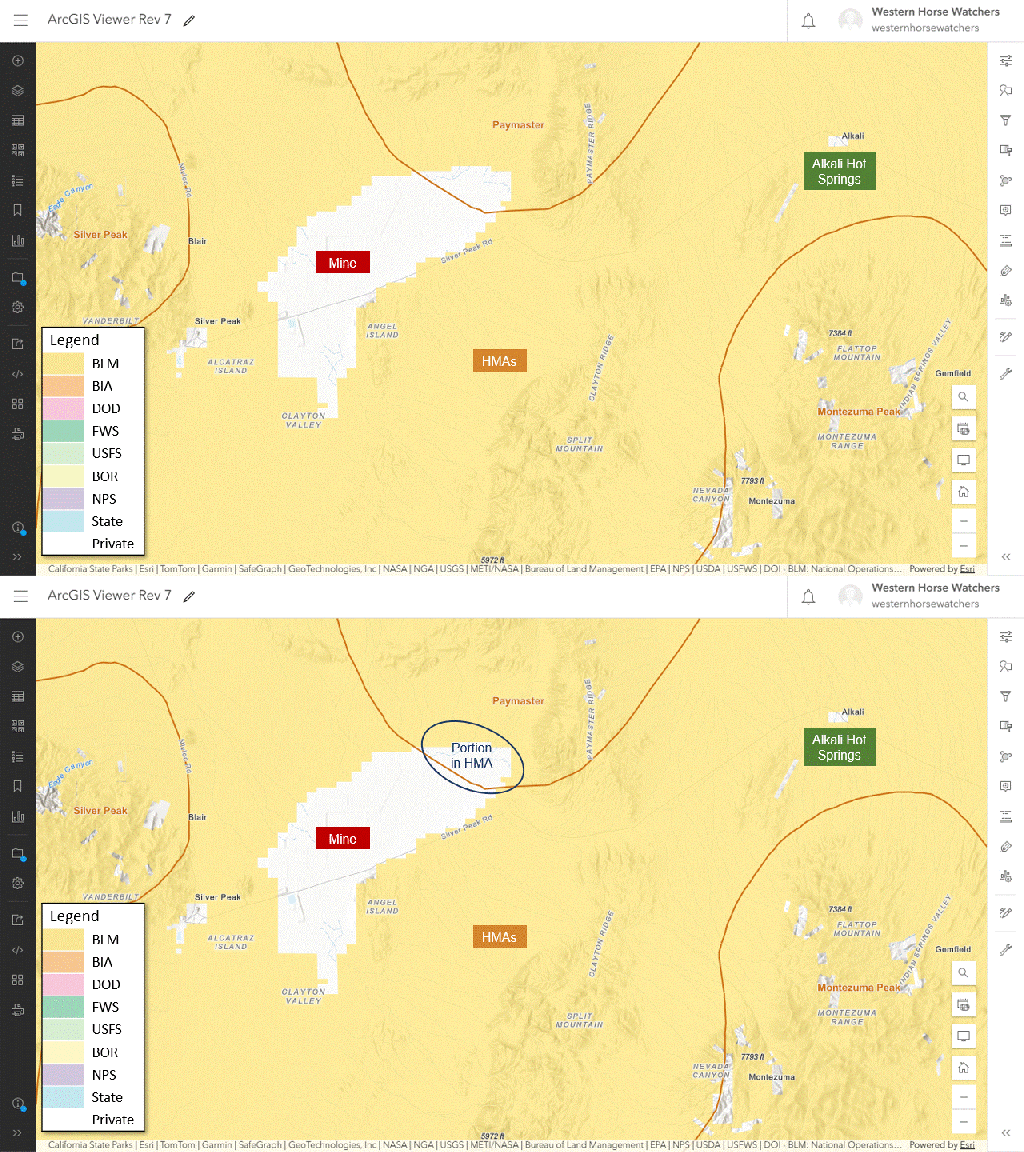
Table 1-3 of the Final EIS says there are no Herd Management Areas within the Plan of Operations boundary, but Figure 1-2, in combination with the ArcGIS Viewer, shows that it extends into Paymaster.
The mine, the only one producing lithium in the United States, is a few miles west of Alkali Hot Springs, a source of water for wild horses and burros.
The EIS can be found in the project folder with other planning documents.
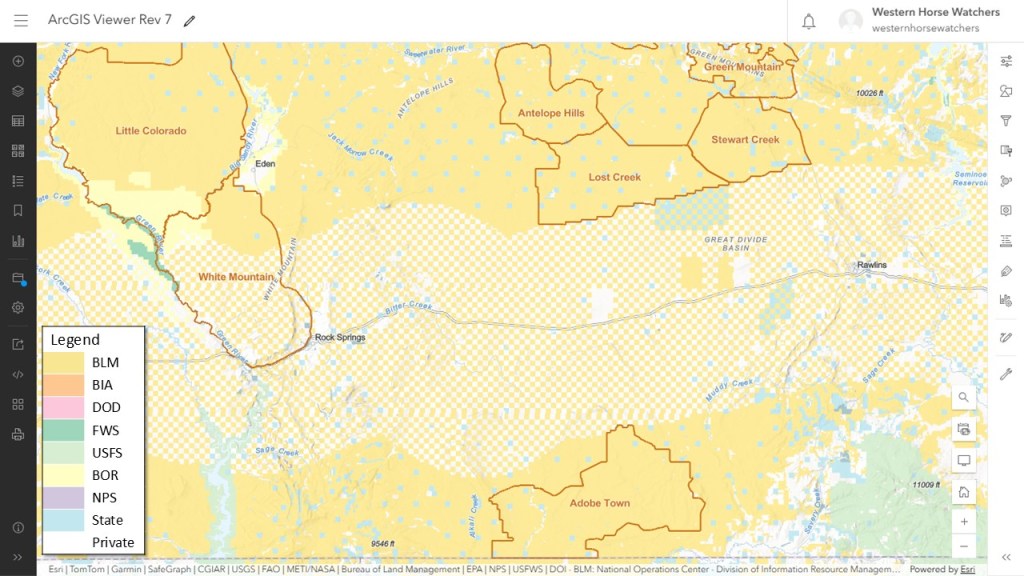
The HMA layer in the Viewer was updated a week ago and gone are the polygons for Salt Wells Creek and Divide Basin.
The outline for Adobe Town was also updated.
With the exception of White Mountain, the Wyoming checkerboard has been cleansed of wild horses, at least from a planning viewpoint, despite a court order opposing it.
In this role you will work under the supervision and guidance of professional range and natural resource specialists performing a variety of duties related to monitoring rangeland conditions and managing herds of wild horses and burros.
The temporary position is based in Belle Fourche, SD, where public lands are scarce and there are no defined areas for wild horses and burros.
Another possibility if you want to be around wild horses is to work for free as a certified applicator of fertility control pesticides—not for the BLM but for the advocates.
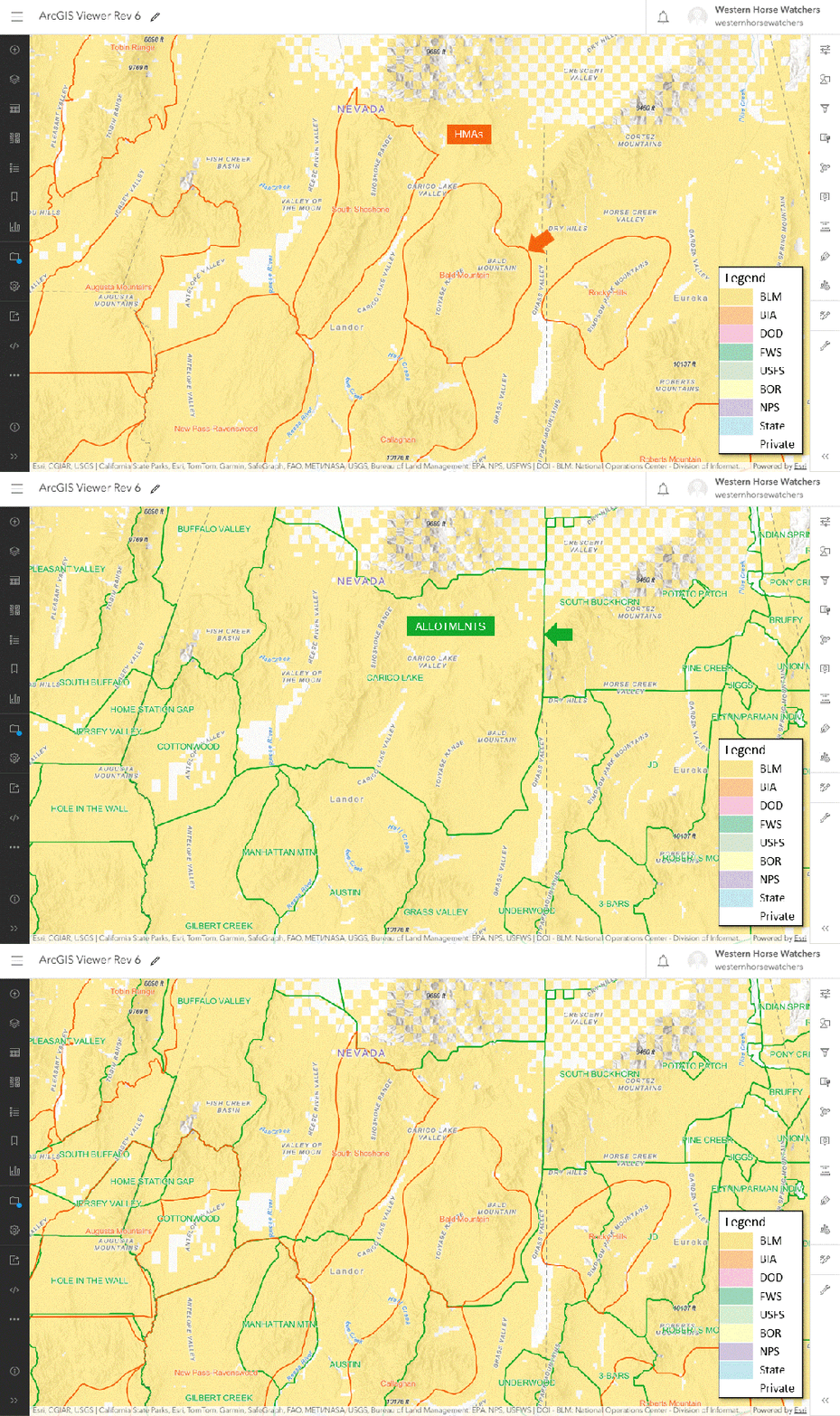
The HMA overlaps the Carico Lake and Austin allotments, with 11% in Austin and 89% in Carico Lake according to Table 8 of the Final EA for the Callaghan Complex.
The 100 wild horses allowed by plan require 1,200 AUMs per year.
Carico Lake offers 24,954 active AUMs per year on 562,465 public acres, equivalent to 3.7 wild horses per thousand public acres.
Austin offers 14,478 active AUMs per year on 235,185 public acres, equivalent to 5.1 wild horses per thousand public acres.
If the resource is evenly distributed across the parcels, it’s present in the HMA but your faithful public servants gave it to the ranchers.
To estimate the carrying capacity, shift it back to the horses. Forage assigned to wildlife stays with wildlife.
The HMA covers 132,401 public acres so the forage granted to the Carico Lake ranchers should support 132,401 × .89 × 3.7 ÷ 1,000 = 436 wild horses.
The forage granted to the Austin permittees inside the HMA should support 132,401 × .11 × 5.1 ÷ 1,000 = 74 wild horses.
The HMA should be able to sustain 100 + 436 + 74 = 610 wild horses (6X AML) if it was managed principally for them, as specified in the original statute.
The new stocking rate would be 610 ÷ 132,401 × 1,000 = 4.6 wild horses per thousand public acres, a bit more than the target stocking rate across all HMAs of one wild horse per thousand acres.
The allotment master report puts Austin and Carico Lake in the Improve category, which could be due to overgrazing or there may be some other environmental concern that needs monitoring.
The allotments would not make a good wild horse preserve because they overlap areas identified for wild horses and there is more than one authorization attached to each, so you’d have to acquire or control several base properties to access all of the AUMs.
The allotment would not make a good wild horse preserve because it overlaps areas already identified for wild horses and there is more than one authorization attached to it, so you’d have to acquire or control several base properties to access all of the AUMs.