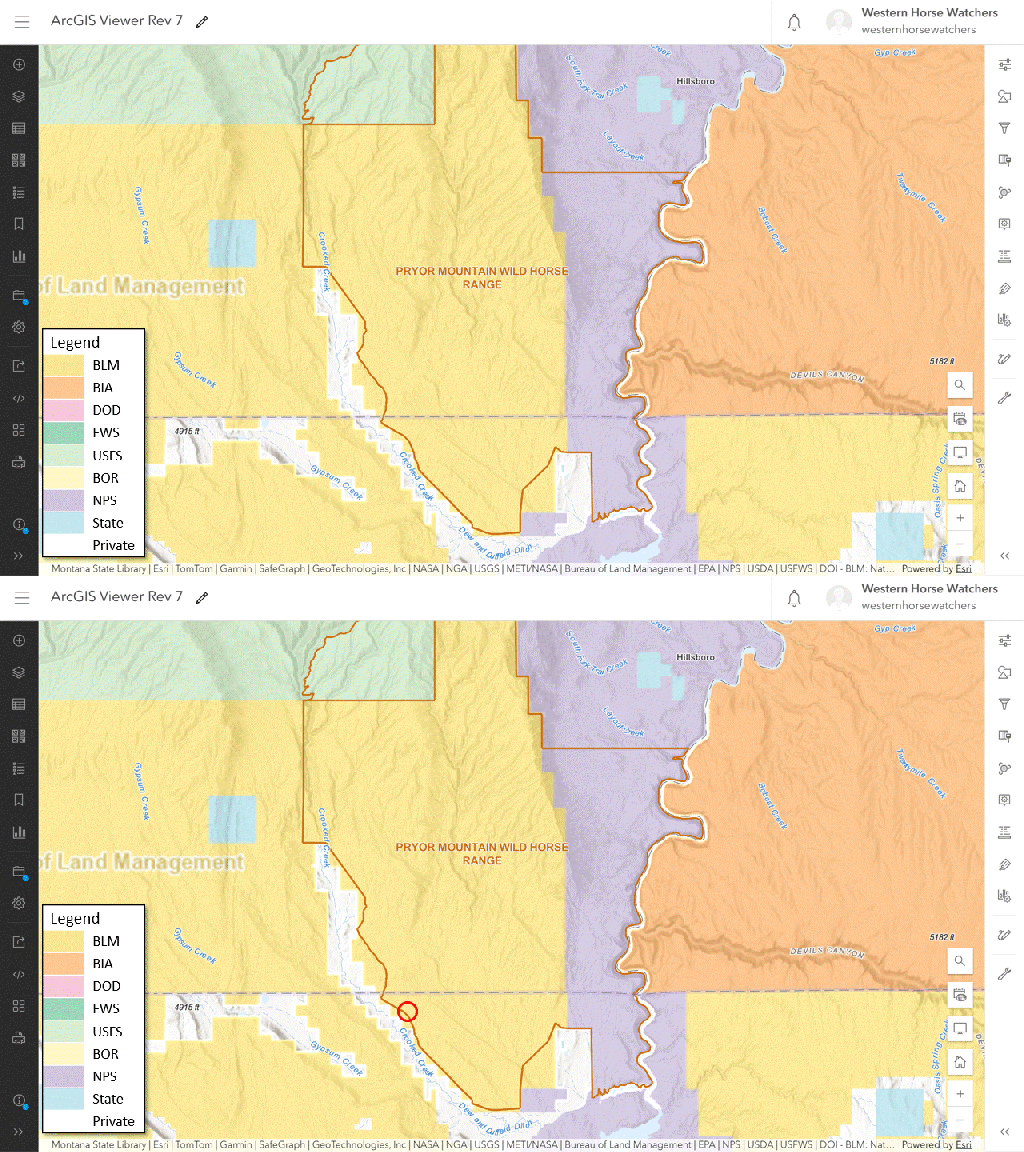
In the latest incident, the Decision Record, which may have been issued after the fact, says “The stallion was recently corralled on private property after commingling with, and exhibiting aggressive behavior toward, domestic horses and the individual attempting to corral the stallion. With landowner permission, the BLM retrieved the horse and transported it to the BLM corrals at Britton Springs within the Pryor Mountain HMA.”
The project description says the Proposed Action is to remove one wild horse from private lands but the news release says the agency retrieved him and took him to the corrals at Britton Springs, as if it’s a done deal.
He strayed from the HMA twice within a 12-day period, resulting in complaints from private landowners.
The incident follows the removal of three wayward horses in December.
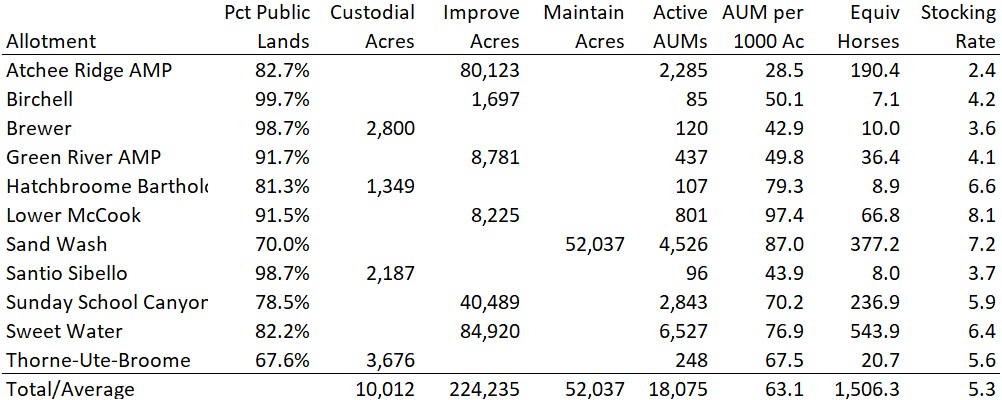
Grazing receipts = 18,075 × $1.69 = $30,546.75 per year
Cost of caring for wild horses = 1,506 × $6 × 365 = $3,298,140 per year
Cash flow = $30,546.75 – $3,298,140 = -$3,267,593.25 per year
B. Convert to Wild Horse Preserve
Grazing receipts = $0 per year
Cost of caring for wild horses = $0 per year
Cash flow = $0 per year
Option B saves taxpayers over $3 million per year.
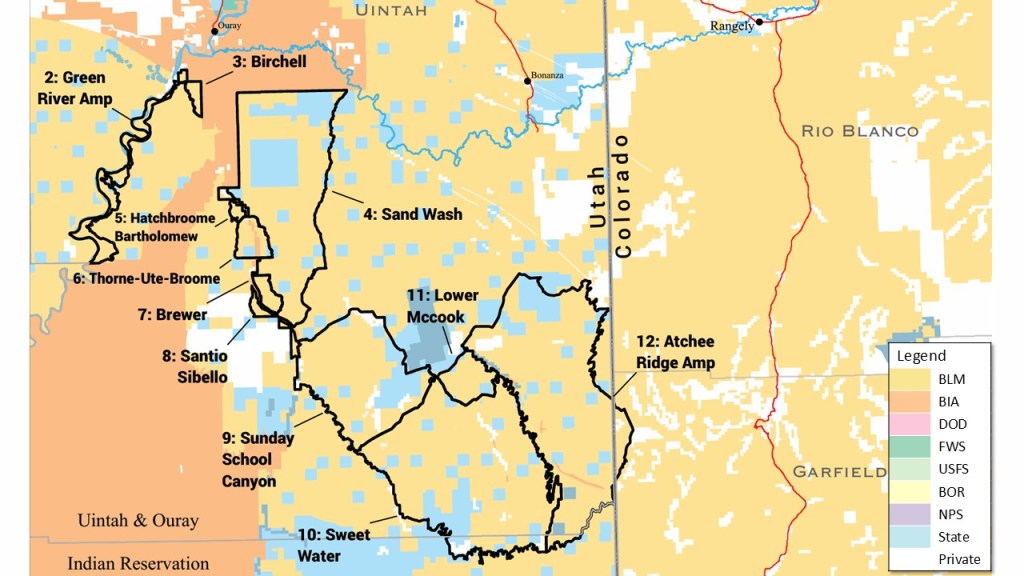
At an average stocking rate of five wild horses per thousand public acres, which is the case for the Uintah allotments, the 21,000 animals in short-term holding could be put back on the range by cancelling the permits on 4.2 million acres—less than 3% of the BLM land identified for livestock grazing.
The case revolves around the BLM’s new understanding of the meaning of livestock, discussed in a January 16 proposed decision that would cancel American Prairie’s grazing permits.
The agency says it can only issue permits for production herds, not conservation herds.
The decision would also frustrate those who would purchase base properties to establish wild horse preserves on public lands.
Green River and Birchell are on the west side of the Uintah & Ouray Reservation but the allotments on the east side might make a good wild horse preserve.
It’s not clear if one base property can secure grazing preference on multiple allotments.
The bureaucrats would likely throw as many roadblocks in your way as they can because they, like the advocates, want the ranchers to win.
Remember, if a proposed refuge doesn’t include public lands and doesn’t displace livestock therefrom, it’s not worthy of your support.
Officials in Elko, Eureka, Humboldt, Lander, Pershing, White Pine and Lincoln counties have issued emergency declarations or resolutions citing impacts they attribute to wild horses according to a report by KOLO News.
An estimated 37,426 wild horses and 5,146 wild burros roam freely in the state, compared to an AML of 12,811.
The acreage occupied by those animals was not given.
Who’s complaining? It’s not a, b or c as the advocates would have you believe.
a. Drillers
b. Miners
c. Loggers
d. Hunters
e. Ranchers
Let’s do what they don’t want us to do: Look at the data.
The management plans allow 11,987 wild horses and 824 wild burros, equivalent to 12,399 wild horses, on 14,032,947 public acres identified for their use, or 0.9 wild horses per thousand public acres. (Refer to 2026 population dataset.)
Beyond that, rangeland health will suffer according to your faithful public servants.
We have one standard for wild horses.
The allotment information report at RAS shows 2,083,025 active AUMs, equivalent to 173,585 wild horses, on 40,160,475 public acres. (Refer to this spreadsheet.)
The equivalent stocking rate is 4.3 wild horses per thousand public acres—almost five times higher than the rate associated with “healthy horses on healthy rangelands.”
And another standard for livestock.
The current population, equivalent to 37,426 + 5,146 ÷ 2 = 39,999 wild horses, has probably spread beyond the HMA boundaries.
If you assume they’re residing within the HA boundaries, the stocking rate would be 39,999 ÷ 19,778,204 × 1,000 = 2.0 wild horses per thousand public acres.
Twice the limit for wild horses but half the limit for livestock.
The impact on rangeland health cannot be determined because of the double standard.
The real concern, of course, is that they’re robbing forage from big game and livestock.
In keeping with established practice, the writer included comments from the Campaign Against America’s Wild Horses, even though its rep is no longer with the nonprofit.
The capture total included 152 stallions, 124 mares and 24 foals.
Youngsters represented 8.0% of the animals gathered, suggesting that the herd is growing at a much slower pace than your faithful public servants claim.
Of the adults, 55.1% were male and 44.9% were female, no indication of an abnormal sex ratio.
There were no plans to treat any of the mares with fertility control pesticides and return them to the range.
There were 55,533 wild horses and 2,741 wild burros in off-range holding on March 26, compared to 60,283 wild horses and 3,750 wild burros on November 21.
Reasons for the change were not given in the report.
Adoptions, sales, deaths and transfers to other government agencies will cause the numbers to drop.
Roundups, whether nuisance, emergency or planned, make the numbers larger.
Mass sterilization, favored by the advocates, drives the on-range and off-range numbers down, to the delight of the bureaucrats and ranchers.
Another option would be to cancel the grazing permits and leave the animals in their lawful homes.
Livestock production would continue on base properties as it does during the off season.
The worksheet says the current population is 129, compared to an AML of 50, but does not give the amount of forage assigned to livestock, so there is no easy way to determine if there are more horses than the land can support.
Mares returned to the range will be treated with GonaCon-Equine, a fertility control pesticide that the advocates previously shunned but are now starting to embrace.
They are spiraling out of control and don’t deserve a penny of your support.