Filmed just before sunset.
Category: Ranch
Around the ranch
Backstop for Hay
This hay room is in an old horse stall, so the partition was already there. When you cut the hay strings, the bales don’t come apart because of the wall.
It’s also nice to lean against or catch your balance when you’re pulling bales to the top of the stack. They weigh around 100 pounds each.
I can stack four of them while standing on the floor but must stand on one of them to lift them any higher. The top of the sixth bale, on the right in the following photo, is about eight feet up.
The capacity of this area is 30 bales. They are stacked on pallets.
Each bale contains 15 to 18 flakes.
RELATED: Hay Transport, Hay Reserve.

Remembering Brenda
She’s been gone for eight years. I never met her and spoke to her only once by phone.
Her horse came to the ranch in 2012 while she sought treatment. Her husband was inconsolable a year after she died.
He’s put on some weight since then, maybe a bit too much. He’ll be 25 in June.
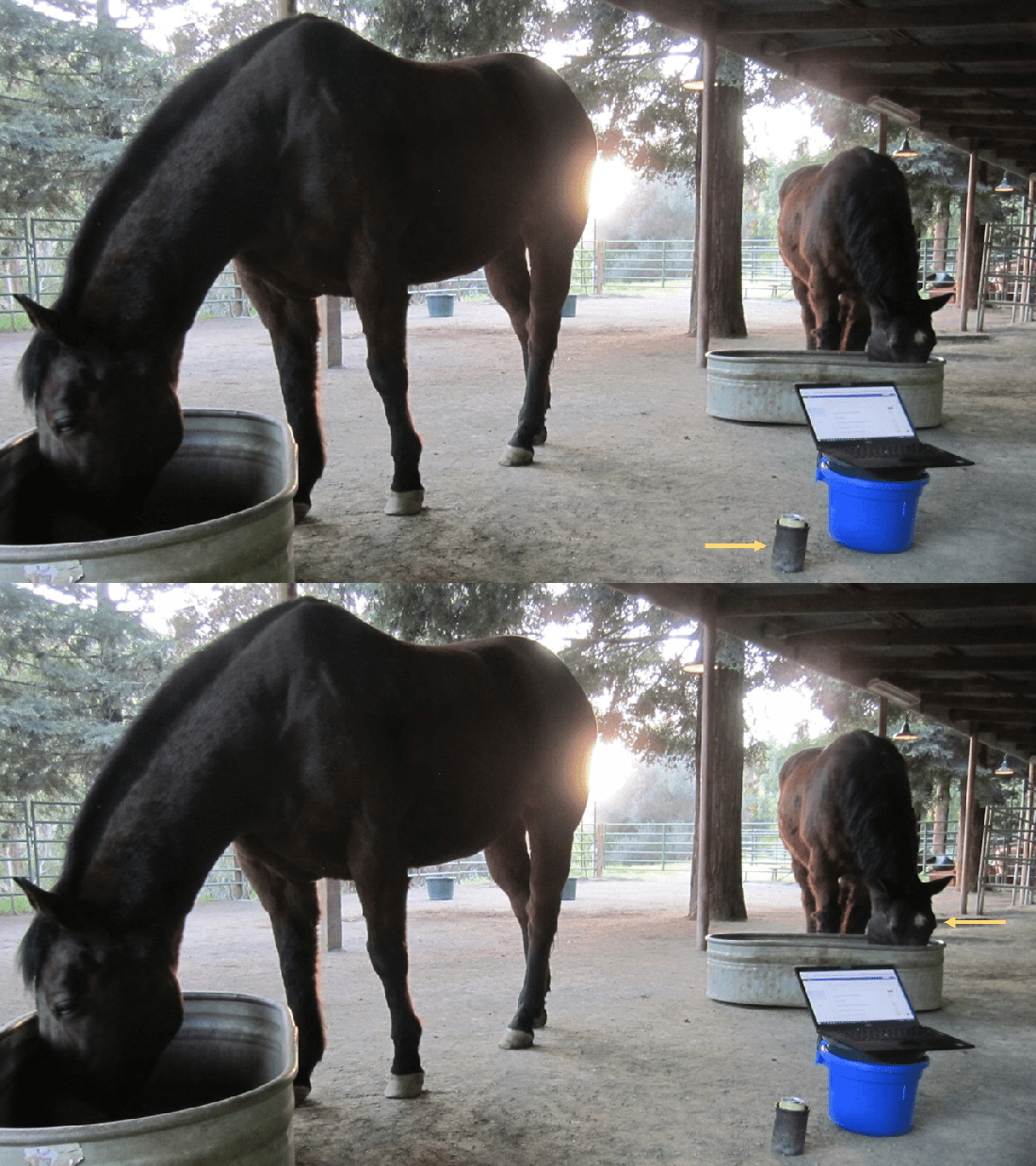
He’s in the background in the following photo, taken March 21.

Grain Tank Refilled
You probably guessed that the local feed store is a Purina dealer.
The drive-out price was $666.73, which included 20 bales of alfalfa-grass, ten 50-pound sacks of grain and one 50-pound sack of chicken feed, plus tax.
That payment will keep six horses fed for about a month, which works out to a little over $100 per AUM.
It also works out to about 2,500 pounds in case you’re wondering who had to stack it.
The cost to feed cattle and sheep on public lands is $1.35 per AUM, which explains in part why there is so much interest in getting rid of wild horses and replacing them with privately owned livestock.
RELATED: Extra Grain Storage.

Why Write When You Can Talk?
Quick video update, filmed just before dark.
Premarin Derived from Horses?
The drug, a hormone replacement that alleviates the symptoms of menopause, is made from the urine of pregnant mares, according to a letter published today by the Johnson City Press of Johnson City, TN.
A search for ‘premarin horses’ suggests that it’s true, and may qualify as animal cruelty, but Western Horse Watchers does not know if the practice goes on today.
Side effects include blood clots, stroke and breast cancer.
Life in the ORPs
Aerial footage of former wild horses in an off-range pasture by Jay Stockhaus.
There are currently six ORPs in Kansas. They are the subject of a 2019 article in Kansas! Magazine.
Horses not adopted or sold are supposed to end up in these facilities.
RELATED: New Off-Range Pastures, Quick Note on Overpopulation.
You Are Responsible for Your Own Feet
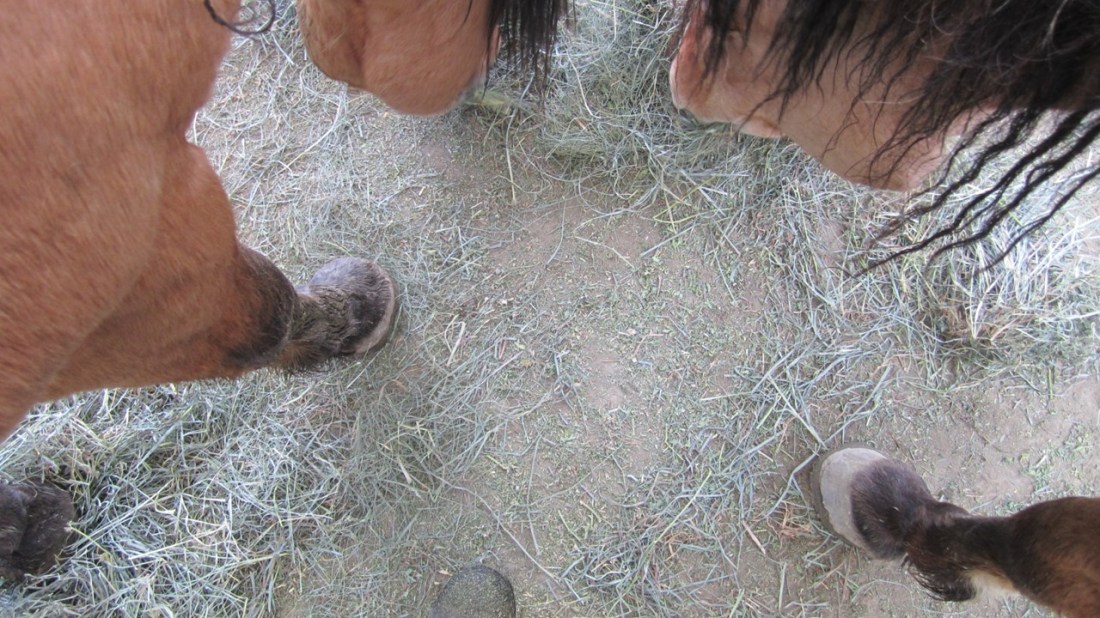
Rain over the last two days has turned the corral into a mudhole again, reducing the feeding area to a dry patch in the shelter.
When you show up with hay, the horses will converge on you, not because they’re mean but because they’re hungry, increasing the risk of foot injury.

There are four of them in this corral and they don’t pay much attention to the location of my feet when they’re exploring the pile for the best spot.
The front feet of an average horse carry around 300 pounds each, with 200 pounds on each of the rear feet, give or take.
In the early days, I had steel-toed boots but when they wore out I never replaced them.
Western Horse Watchers Goes to School of Hard Knocks
Two weeks ago tomorrow, the colt reared up and came down on top of me. Yeah, that colt. Probably around 500 pounds. I got up, dusted myself off, but did not respond in kind. Just a colt acting like a colt, I thought.
As they say, if you can’t take the heat, get out of the kitchen.
I’ve been bitten, kicked, stepped on and knocked to the ground, not by wild horses but by those on lead ropes or in a corral. This was a new experience.
Every youngster, you have to set the limits, teach them what’s okay and what’s not okay.
The whoosh of a hoof going past your ear, you don’t want to hear that very often.

Due in Two Weeks?
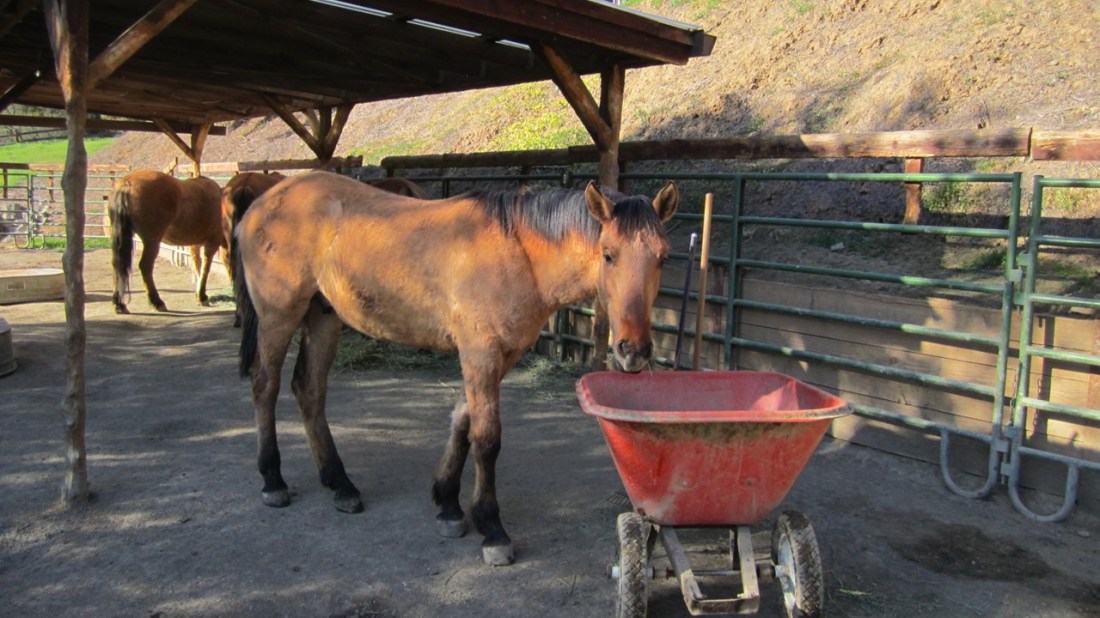
Photo of colt’s mom taken this morning. Conventional wisdom says she’s due mid month, but that doesn’t appear to be the case. These are not randomly selected horses thrown together in a corral, they are family.
One of the theories in the wild horse world is that roundups stimulate reproduction, growth rates are lower when herds are kept intact.
Video of colt at eleven months was posted to YouTube yesterday.
RELATED: Another One on the Way?

FDA Warns Against Use of Ivermectin to Treat Covid
The agency is aware of several cases where patients required medical support after self-medicating with the equine dewormer, according to a report published yesterday by The New York Daily News.
RELATED: Safety of Ivermectin Paste?
Another One on the Way?
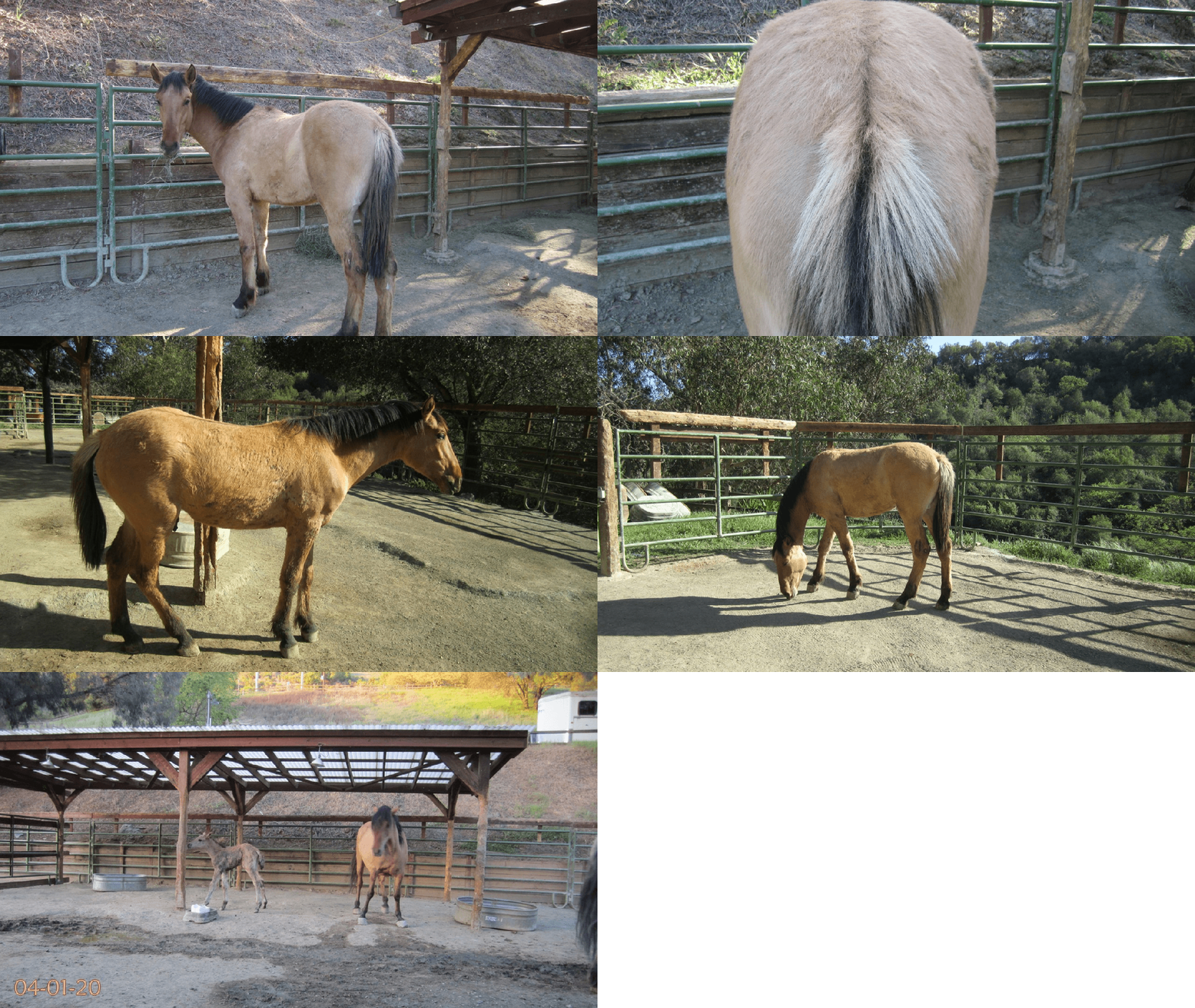
The colt was eleven months old yesterday. He was born last year on April 1.
Mares supposedly go back into heat shortly after birth so let’s say she was bred on April 10. Adding 340 days to that means she’d be due on March 16—two weeks from today.
She’s behind the colt in the photo, but does she look like she’s two weeks out? Nope, not even close. Is the stud still in the corral? Yep.
After the colt was born the mare told the stud, by numerous kicks, that she didn’t want anything to do with him. For the first six weeks, she ruled the roost with an iron fist.
So maybe they only get pregnant when they want to get pregnant?
RELATED: Thoughts on New Colt.

Extra Grain Storage
What’s the point of buying enough hay to last four weeks when you can only store enough grain for two weeks?
A 31-gallon metal trash can holds up to three 50-pound bags and they’re great for dispensing daily rations. Rodents will bore into the plastic ones.
An eight-foot round end tank will hold up to twelve sacks. Cover it with plywood or similar material to keep pests away.
At current prices, you’ll be paying about $100 per AUM to feed your horses—unless you have grazing privileges on public lands, in which case you’ll pay $1.35 per AUM.

Meeker Mustang Makeover Seeks Trainers and Adopters
If you want to help the local ecosystem and reduce inbreeding associated with “rising populations” of wild horses, then you need to get involved with the Meeker Mustang Makeover. Yep, genetic diversity is compromised by overpopulation, according to a spokesperson interviewed for a story by The Daily Sentinel of Grand Junction, CO.
A disclaimer says the event is not associated with, sponsored or endorsed by the Mustang Heritage Foundation, Extreme Mustang Makeover, Mustang Madness, Mustang Mania or the Wild to Mild TIP Challenge. It is an independent, volunteer run entity that is unaffiliated with any other mustang event, organization, or association.
Organizers include ranchers, horse trainers, conservationists and historians concerned about the growing populations of mustangs in western Rio Blanco.
Animal Exports to Mexico
A story by WKRN News of Nashville, TN regarding a horse rescue included a link for daily livestock exports from Texas to Mexico.
The most recent report, dated February 23, shows 1,992 horses shipped to slaughter year to date.
The largest category is beef cattle.
The site offers reports on other export channels to Mexico. Type ‘exports’ in the Search Publications field and hit Enter.

UPDATE: A weekly summary is also available.
Question of the Day
If you died and came back as a horse, would you want you as an owner?
Roofs of Barn and Covered Arena Collapse
The incident occurred at the Fitzjoy Farm Riding Academy on February 16, according to a report by the Chicago Tribune. There were no injuries.
The facility owner said the failure was likely due to heavy snowfall.
RELATED: Roof of Covered Arena Collapses.
Roof of Covered Arena Collapses
The incident happened this morning at the Glen Grove Equestrian Center in Morton Grove, IL, according to a story by the Chicago Tribune. Authorities said the failure was the result of heavy snowfall. No people or animals were hurt.
New Film About Nokota Horses in the Works
The film, titled ‘Vanishing Knowledge,’ tells the story of the Kuntz brothers and the horses they rescued, according to a newsletter from The Nokota Horse Conservancy.
These were the original free-roaming horses of Theodore Roosevelt National Park.
RELATED: Story of the Nokota Horses.
It’s Not Devil’s Garden WHT, It’s Dollar General WHT
The Forest Service is now selling wild horses for $1 each, according to a report posted today by KRCR News of Redding, CA. Approximately 150 animals are available.
RELATED: Devil’s Garden Outplacement Program Ramping Up.