Story by KEYT News of Santa Barbara.
Category: Ranch
Around the ranch
Price of Hay Eases Slightly?
A bale of alfalfa-grass mix sold for $30 today, 20 bales minimum, down from $34 in March.
The feed store did not indicate if this was a special offer or the new rate.
A horse would need around five bales per month, putting the cost of feed at $150 per AUM.
The poor ranchers, forced to live in multi-million-dollar base properties, pay $1.35 per AUM on public lands managed by the BLM and Forest Service.
Three years ago, before Bidenomics kicked in, the same bale fetched $19.
RELATED: Price of Hay Defies Gravity.
Indian Lakes Off-Range Corrals Open to Public on May 31
Participants will be escorted by wagon according to today’s announcement.
Registration is required and tours are limited to 20 persons each.
The privately owned facility has a capacity of 7,600 animals and the population as of January 11 was 3,804 wild horses and one wild burro.
The corrals support three tenets of rangeland management.
RELATED: Sour Grapes: Advocates Criticize Indian Lakes Wild Horse Deaths.
Tour of Gray Horse ORP Set for June 22
The privately owned ranch covers approximately 26,000 acres of grassland in northeastern Oklahoma according to yesterday’s news release.
The January Facility Report shows two pastures, Gray Horse East, with a capacity of 1,735 mares, and Gray Horse West with a capacity of 1,015 geldings.
The populations as of January 1 were 1,783 mares and 775 geldings.
These animals were removed from public lands in the western U.S. and sent here to die not because of inadequate resources but because the bureaucrats have assigned most of their food to privately owned livestock.
Thus, the facility plays an important role in achieving and maintaining AMLs, sometimes referred to as ranching superiority in the lawful homes of wild horses.
Winnemucca Off-Range Corrals Open to Public Next Month
Tours will be offered on May 16 and 17 according to today’s announcement.
Registration is required and groups are limited to 20 persons each.
The facility, owned and operated by JS Livestock, was at or near capacity after the East Pershing roundup earlier this year.
RELATED: Site of New Off-Range Corrals Sells for $3.8 Million.
Colorado’s Wild Horse Refuge Seeks Ranch Hands
Two full-time openings exist according to the job posting at AgHires:
- General care of property, repairing fences, field/hay work, building gates/pens
- Monitoring herds, leading tours, cleaning rental house after visitors, photography
A husband-wife team would be ideal.
The facility, formerly Rio Ro Mo Ranch, covers approximately 22,500 acres near Craig.
Return of Caisson Platoon Delayed Indefinitely?
The commander of the Military District of Washington hesitated to use the term but would not commit to a specific timeframe, according to a story dated April 12 by AP News, saying only that the Army has every intention to resume operations of the horse-drawn carts during burial services at Arlington National Cemetery.
RELATED: Caisson Platoon Going on Hiatus.

Adoptions Resume at Litchfield Off-Range Corrals
Repairs to the visitor center are complete and the facility is now open to the public according to today’s announcement.
Price of Hay Defies Gravity
The feed store collected $34 per bale today for alfalfa-grass mix, 20 bales minimum, no change from December.
The single-bale price was $35.
Three years ago the price was $19.
A horse would need around five bales per month, putting the cost at $170 per AUM.
At that rate, you’ll burn through your $1,000 adoption incentive in six months.
Ranchers pay $1.35 per AUM on public lands.
RELATED: Price of Hay Unchanged, Still Too High.
Price of Hay Unchanged, Still Too High
A bale of alfalfa-grass mix sold for $34 yesterday, 20 bales minimum, no change from last month.
The single-bale price was $35.
Although it’s off its high of $36 per bale earlier this year, it’s up 79% from the summer of 2021, when Bidenomics was unleashed on the American people.
An average horse would need around five bales per month, putting the cost at $170 per AUM.
The poor ranchers, forced to live in multi-million-dollar base properties, pay $1.35 per AUM to access forage on public lands.
Curiously, a headline today on Drudge says “Animal shelters across USA overflowing.”
RELATED: Cost of Hay Dropped Slightly!
Cargo Jet Returns to JFK After Horse Escapes from Stall
The incident was reported by UPI in a story dated November 14 and has been covered by other news outlets since but nobody’s asking why the horse was on board and what happened to it after a late arrival in Belgium.
Off-Range Population Climbing
As of September 2023. Sourced from BLM program data.

The advocates will tell you “Better if they weren’t even born.”
Western Horse Watchers believes the forage assigned to livestock in areas identified for wild horses would allow these facilities to be emptied several times over.
RELATED: BLM Offers $7.5 Million for WHB Adoption Partnerships.
Newest Addition to Ranch
Heard outside window on September 20. Found dead cat near poop pile that afternoon.
“Hey Western Horse Watchers, that photo may offend the advocates.”
How’s that?
“You know what they think about new life.”

Cost of Hay Dropped Slightly!
The price of a bale of alfalfa-grass mix on August 5 was $34, twenty bales minimum, compared to $36 in July.
But it’s still up 79% since July 2021, before Bidenomics, when the price was $19.
The single-bale price was $35.
The average horse would need five bales per month, putting the cost at $170 per AUM.
The poor ranchers, with their multi-million-dollar base properties, are forced to pay $1.35 per AUM.
RELATED: How to Double the Value of Your Truck.
BLM Reviewing Data Collection Requirements for WHB Adoption
An announcement dated July 19 in the Federal Register seeks public input on new, proposed, revised and continuing collections of information from those who wish to adopt, purchase, foster or train wild horses or burros.
The agency collects information from individuals to determine (1) if applicants are qualified to adopt or purchase wild horses and burros, (2) whether or not to authorize an adopter or purchaser to maintain more than four wild horses and burros, (3) whether or not to grant requests for replacement animals or refunds, and (4) whether or not to terminate a private maintenance and care agreement.
Your remarks should address these issues:
- Whether the collection of information is necessary for the proper performance of the functions of the agency and whether the information will have practical utility
- The accuracy of the agency’s estimate of the burden of information collection, including the validity of the methodology and assumptions used
- Ways to enhance the quality, utility and clarity of the information to be collected
- How to minimize the burden of information collection on those who are to respond, including the use of automated, electronic, mechanical or other forms of technology
Written and electronic comments will be accepted through September 18.
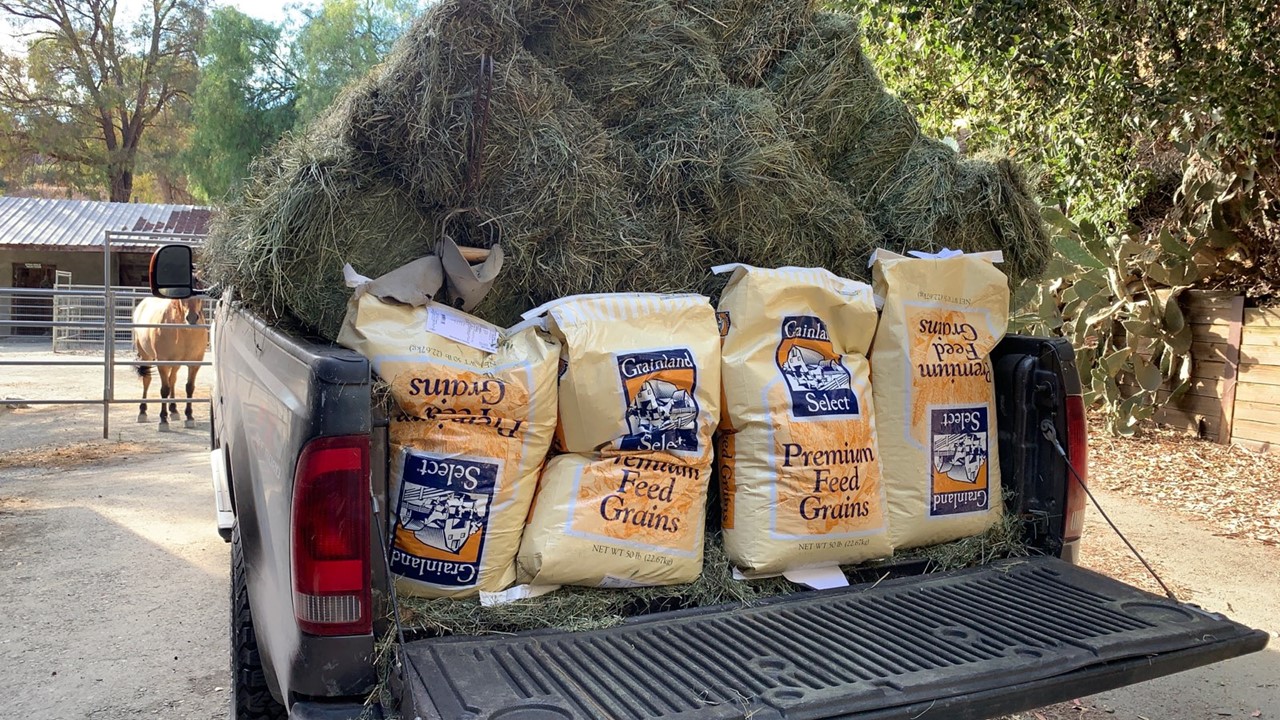
How to Double the Value of Your Truck
Fill it with gas and load it with hay!
Two years ago this was not possible. But it is now thanks to Bidenomics.

RTF Seeks Lead Ranch Hand
Duties include, feeding, watering, cleaning, repairing, transporting, supervising and other tasks as assigned, according to the job posting on SimplyHired.
A keyword search of the page yielded no occurrences of darting, fertility control, PZP, pesticide, sterilize or vaccine.
RELATED: RTF Seeks Development Director.
Do Wild Horses Poop More Than Domestic Horses?
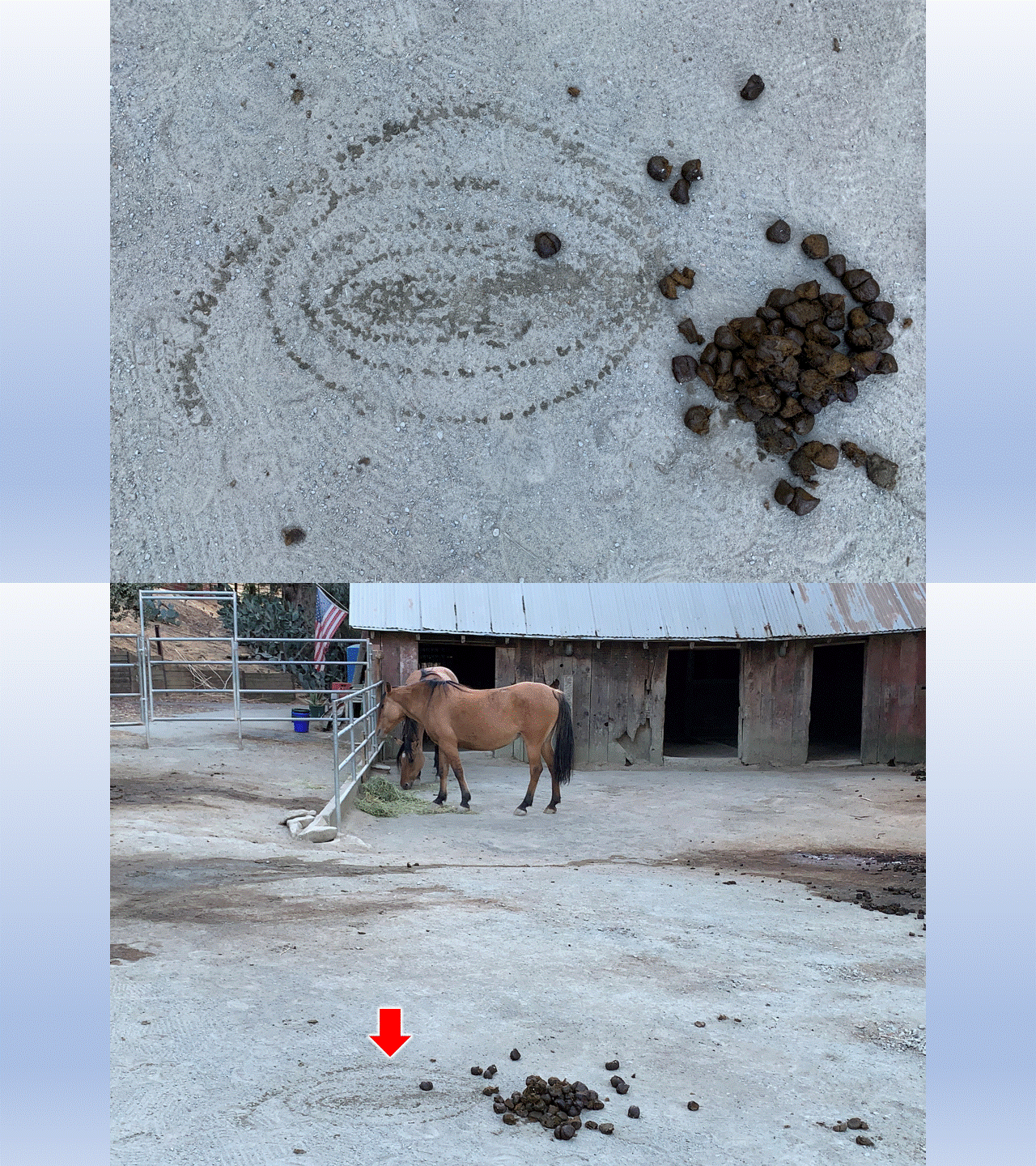
If one corral has three adopted horses and another has two domestic horses, you’d expect about 50% more poop from the first corral than the second.
But, as seen in these photos, taken on July 3, the load from the first corral is roughly twice the size of the load from the second corral (100% more).
RELATED: Do Wild Horses Eat More Than Domestic Horses?

Museum Buys Beebe Ranch!
The June 29 GoFundMe update said all but $5,000 had been received but a story by WBOC News said the deal went through today as planned.
RELATED: Beebe Ranch Fundraiser Reaches 90% Mark.
Do Wild Horses Eat More Than Domestic Horses?
Your host buys twenty bales of alfalfa-grass mix every four weeks, allocated as follows:
- Seven bales for two domestic horses
- Thirteen bales for three adopted horses
The domestic horses consume 3.5 bales each over the four-week period.
The adopted horses consume 4.3 bales each during the same period.
This has been the pattern for several years.
Experience indicates that wild horses need about 25% more hay than domestic horses, which means they poop more than domestic horses.
These guys also receive grain in the evening, hay is not the only component in their diet.
They are not ridden or expected to do any work.
Call them pets if you’d like.
RELATED: No Relief in Cost of Feed.