Salt River Rescue Attacked Again

Shots were fired Sunday into a rescue operated by the Salt River Wild Horse Management Group, according to a report posted yesterday by FOX-10 in Phoenix.

Personnel with the Maricopa County Sheriff’s Office are investigating the incident.

The facility, and the Salt River horses, are west of the Heber WHT, where ten wild horses have been shot in the past three weeks.  No arrests have been made in the case.

My friends, you’re not in California.  Set the dart guns aside and get reacquainted with gas operated, magazine fed, semiautomatic rifles, such as this one.  Note the images at 0:22 and 2:42.  In the forest.  Hint, hint.

RELATED: Shots Fired at Salt River Wild Horse Rescue Facility.

UPDATE: Added video by ABC-15 in Phoenix.

Return to Palomino Valley Wild Horse Corrals

Last day of government shutdown, at least for a while.  Two BLM workers were on site.

Service gate was open but visitor gate was closed.

Some of the corrals that were empty on 12/31/18 had horses, some of the corrals that had horses back then were empty.  Youngsters seen on 12/31 were not there.

Ranchers like these wild horses best—the ones that are off the range—permanently.

No freedom, no family, no foals, no legacy.

RELATED: Palomino Valley Corrals, Day Ten of Government Shutdown.

Backyard Chickens – Intro

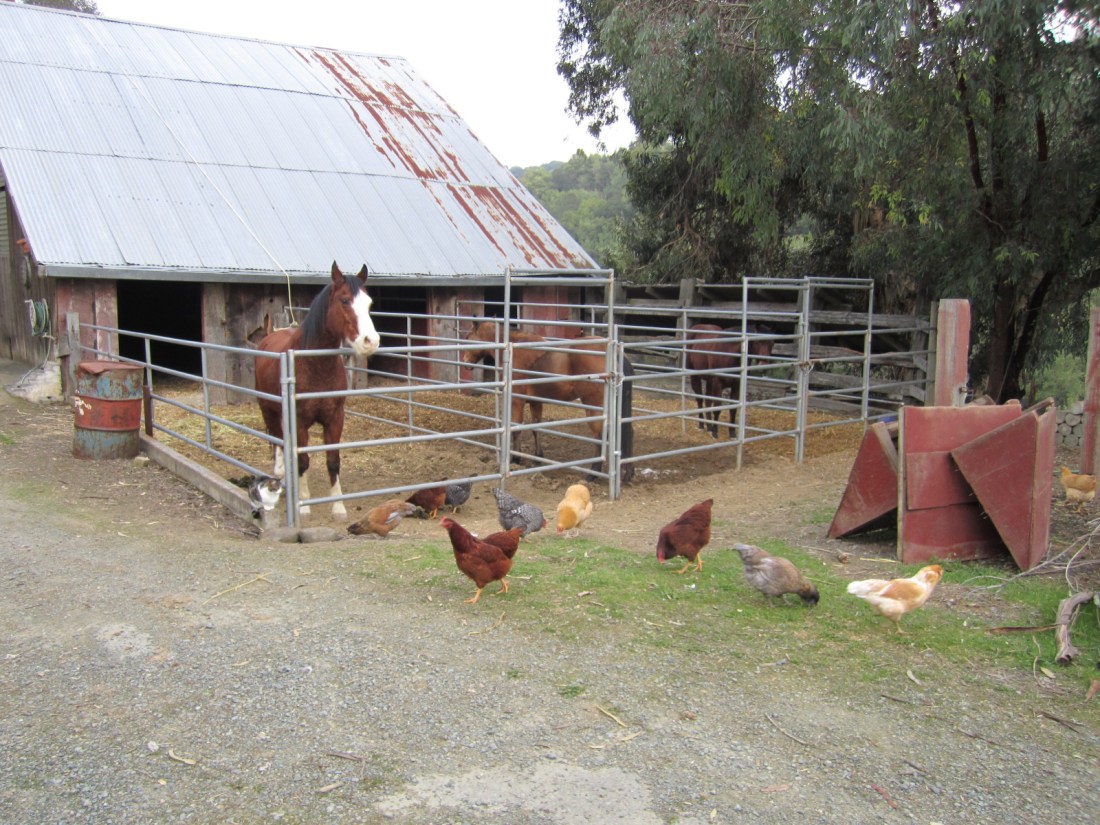
If you have horses on your property, you can probably have chickens too.  Even in urban areas, you may be able to keep a few hens for personal use.  Check the ordinances.

To get started, you’ll need these items:

  • Galvanized tub with screen and lamp
  • Coop with covered run
  • Wood shavings
  • Feeder
  • Waterer
  • Chicks
  • Egg cartons

Feed stores usually have chicks in the spring, some have them year around.  Start with four to six.  They must be kept warm until they have feathers.

Place them in the tub with some bedding, cover it with a metal screen, and set a reflector lamp on top.  Sixty to seventy five watts should be adequate (incandescent bulb).  Add feed (medicated) and water daily.  The chicks will outgrow the tub in three to four weeks but will be ready to go into the coop.

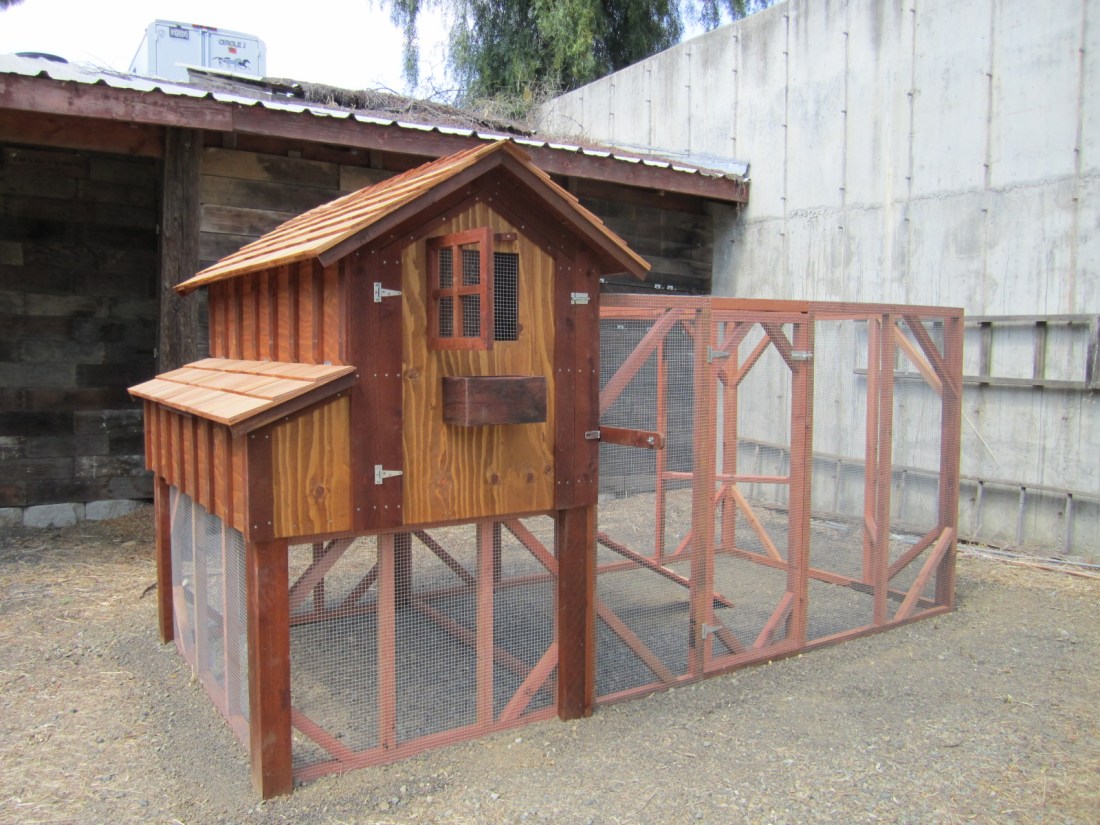
Choose a location that’s level and protected from wind.  Coops are usually built with wood frames and wire cloth.  Chicken wire is not acceptable.  The mesh for the wire cloth should be 1/2 inch or less.  Install it on the floor of the coop to stop rodents from tunneling their way in.
img_0613

You can build a coop or buy one.  The feed store probably sells them, ready to use.  You can also find them online.  Ideally, the run would be of walk-in height.
img_0612

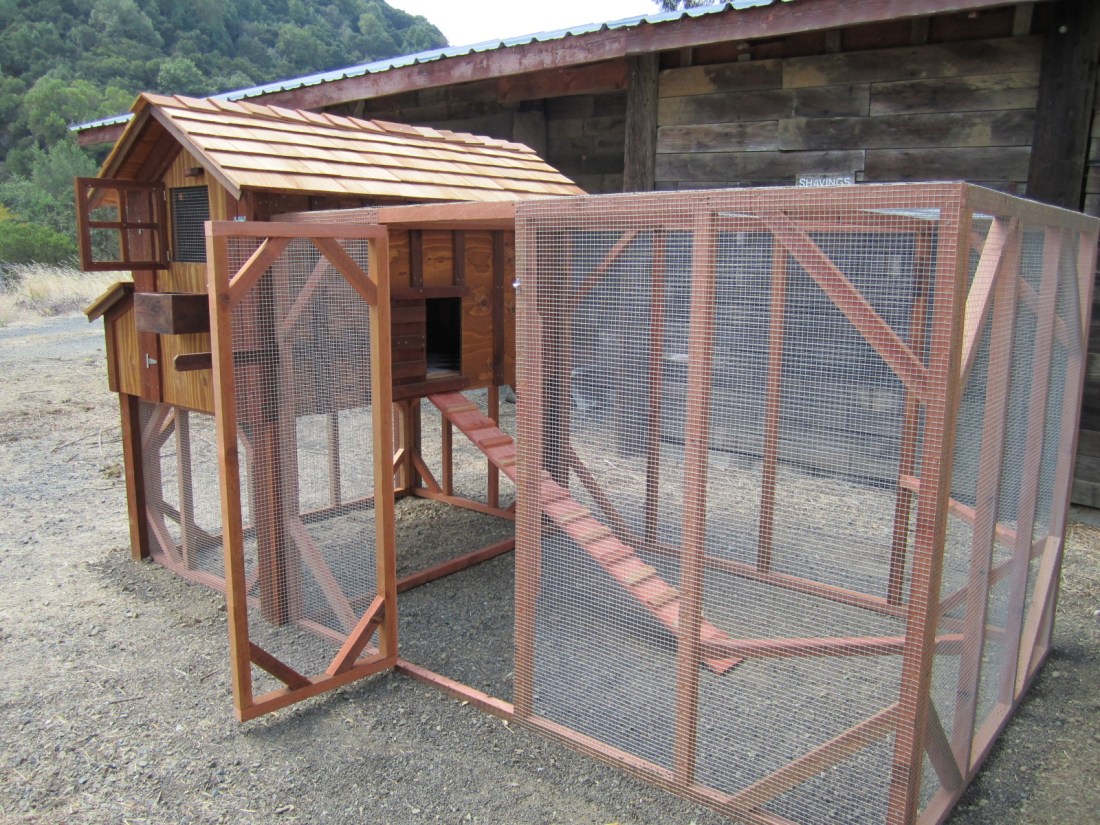
You’ll need to access the run daily.  The feeder and waterer can be hung from the wood frame if strong enough to carry the weight.  As with horses, you should provide clean, fresh water every day.  The hen house should also be accessible but if the nesting boxes have separate access (such as the hinged cover on the left in the top photo), you won’t need to open this door very often.

img_0605

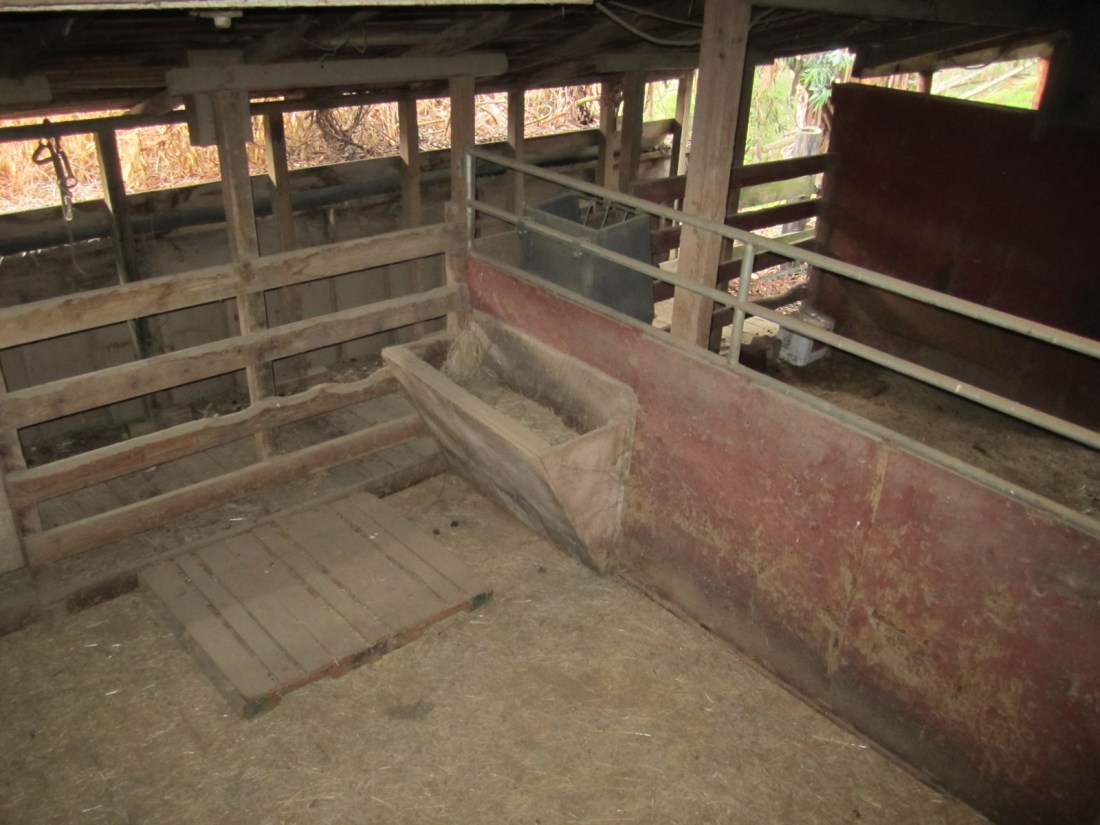
Put some wood shavings in the nesting boxes and on the floor of the hen house.  A ramp extends from the house down into the run.  Two bales of straw can be positioned below the house for additional protection from wind and rain.

img_0630

A corrugated roof can be added to the run to keep it dry.

img_0636

The last step is to place the chicks in the cage.  They can go outside when three months old.  If the cage is in a remote area, there is a risk of predation by hawks and coyotes.

img_0666

Allowing them to go scratch for bugs and seeds (known as free ranging) may improve the quality of the eggs.  Don’t worry about getting them back in the cage at sunset, they will do that by themselves.  Just remember to close the gate!

Be prepared to find little ‘fox holes’ where they have temporarily nested.  They can make a mess of your yard and garden.

At this point you can go back to the feed store and get a few more chicks, repeating the process to build up your flock.  The coop in these photos will handle ten to twelve hens, although it held sixteen at one point.

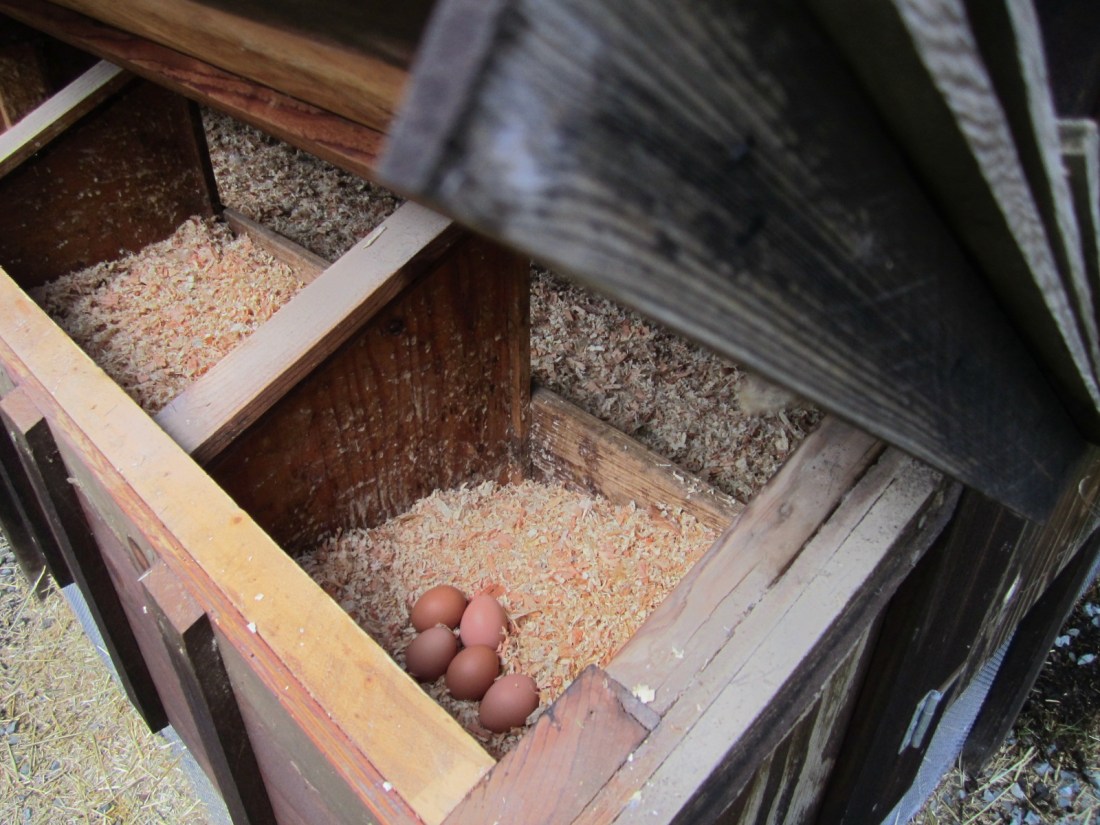
Eggs will appear in the nesting boxes when the hens are about five months old.  Their feed should be switched to the non-medicated type before this time.  Read and follow the directions on the bag.
IMG_4960

Photos above were taken in 2011, when everything was new, except for the last one.

This YouTube video from 2018 shows the ‘halfway house’ that was added a few years after the coop was delivered.  Chicks are moved there after their stay in the tub and are turned in with the older hens when three months old.

Forest Service Moving Ahead with Devil’s Garden Sale

The legal battle continues over wild horses removed from the Modoc National Forest in October and November, 2018, according to a syndicated report that appeared today in the Atlanta Journal-Constitution.  Animals aged ten years or more, currently held in a Forest Service corral, are subject to ‘sale without limitation’ next month, which means they could be shipped to slaughter.

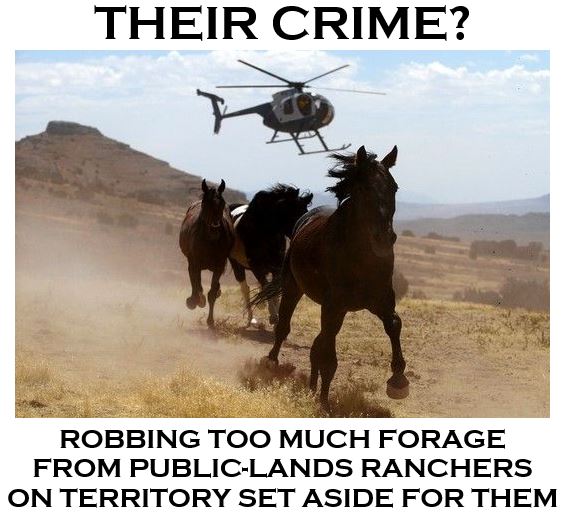
The report stated that “Ranchers generally support these sales because of the horses’ economic impact on leased grazing land.”  It didn’t mention that the land was set aside for the horses.

Robbing_Too_Much_Forage-1

RELATED: Group Attempts to Block Sale of Devil’s Garden Horses, Devil’s Garden Horses Get Short End of Stick, Livestock Grazing in California.

Group Attempts to Block Sale of Devil’s Garden Horses

The Animal Legal Defense Fund has asked a federal judge in San Francisco to stop the sale without limitation of wild horses gathered from the Devil’s Garden Plateau WHT in October and November, according to a report filed today by Reuters.

The Forest Service announced last month that it would delay the process until February.

RELATED: Forest Service Delays Sale of Devil’s Garden Horses.

Founder of South Dakota Wild Horse Sanctuary Remembered

Dayton O. Hyde, founder of the 11,000 acre Black Hills Wild Horse Sanctuary, died 12/22/18 at the family ranch in Oregon.  He was 93.  Refer to this story posted 12/30/18 by the Herald and News of Klamath Falls.

The sanctuary was in the news recently because of a conservation easement that affects over 70% its land.  It will continue operations under the leadership of Susan Watt.

UPDATE: Added video by Black Hills Wild Horse Sanctuary.

Palomino Valley Corrals, Day Ten of Government Shutdown

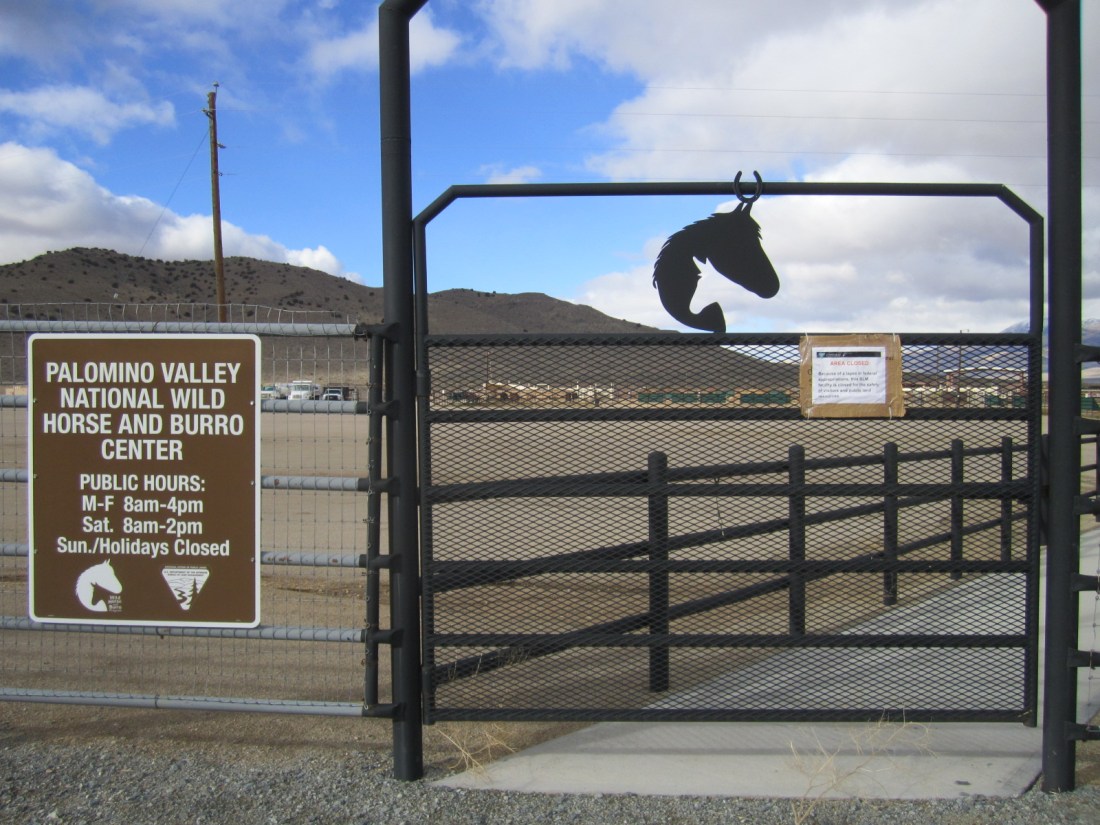
Monday, December 31, 2018, a cold and windy day in northern Nevada.  It’s day ten of the federal government shutdown.  Nobody to be seen at BLM’s Wild Horse and Burro Center, about twenty miles north of Sparks on Highway 445.

IMG_7842

The visitor gate was shut.

IMG_7844

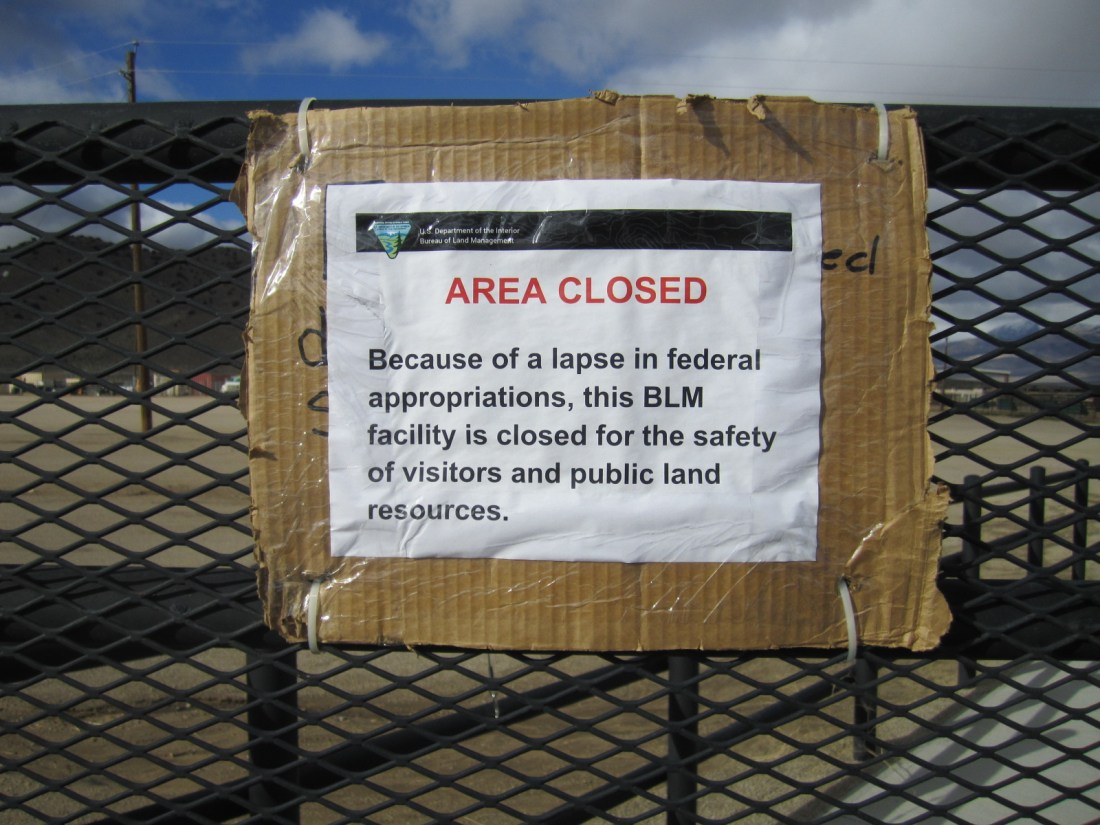
A temporary sign told the story.

IMG_7847

The office was idle.

IMG_7856

You’ll have to read the signs to find out what goes on there.  The display is on the south side of the facility, along Ironwood Road.  See this video.

IMG_7867

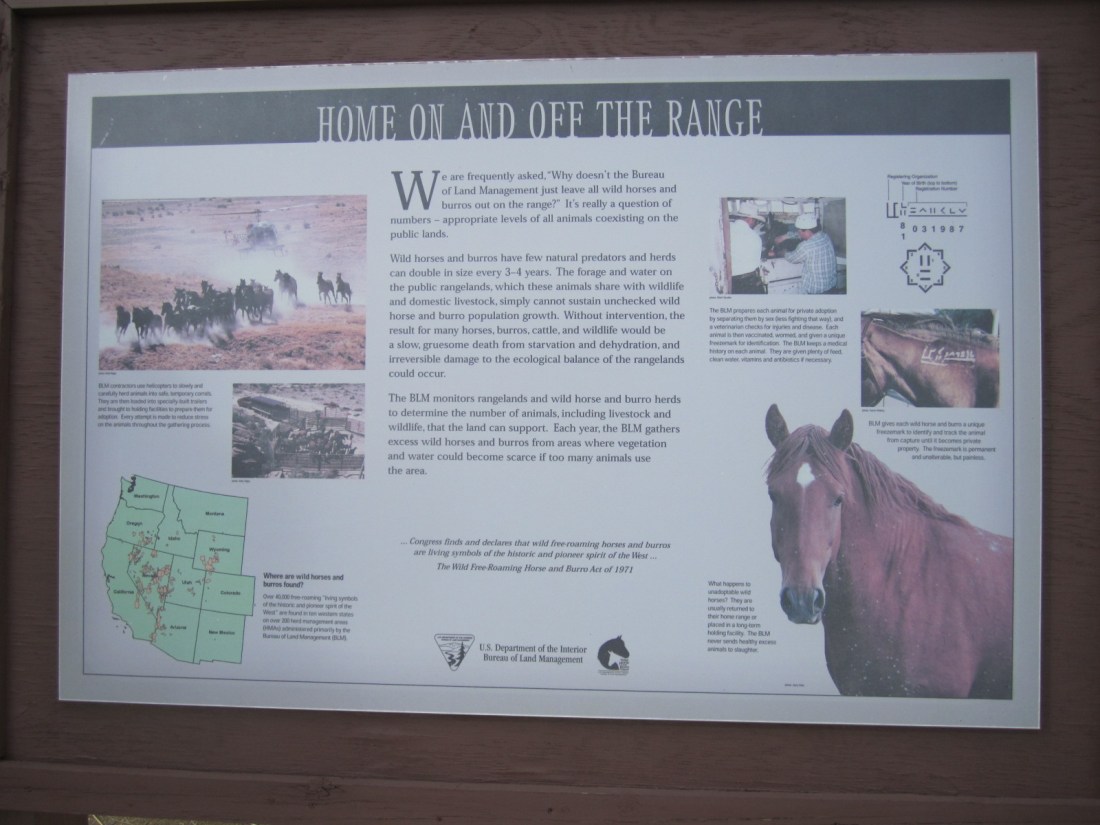
This one tells the story of wild horses and burros on public lands in the western U.S.

IMG_7865

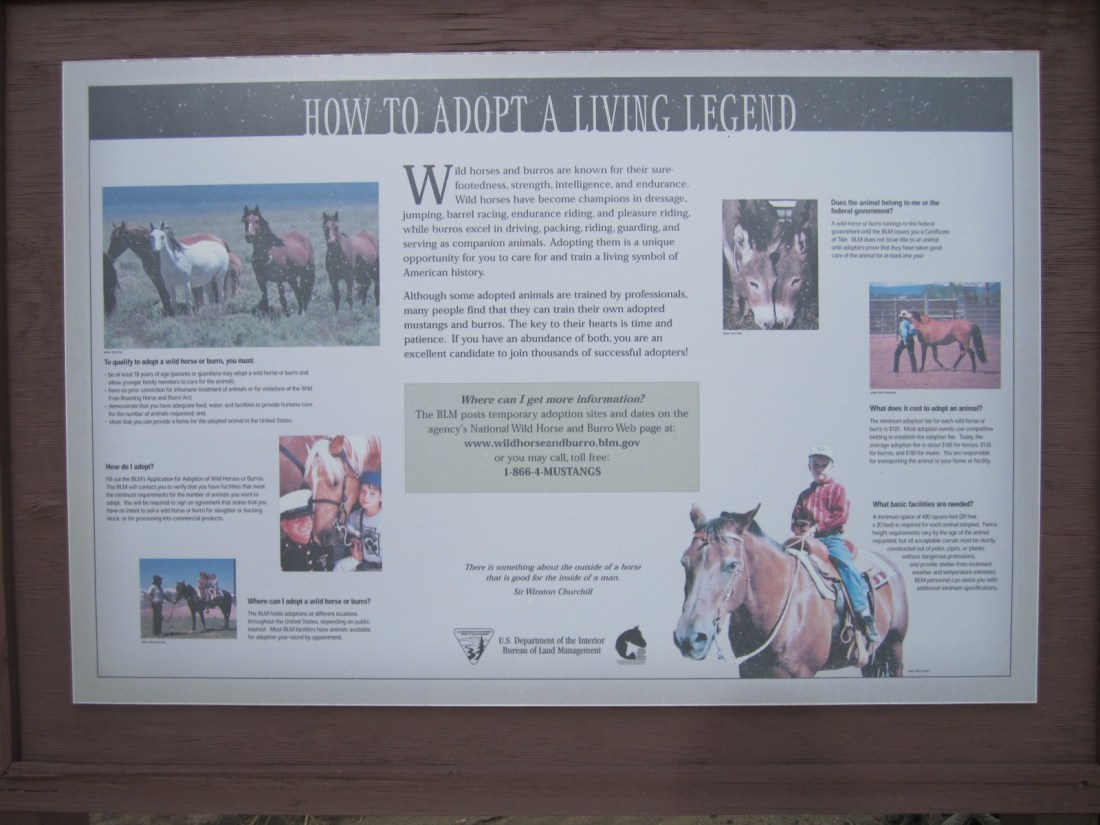
There’s also some information on how to gitcha one.

IMG_7864

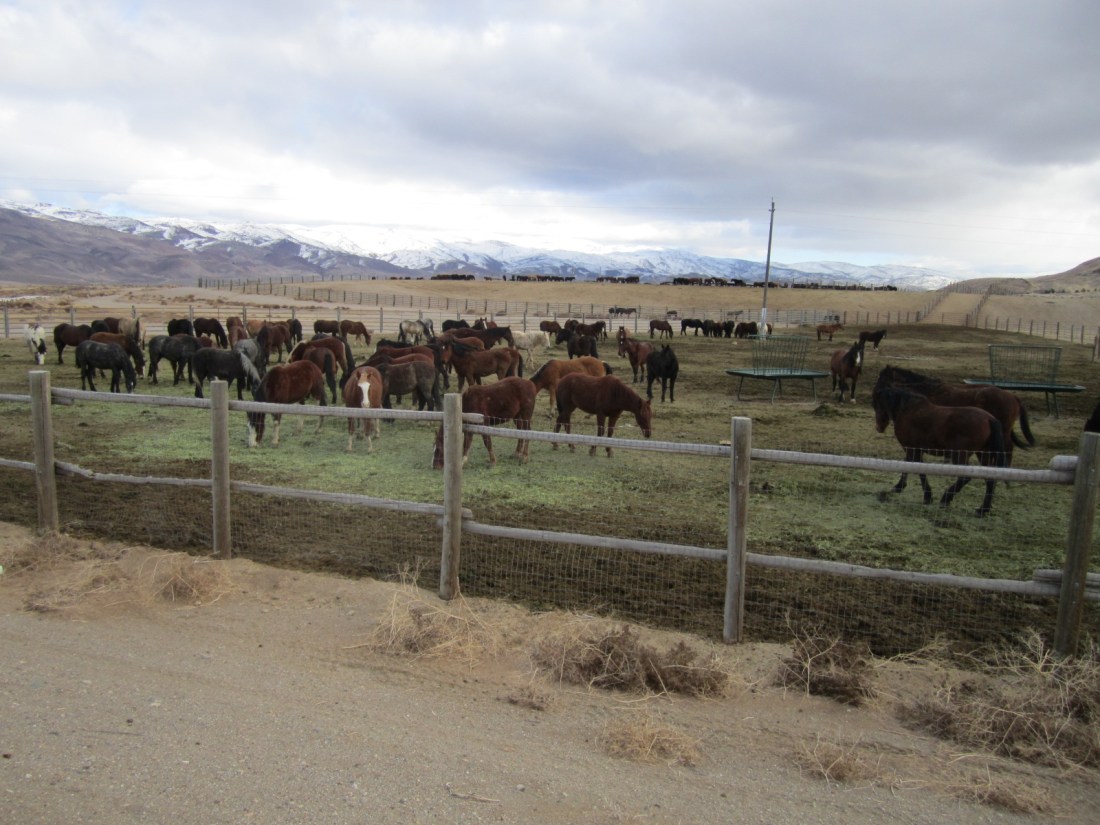
Although nobody was there to identify the horses and show you around, someone has been stopping by to feed them.

IMG_7903

These guys looked okay, despite the harsh conditions and lack of shelter.

Fence Post Replaced, Finally

Four by six treated post failed in May, 2018, probably because one of the horses put his butt to the fence to scratch it.  Installed October 2103, replaced 12/28/18.

Step 1: Gather tools and materials.  Best way to carry eighty pound sacks of cement to the job site?  Your tractor.

IMG_7791

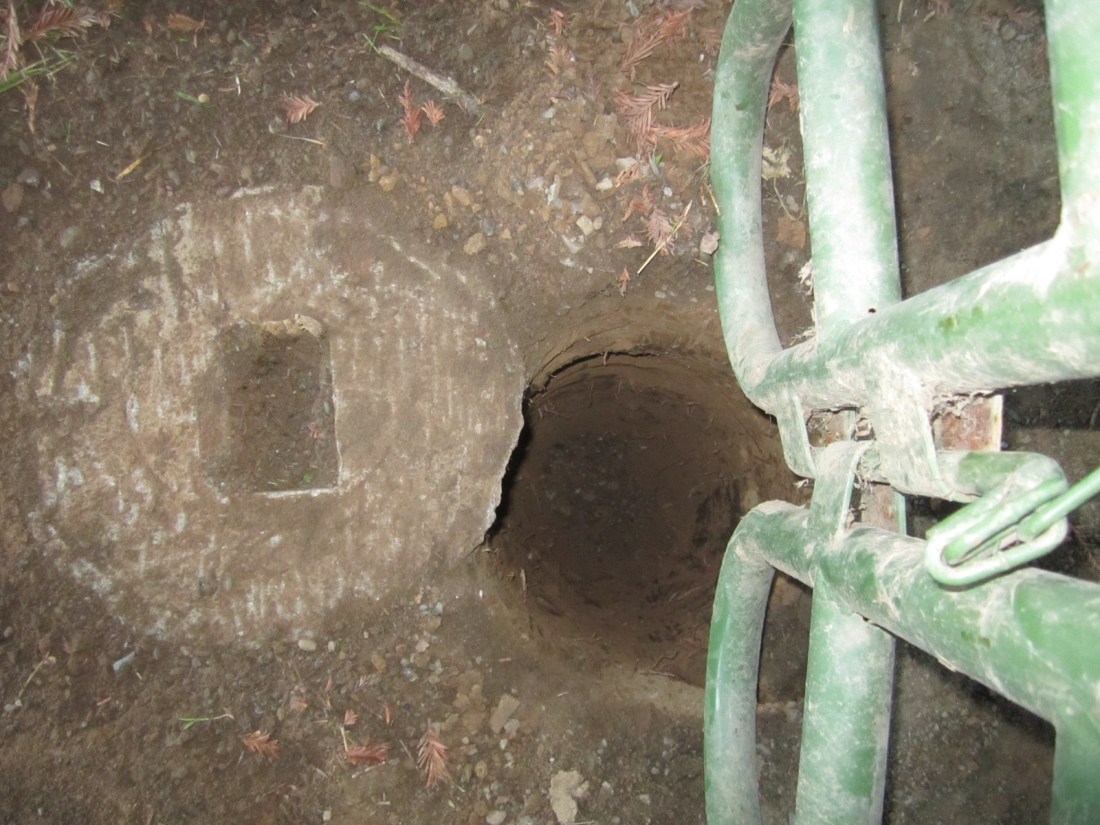
Step 2: Dig the hole.  The fence tells you where.

IMG_7794

Step 3: Check depth of hole.  Top of post should be at top of fence, in this case about 64″ above grade.  Hole should be deep enough to place a few inches of gravel at the bottom so the post does not rest on soil.  Don’t cut the post, dig the hole deeper.

IMG_7799

Step 4: Use a level to plumb the post.  Mix the cement and place in hole.  In this photo, a wood block braces the new post against the old concrete.

IMG_7803

Step 5: If your pipe panels have loop legs, be sure to press them into the concrete before it hardens.  Make sure the depression can drain into the surrounding soil.  Top of concrete should be slightly higher than grade, so rainwater runs away from the post.

IMG_7808

Step 6: Secure the fence to the new post.  A U-shaped metal strap with two 1/4″ lag bolts should work.  You can see one near the top of the first post in this photo.  The new post is next in line.

IMG_7819

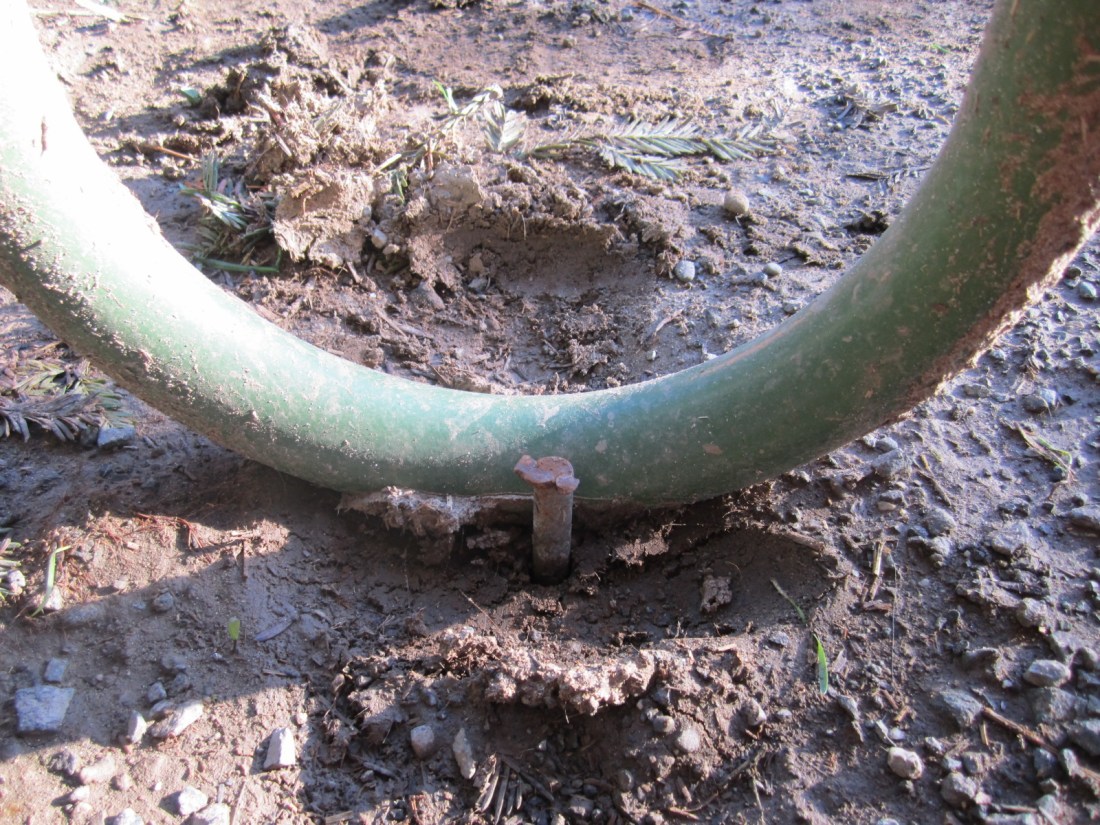
In this corral, the pipe panels are supported at every other junction.  Steel rods were pounded into the ground where not supported to keep the horses from pushing those sections out (the pinned joints act like hinges).  You can make the rods from #4 rebar or larger.  Drive them in on the outside of the leg until flush with the top of the loop.

IMG_7823

Technical note: The 4×6 posts in this corral were oriented with the broad side facing the pipe panels, to accommodate the U-shaped straps.  The posts would do a better job of resisting the horses if their narrow side was put toward the fence.  But you’d have to find another way to secure the panels to them, such as drilling holes through the vertical members and lagging them directly to the posts.  Straps have more ‘give,’ which is nice when horses lean against the fence or ground conditions change from wet to dry.  The face-to-face spacing between 6×6 posts on a 12′ gate can change 1/4″ or more between summer and winter in this area.

South Dakota Sanctuary Stuck with Conservation Easement

The highest court in the state has upheld a circuit court decision to dismiss a lawsuit brought by the Black Hills Wild Horse Sanctuary to cancel a conservation easement granted to The Nature Conservancy.  The easement limits the use of 8,300 acres of sanctuary land, according to a report that appeared today in the Washington Times.

The sanctuary received $230,000 in exchange for the easement.

The report did not indicate who owns the 8,300 acres, what uses were prohibited, and if the ruling would be appealed.

In a related story, seventeen wild horses arrived at the sanctuary in October after being removed from the Fort Polk army base in Louisiana.