The incident occurred in Moore, SC, on the evening of January 6, according to a report by WYFF News of Greenville, SC.
The Spartanburg animal control department is investigating. A reward has been offered for information leading to an arrest.

Western Horse Watchers Association
Exposing the Hypocrisy, Lies and Incompetence of the Wild Horse Advocates
Around the ranch
The incident occurred in Moore, SC, on the evening of January 6, according to a report by WYFF News of Greenville, SC.
The Spartanburg animal control department is investigating. A reward has been offered for information leading to an arrest.
The pet cemetery delivered his remains yesterday, in an oak box. Will try to put something together about end-of-life options for your horse, including costs.
RELATED: Farewell Trapper.
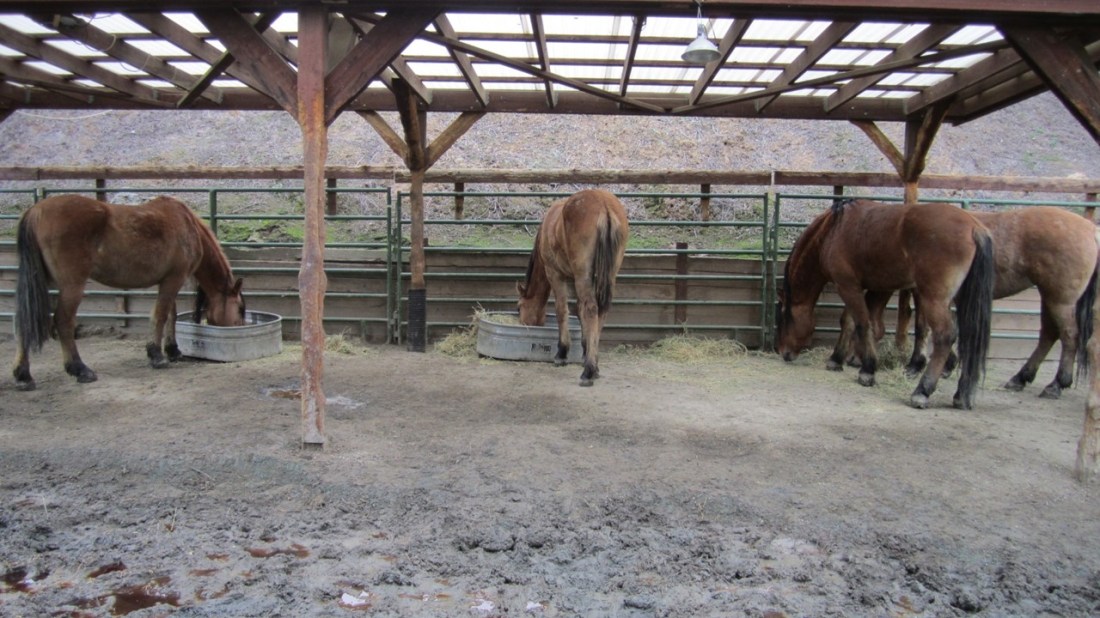
The retaining wall provides a backstop for their hay. They usually fling it out of the troughs and scatter it around, eating the leafy material first.
Moving the troughs to the rear of the shelter, shredding the flakes and feeding smaller amounts more frequently has reduced the amount that ends up in the mud.
Colt, in center of photo, was nine months old on January 1.
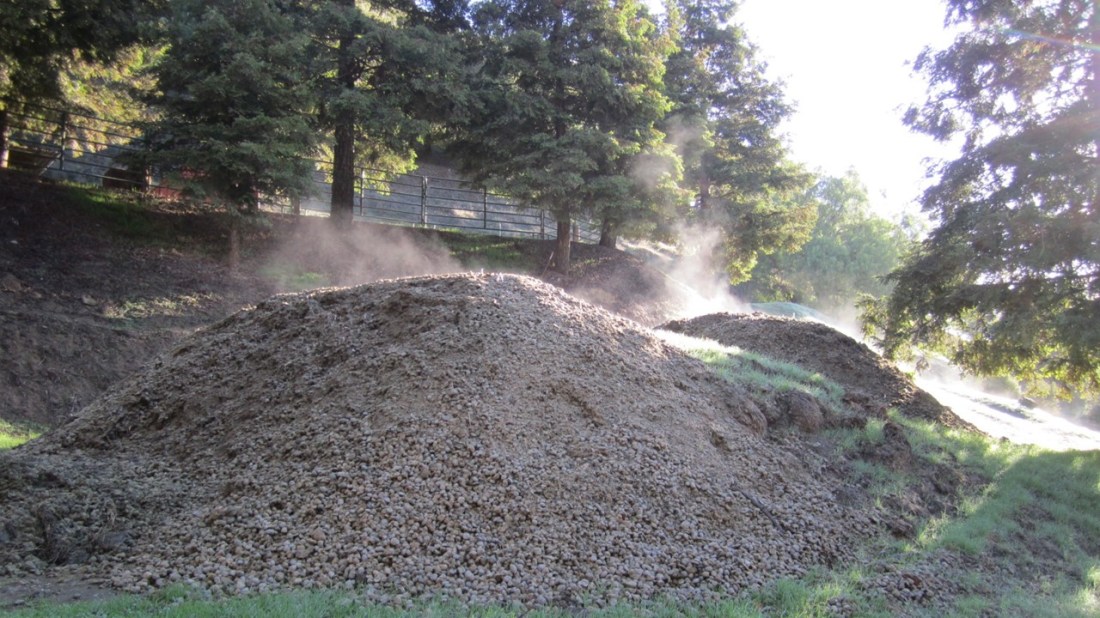
Steam rises in the morning sun on January 5.
Refer to this report, posted yesterday by the CBS affiliate in Sacramento, CA.
A story published yesterday by Fox News of Colorado Springs, CO says that a rescue in Ellicott has reached its capacity and now has a waitlist with eleven more.
An email sent this morning asking if any of the horses are coming in with freeze marks has not been answered.
A BLM public affairs officer reported earlier this month that adoptions had declined this year for similar reasons.
RELATED: Cost of Feed?
Haven’t felt like writing very much today, lost one of my horses. He would have been 30 in a few weeks. Didn’t have any papers but was supposedly part thoroughbred. He’s the middle horse in this photo from June 28.

BLM said today that the off-range corrals, destination of the some of the Devil’s Garden horses, are closed to the public in response to county edicts related to Covid-19.
On-site staff are continuing to care for the animals held at the facility, according to the news release.
The new rake works pretty darn well. When you’re spending two or more hours a day cleaning corrals, seven days a week, rain or shine, you look for labor-saving ideas.
RELATED: Gathers and Removals: Horse Poop Edition.

Corral cleaning is like leaf collection: You first have to gather the pieces into piles then transfer them into a container for removal.
The typical manure rake, on the right in the photos below, is made of plastic. It’s designed for scooping not raking. When you flip it over and use it as a rake, the tines break off, usually in the middle. It’s a productivity killer.
Home Depot has a True Temper leaf rake made of metal that works great for gathering the poop into piles. Only complaint is that the handle is a little short and made of metal. In the winter it will pull the heat out of your hands if you’re not wearing gloves.
Price is $16. It’s better and faster than a manure rake for horse poop roundups.

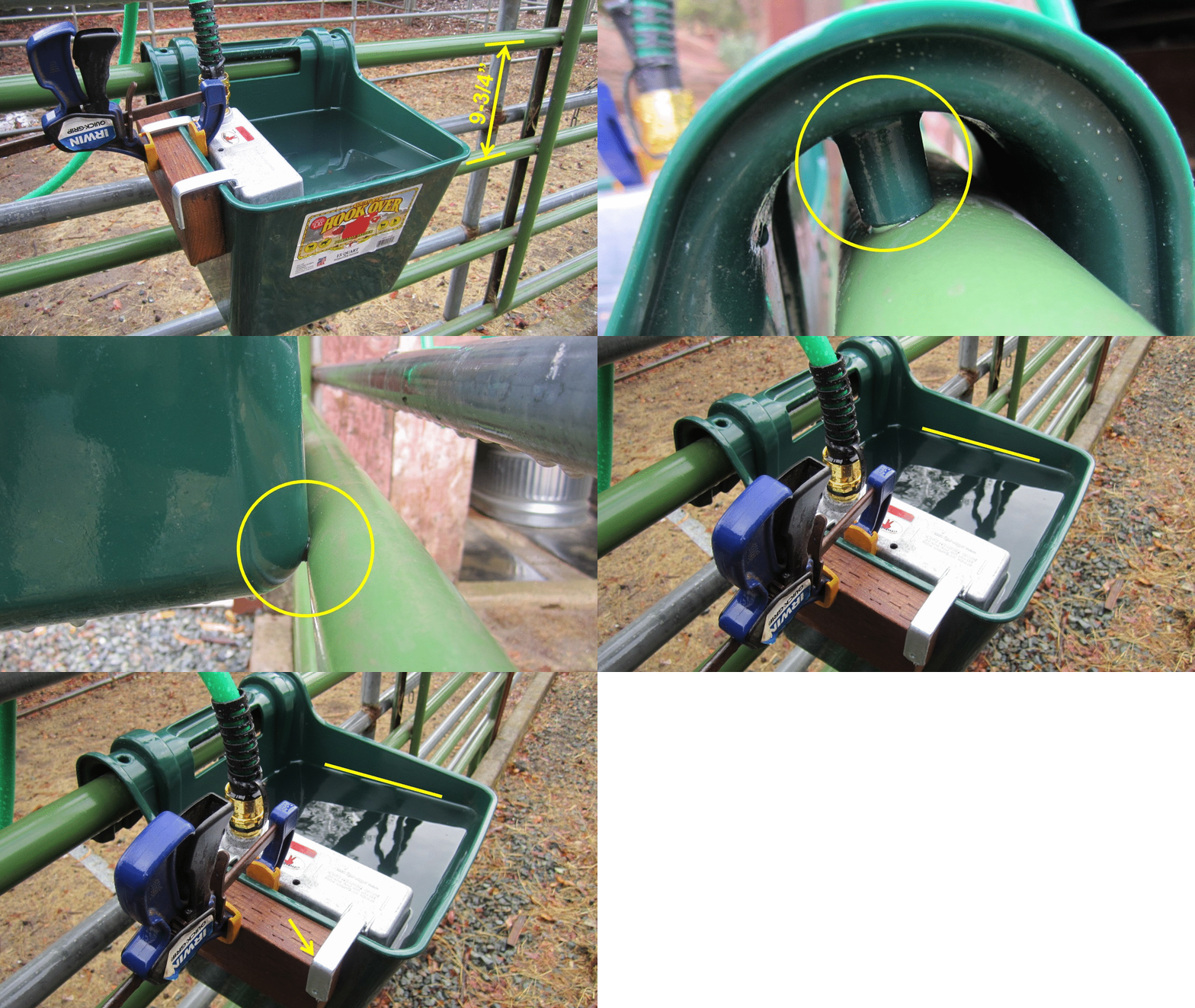
Duraflex buckets won’t work on pipe panels with rail spacings greater than ten inches.
The rails in the Powder River panel below are on 9-3/4″ centers. Lugs under the hooks lift the bucket, so the lower edge barely contacts the rail. The galvanized panel in the background has rails on 12″ centers.
The bucket tilts slightly when hooked over the panel, bringing the water level closer to the rim. Holes for the mounting block should be within an inch from the rim.
The block in these photos is still clamped to the bucket and the brackets for the valve haven’t been secured to it, allowing the valve to slide toward the front of the bucket.
The hose was purchased at Home Depot. The feed store used to carry them but not any more. The hose should have 3/4″ male thread on one end, to connect to the float valve, and a 3/4″ female thread on the other, to connect to a standard hose bibb.
A washing machine hose won’t work.
RELATED: Hookover Bucket Mock-Up.
Switched to Duraflex instead of Fortiflex. Water level is about two inches below the rim and barely touches the float valve. Next step will be to secure the valve to the bucket so the horses can’t flip it out of the water, which happened on the Virginia Range.
RELATED: Another Water Bucket Destroyed.

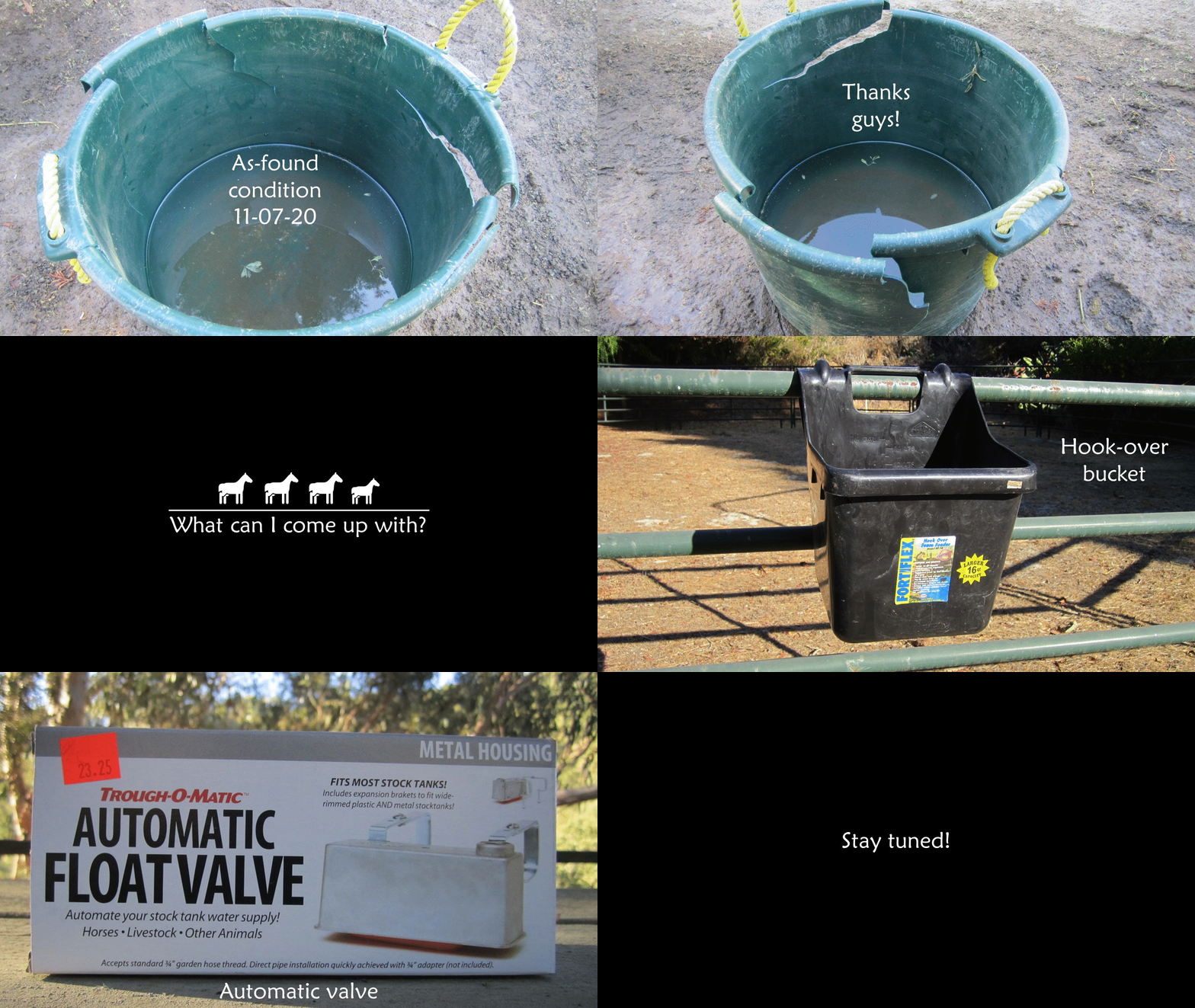
It was in good shape last night. The sediment in the bottom suggests they put their feet in it, which happens almost daily, but why destroy it? These things cost $25 apiece.
The cover on the DuraMate automatic waterers prevents a thorough cleaning of the unit, you have to take it apart to bleach that area. I want something that can be lifted off the pipe panel, cleaned and easily reinstalled, yet won’t get torn down by the horses.
It would be a miniature version of the water tanks on the Virginia Range.
BLM said today that it has requested bids for new short-term holding facilities in Idaho, Nevada and Utah. Capacities of 500 to 10,000 wild horses and burros are desired, according to the news release.
Animals delivered to the corrals will be held temporarily before transfer to off-range pastures or adoption/sale locations across the country.
Proposals will be accepted through November 30.
The construction of a high-capacity animal feeding operation was the subject of a heated debate earlier this year in Laramie County, WY.
RELATED: BLM Seeks Off-Range Corrals.

A man who led a horse from its stall last December and killed it for its meat has been arrested and charged, according to a report posted yesterday by AP News.
In a 2018 interview on Fox News, Dave Duquette, spokesman for Protect the Harvest, a cheerleader group for the public-lands ranchers, said “There was one meat buyer…in the south of…in Florida…that said he had 2.3 million Hispanics down there that would eat it…every day if they could get it.” That video has been scrubbed from YouTube.
Just realized this monthly newspaper is now online. Based in Gardnerville, NV.

Now that the roundup is over, the daily reports have been replaced with adoption/sale information. All stallions will be gelded and mom/baby pairs are available.
Today’s InciWeb report states that the fire has spread slightly to the northeast and east over the last 24 hours, with containment holding at 14%. The total area burned is now about 161,200 acres.
Winds out of the west and southwest are expected over the next 48 hours.
Western Horse Watchers is estimating the fire to be about five miles west of Deerwood Ranch and two miles to the south. An email sent to the ranch earlier today has not been answered. The location on the following map is a best guess.
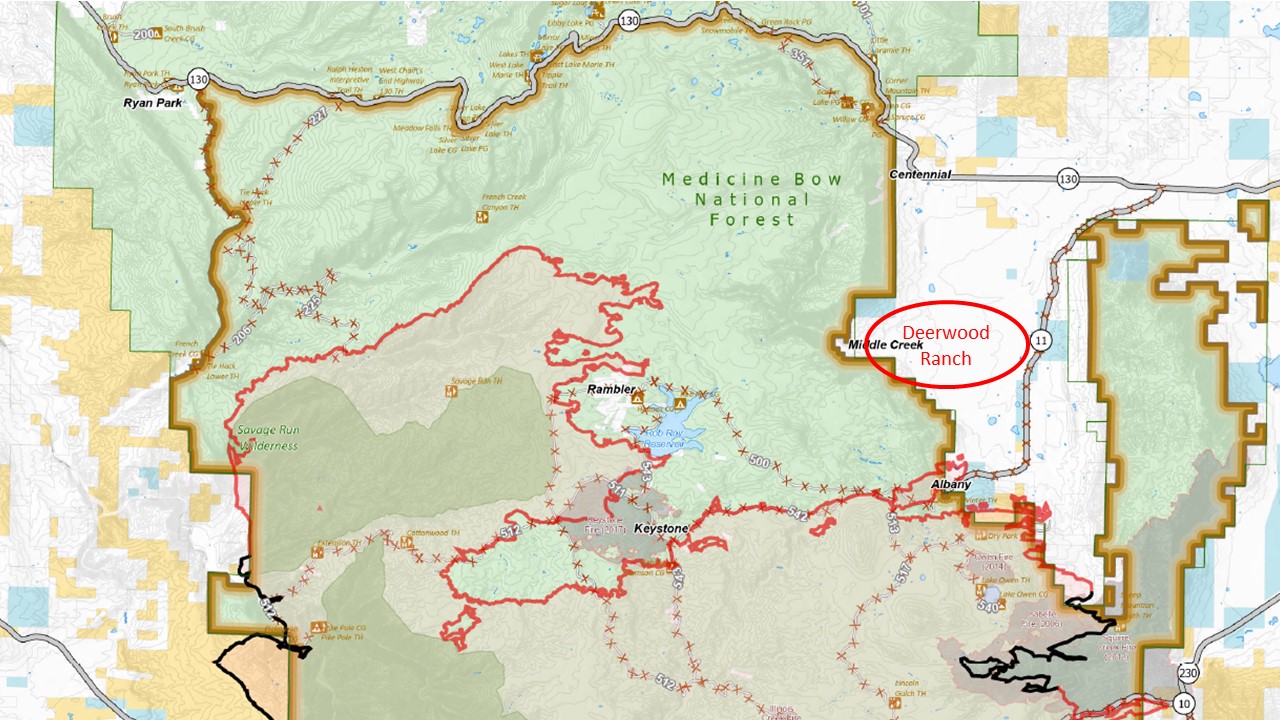
The ranch is home to 350 wild horses, according to the BLM page for off-range pastures.
RELATED: Deerwood Off-Range Pasture Threatened by Mullen Fire?
A report by Wyo4News says the BLM is monitoring the situation in southeastern Wyoming and is prepared to evacuate the horses to corrals in Rock Springs if necessary.
The fire started September 17 in the Medicine Bow National Forest.
The 4700-acre Deerwood Ranch has a capacity of 350 wild horses, according to the BLM page for public off-range pastures.
Not sure if Google is still sending out email notifications of new videos so if you’re subscribed to the channel here is a link to the latest. Or you can watch it here.
 Western Horse Watchers Association