What If the Rock Springs HMAs Were Zeroed Out with Pesticides?

Would the advocates drop their lawsuits?

What if the pesticide of choice was PZP?

Would they offer to do it at no charge?

Consider the June 25 news release by the Animal Welfare Institute about the BLM’s wild horse eradication plan in southwestern Wyoming.

Removal of nearly 5,000 wild horses could start as early as October 1.

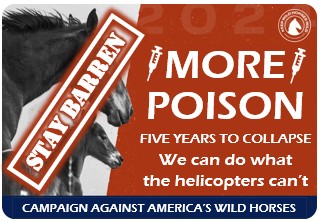
At the end of the announcement, AWI cites the Virginia Range fertility control program, where their coalition partner, the Campaign Against America’s Wild Horses, is wiping out a herd of roughly 3,500 with PZP sterilization.

They have no problem with that!

RELATED; Scoping Begins for Rock Springs Wild Horse Removal.

Pesticide Pushers 07-17-23

They Fear Western Horse Watchers Most

The Love Triangle has been rocked back on its heels, long overdue.

From the unlawful use of pesticides to the mismanagement of resources, your host has put these phonies under the microscope and they don’t like one bit.

They’re now circling the wagons to protect their beloved gravy train, hoping their big-tech minions will ride to the rescue.

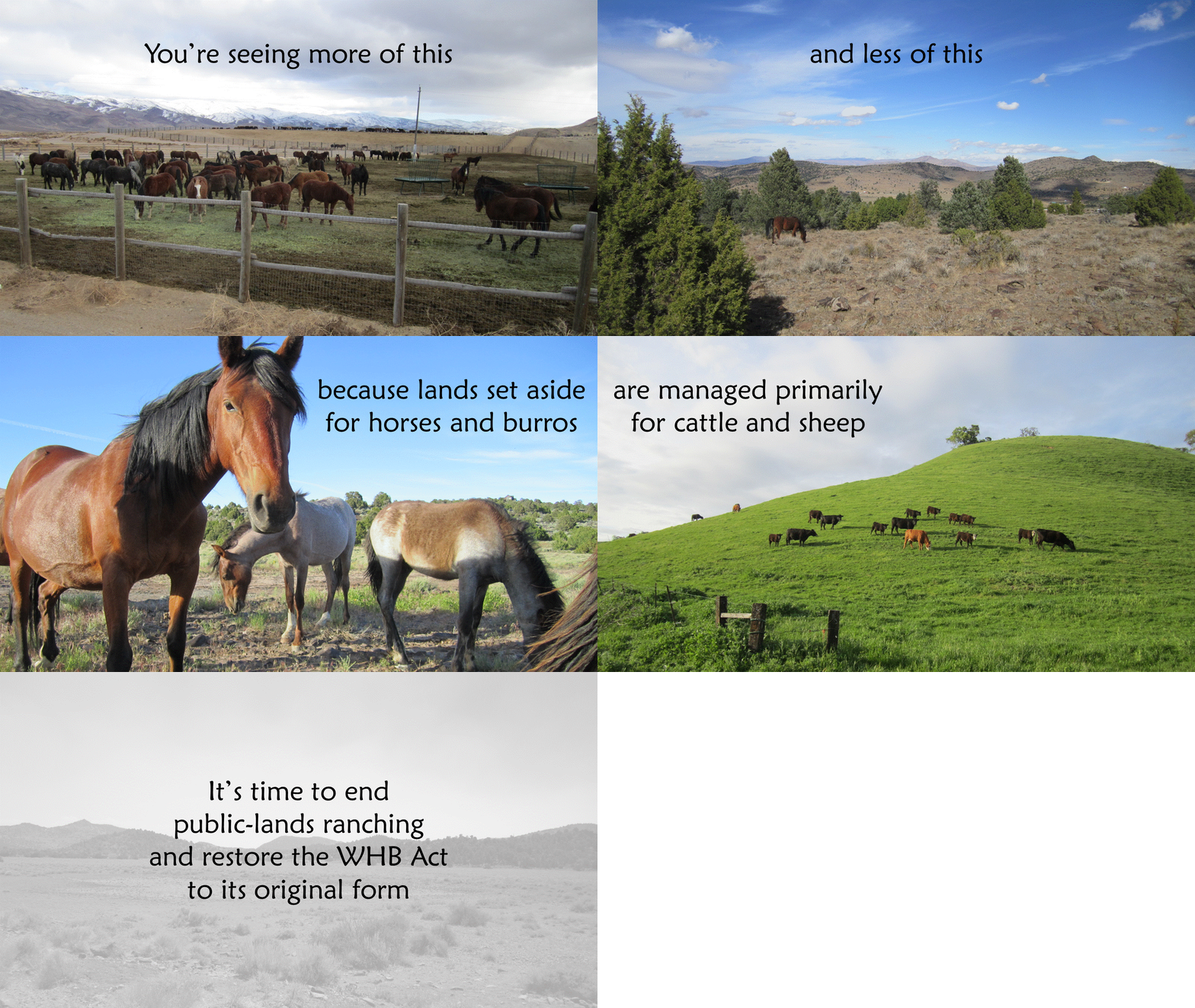
America’s wild horses will not be safe until the public lands have been cleared of privately owned livestock and the statute has been restored to its original form.

Working Together for a Horse-Free Future 12-21-22

Observing Wild Horse Roundups Does Not Protect Wild Horses!

The new fundraiser could be titled “Greaves Carries Water for Leigh.”

The goal is $2,000, with a current balance of $260.

Presumably, the money will support observation of the North Lander roundup starting on or about July 1.

It will not break the cycle of wild horse removals in favor of privately owned livestock, motorized or nonmotorized.

It will not change the goal of ranching superiority in the lawful homes of wild horses, sometimes referred to as achieving and maintaining AMLs.

It will not alter the cozy relationship between the bureaucrats and ranchers, which the advocates accept and support.

It will not give principal use to the horses as Velma and the 92nd Congress intended in the original statute.

It will, however, keep their base fired up and the donations rolling in, while protecting and preserving the status quo.

RELATED: North Lander Roundup Pending.

Thriving Ecological Balance-3

Currituck Herd Adds Another Foal, Exonerating Advocates?

Too early to say.

The PZP darting program was suspended in 2022 but was it soon enough to save the herd from irreversible decline?

The herd on the Maryland side of Assateague Island is still shrinking eight years after the darting program was shut off.

A story dated June 21 by OBX Today says the filly was born earlier this month but does not indicate how many foals have been born this year and how many horses have died.

If life is incredibly fragile for the horses, as stated in the article, why were the advocates trying to snuff it out?

PZP, a restricted-use pesticide, tricks the immune system into attacking the ovaries, resulting in sterility after five years of treatment.

RELATED: Currituck Advocates Send New Filly to Beach in the Sky.

Foal-Free Friday, Protecting the Gravy Train Edition

Can you imagine starting a nonprofit, and eventually raking in hundreds of thousands of dollars or even millions every year, while sidestepping the most important issue facing wild horses?

That’s what the advocates do.

Can you imagine inventing a fake problem to hide the real problem and supporting it with a bullshit storyline based on an undefined term in the statute?

That’s what the bureaucrats do.

Can you imagine trying to stay above the fray while reaping the benefits flowing therefrom?

That’s what the ranchers do.

Can you imagine silencing your critics to keep the situation out of the public eye and maintain the status quo?

That’s what their big-tech minions do.

Welcome to the Love Triangle on America’s public lands.

More poison for the horses means more forage for the ranchers, exactly what the bureaucrats ordered.

RELATED: Foal-Free Friday, Breaking with the Past Edition.

Pancake Gather Plan

Turmoil at Little Book Cliffs?

Lawmakers behind the Colorado Wild Horse Project are upset that the BLM is working on a plan to do what their legislation was designed to prevent, according to a story dated June 19 by The Grand Junction Daily Sentinel.

Predictably, the Campaign Against America’s Wild Horses, unable to come up with an original thought, called for greater use of PZP, a restricted-use pesticide that tricks the immune system into attacking the ovaries.

Although the agency is working on an Enviornmental Assessment for management actions in the HMA, the roundup was dropped from the schedule earlier this month.

RELATED: Colorado Wild Horse Project Helps Ranchers, Not Horses.

GonaCon Crime Ring in Oregon?

Last year the Bureau of Livestock Multiplication gave High Desert Strategies, sometimes referred to as Shaney and the Riflemen, $468,033 to expand their pest control efforts in the lawful homes of wild horses.

The HMAs appear in the first part of the latest schedule for nonmotorized removal.

The pests, of course, are the cherished wild horses.

Their homes lie within grazing allotments, the birthright of the ranchers.

The riflemen run livestock on said allotments.

The pesticide of choice is GonaCon Equine.

Like most darting programs, there is no accountability to the public.

We don’t know if they’re darting mares or stallions.  The product works on both.

We don’t know if they’re applying one dose or two.

We don’t know the interval between doses, which the EPA changed from a minimum of 30 days to 90 days in a 2017 labeling amendment.

We don’t know anything about genetic viability, the number of viable mares and the size of the breeding populations.

We don’t know about changes in death rates and herd demographics.

We don’t know if they’re using the proper PPE.

We don’t know their names.

We don’t know if they’re certified applicators.

The Directions for Use say “It is a violation of Federal law to use this product in a manner inconsistent with its labeling.”

We know the agency used the pesticide unlawfully at Red Rock, Reveille and Clan Alpine, so why shouldn’t the pattern carry over in Oregon?

GonaCon was used in other roundups over the past two years but it’s not clear from the daily reports if two doses were applied and the interval between them.

RELATED: BLM Awards $1 Million for Wild Horse Protection?

Adjectives for Pests 12-01-23

Advocate Defends Virginia Range Sterilization Program

There was no need to remove any wild horses.

The Nevada Department of Agriculture only needed to float the idea because they knew the advocates would fold like cheap suits and do the dirty work for them.

Speaking in favor of the effort is Tracy “You need to manage the numbers to fit what’s available for the horses” Wilson, defeatist, pesticide pusher and ranching sympathizer with the Campaign Against America’s Wild Horses, a leader in nonmotorized removal.

RELATED: How to Bring the Advocates to Their Knees.

Wild Horse Fire Brigade Takes “Path Forward” to New Level

You know an idea is bad for wild horses if the advocates support it.

Likewise, you know an idea is good for the ranchers if Elko County endorses it.

The Wild Horse Fire Brigade goes far beyond the “Path Forward,” a 2019 plan for ranching superiority in the lawful homes of wild horses, sometimes referred to as achieving and maintaining AMLs.

The AMLs would go to zero.  The ranchers would get everything.

What happened to the horses?

They were sent to remote wilderness areas not particularly suited to livestock grazing, to stop lightning, arsonists and campers from starting wildfires.

Problem solved.

RELATED: SHOCKER: Elko County Endorses Wild Horse Fire Brigade.

McKinney Fire 08-08-22

Putting the Grazing Program on Par with the WHB Program

The BLM allows livestock equivalent to 1,023,481 wild horses on 145,895,940 public acres, or seven wild horses per thousand public acres, as discussed previously.

To bring the grazing program in line with the wild horse and burro program, which allows one such animal per thousand acres, the bureaucrats would need to relieve the ranchers of six out of seven AUMs, or approximately 86% of the forage apportioned thereto.

This would likely result in a major disruption of the gravy train.

A level playing field would mean that cause of poor rangeland health would be much more difficult to identify.

RELATED: Putting Wild Horses on Par with Privately Owned Livestock.

SHOCKER: Elko County Endorses Wild Horse Fire Brigade

The battlefield is America’s public lands, not urban neighborhoods as stated in a June 12 report by KOLO News.

The idea is to move wild horses from their lawful homes to remote wilderness areas not suited to livestock grazing, so ranchers can have all of their food.

That’s why the commissioners like it, along with the Nevada Lands Council.

A better way to alleviate the conflict is to confine the ranchers to their base properties in a year-round off season and let them pay the going rate to feed their animals.

No more gravy train, no more sucking on the government teat.

RELATED: Wild Horse Fire Brigade Serves Ranchers, Not Wild Horses.

KNPR Tours Winnemucca Corrals

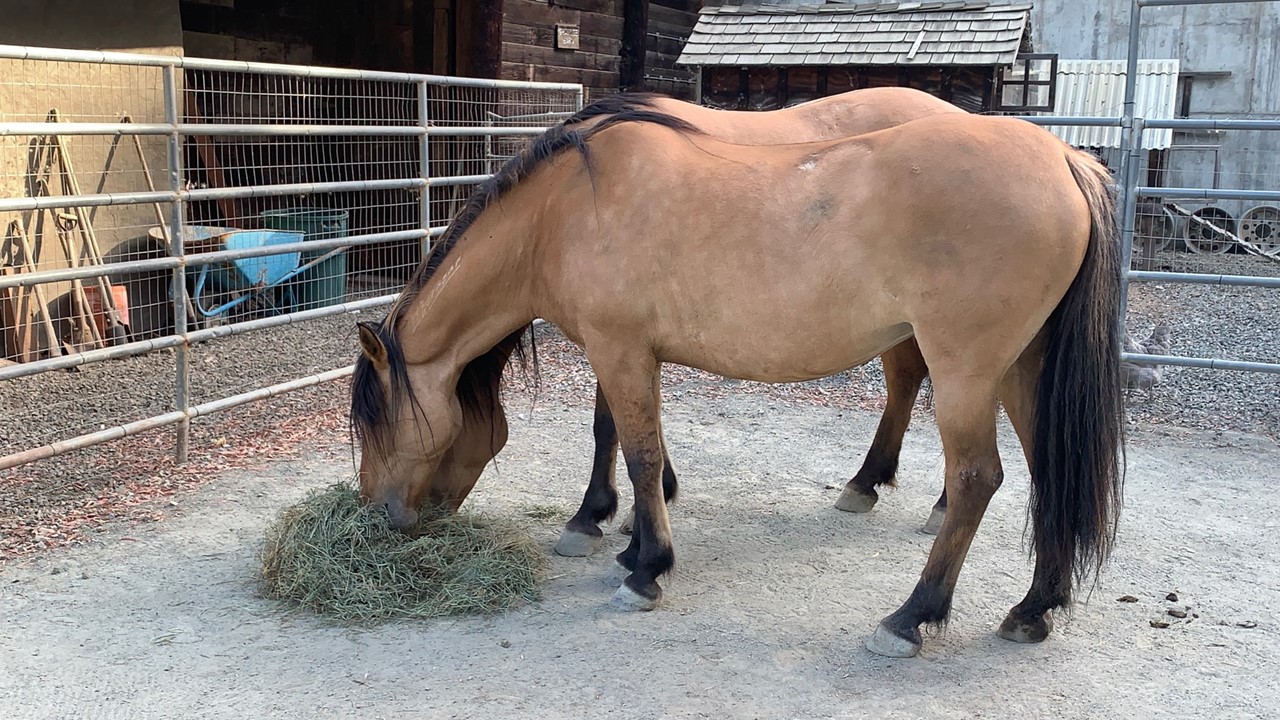
The BLM representative is back with another tall tale about wild horses in this 5-minute audio segment: They’re built much differently than domestic horses, evident in the photo below.

The extra chromosome really makes a difference.

Instead of explaining how the conflict on public lands can be alleviated by clearing them of privately owned livestock, a spokesperson for the Campaign Against America’s Wild Horses argued in favor of nonmotorized removal, which helps the ranchers.

Better Way 10-25-23

If they had their way, there would be no more roundups and no need for off-range holding, because there would be no more horses, an intended consequence of mass sterilization with PZP, now in progress at the Salt River and Virginia Range.

They are phonies, leaders of the blind, irrelevant.

RELATED: Winnemucca Off-Range Corrals Open to Public Next Month.

Wild Horses Built Much Differently 06-12-24

Foal-Free Friday, Race to the Bottom Edition

The advocates, led by the Campaign Against America’s Wild Horses, are trying to prove that the Montana Solution is a viable alternative to motorized removal.

Behind the effort is a belief that there are too many wild horses on public lands in the Western U.S., that the bureaucrats are correct, and that the animals need to be removed from their lawful homes (in favor of privately owned livestock).

This view is held almost universally across their cohort.

We Want the Ranchers to Win 04-04-24

As stated previously, the AML of the wild horse and burro program would have to be increased from roughly 27,000 to nearly 189,000 to match the resource loading of the grazing program.

The land can support many more animals than the government admits, enough to empty all of the off-range corrals and long-term pastures several times over.

But the advocates are undeterred.

They continue to pummel the Salt River and Virginia Range mares with ovary-killing pesticides in the hope that the bureaucrats and ranchers will see the world their way.

Then they can spread the poison to other areas, at a complete loss of whatever credibility and legitimacy remain, along with the herds themselves.

CAAWH Membership Card Exposed 01-01-24

They are phonies, leaders of the blind, unworthy of your financial support.

RELATED: Foal-Free Friday, Point of No Return Edition.

When Will Virginia Range Advocates Hit Ten Thousand?

Yesterday’s report put the total at 9,332 doses of PZP given to 2,030 mares since 2019, consisting of 2,517 primers and 6,815 boosters.

The field workers apply about five doses per day, rain or shine, so the goal should be reached in (10,000 – 9,332) ÷ 5 = 134 days, or about 4.5 months.

The October report should be the winner.

The mares will have received five doses apiece, enough to send the herd into irreversible decline like Assateague Island.

This is how the advocates save wild horses.

RELATED: Virginia Range Darting Update for May 2024.

Pesticide Pushers 07-17-23

Virginia Range Darting Update for May 2024

The Campaign Against America’s Wild Horses, a leader in nonmotorized removal, reported today that 189 mares received 192 doses of PZP during the month, 41 given as a primer and 151 as a booster.

Over the life of the program, which began in 2019, the advocates have pumped 9,332 doses of the pesticide into 2,030 mares, for an average of 4.6 doses per mare.

Since the beginning of the year, 119 foals have been born and 16 died.

The current population is thought to be 3,502, with 310 horses listed as missing, compared to 3,519 with 370 listed as missing in April.

The population was 3,480 with 353 horses listed as missing in March and 3,444 with 338 listed as missing in February.

The agreement with NDA was extended for a sixth year effective May 1 but it has not been posted to the darting resources page.

The goal for June is to shrink the herd by maximizing booster treatments to prevent pregnancies (and praying for the older horses to die).

Protecting Them From Removal 12-03-23

Not discussed:

  • Long-term population goal
  • Number of viable mares
  • Size of breeding population
  • Loss of genetic diversity
  • Changes in death rate and sex ratio
  • Unlawful use of pesticides

PZP tricks the immune system into destroying the ovaries.

After five years of treatment, the birth rate will no longer be able to keep up with the death rate and the herd will slide into irreversible decline.

The report will be submitted to the Nevada Department of Agriculture.

RELATED: Virginia Range Darting Update for April 2024.

Adjectives for Pests 12-01-23

TIME Looks at Wild Horse Politics

The BLM has been captured by the cattlemen according to the June 3 report.

They look at the horses as pests, something to get rid of, and something that infringes on the ranchers.

So do the advocates and their political allies, not mentioned in the article.

They want to get rid of them with PZP, a restricted-use pesticide that tricks the immune system into destroying the ovaries.

Better Way 10-25-23

“Despite the mythologies of the West, herd management is done more by aircraft than lasso these days.  And it’s often handled by the same companies intent on making room for their own cattle to roam, a twisted insiders’ game that lets the giant mega-ranchers cash in not just on flying the helicopters that clear the area, but then again with pennies-on-the-dollar deals to allow private cattle and sheep to graze on public lands.”

“The money behind it seems like a loop between bureaucrats, ranchers, and their helicopter pilots in a closed system that nefariously protects cattle and sheep at the expense of horses.”

Nobody wants to pick a fight with the ranchers, especially in an election year.

They have strong sympathy among voters, which should be easy to change.

Public-lands ranching is government dependency and redistribution of wealth, hallmarks of socialism, which most Americans reject.

No more gravy train, no more sucking on the government teat.

RELATED: How Much Private Land Do the Public-Lands Ranchers Control?

PSA 12-07-19

NDA Extends Virginia Range Mass Sterilization Program

The Animal Industry Report for the June 4 BOA meeting indicates on page two that the agency entered into a sixth-year non-exclusive cooperative agreement running from May 1, 2024 through April 30, 2025.

The Campaign Against America’s Wild Horses operates the search-and-destroy mission on their behalf.

Protect Wild Horses from Advocates 08-29-21

With a dwindling breeding population and growing number of nonviable mares, the tipping point is now within reach, where a decreasing birth rate cannot keep up with an increasing death rate, and the herd slides into irreversible decline like Assateague Island.

This is what the advocates bring to the table, a strategy that appeals only to hunters, ranchers, bureaucrats and their lunatic followers.

RELATED: Virginia Range Darting Program Now in Its Sixth Year?