Controlling Costs Not a Priority When Taxpayers Have Your Back

If you want to understand why there are so many wild horses in off-range holding, and why the government needs more corrals, more pastures and more adoptions, look no farther than the Little Colorado HMA.

It’s not in Colorado, but it explains why taxpayers are being asked to shoulder the growing costs of off-range management.

In general, the bureaucrats assign most of the forage in areas identified for wild horses to privately owned livestock.

At Little Colorado, the horses receive just 2.6% of the resource.  Table 8 in the 2021 EA for management actions in the Wyoming checkerboard has the data.

To keep the pests in check and ensure the ranchers have principal use of the HMA, the BLM takes them off the range and crams them into public and private feedlots.

None of this is intended to reduce costs.

More animals can be removed if there are more places to places to hold them.

The goal is ranching superiority in the lawful homes of wild horses, sometimes referred to as achieving and maintaining AMLs.

At Little Colorado, the AML ranges from 69 to 100.

Horse #70 is excess, the beginning of overpopulation.

The HMA can’t support more than 100, but it can sustain livestock equivalent to 3,750.

This accounts for six percent of the horses in off-range holding!
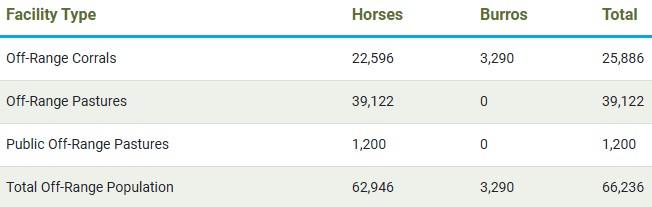
Off-Range Stats as of Sep-2024 12-26-24

If they really wanted to cut costs, they’d put the horses back on the range and confine the ranchers to their base properties in a year-round off season.

RELATED: What Are Musk and Ramaswamy Being Told About Wild Horses?

Thriving Ecological Balance-3

Conflict of Interest at Pine Nut Wild Horse Advocates?

The president of the nonprofit, a real estate agent, PZP darter and close supporter of the Campaign Against America’s Wild Horses, frequently writes about the Fish Springs herd in Horse Tales.

This month, her column begins on page four, wherein she mentions the “strong birth control program” that has reduced the reproduction rate by over 90% at no cost to the taxpayers.  (This means the herd is vanishing, perhaps irreversibly, because most of the mares have been sterilized.)

Her listings appear on the back page.

Cioffi Real Estate Listings 12-20-24

Let’s take a look at her clientele.

The owner of these parcels holds most of the active AUMs in the Buckeye Allotment, an area where the horses roam, which means she’s protecting ranching interests, and her own financial interests, not wild horses.

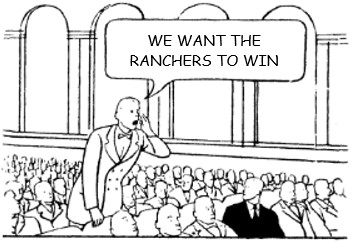
We Want the Ranchers to Win 04-04-24

Almost certainly everybody on the Board knows about this, which means they all should resign in disgrace.

RELATED: Who Has Grazing Preference on the Buckeye Allotment?

Foal-Free Friday, Mergers and Acquisitions Edition

How much longer before the advocates join forces with the farm bureaus, stockgrower’s associations and cattlemen’s groups?

The Campaign Against America’s Wild Horses could become the Field Services Division of the Coalition for Healthy Nevada Lands, providing mass sterilization where it’s needed most.

Their flagship darting program on the Virginia Range proves they can be as ruthless as the helicopter pilots and wranglers.

Return to Freedom could align in a similar manner with the Public Lands Council.

Other groups have already demonstrated their mettle by demanding new management plans that ratify and reinforce policies and practices already on the books.

And who wouldn’t want an endorsement from Elko County?

A first step in coming out of the closet and signaling your interest in a partnership might be to support the Washoe Lake fencing project, which will hurt the older horses most by driving them into the higher elevations in search of water.

The impact on young horses will be negligible because their numbers are small, thanks to the advocates.

We Want the Ranchers to Win 04-04-24

RELATED; Foal-Free Friday, Hypocrisy and Lies Edition

Picard Road Allotment: Good Things Come in Small Packages

The tiny allotment offers 21 active AUMs on 274 public acres, according to the Allotment Master Report, equivalent to 6.4 wild horses per thousand public acres.

Equivalent stocking rate = 21 ÷ 12 ÷ (274 ÷ 1,000) ≅ 6.4

This is far more helpful than anything peddled by the advocates because it

  • Defies the carrying capacity narrative
  • Destroys the rationale for their darting programs
  • Discloses their role as accessories to the ranching agenda

The target stocking rate across all HMAs is one wild horse per thousand acres (27,000 animals on 27 million acres), far less than what the land can support.

A draft CX for grazing permit reauthorization has been copied to the project folder in ePlanning.

Comments are due by December 27.

The nearest HMA is Pokegama, about five miles to the northwest.

RELATED: The Allotments Tell the Story: They’re Lying, All of Them.

Picard Road Allotment 12-18-24

If Louse Canyon Was a Wild Horse Complex

As noted yesterday, if the allotments were a Complex (consisting of two or more HMAs), the AML would be 534 and 2,551 horses would be consigned to off-range holding because of permitted grazing.

The horses allowed by plan would receive 534 ÷ 3,085 × 100% = 17.3% of the authorized forage, with the balance going to livestock.  A small amount would be reserved for wildlife, not considered in the analysis.

This is typical in areas managed for wild horses.

The low end of the AML would be 267.

Horse #268 would be excess, the beginning of overpopulation, even though the land can support him and many others.

Some advocates defend this philosophy with their HMAPs, guaranteeing that more and more wild horses will be crammed into government feedlots.

Others say the problem can be avoided by snuffing out new life with pesticide-laced darts.

Even the casual observer realizes they’re not playing for the home team.

We Want the Ranchers to Win 04-04-24

RELATED: If Wild Horses Had Principal Use of Louse Canyon.

Value of Endorsements from Elko County?

In ranching circles, you can’t beat them.

But if you’re trying to pass yourself off as a voice for wild horses, they’re the kiss of death.

That’s the situation at Wild Horse Fire Brigade.

Elko County Commissioners like the guy, which means he shouldn’t be allowed near wild horses.

There are other nonprofits, most of them obsessed with pesticides and doing their best to get rid of wild horses, that deserve endorsements.

The downside is that they might spook your donors, who you’ve been fleecing for years.

That’s a risk you don’t want to take.

Some things are better left unsaid.

RELATED: Good Grief, Another Story About WHB Nominee.

Pesticide Patrol 08-16-23

CAAWH Going Dark on Virginia Range Sterilization Program?

A few weeks ago the update for October appeared on the list of monthly reports but now it’s gone.

As of today, there is no report for November.

The 10,000-dose milestone predicted for October was likely reached in November.

Curiously, the Campaign Against America’s Wild Horses, a leader in nonmotorized removal and fierce opponent of principal use, has not been endorsed by Elko County.

RELATED: Virginia Range Darting Update for October 2024.

Good Grief, Another Story About WHB Nominee

The narrative started earlier this month with a story by KFYR News.

Now, KOLO News has jumped on the bandwagon.

You should support William Simpson of the Wild Horse Fire Brigade because he’s been nominated as the director of the BLM’s Wild Horse and Burro Program, even though the job title is Division Chief and the role is filled through postings on USA Jobs.

The guy’s a shill for the public-lands ranchers.  He wants to move wild horses from their lawful homes to remote wilderness areas not suited for livestock grazing.

No wonder he has the support of Elko County.

RELATED: Head of WHB Program Not a Political Appointee.

New Study Ignores Harmful Effects of PZP

The researchers examined the effects of PZP on the body condition of adult females, the timing of the breeding season and the survival of their offspring, finding that

  • The body condition of mares without foals improved faster than mares with foals
  • The foaling seasons of the treated herds were later in the year and more spread out
  • Deaths of foals born to treated mares through their second year of life were very rare and no more frequent than those of foals born to untreated mares

The research was carried out at Cedar Mountain and Sand Wash Basin.

Although the timing of breeding changed, the writers found no evidence that the changes were harmful to the treated mares or their foals.

Not addressed in the report:

  • Risk of sterility
  • Loss of genetic diversity
  • Skewing of sex ratios
  • Selection for weak immune systems

The authors claimed no conflicts of interest but one of them is with the Science and Conservation Center, manufacturer of the pesticide and home of the Billings School of PZP Darting and Public Deception.

Funding was provided in part by the Humane Society of the United States, holder of the EPA registration.

Washoe Lake Fence to Wipe Out Virginia Range Horses?

That was one of the concerns expressed by residents at the December 6 meeting with the Nevada Department of Agriculture.

But NDA Director J.J. Goicoechea told KTVN News in this report that the fence will steer the horses deeper into the range where there are plenty of resources and they will do better for themselves.

If that’s true, why did he hire the Campaign Against America’s Wild Horses to get rid of them with pesticide-laced darts?

RELATED: Pesticides, Not Fences, Greatest Threat to Virginia Range Herd.

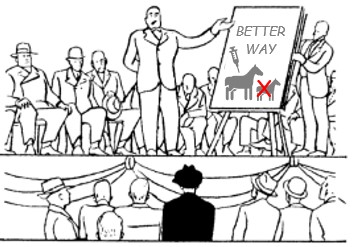
How to Build Support for Wild Horse Roundups

Call a press conference.

Ask the High Priestess of Pesticides and her acolyte in Nevada to join you at the podium, one on your right and one on your left.

Announce that you’ve decided to get rid of the herd with PZP.

Better Way 10-25-23

A sigh of relief will go up from their followers.

Tell the press you need assistance from NGOs.

Let your guests step forward to pledge their support.

Tell the public you want healthy horses on healthy rangelands.

Tell the ranchers (privately) that the herd will implode in five years as the birth rate sinks irreversibly below the death rate.

Point to Assateague Island as an example of what can be achieved if they would just be patient.

Pesticides, Not Fences, Greatest Threat to Virginia Range Herd

Water may soon be harder to find, thanks to the NDA fencing project, but foals will be even harder, thanks to the advocates.

How many of the protesters in this report by KRNV News are field workers with the Campaign Against America’s Wild Horses or supporters thereof?

They claim to be protecting the horses but they’re getting rid of as many as possible with pesticide-laced darts, a process known as mass sterilization.

RELATED: NDA Sitting on Fence After Yesterday’s BOA Meeting?

NDA Sitting on Fence After Yesterday’s BOA Meeting?

It’s not evident in this report by KOLO News.

Although they heard comments in opposition to the Washoe Lake fencing project, they are unlikely to change course.

After all, the man at the top is a public-lands rancher.

You can’t be telling the American people that public lands in the western U.S. can only support one wild horse per thousand acres when the Virginia Range is carrying ten.

RELATED: NDA Posts Public Comments About Washoe Lake Fence.

DOGE Should Eliminate Wild Horse and Burro Program?

The biggest threat to those animals comes from the bureaucracy charged with protecting them according to a December 7 opinion piece in Townhall.

WARNING: The article has been tainted with links to the Campaign Against America’s Wild Horses and the Property and Environment Research Center.

The approach seems reasonable.  If you’re trying to reduce government waste, go after the programs that aren’t fulfilling their mandates.

But you can’t limit your analysis to things on the surface.  The Wild Horse and Burro Program is a grazing program ancillary.

This is where conservatives will go all wobbly.

You don’t expect us to take those ranchers off the public lands?

Yeah we do.  They’re a shining example of government dependence and redistribution of wealth.

Confine them to their base properties in a year-round off season and let them pay the going rate to feed their animals.

The problem is not the bureaucracy charged with protecting the horses and burros, it’s the special interests that have co-opted the bureaucracy charged with protecting them.

They have invaded the agency the same way cancer invades cells.

RELATED: What Are Musk and Ramaswamy Being Told About Wild Horses?

Side Trips While in SacTown for WHBAB Meeting

Forget about Napa and Sonoma.  The best time to visit those wineries was in the 70s.

Same for the Bay Area.

Instead, drop by a nearby Walmart and try to buy socks and underwear without calling an attendant.  You can’t, they’re behind glass doors.

Go to a Home Depot and see how many items are in locked cages.

Try to buy a gas trimmer or chainsaw.  You can’t, they’re banned.  Still available in Reno, a few hours to the east.

Check out the prices at Safeway.

While at Walmart and Home Depot, you might not notice the fastest shrinking demographic in the state—white folks.

This is what happens when you put liberals in charge.

Homes in established neighborhoods are well above $1 million.  For real sticker shock, try North Bay or South Bay.

And the traffic.  You are free to move about the area from 10:00 AM to 2:00 PM.

On the bright side, Davis is only a few miles to the west—if you can get past the Yolo Causeway.

It’s home to the Campaign Against America’s Wild Horses, a leader in nonmotorized removal and fierce opponent of principal use.

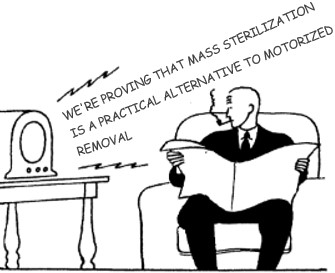
Mass Sterilization and Motorized Removal 08-10-24

Unfortunately, their 2022 Form 990, the most recent posted by the IRS, only gives a PO Box, not a street address.

Maybe they’ll have an open house or similar function.  It’s a great opportunity to build rapport with the bureaucrats and ranchers while maintaining the illusion of support for America’s wild horses.

RELATED: Next WHBAB Meeting Set for Early January.

UPDATE: The Douglas County Assessor gives the address as 216 F St #131.  Refer to APN 1322-00-002-067, one of the parcels in the land trust.

Foal-Free Friday, Spending Wisely Edition

The advocates use your donations to buy pesticides.

They want to replace motorized removal with mass sterilization, abnormal sex ratios and faulty immune systems.

They oppose principal use, management at the minimum feasible level and nature’s way.

They care most about their standing with the bureaucrats and ranchers.

Why are you still giving them money?

Withholding your financial support is easy, sensible and costs nothing.

RELATED: Foal-Free Friday, Raising Them Right Edition.

Pesticide Pushers 07-17-23

Colorado Wild Horse Working Group Meets Next Week

The meeting runs from December 12 to 13 and is open to the public.

An agenda was not provided.

The group supports three tenets of rangeland management.

The legislature expects it to make recommendations on humane, non-lethal alternatives for horses taken off range but most of the resources are devoted to helping the advocates buy pesticides and apply them on the range.

Sand Wash Advocates 01-17-22

Spend Wisely: Today Is Defund the Advocates Day

They want to replace motorized removal with mass sterilization, abnormal sex ratios and faulty immune systems.

They oppose principal use, management at the minimum feasible level and nature’s way.

Withholding your financial support is easy, sensible and costs nothing.

RELATED: Starting a Nonprofit That Actually Helps Wild Horses.

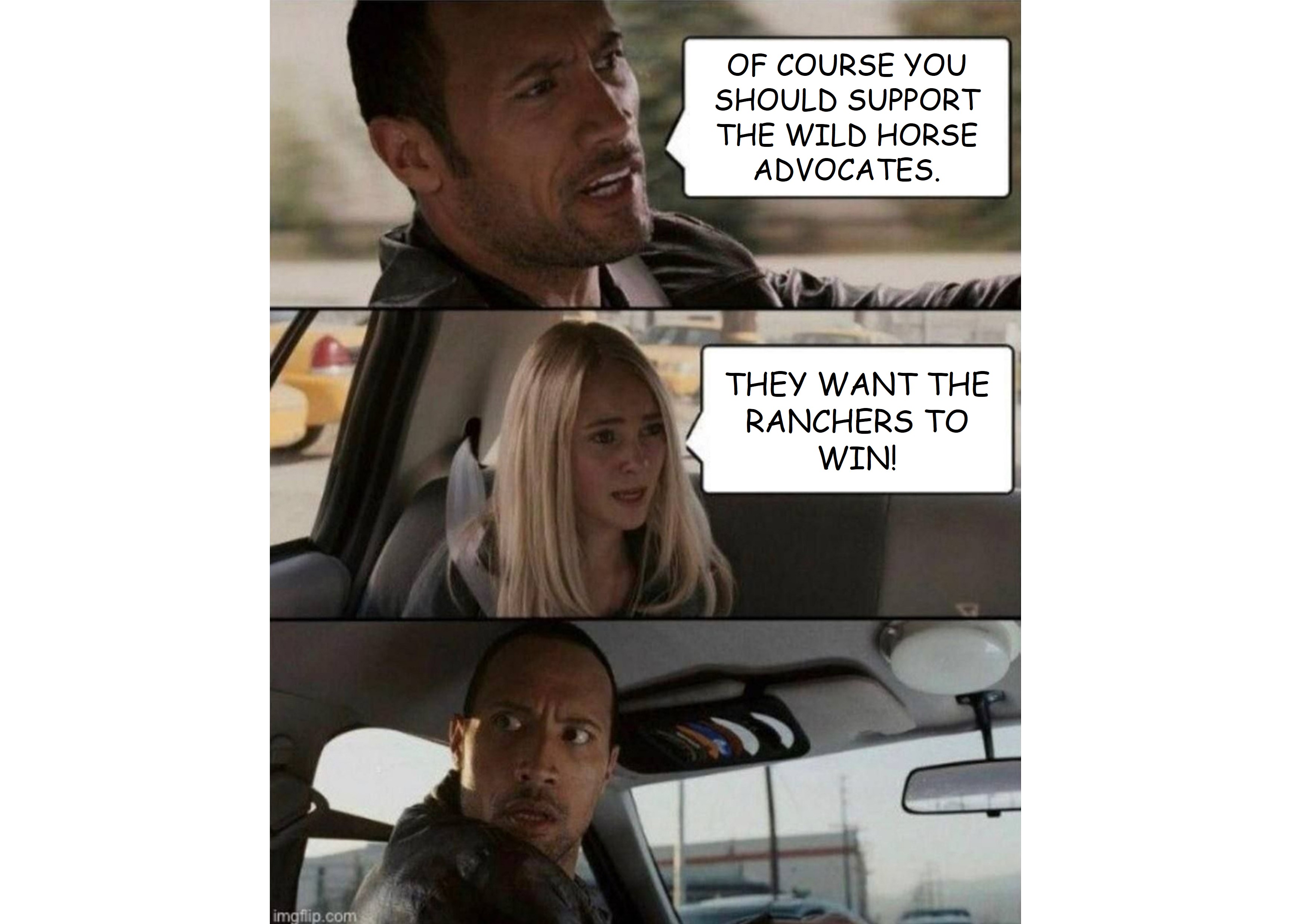
Support the Advocates 09-22-24