The resolution has been received from the Senate.
The House also has an Energy and Natural Resources committee, so it may land there.
RELATED: Senate Passes SCR 4006.

Western Horse Watchers Association
Exposing the Hypocrisy, Lies and Incompetence of the Wild Horse Advocates
Opinion
The resolution has been received from the Senate.
The House also has an Energy and Natural Resources committee, so it may land there.
RELATED: Senate Passes SCR 4006.
Why would you spend $10 million for 5,000 deeded acres when you can spend $10 million for 5,000 deeded acres plus 25,000 public acres?
Base properties give you more value for your investment, get livestock off the public lands and put wild horses back on the range where they belong.
RELATED: Colorado Wild Horse Working Group Mulls New Refuge.
It’s not apparent to the untrained eye.
But it’s occurring across the American west, as the advocates sterilize the mares and birth rates fall irreversibly below death rates.
In this example from the Salt River, the white horse at 1:42 shows a subtle indicator of their involvement.
The Salt River Wild Horse Darting Group works closely with the Campaign Against America’s Wild Horses.
RELATED: When Will PLC Endorse Salt River and Virginia Range Advocates?
They’re using PZP to reduce wild horse populations, with the inevitable result of mass sterilization.
The technique was pioneered at Assateague Island, where, as of last year, the herd was still shrinking eight years after the darting program was shut off.
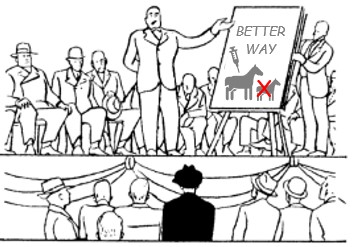
The advocates sell it as a humane alternative to motorized removal, claiming the pesticide is safe and reversible.
The Public Lands Council represents cattle and sheep producers who hold grazing permits on public lands across the western U.S.
The agenda from last week’s meeting indicates that Day 2 was devoted to consideration of a new preserve.
The legislature expects the group to identify and pursue long-term solutions for wild horses that are removed from federal horse management areas or held in federal facilities according to the Year One Report.
The best option is to acquire base properties tied to one or more grazing allotments, such as the ranch near Dinosaur, and flip the preference to horses.
The pattern has already been established by the Wild Horse Refuge.
Proponents of pesticides, helicopters and livestock will share a special moment today as they renew their vows of ranching superiority in the lawful homes of wild horses.
They may not always agree on fine points but a belief in the overpopulation narrative and the necessity of achieving AMLs helps them overcome their differences.
RELATED: Foal-Free Friday, Science-Based Conservation Edition.

The resolution was approved today according to the Day 25 floor calendar.
No roll call vote was reported.
RELATED: Committee Approves SCR 4006.
A motion to adopt the amendment carried yesterday by a voice vote but the bill was defeated today in its second reading by a 14-33 roll call vote.
RELATED: Committee Rejects SB 2331.
UPDATE: Results posted to Day 25 floor calendar.
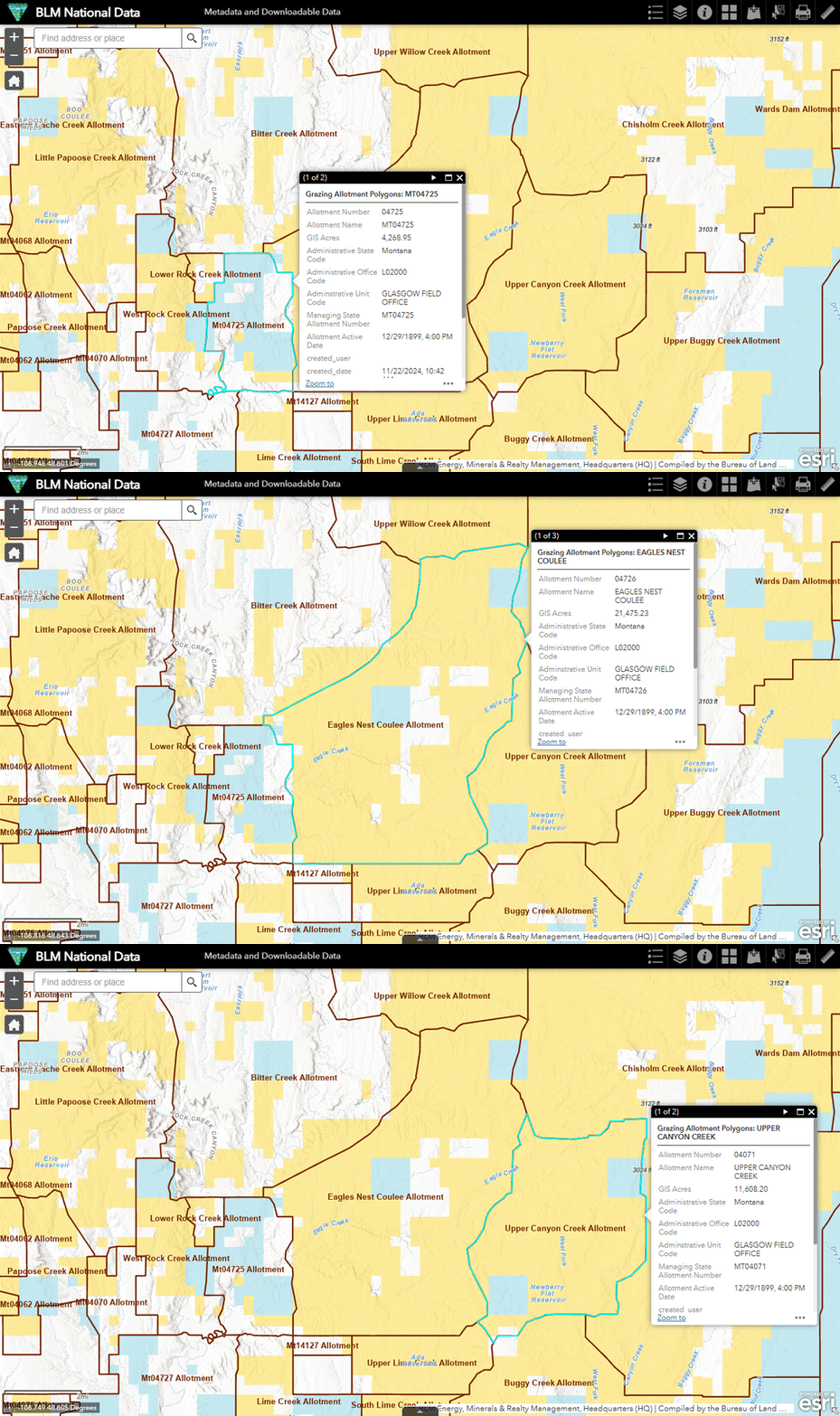
Black Ranch covers 3,710 deeded acres in northeastern Montana, with grazing privileges on 26,600 BLM acres and 4,680 state acres according to the agent’s listing.
The map indicates the BLM grazing preference is tied to the Upper Canyon Creek, MT04725 and Eagles Nest Coulee allotments, which offer a combined 4,346 active AUMs on 28,661 public acres, according to the allotment master report.
That’s equivalent to 362 wild horses or 12.6 wild horses per thousand public acres.
Your faithful public servants claim that public lands in the western U.S. can only support one wild horse per thousand acres (27,000 animals on 27 million acres).
The land ratio, using the agent’s data, is 7.2 public acres per deeded acre.
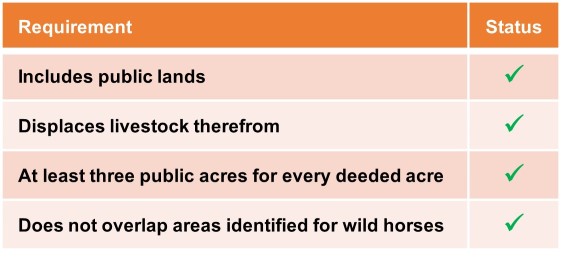
The ranch does not overlap any areas identified for wild horses.
The best option for wild horses removed from their lawful homes is to put them back on public lands at the expense of privately owned livestock.
This can be accomplished by acquiring base properties such as this one and flipping the grazing preference to horses.
The investment ratio would be $27,624 per rescued horse, assuming the ranch operated in self-sustaining mode.
On-site hay production would increase capacity, driving the investment ratio down.
The listing says the ranch supports 750 head for seven months per year but does not give the status of livestock during the off season. Normally the animals would retreat to the deeded acreage or rented pastures.
RELATED: Starting a Nonprofit That Actually Helps Wild Horses.
It’s when conservatives expose decades of liberal corruption in the federal government.
RELATED: Elon Musk Is to Government as Dave Bowman Was to HAL.
Videos have been rolling out at the Chasing Horses YouTube channel, the latest of which is the session on fertility control.
No videos from the conference have been posted to the Save Our Wild Horses YouTube channel.
Speaker bios can be found at the summit home page.
RELATED: Notably Absent from Wild Horse Summit.
It’s the kiss of death if you’re trying to pass yourself off as a voice for wild horses.
What would you say about the organizers of a conference who gave these charlatans airtime?
RELATED: Wild Horse Fire Brigade Serves Ranchers, Not Wild Horses.
They’re obliterating one of the largest wild horse herds in the American west, proving that mass sterilization is more effective in the long run than motorized removal.
They’re pioneering a two-part management philosophy:
Added benefits include:
They sell this scam as wild horse conservation and many have fallen for it.
RELATED: Modus Operandi of the Wild Horse Advocates.

The herd consists of 300 head, maybe a bit more, but you can count the breeding population on one hand thanks to the advocates.

A motion to pass carried 7-0 in the Senate Energy and Natural Resources Committee on February 7.
Refer to video of the discussion and vote.
The resolution asks Congress to establish federal protections for the wild horse herd at Theodore Roosevelt National Park.
If it agreed, would it impose the multiple-use mandate, which the bureaucrats interpret as four to six cow-calf pairs for every wild horse?
RELATED: Committee Rejects SB 2331.
Next to their love of wild horses, the advocates lie most about fertility control, selling mass sterilization as wild horse conservation.
In this snippet from her testimony on February 7 regarding SB 2331, Castle McLaughlin speculates about the management philosophy at TRNP.
She’s talking about the Park Service but her remarks apply to the advocacy groups, especially the Campaign Against America’s Wild Horses and its affiliates.
In this snippet from his testimony on February 7 regarding SB 2331, Eric Molvar explains that the breeding population is a function of herd size minus the number of mares that have been treated with fertility control.
Section 4.4.6.3 of the WHB Management Handbook calls for a herd size of 150 to 200 animals to achieve a breeding population of at least 50 but does not mention the fertility control deduction.
The advocates won’t talk about this because they’re driving the breeding populations to zero in their quest to prove that mass sterilization is a practical alternative to motorized removal.
RELATED: What’s the Minimum Herd Size for Genetic Viability?
Scene from 2001: A Space Odyssey.
The ranch operates as a refuge for wild horses rescued from the park.
Thought to be descendants of Sitting Bull’s ponies, they have historical significance.
The herd you see today was put there by the Park Service as an exhibit.
There is too much fuss about the current herd and not enough interest in preserving the original bloodlines.
North Dakota lawmakers should consider this issue as they refine the bill.
RELATED: SB 2331 Testimony List Growing.
There’s only one foal in the following report about SB 2331 by KX News, a sign of long-term problems for the herd.
The advocates claim that a working group would unite state officials, advocates, experts, and interested parties to ensure collaborative, humane, science-based conservation of the Theodore Roosevelt National Park wild horses.

Those are codewords for mass sterilization. The science is flawed, it’s not humane and collaboration is really collusion among those who want the horses gone.
RELATED: Foal-Free Friday, Bringing Them Up on Charges Edition.

