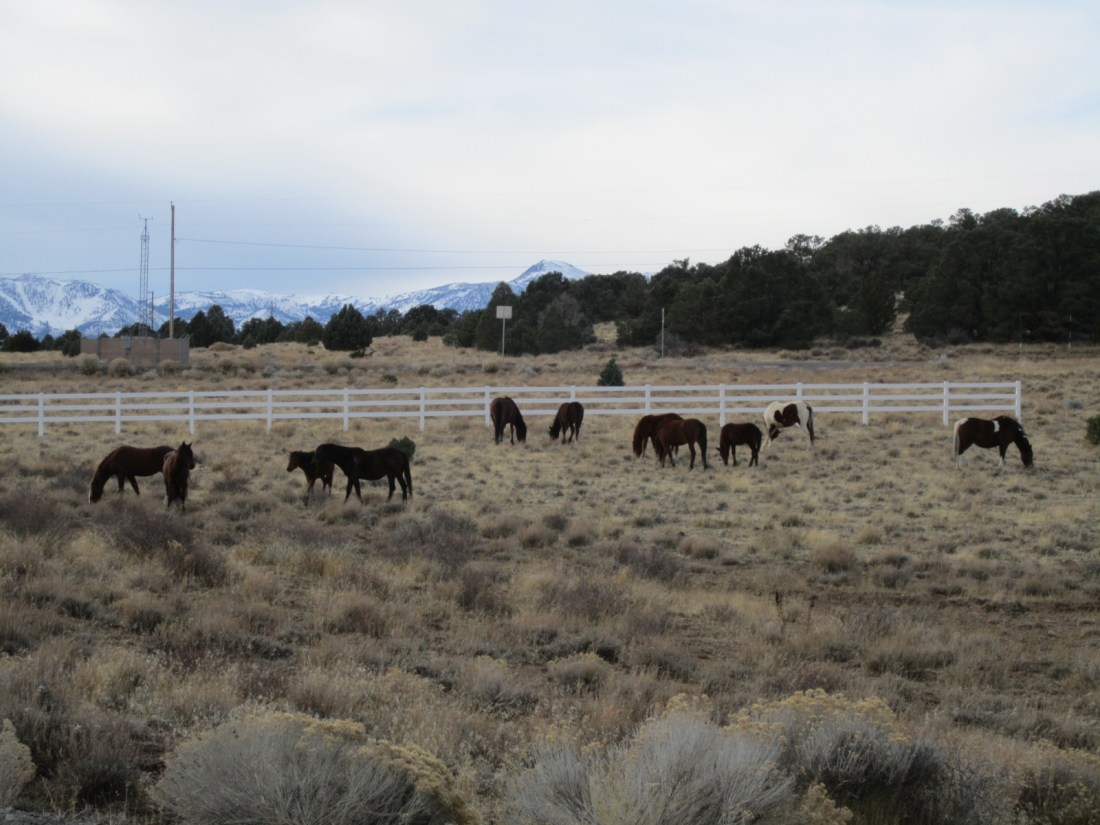
H/T Thinklikeahorse.org.


Western Horse Watchers Association
Exposing the Hypocrisy, Lies and Incompetence of the Wild Horse Advocates
H/T Thinklikeahorse.org.
Now that you found water on your property, you’ll have to bring it to the surface.
If the water level is 30 feet down or less you can install a pump at grade. This would also apply to water drafted out of a spring or pond. Keep in mind that surface water is more susceptible to contamination than ground water.
A surface-mounted pump should be self-priming, which means it can draw water from the source even if the suction line is empty.
If the water level is below 30 feet, the pump will have to go down hole. It has to do three things:
Suppose you drilled your well to 480 feet. You hit water at 420 feet and the static water level is at 360 feet.
You don’t want to install the pump at the bottom of the well. Leave some room for accumulation of silt and sediment. At least 20 feet. That puts the pump at 460 feet. Although the water level is 100 feet higher, the worst case is when you pull water too fast and drop the level down to the pump.
This brings up the concept of recharge rate. Water enters the well through perforations in the casing. You don’t want to draw water out faster than it flows in. At least not for long. Running a pump dry will destroy it.
Your driller can perform a test to determine the recharge rate.
The system pressure is controlled by a switch that turns the pump on and off automatically. Typical pressure range is 40 to 60 pounds per square inch (psi). On at 40, off at 60. Greatest pressure is therefore 60 psi. As you use water, the pressure in the system drops until the pump kicks in and refills the tanks.
The amount to allow for pipe friction depends on the water flow rate, pipe size, and length of discharge line (depth of pump plus distance from well to pressure tanks). If the line is properly sized, this number will be small. Start with 5 psi.
Summary of conditions for this example:
Pumps curves are based on feet not psi. To convert, multiply psi by 2.3 to get feet.
Total head = 460 + (60 × 2.3) + (5 × 2.3) = 610 feet
Round to 600 feet to keep things simple. Here are curves for Goulds series 7GS pumps.

Start on the y-axis at 600 feet and move to the right. When you hit a curve read down to the x-axis. A 7GS15 pump will give you about 5 gpm. A 7GS20 will give you 8.5 gpm. A flow rate of 5 to 10 gpm should be adequate for you and your horses. Boarding facilities and farms require something larger.
On Lake Pleasant HMA.
If ownership of the Virginia Range horses passes from the Nevada Department of Agriculture to a privately owned animal advocacy group, as proposed by the Board of Agriculture on 12/12/17, you will have animals belonging to one party grazing on land owned by another.
Can private party A (who owns horses) compel private party B (who owns land) to accept A’s horses for grazing?
If A can place his property on B’s land without B’s consent, could A also place cattle and sheep on B’s land? Equipment and supplies?
How will the concept of fence out / open range work in this environment?
See NRS 568.300. The horses will be considered livestock when placed into the hands of the advocacy group.
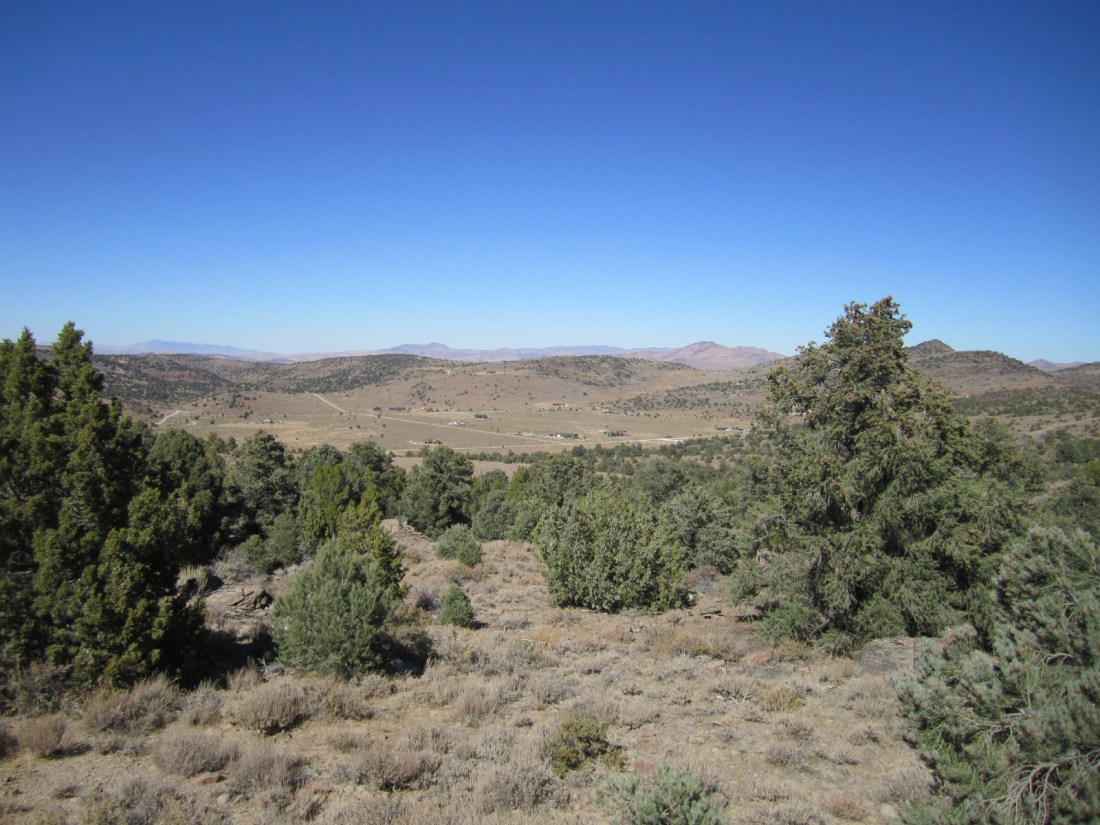
NDA intends to keep the horses on the range and away from slaughter.
RFP for transferring ownership of the horses to a private animal advocacy group will be posted to the NDA Grant/RFP web site in mid January.
Groups will have six weeks to apply.
A selection committee representing various voices in the community will review the proposals.
Audio of Nevada Board of Agriculture meeting on 12/12/17 follows. Discussion of VR horses begins at 4:15 and ends at 2:58:20. Vote taken at 2:56:50.
You probably have water under your property. Technologies are available to help you find it but you might pay over $10,000 for the work. Old-timers in the area may know where to drill based on their experience.
Another idea is to look at public records (driller’s reports) for nearby parcels.
Keep in mind that if you drill at the low spot on your property you will be pushing water uphill which means lower pressure the higher you go. Not really an issue on ground that’s fairly level but if you live among rolling hills, where your corral and arena are 80 feet above the wellhead, you’ll lose about 35 psi by the time water gets to your horses.
No wonder it takes 10 minutes or more to fill a water bucket!
Conversely, if your wash rack is 80 feet lower than the wellhead, water may come out of the sprayer with so much force that it’s dangerous to your horse.
Water pressure typically ranges from 40 to 60 psi at the wellhead. More about that in the next post.
Your driller will recommend an appropriate casing. Sometimes it’s PVC, as shown in the Intro. The casing below is steel.

Your driller will also decide how far to go. Usually 50 feet or more beyond the point where water is found.
He will install solid or perforated casing as needed, backfill the space around the casing with sand or gravel, and seal the uppermost portion of the bore with cement.
The bottom of the casing is usually left open, in case the well goes dry and you have to dig deeper.
Subsurface pressure may push water up the casing. Suppose you hit ‘pay dirt’ at 400 feet but water inside the well is at 340 feet. This is known as the static water level.
Cost to drill depends on several factors but you can start with $40 to $45 per foot. If your well is 500 feet deep, you will pay at least $20,000. This does not include the pump, controls, or anything else.
On Fifteenmile HMA.
Bachelor band on the Virginia Range 08/12/17, inspecting roadways and drainage systems, keeping vegetation under control. We love you guys!

You can’t have horses on your property without a reliable source of water.
Parcels large enough for horses are usually not connected to the public water system.
So you have to provide your own water.
You must be able to give your horse clean fresh water daily, hot or cold, rain or shine.

A rural water system will likely have these components:
Here’s what you might see in warmer climates (small risk of freezing temperatures for more than 8 to 12 hours). Well, pressure tank & switch, power supply & piping exposed to the elements.
Other measures are required for colder climates, to be considered in subsequent posts.

Avoid 90 degree interior corners where a lower horse can be trapped by a higher horse.
Don’t put food and water where a lower horse can’t yield to a higher horse without getting kicked.
Install gates large enough for vehicle access (usually 12 ft).

The dynamics of a family unit are different from a group of randomly chosen horses.
If you place, say three unrelated horses in a corral (e.g., mare and two geldings), you will likely see more pushing and establishment of pecking order. (Do not be fooled however, they will form a cohesive group. Some call this ‘buddy sour.’ Use it to your advantage: Learn how to become his best buddy.)
If you adopt a family unit (mare and one or more foals) you may wonder about hierarchy: These guys will eat together on one pile of hay, no pushing.

H/T Rick Gore at Thinklikeahorse.org.
The principle of keeping power closest to those it affects.
What an individual can do, society should not take over, and what small societies can do, larger societies should not take over.
On 12/12/17, the Nevada Board of Agriculture voted to give control of the wild horses on the Virginia Range to a yet-to-be-determined non-profit animal advocacy group, according to a report in the Reno Gazette Journal.
If those horses belong to the people of Nevada, as opponents of the action claim, then YOU be that group. YOU form the non-profit. YOU keep the horses on the range and away from slaughter. The people of Storey County.
This is an opportunity not a catastrophe.
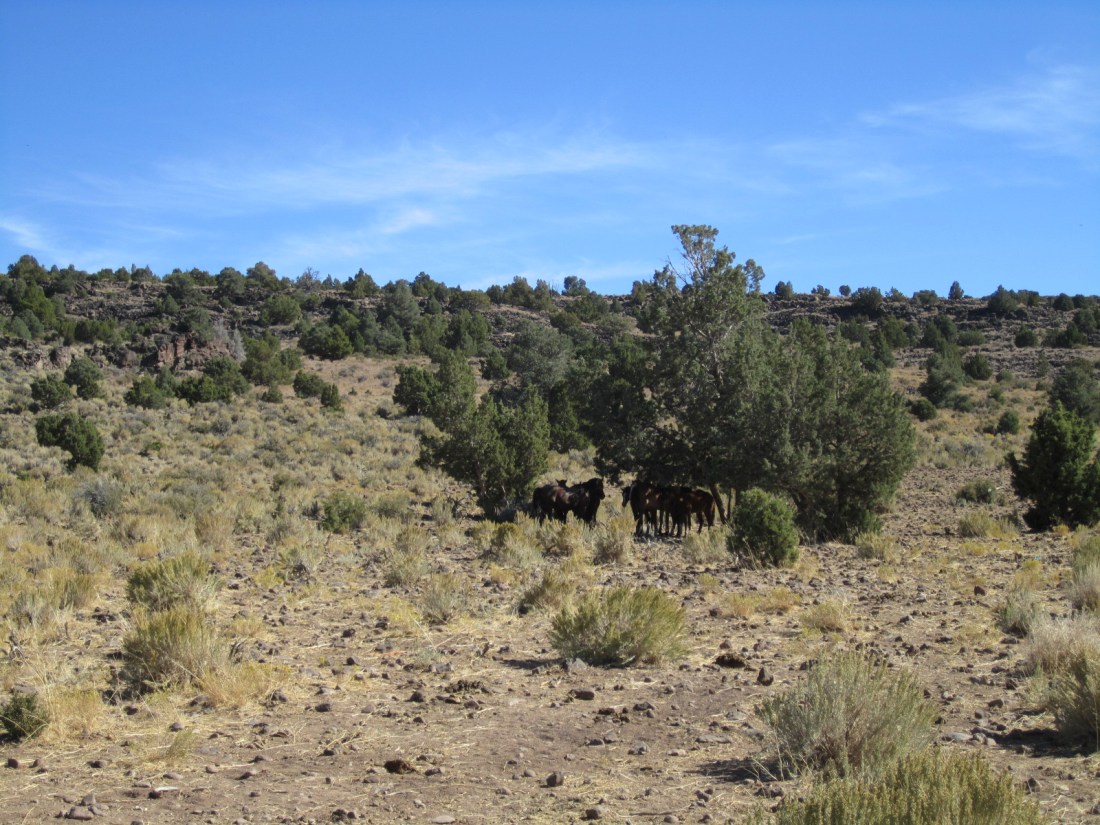
News report on the burros of Oatman AZ (old mining town in southern half of Black Mountain HMA).
On Kiger HMA.
Ask for more than you can achieve.
Give your idea a nice name that masks your true intent.
Use the media and educational tools to inculcate your view in the public.
Develop your own lexicon, redefine words, keep pounding those words into the psyche.
Attack your opponents not on logic or facts, but by name-calling and emotion.
Don’t concede until you’ve moved the marker a little closer to your goal.
Reset the measures so the new position is considered normal.
Refer to adherents of the old position as extremists.
Never, ever give up or stop pushing.

Trailcam images from the Virginia Range. Darters don’t want you to see these.
05/01/17
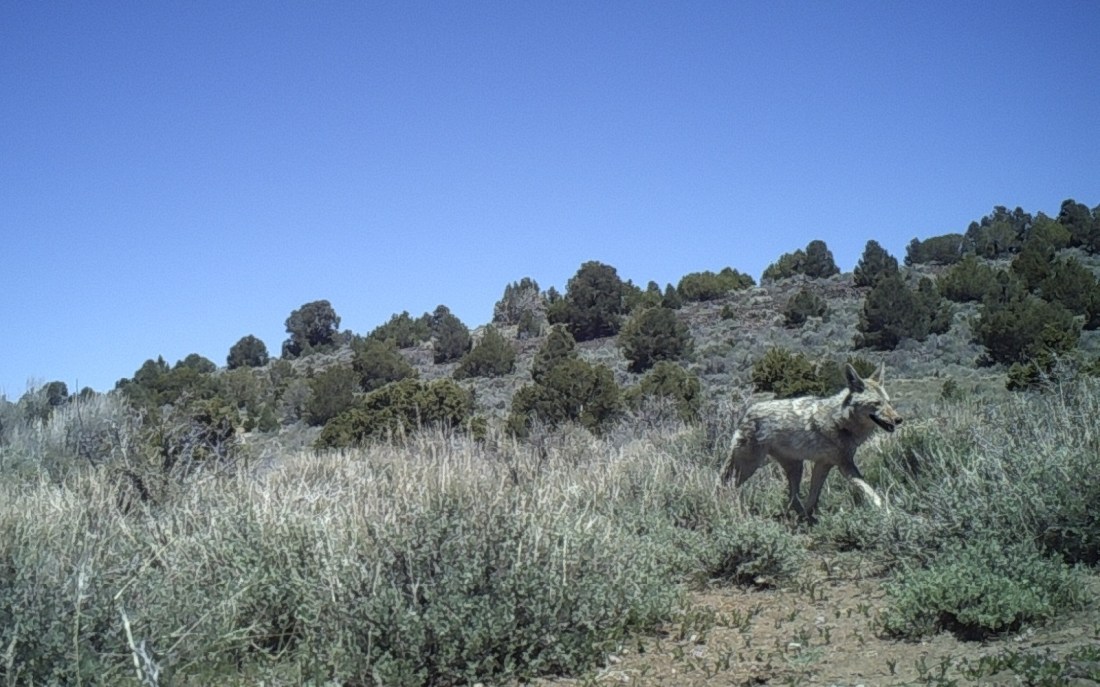
07/06/17

Documentary from 1976. Features interview with Velma Johnston.
Remarks about trust beginning at 14:46 are off the mark. The ‘problem’ with older horses is not how long before you can trust them but how long before they trust you.
Here is a rule of thumb: Age ÷ 2
If you adopt a four year old horse, allow at least 2 years to earn his trust. The other option is to force yourself on him and break his spirit.
On the Salt River.
VR band 12/02/17 (Mt. Rose in background, center).