Horse Befriended by Campers Removed from Big Summit WHT

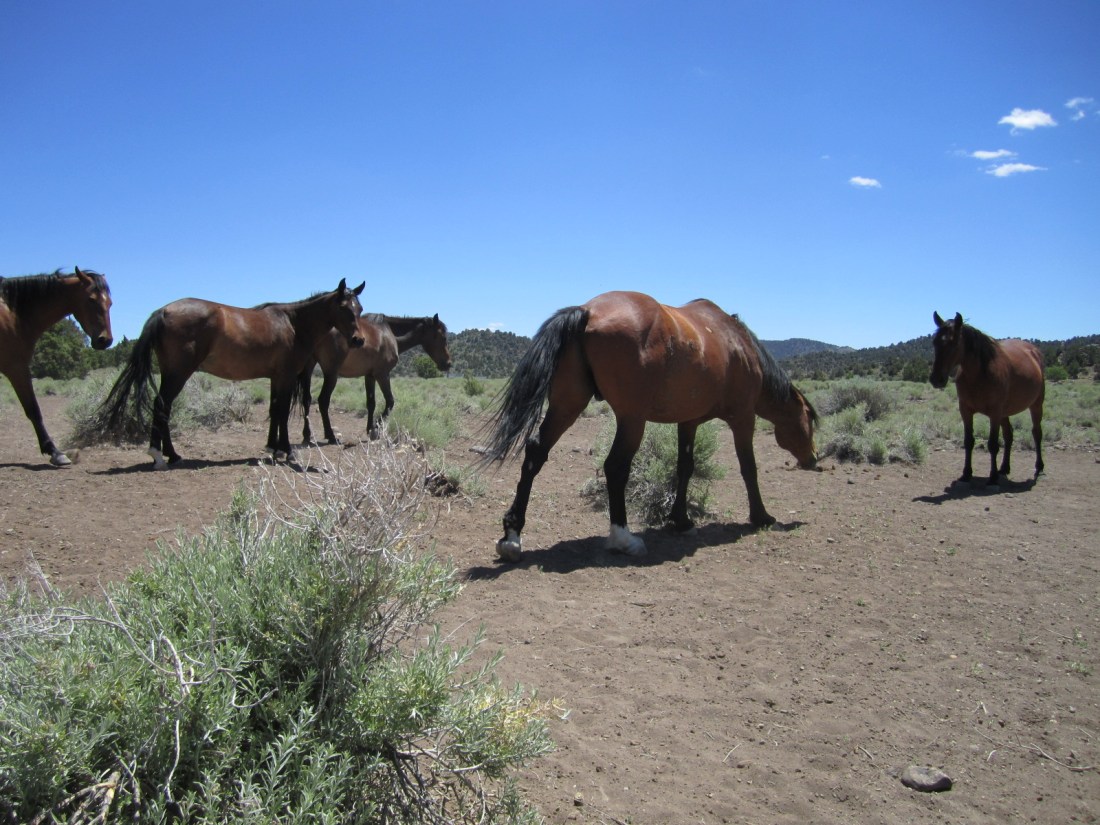
A wild horse was captured earlier this month in the Ochoco National Forest, near Prineville, OR, because he lost his hear of humans.  He had been coming to a campground for a year or more, and was fed, petted and groomed.  When the campers departed, he sought food from others and the companionship of their horses, putting both at risk.

The only way to resolve the situation was to remove him to a life of captivity.

See this report, posted today by KMTR-16, the NBC affiliate in Eugene, OR.  Note the guidelines for camping and recreating around wild horses.

Emergency Gather Ordered for Antelope Valley HMA

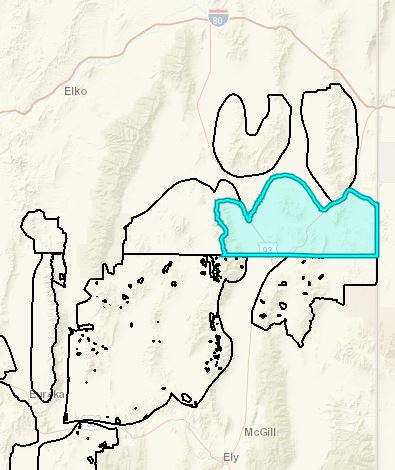
BLM announced today that it would commence bait-trapping operations immediately, with a goal of removing approximately 250 wild horses from the Antelope Valley HMA, due to insufficient water.  The gather will not be open to public observation.

The HMA is about 60 miles southeast of Elko, NV, and covers 502,909 acres (463,540 acres per the news release).  The AML of 259 gives a target population density of 0.5 animals per thousand acres (1942 acres per animal).

Antelope_Valley_HMA_Map-1

Captured horses will be taken to the Indian Lakes Off-Range Corral in Fallon, NV, where they will be evaluated by a veterinarian and prepared for adoption.  Gather stats can be found at this page.

The news release did not indicate if livestock were present on the HMA or surrounding lands where the horses might roam in search of food or water.

Thunder Mountain Fundraiser Set for August 10 – 11

An open house and BBQ will be held at Giddy Up Horse Ranch in Bend, OR, on 08/11/18 so interested persons can see the foals saved from slaughter by the Yakima Orphan Foal Network, also known as Thunder Mountain Farms Equine Rescue.

See this announcement at Visit Bend, a public relations site created by the Bend City Council.

These foals are coming from the Yakama Indian slaughter pipeline in Washington state, where slaughter-bound horses are hauled off in trucks marked ‘666.’  There are some sick minds in that industry.

Fish Springs Roundup Set for First Week of August

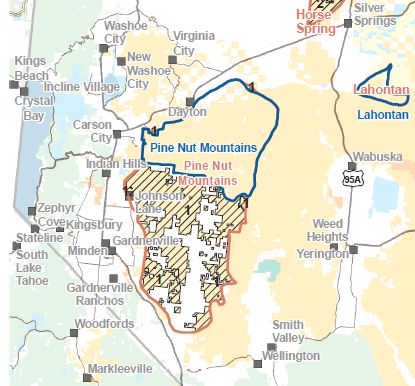
The Pine Nut gather will occur in November, according to a report dated 07/21/18 by KOLO-TV in Reno, NV.

Over half the area where horses were found in 1971 (when the WHB Act became law) has been designated a herd area (red border in the map below), which has no AML and is not managed for WHB, due to inadequate food and water.  However, it does have sufficient resources for other animals, such as, ahem, cough-cough, cattle and sheep.

Pine_Nut_Mountains_Map-2

These roundups, especially on herd areas, aren’t about saving money or protecting an endangered species.  They’re a payoff to the beef lobby and the crybabies they represent.

One way to put an end to this crap would be to raise the grazing fee from the current $1.41 per AUM to $25 per AUM, in line with grazing costs on private land.  The government serfs would be loading their cattle back on 18-wheelers faster than you can say Slaughterhouse Sue.

RELATED: Opponents of Fish Springs Roundup Protest in Reno.

Horses and Burros Go ‘Off the Reservation’

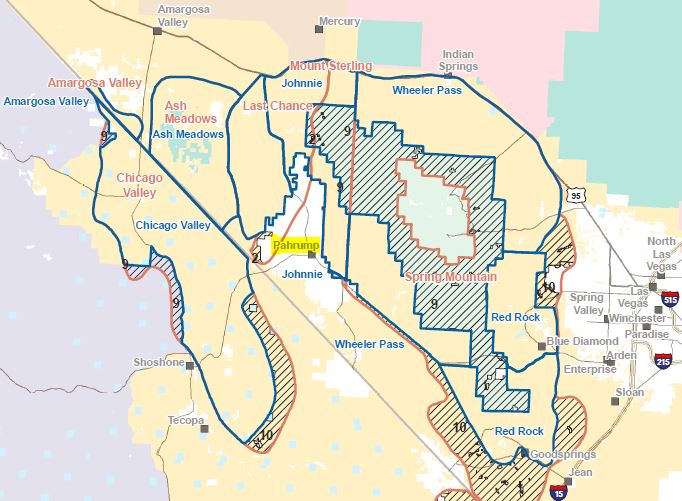
Homeowners in Pahrump, NV, are tired of cleaning up the mess from wild horses and burros.  See the report published yesterday in the Pahrump Valley Times.

They’re looking for water and have found it near lawns and gardens.  See this post for another example on the Virginia Range.

Just a friendly reminder that if you’re buying property in Nevada and don’t want to have this problem, put some money in the budget for a fence, especially if you’re moving to an area surrounded by HMAs and WHTs.

Pahrump_Map-1

Another option is to buy acreage in a rural area and let the poop fall where it may.

IMG_6625

Wild Burro Hit in Ear with Arrow

Animal control personnel are trying to locate the injured animal, which roams the Reche Canyon area south of San Bernardino, CA, according to a report dated 07/19/18 in The Sacramento Bee.

The area of interest is not on BLM land.  The nearest BLM Herd Areas are 20 to 30 miles to the east.  They have no AMLs and are not managed for WHB.

A $1000 reward has been offered for information leading to the arrest and conviction of the person(s) responsible.

Utah HMA Stats

Most of the herd management areas in Utah are on the western side of the state.

Here are some statistics for them, developed from individual pages at the BLM web site.

  • Number of HMAs: 18 (one jointly managed with USFS)
  • Total land: 2.7 million acres (mostly public, some private)
  • Total animals: 1911 (mostly horses, some burros, based on upper values of AMLs)
  • Average stocking rate: 1397 acres per animal (0.72 animals per thousand acres)
  • Stocking rate at 3X AML: 466 acres per animal (2.15 animals per thousand acres)

The last figure is offered as an estimate of the current situation, as many of the HMAs have more animals than allowed by the upper end of their AMLs.

Livestock grazing was reported on the Sulphur HMA and presumably occurs on others.

The largest HMA is Cedar Mountain at 411,636 acres, while the smallest is Tilly Creek at 37,006 acres.

Stocking rates vary from 1.5 animals per thousand acres at Range Creek HMA to 0.4 animals per thousand acres at King Top Mountains HMA.

The North Hills HMA is jointly managed with the USFS.