The agenda indicates the group is drafting recommendations for a wild horse preserve.
HB25-1283 was passed by the legislature but has not been signed by the governor.

Western Horse Watchers Association
Exposing the Hypocrisy, Lies and Incompetence of the Wild Horse Advocates
The BLM purchased the ranch in 2022 with support from the Land and Water Conservation Fund, taking much of the deeded acreage public.
A 2023 article by Cowboy State Daily said the Marton family retained some grazing privileges and will continue to graze cattle there.
A meeting to receive public input on the future of the property, scheduled for May 14, has been postponed according to a BLM news release.
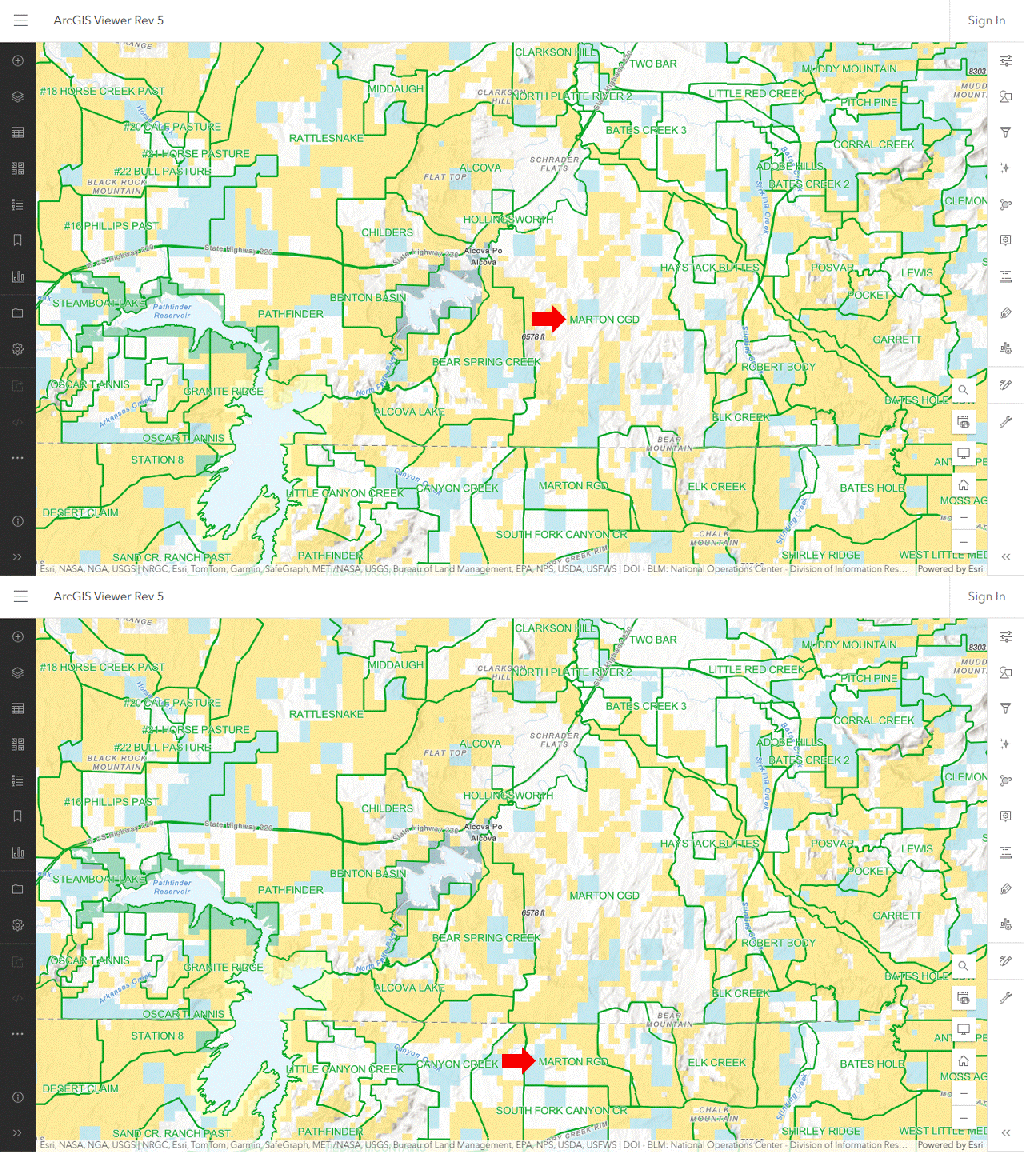
The project boundary in Figure 1 of the Final EA coincides roughly with that of the Marton CGD and RGD allotments, east of the Alcova Reservoir.
Together they offer 10,636 active AUMs on 61,519 public acres.
The Allotment Master Report puts both in the Improve category, suggesting that your stewards of the public lands have not been taking their responsibilities seriously.
If the area was designated for wild horses, how many could live there?
The forage assigned to livestock is equivalent to 886 wild horses, or 14.4 per thousand public acres.
Your faithful public servants claim that rangelands in the western U.S. can only support one wild horse per thousand acres (25,500 animals on 25.6 million acres).
The advocates, defeated a long time ago, reinforce the narrative with their darting programs.
If the allotments were an HMA, the AML would be 62 and 824 wild horses would be consigned to off-range holding because of permitted grazing.
BLM allotments in Wyoming support livestock equivalent to 158,425 wild horses on 17.312,214 public acres, or 9.2 wild horses per thousand public acres.
Wild horses can be placed on public lands not identified for their use by acquiring base properties associated with grazing allotments and flipping the preference to horses.
RELATED: The Allotments Tell the Story: They’re Lying, All of Them.
At the southwest corner of the Virginia Range with easterfilmsdotcom.
The Preliminary Environmental Assessment for the Blue Wing HMAP says on page 163 of the pdf that if some number of mares become sterile as a result of PZP treatment, that result would be consistent with the contraceptive purpose that motivates BLM’s use of the vaccine, and with Congressional guidance that condones such treatment in the management of wild horses and burros.

That statement makes the advocacy groups partners, not adversaries, of the bureaucrats and ranchers.
RELATED: Blue Wing HMAP Shows Advocates Ill-Informed About Wild Horses.

The gather page says 110 horses were returned to the Complex in November, bringing the number of animals removed to 2,467.
All mares received two doses of GonaCon Equine.
The interval between treatments was not given.
At the time, the label called for 90 days, a requirement the BLM routinely ignored.
In January the interval was reduced to seven days.
RELATED: North Lander Roundup Ends.
Mothers are almost as hard to find at the Salt River and Virginia Range as foals.
Referring to the Campaign Against America’s Wild Horses as the nation’s leading wild horse protection organization is like claiming that Planned Parenthood is the nation’s premier right-to-life organization.

Neither serves a charitable purpose.

The incident concluded on May 2 with 460 burros captured, 457 shipped, none returned and three dead.
There were no unaccounted-for animals.
The start date was April 15, one week later than scheduled.
The capture and removal goals were 400 each but a 15% increase was authorized.
The capture total included 187 jacks, 240 jennies and 33 foals.
Foals represented 7.2% of the animals gathered.
Of the adults, 43.8% were male and 56.2% were female.
The death rate was 0.7%.
There were no plans to treat any of the jennies with fertility control pesticides and return them to the HMA.
Animals identified for removal were taken to the Florence off-range corrals.
The news release says the AML will range from 100 to 140, compared to 50 to 140 at the WHT page, implying heavy use of fertility control pesticides.
The closer the range the lower the expected growth rate.
The project folder contains numerous documents, including the Final Environmental Assessment and Draft Decision.
The Decision Record would authorize a modified version of Alternative 4, presented in Chapter 2 of the EA.
The proposed HMAP and its variants are discussed in Appendix A.
The Alternative 4 HMAP (page 234 in the pdf) calls for an AML of 50 to 140.
The DR corroborates that range.
Western Horse Watchers cannot account for the range given in the news release.
Other features of the modified plan include
Table 5 in the EA indicates that livestock in the JMA (HMA + WHT) receive 7,770 AUMs per year, while horses receive 1,680 AUMs per year at the high end of AML.
This yields a True AML of 140 + 7,770 ÷ 12 = 787, the number of horses the land could support if it was managed principally for them as specified in the original statute.
The problem is not inadequate fertility control, as the advocates would have you believe, but too many cow/calf pairs.
RELATED: Forest Service Seeks Input on EA for Murderer’s Creek HMAP.
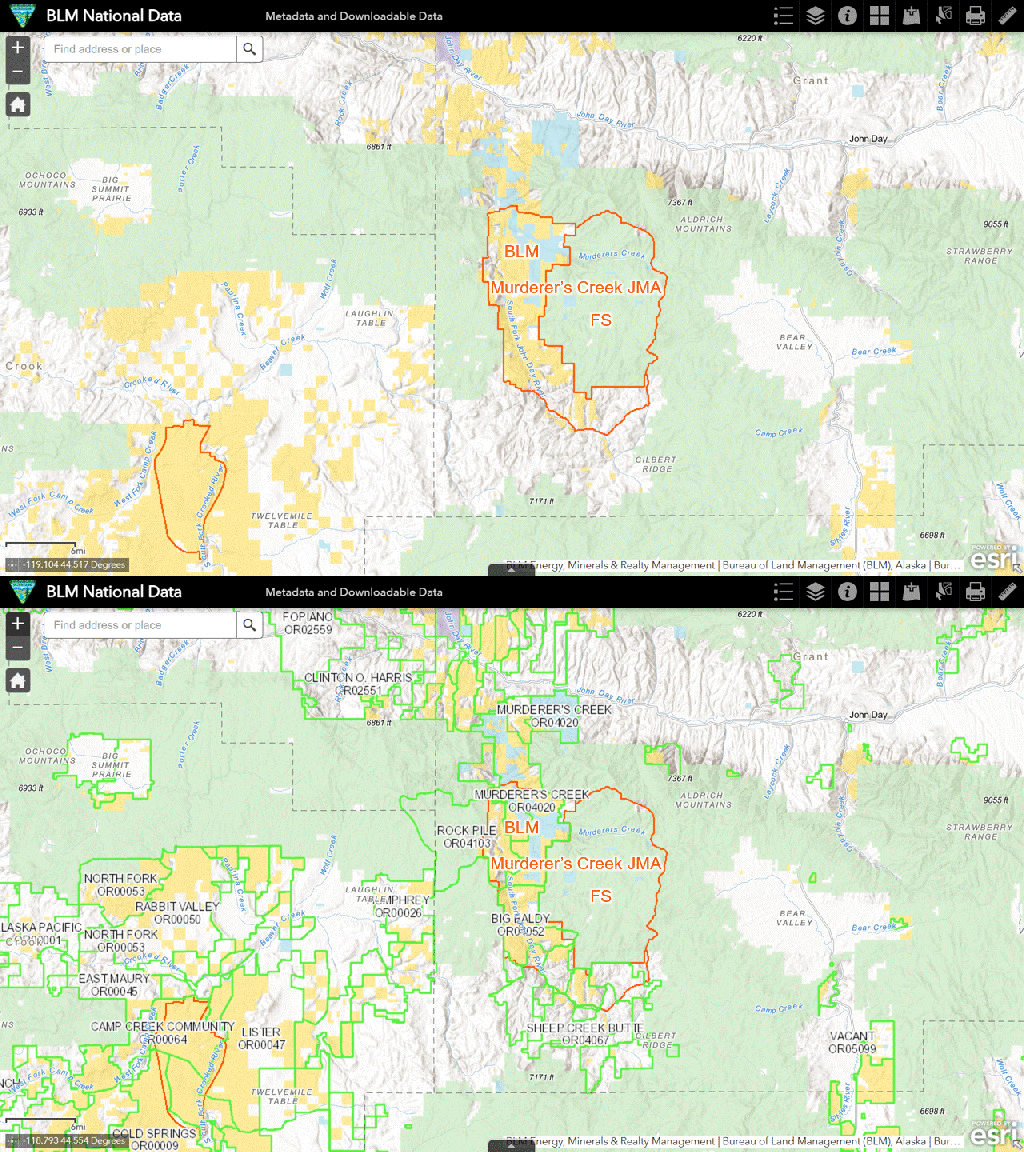
The gather page said “No decisions are being made at this time regarding the long-term disposition of horses gathered as part of this emergency action” but the Forest Service has apparently decided they will be put up for adoption according to a May 9 news release about a new HMAP for the WHT.
The roundup, prompted by the 2024 Rail Ridge Fire, cut the herd by 410.
The status of livestock grazing in the burned area is not known.
RELATED: Murderer’s Creek Roundup Ends.
Like the NGOs behind it, the membership will not advocate for principal use and management at the minimum feasible level.
Instead, it will support the goal of ranching superiority in the lawful homes of wild horses, sometimes referred to as achieving and maintaining AMLs, but the weapon of choice will be pesticide-laced darts, not low-flying helicopters.

Moreover, they’ll argue that it’s not removal, even though the numbers go down just like they do in roundups.
The major difference is that the herds don’t bounce back.
RELATED: Congress Rides to the Rescue with Wild Horse Caucus?

How stupid do you have to be to accept mass sterilization as wild horse conservation?
RELATED: Foal-Free Friday, Infertility Awareness Edition.

Do not be fooled by the announcement, brought to you by the Las Vegas Sun in a story dated May 8.
It’s a ploy backed by the big-name advocacy groups to replace motorized removal with mass sterilization.
They want the horses removed in favor of livestock but they want it done with pesticides not helicopters.
A story by The Virginian-Pilot says the advocates will not be sharing the names of foals and will use more discretion when sharing the names of the adults, another indication they are worried about the viability of the herd, a problem they caused.
A herd of approximately 100 should produce around 15 foals per year, more than enough to overcome the loss of five to six adults to natural causes.
The low number of foals suggests the herd is shrinking, perhaps irreversibly.
You will never hear the advocates criticize PZP darting programs because their livelihoods as NGOs depends on them.
If the pesticide was taken off the market they’d have nothing, no reason to exist.
The herd has survived on its own for hundreds of years, as stated in the report, but it cannot survive the advocates and their stupid ideas.
RELATED: Too Late to Save Currituck Herd?
Here are the top three, in common use by the wild horse advocates:
How stupid do you have to be to believe these frauds?

Remember last year at the Save Our Wild Horses Conference when they were higher than a kite on HMAPs?
The first item in their recommendations was to create these plans for every HMA and enforce strict adherence to them.
Consider these features of the new plan for the Blue Wing Complex:
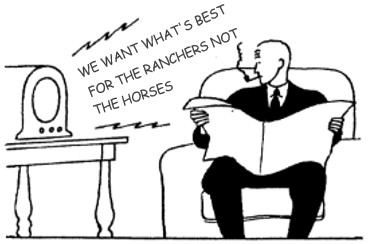
The underlying belief of those involved is that that the horses and burros are pests and that the land should be managed primarily for livestock.
The advocates, facing great embarrassment, will switch to another brand of snake oil rather than admit their errors.
It is not possible to overestimate the stupidity and naivety of the wild horse advocates, with the exception of those colluding with the bureaucrats and ranchers.
In those cases, it’s easy to underestimate the depths they will plumb to deceive their supporters and the population at large.
RELATED: Pancake HMAP Proves Advocates Ill-Informed About Wild Horses.
Outside Chloride HMA, Four Mile and Bible Spring were added to the May 1 update.
The bottom-line totals are the same as in the April 1 edition.
RELATED: Minor Changes in New Roundup Schedule.
The government will pay $1,000 to illegal aliens that leave the country voluntarily according to a report by AP News.
The story did not indicate if the migrants would receive $500 when they crossed the border and $500 if they stayed out for a year.
The status of compliance inspections is unknown.
Unlike the Adoption Incentive Program, payments are made in lieu of capture and are not available to those who would take the detainees from the government and escort them to Canada or Mexico.
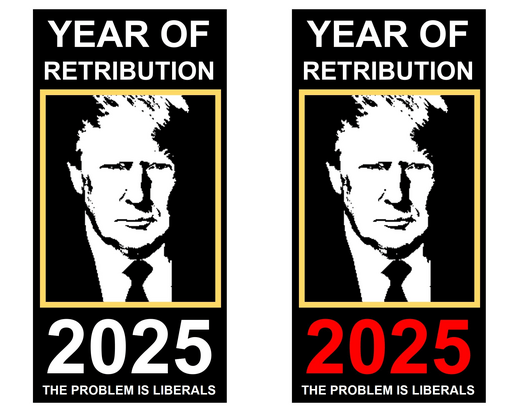
The program is an important step in keeping Democrats away from the levers of power.
The change was mentioned in a response to comments in the Buffalo Hills DNA.
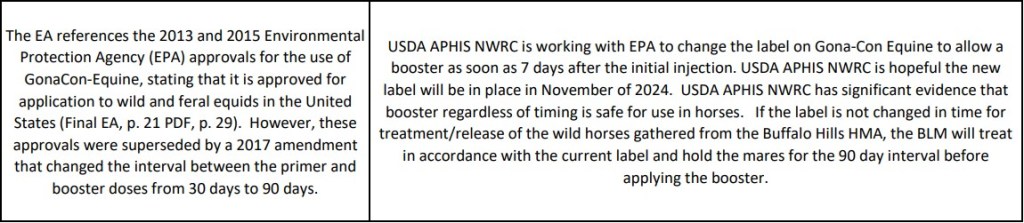
The January 21 labeling amendment allows the second dose to be given in as little as seven days after the first.
The effect of the change on treated animals is not known.
Although the 2017 labeling amendment changed the interval to 90 days, the BLM continued to refer to the 2013 and 2015 registrations in planning documents issued after that date and gave two doses 30 days apart to mares captured in roundups, which constitutes unlawful use of the pesticide.
If that sounds like an allegation of wrongdoing, it is.
RELATED: BLM Not Following GonaCon Treatment Plan at Buffalo Hills.
The Preliminary Environmental Assessment has been copied to the project folder along with a cover letter.
Comments are due by June 4 according to the news release.
Alternative A, the Proposed Action, features
The proposed HMAP is discussed in Appendix XIII of the EA.
Section 2.4.2.2 refers to a 2025 labeling amendment for GonaCon Equine, which may have changed the interval between treatments from 90 days to seven, but Western Horse Watchers has not been able to find it at the EPA website.
RELATED: Scoping Begins for Blue Wing HMAP.
UPDATE: The amendment changed the interval from 90 days to 7 days.
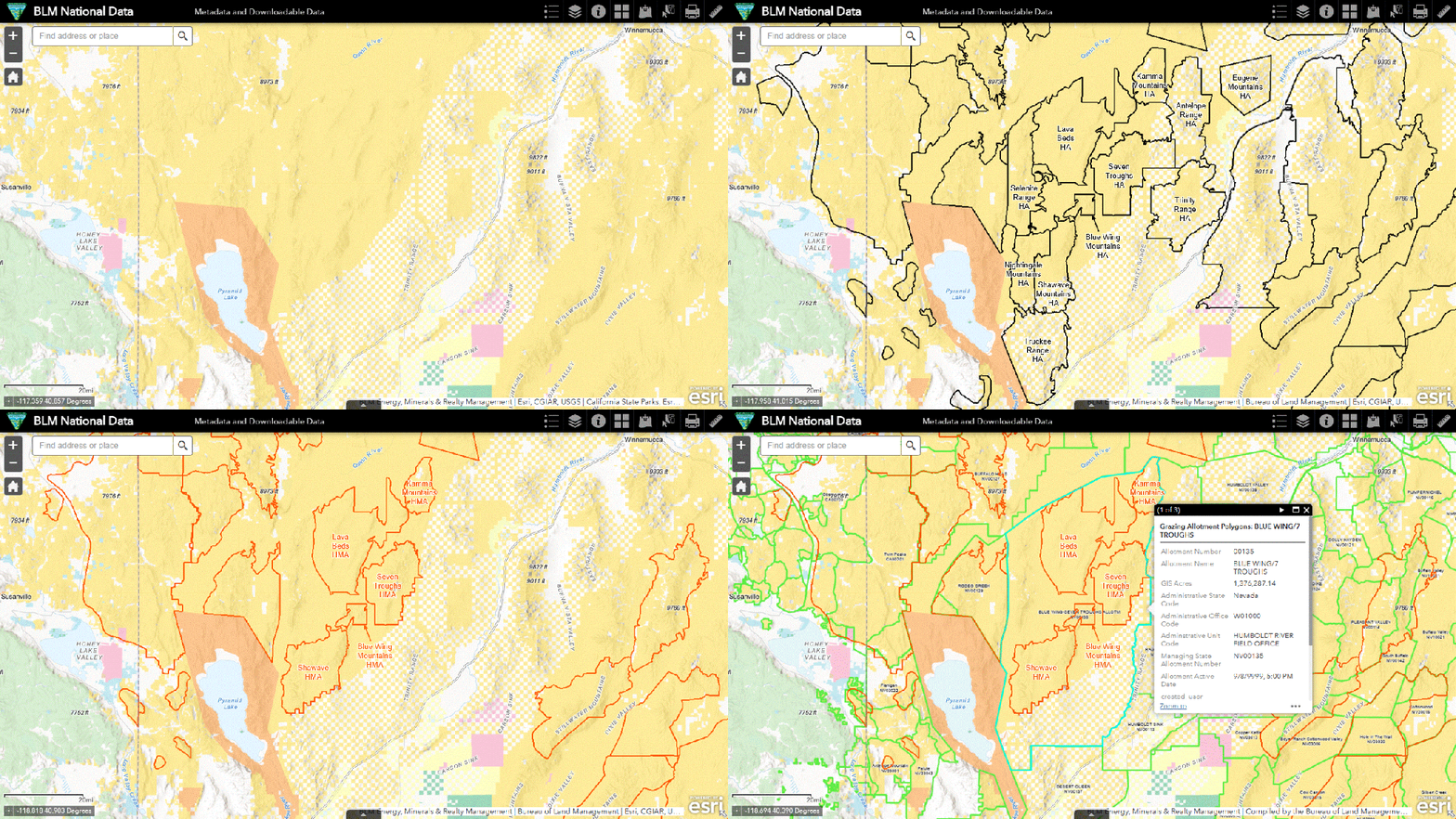
Look at the photos in this BLM blog post.
Is that what you want for America’s wild horses?
The Comprehensive Animal Welfare Program applies to horses that are off the range or nearly so.
In effect, it ensures that burn victims receive the best possible care instead of figuring out how to have fewer fires.
It guarantees the removals will continue because it does not address their causes.
The advocates believe the problems can be avoided by not having any horses or not having them in sufficient numbers to protect herd health and genetic viability.

 Western Horse Watchers Association