The Chincoteague ponies make their return swim today, minus all but six of the foals.
If you were to visit the island this weekend, you’d think the advocates were poisoning the mares with PZP.

But that would not be the case.
Western Horse Watchers Association
Exposing the Hypocrisy, Lies and Incompetence of the Wild Horse Advocates
The Chincoteague ponies make their return swim today, minus all but six of the foals.
If you were to visit the island this weekend, you’d think the advocates were poisoning the mares with PZP.

But that would not be the case.
The event, organized by ranchers for the benefit of ranchers, helps the BLM take more wild horses off the range.
Deirdre Macnab still drives the bus.
You’re not supposed to know that she owns a $10 million base property and runs livestock on over 125,000 public acres.
New this year is an Adult In-Hand Division and a Mustang Only Horse Show, scheduled for August 22 according to a report by the Steamboat Pilot & Today.
The incident started on June 9. Results through July 30:
The figures above are based on the daily reports. More animals have been processed than trapped.
There is a discrepancy in the Day 51 results.

The capture goal has been reached according to the sidebar at the gather page.
One animal was dispatched on Day 51 for pre-existing conditions. The death rate is 0.6%.
The capture total includes 536 jacks, 470 jennies and 87 foals. The sidebar says 541/471/88.
Youngsters represented 8.0% of the animals gathered.
Of the adults, 53.3% were male and 46.7% were female.
The location of the trap site is not known.
The name of the contractor was not provided.
On Day 51, 22 jennies were treated with PZP, bringing the total to 100.
With 1,100 captured, 1,093 shipped and seven dead, according to the gather page, the number of animals available for release is zero. Where are the treated jennies?
The Complex is subject to permitted grazing. Resources liberated to date:
RELATED: Three Rivers Roundup, Day 46.

The pony swim guide indicates that roughly 50 adult ponies and their foals live at the southern end of the island while 100 adult ponies and their foals reside a little farther to north, putting the total at 150 adults and 60 to 70 foals born in the spring.
But the list of this year’s foals published by DSC Photography includes 100 animals.
In the wild, a population of 150 adults could be expected to produce 20 to 30 foals, maybe a few more.
An article by WBOC News indicates that six will make the return swim to the island with the adults.
The remainder will be sold at auction.
What does that tell you about current management practices?
What is the long-term effect on genetic diversity and viability of the herd?
Given that the event is a fundraiser for the Chincoteague Fire Department, there is little if any reason to change course.
The more foals the better.
RELATED: Chincoteague Pony Swim Set for July 30.
A story by KPNX News does not indicate if the herd would be nonreproducing but the answer is clear, given that the advocates have ruined the mares with PZP.
RELATED: More Options for Salt River Horses?
The incident started on July 15. Results through July 29:
The figures above are based on the daily reports. The sidebar at the gather page says 1,519 horses captured (including a mule) and 1,293 shipped.
A foal died of capture shock on Day 14. The death rate is 0.4%.
The capture total includes 543 stallions, 649 mares and 325 foals, not counting the mule.
The sidebar says 545/648/326.
Youngsters represented 21.4% of the animals gathered.
Of the adults, 45.6% were male and 54.4% were female.
The location of the trap site is not known.
The name of the contractor was not given.
There are no plans to treat any of the mares with fertility control pesticides and return them to the range.
The HMA is subject to permitted grazing. Resources liberated to date:
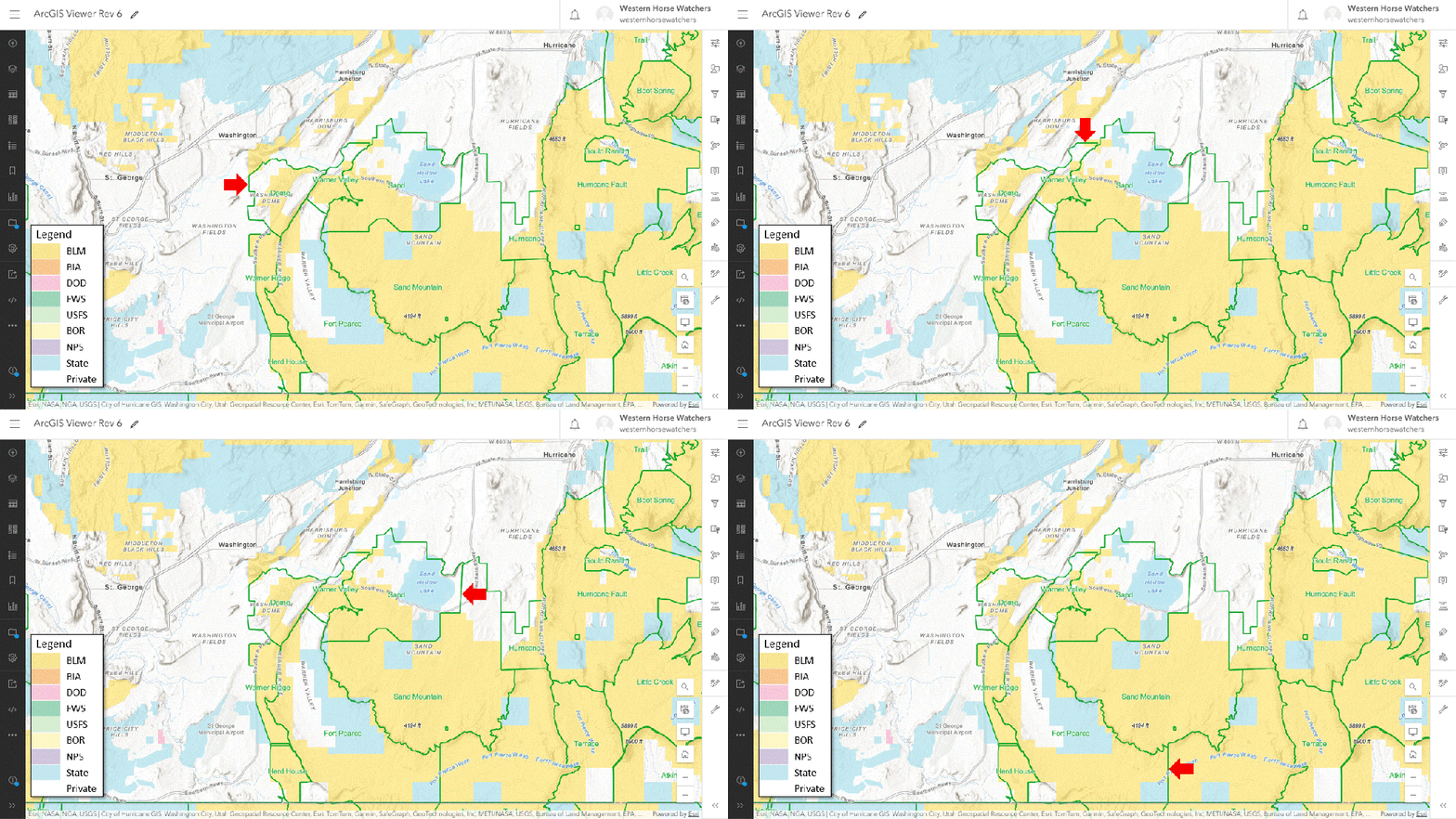
The map shows the Rock Springs HMAs before the RMP amendments, which were halted by an appeals court ruling on July 15. Click to enlarge.
RELATED: Adobe Town Roundup, Day 13.

The article says the BLM, in partnership with the Forest Service, planned and installed five virtual fence towers in a jointly managed grazing allotment in the Agua Fria National Monument but did not give the name of the allotment.
A link to the NEPA review was not provided.
A keyword search of ePlanning for “Agua Fria” turned up nine results but nothing for this project.
A search for “virtual” yielded 62 results including three in Arizona but none for a fencing project in Agua Fria.
Maybe the Forest Service did the environmental review.
Or maybe it wasn’t done at all. Not even a CX.
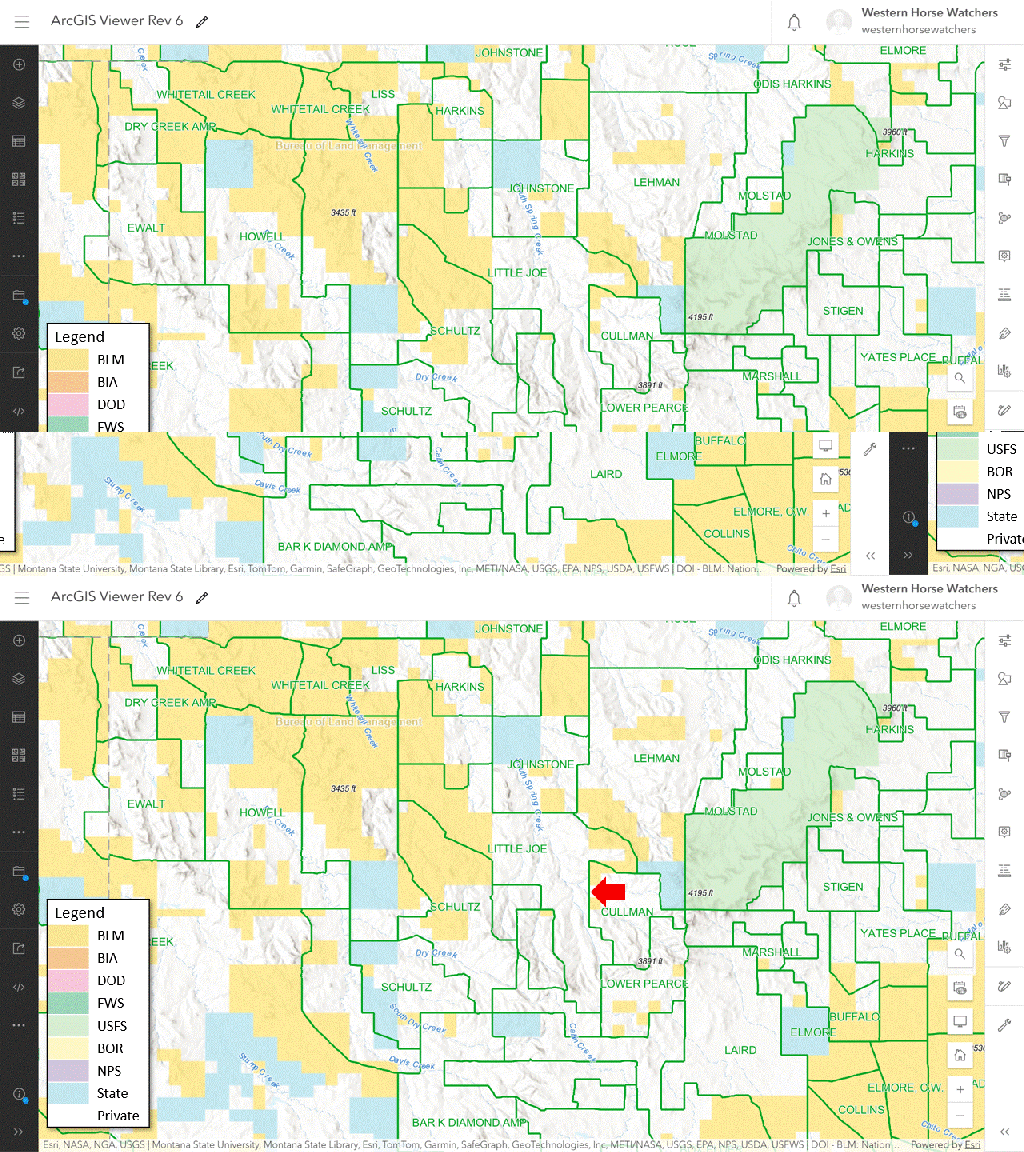
The ArcGIS Viewer shows two allotments stretching eastward into Forest Service land, Horseshoe and EZ Ranch.
The allotment master report identifies the permittees.
A page at the JH Cattle Company website confirms the connection with Horseshoe.
Another page describes the Vence virtual fencing system, which matches the description in the BLM article.
Presumably, JH Cattle will benefit from the new equipment, but who paid for it?
The allotment offers 4,572 AUMs on 29,851 public acres, equivalent to 12.8 wild horses per thousand public acres.
Your faithful public servants claim that public lands in the western U.S. can only support one wild horse per thousand acres (25,500 animals on 25.6 million acres).

The Proposed Action would also increase the grazing season by a factor of two.
Table 1 in the Draft EA, developed with no public input, summarizes the changes.
The project folder also contains an aerial image of the allotment.
The topic of increased forage usually appears in planning documents for wild horse roundups.
The customary response is that it can’t be accomplished through a wild horse gather decision and is only possible if the agency first revises the land-use plan to reallocate forage.
Refer to item 27 in the Lohanton comment summary for an example.
In this case, forage will go up with no changes to the LUP.
The allotment master report puts Granite Springs in the custodial category, condition unknown.
The EA claims the allotment has been underutilized.
The report shows no AUMs in the suspended column so the incremental forage has gone undetected for many years.
If the project is approved, the permittee will receive 383 AUMs on 982 public acres, equivalent to 32.5 wild horses per thousand public acres.
The target stocking rate across all HMAs is one wild horse per thousand acres (25,500 animals on 25.6 million acres).

On the Salt River with Walking with a Wookie.
The incident concluded on July 26 with 105 horses captured, 104 shipped, none released and one dead.
There were no unaccounted-for animals.
The capture and removal goals were 100 each.
The death rate was 1.0%.
The average daily take was 35.0.
The capture total included 41 stallions, 50 mares and 14 foals.
Youngsters represented 13.3% of the total.
Of the adults, 45.1% were male and 54.9% were female.
Ther were no plans to treat any of the mares with fertility control pesticides and return them to the range so the number of animals removed was 105.
The HMA is subject to permitted grazing. The operation liberated 1,260 AUMs per year.
The roundup supported three tenants of rangeland management.
RELATED: Pancake Emergency Roundup Starts July 22.
The incident started on July 15. Results through July 27:
The figures above are based on the daily reports. The sidebar at the gather page says 1,278 horses captured (including a mule) and 1,078 shipped.
A stallion was dispatched on Day 13 for pre-existing conditions. The death rate is 0.4%.
The capture total includes 457 stallions, 544 mares and 275 foals, not counting the mule.
The sidebar says 459/543/276.
Youngsters represented 21.6% of the animals gathered.
Of the adults, 45.7% were male and 54.3% were female.
The location of the trap site is not known.
The name of the contractor was not given.
There are no plans to treat any of the mares with fertility control pesticides and return them to the range.
The HMA is subject to permitted grazing. Resources liberated to date:
The map shows the Rock Springs HMAs before the RMP amendments, which were halted by an appeals court ruling on July 15. Click to enlarge.
RELATED: Adobe Town Roundup, Day 11.

The incident started on June 9. Results through July 24:
The figures above are based on the daily reports. The gather page says 982 captured.
Two animals were dispatched on Day 44 for pre-existing conditions, boosting the death rate to 0.6%.
The capture total includes 471 jacks, 434 jennies and 74 foals. The sidebar at the gather page says 476/431/75.
Youngsters represented 7.6% of the animals gathered.
Of the adults, 52.0% were male and 48.0% were female.
The location of the trap site is not known.
The name of the contractor was not provided.
No jennies were treated with PZP since the last report, leaving the total at 78.
The July 1 schedule indicates the designated pesticide was GonaCon Equine.
The Complex is subject to permitted grazing. Resources liberated to date:
These numbers will go down if burros are returned to the range.
RELATED: Three Rivers Roundup, Day 39.

The incident started on July 15. Results through July 25:
The figures above are based on the daily reports.
The death rate is 0.4%.
The capture total includes 377 stallions, 433 mares and 226 foals. A mule caught on Day 7 is not included in the total.
Youngsters represented 21.8% of the animals gathered.
Of the adults, 46.5% were male and 53.5% were female.
The location of the trap site is not known.
The name of the contractor was not given.
There are no plans to treat any of the mares with fertility control pesticides and return them to the range.
Captured animals will be taken to the off-range corrals at Cañon City, Rock Springs or Wheatland.
The HMA is subject to permitted grazing. Resources liberated to date:
The map shows the Rock Springs HMAs before the RMP amendments, which were halted by an appeals court ruling on July 15. Click to enlarge.
RELATED: Adobe Town Roundup, Day 9.

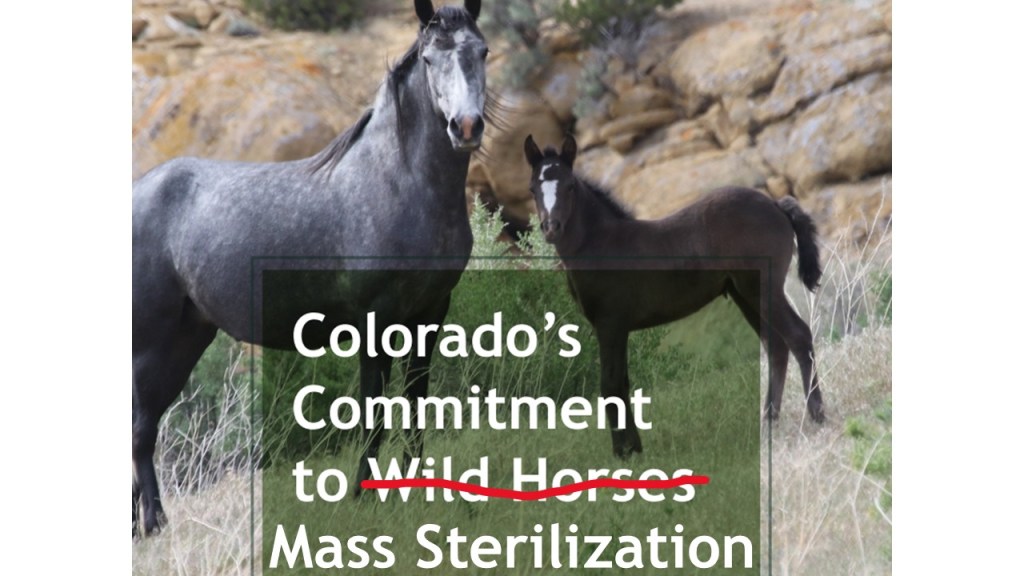
While some folks talk about humane disposal of wild horses, the advocates deliver, referring to the practice as humane management or in-the-wild management.

Those are codewords for mass sterilization with PZP.

Ironically, the most vocal proponent of the method, who accused the BLM of the largest attempted eradication of wild horses, convinced an appeals court to halt the plan, snatching the title for itself.

Beware of the wild horse advocates.
RELATED: Foal-Free Friday, Missing in Action Edition.

The incident started July 24, two days later than expected, with 36 horses captured, none shipped, none released and no deaths.
RELATED: Pancake Emergency Roundup Starts July 22.
The challenger to the Salt River management contract discusses her experiences trapping wild horses in the Apache-Sitgreaves forest in this 65-minute podcast.
Funds from the Forest Service are not unlimited so she receives financial support from “conservation groups” to carry out her work.
If AZDA wants rapid decline in the size of the Salt River herd, she’d be a good option.
RELATED: Salt River Challenger Writes About Wild Horse Advocates.
The incident, set to begin on August 25, has been postponed according to a story by Wyoming News.
The incident started on July 15. Results through July 23:
The figures above are based on the daily reports.
The death rate is 0.5%.
The capture total includes 317 stallions, 352 mares and 189 foals. A mule caught on Day 7 is not included in the total.
Youngsters represented 22.0% of the animals gathered.
Of the adults, 47.4% were male and 52.6% were female.
The location of the trap site is not known.
The name of the contractor was not given.
The shipping destination was not disclosed.
There are no plans to treat any of the mares with fertility control pesticides and return them to the range.
The HMA is subject to permitted grazing. Resources liberated to date:
The map shows the Rock Springs HMAs before the RMP amendments, which were halted by an appeals court ruling on July 15. Click to enlarge.
RELATED: Adobe Town Roundup, Day 7.

The unspoken word in news circles, apparently, is if you’re doing a story about wild horses, go to the Bureau of Livestock Multiplication and the Campaign Against America’s Wild Horses for comments.
Even Google—an appendage of the Democrat Party—is in on it.
Think of it as JournoList for wild horses.
Those who try to expose the deceit are censored.
Exhibit #1, a report by KRNV News on the Lahontan Management Plan, featuring the genetic diversity narrative and overpopulation narrative.
The first interview is with Tracy Wilson, defeatist, pesticide pusher and overseer of the largest attempted wild horse eradication in Nevada, who argues that the AML is too small to support genetic diversity and should be at least 150.
Unfortunately, herd size is poor indicator of genetic viability. Breeding population is more important. An AML of 500 would be too small if you’re poisoning the mares with PZP, the raison d’être of CAAWH.
Next, the camera turns to Holley Kline of the BLM who says there are far more wild horses than the land can support, which is misleading.
There are more wild horses than allowed by plan and they’re robbing forage from high net worth individuals who receive generous government benefits with no means testing.
Exhibit #2, a report by KLAS News on FY26 appropriations affecting wild horses, featuring the fertility control narrative.
Suzanne Roy, Wilson’s boss, said the BLM should “make humane management—not removals—the foundation of its program,” implying that fertility control is not removal, even though wild horse numbers go down as the advocates pummel the mares with pesticide-laced darts.
RELATED: PZP Doesn’t Kill Wild Horses, It Kills Wild Herds.

They may go on as scheduled due to overpopulation but the AMLs would revert to their previous values so the capture and removal goals should go down.
The number of horses removed could be reduced by 1,229.
The title of largest attempted eradication of wild horses would shift to the advocates at the Salt River and Virginia Range.