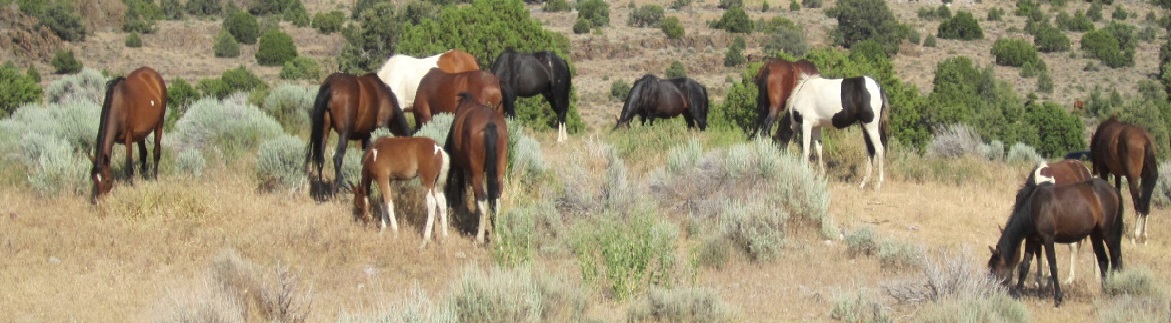
The cycle of life repeats on the Virginia Range, despite those who would try to break it.
Western Horse Watchers Association
Exposing the Hypocrisy, Lies and Incompetence of the Wild Horse Advocates
The cycle of life repeats on the Virginia Range, despite those who would try to break it.
The topic of forage demand comes up frequently on these pages. We know that one AUM will sustain one wild horse, one cow/calf pair, two wild burros or five domestic sheep for one month. The forage demand of one wild horse is 12 AUMs per year.
The land use plan for an HMA must allocate 2,184 AUMs per year if the AML is 182.
But you can’t write the forage budget until you know how much forage is available.
In some of the environmental assessments for wild horse management actions, forage supply varies from 12 to 18 acres per AUM per year.
Let’s pick the midpoint. A wild horse would need access to at least 12 × 15 = 180 acres to survive. Round the result to 200 acres.
Therefore, a stocking rate of five wild horses per thousand acres should be sustainable.
Why does the government limit wild horse herds to one animal per thousand acres?
What happened to the other four horses (80% of the carrying capacity of the land)?
Take a guess.
The 2020 Western States Horse Expo has been cancelled. The event has been moved to May 7 – 9, 2021 at the Murieta Equestrian Center, Rancho Murieta, CA.
No, it’s not a roundup, not on the Virginia Range.
BLM said today that 550 wild horses will be removed from the Swasey Mountains HMA, beginning in July. The news release did not indicate if the operation would be carried out from the air or on the ground. The current population is thought to be 721, plus this year’s foal crop.
Some of the animals will be receive “population growth suppression,” whatever that means, and presumably be returned to their home range.
The HMA covers 134,965 acres in western Utah and has an AML of 100, for an aimed-at population density (stocking rate) of 0.7 horses per thousand acres.

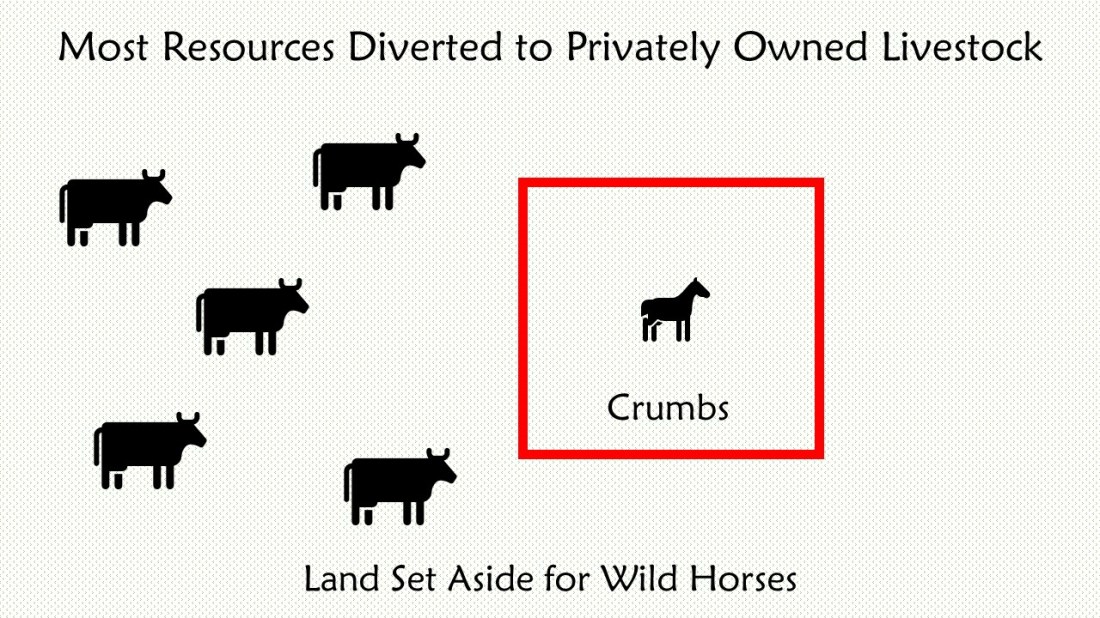
The HMA intersects four grazing allotments, according to Section 3.2.1 of the final EA, with livestock receiving approximately six times as much forage as the horses.
The announcement did not indicate where captured animals would be taken nor did it provide a link to the gather stats and daily reports. It’s not known if the event will be open to public observation.
Land use plans for the Jackson Mountains HMA assign 10,151 AUMs per year to privately owned livestock, according to Table 3.7 in an environmental assessment from 2012, with 2,604 AUMs per year allocated to wild horses.
The HMA covers 283,775 acres, with an AML of 217. The stocking rate allowed by plan is 0.8 wild horses per thousand acres.
The HMA fits the pattern noted two months ago: Low stocking rates correlate with large amounts of forage assigned to domestic livestock.
The HMA intersects six grazing allotments. Grazing seasons were not given in the EA so a period of 4.5 months was assumed. Although cattle and sheep may be authorized on those pastures, the stocking rate was computed for cow/calf pairs, whose resource requirements are said to be equivalent to those of wild horses.
The entire HMA is subject to permitted grazing. The ranchers would have to place 2,256 cow/calf pairs on the land to graze off 10,151 AUMs in 4.5 months, for a stocking rate of 7.9 cow/calf pairs per thousand acres. If the grazing season was longer, the stocking rate would be lower. The AUM distribution would not change.
These figures are compared in the following charts.

The forage assigned to livestock would support an additional 846 wild horses, for a new AML of 1,063.
The rationale for dividing forage in the Jackson Mountain allotment, which represents 67% of the HMA, was 18% to horses and 82% to livestock, per Section 3.3.4 of the EA.
On two other allotments, the forage allocated to wild horses was zero.
And you wonder why there are so many of them in long-term holding.
The problem is public-lands ranching.
RELATED: Jackson Mountains Emergency Roundup Starts Next Week.

On the Virginia Range with itsmissyvonne.
Look both ways before crossing!
If you don’t understand the difference between the Assateague and Chincoteague wild horses, this film will get you up to speed. The distinction is the state line.
Unlike the horses in the west, they are not managed by the BLM or Forest Service.
The annual pony swim, seen at 4:25, was cancelled this year. Would it qualify as harassment?
The remarks from 4:43 to 4:57 might give you the impression that the Assateague horses live their lives as they choose. But the story goes south at 7:52.
The fertility control program, launched about 30 years ago, is discussed for the next four minutes. Unusual characteristics of the herd, such as declining size, abnormal sex ratios and high mortality rates of stallions, are not considered.
The video provides a nice demonstration of the stalking and darting of wild horses, which absolutely do not quality as harassment because the PZP zealots said so.
The program was shut off in 2016 but the herd is only now starting to recover.
Here’s a storyboard.
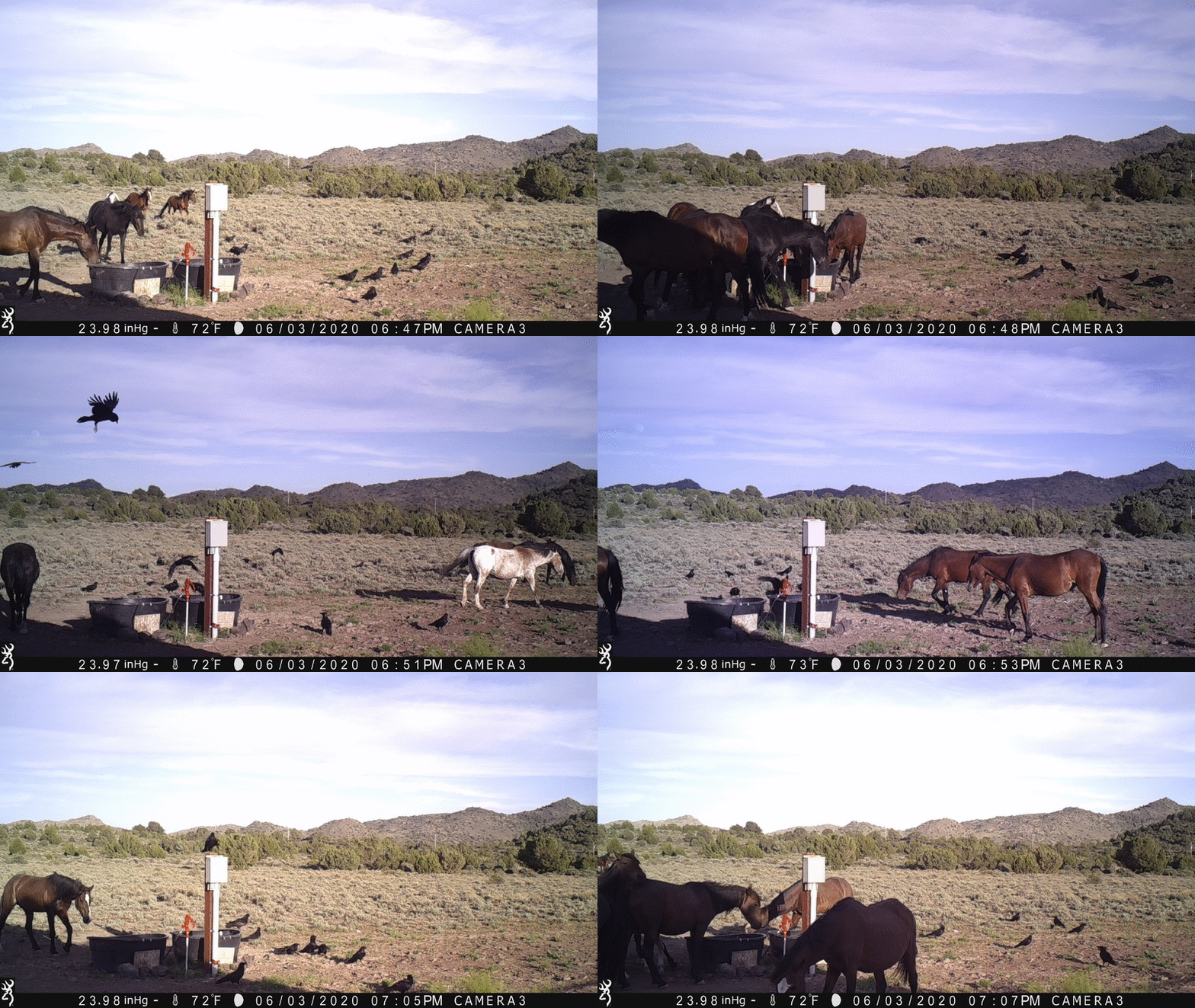
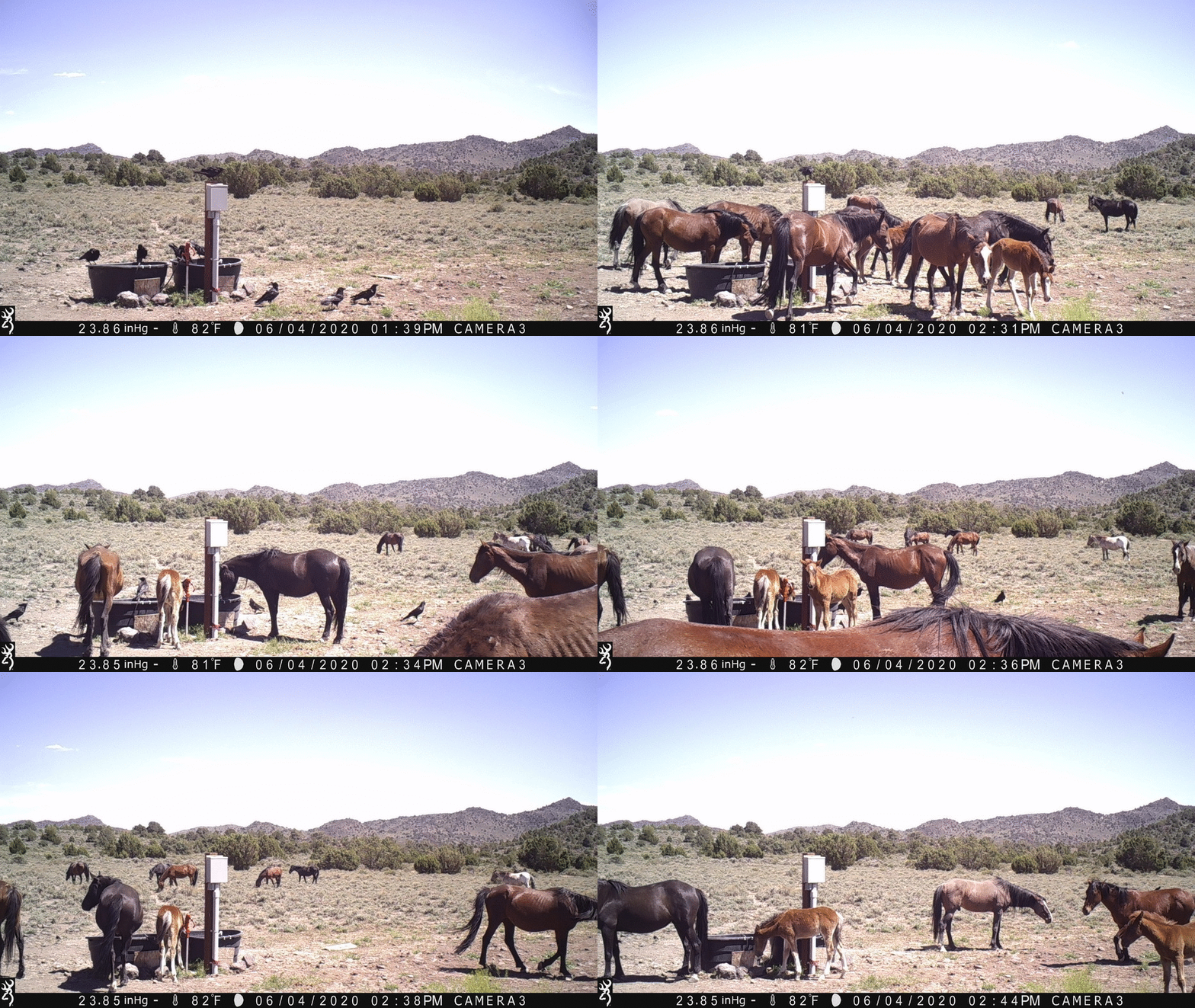
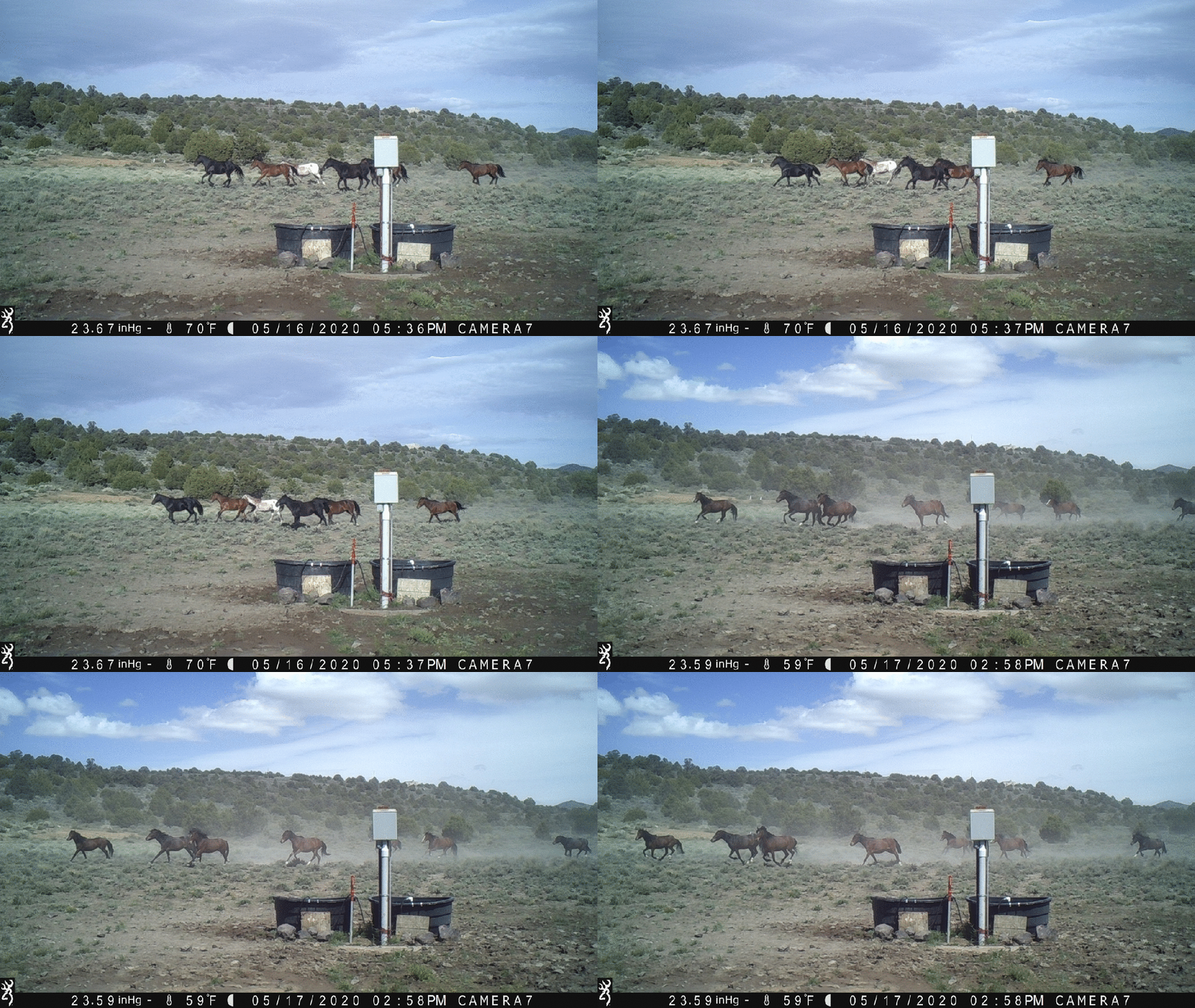
Haven’t seen these guys before. Photos at 09:04 show two youngsters. Can you spot the stud? He’s probably 15 to 16 hh. Tank on the left had been overflowing because they flipped the filler out of the water. That problem was fixed on 06-05-20.

Approximately 300 wild horses will be gathered from the Jackson Mountains HMA due to lack of water, according to a news release issued today by the BLM.
The HMA covers 283,775 acres in northwest Nevada and has AML of 217. The stocking rate allowed by plan is 0.8 wild horses per thousand acres.
The operation, to be carried out with bait traps, will not be open to public observation.

The HMA intersects six grazing allotments according to an environmental assessment from 2012, with all of its acreage subject to permitted grazing (Table 3.3). Table 3.7 in the EA shows 10,151 AUMs per year assigned to livestock inside the HMA (79.6%), with 2,604 AUMs per year available to the horses (20.4%).
The announcement did not indicate if any of the captured animals would be returned to their home range. Those removed will be taken to the Indian Lakes corrals in Fallon.
Gather stats and daily reports will be posted to this page.
BLM announced today the start of a 30-day comment period on a draft environmental assessment for fuels reduction in northern Nevada via livestock grazing.
The EA contains 149 pages plus front matter and multiple appendices. A project of this size should have a 90-day review period.
The EA and supporting documents can be found on this page.
RELATED: Comments Invited on Targeted Grazing Project in Nevada.
Sort of.
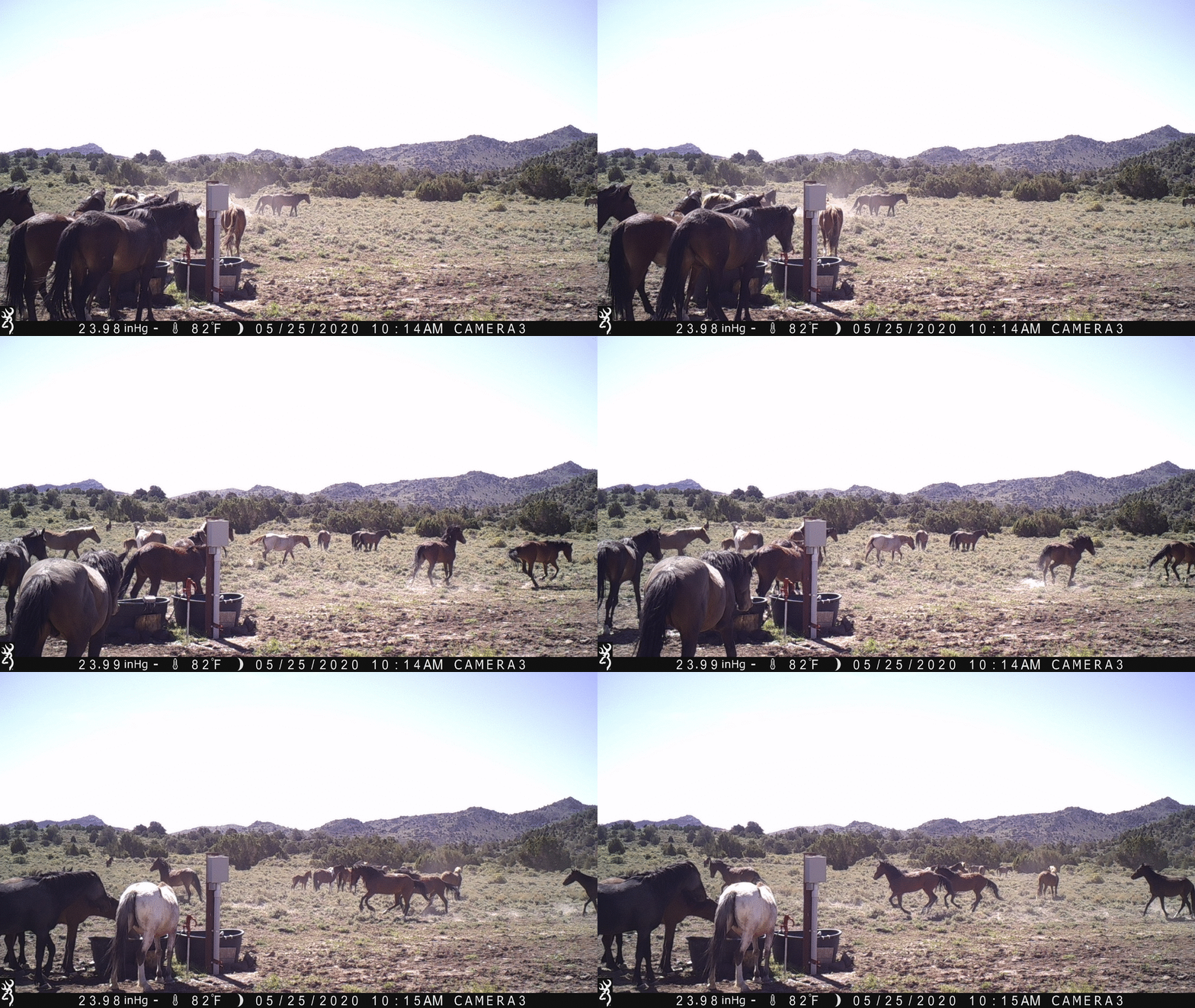
This is such a great video. Posting again to piss off the PZP zealots and their ranching allies. Volume up!
Operation of the machine can’t be all that bad, as the video shows a horse coming back to eat after ‘treatment.’ Most of them probably did the same thing, so it was hard to choose the right clip for the video.
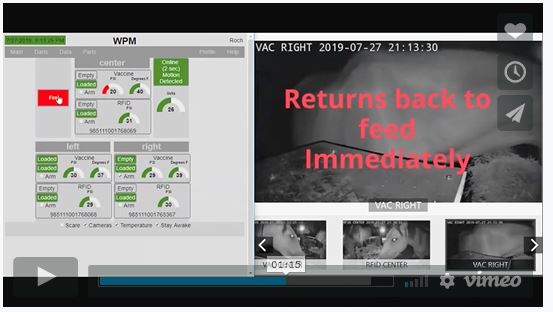
Do you think the user of this equipment will want darted mares eating more of the bait, when there is so much need out in the pasture? Do you think said user will be willing to feed the studs when they come in for a bite?
Hell no!
There must be another feature in the machine that drives the animals out after they’ve been treated or deemed unnecessary, such as an electric shock.
POW! Hit ’em with a dart. Then ZAP! So long sucka!
The following video, posted in 2017, shows a prototype of a machine that automatically darts wild horses in the field. The company now seeks investors to commercialize the technology.
The device targets the forequarters of the animals, contrary to the conventional wisdom in the darting world. It is not clear how the PZP zealots, whose purpose in life is now at risk, will respond.
Oil and mining companies, the greatest threat to wild horses and burros according to some ‘advocacy’ groups, have shown little interest in the contraption.
RELATED: New Machine Darts Wild Horses Automatically.
Wildlife Protection Management, a team of “scientists, engineers, ranch managers, and outdoor enthusiasts,” has developed a system that vaccinates and microchips wild horses on the range, without human involvement.
“There is tremendous interest from policy makers, rangeland managers, tribal entities, and horse advocates,” according to an announcement posted today by EIN Presswire.
The only thing missing is a hopper that refills the trough with hay.
On the Yakama Indian Reservation with Rick Rinehold.

