BLM Issues Bullfrog Final Planning Documents

The Decision Record authorizes the Proposed Action, discussed in Section 2.4 of the Final EA.

A new HMAP was also approved.  Refer to Appendix D.

Section 2.3.2.2 refers to outdated registrations for GonaCon-Equine.

The project folder includes a summary of public comments.

The news release said there are currently more than 1,000 wild burros in and around the HMA.

RELATED: Bullfrog EA Out for Review.

As the Noose Tightens Around SRWHDG, Will CAAWH Hang Them Out to Dry?

Why didn’t the reporter ask Netherlands how many of the mares have been ruined by PZP?

Those who want the horses gone will likely get their wish because the advocates have pushed the birth rate below the death rate with little hope for recovery.

The Salt River Wild Horse Darting Group receives support from the Campaign Against America’s Wild Horses, a leader in nonmotorized removal, fierce opponent of principal use and servant of the public-lands ranchers.

As the truth leaks out in Arizona, look for CAAWH to distance itself from SRWHDG, disavowing any knowledge of their actions.

RELATED: Salt River RFP Cancelled.

Salt River RFP Cancelled

The Arizona Department of Agriculture announced last week that the request for a new management contract had been canceled because of unauthorized conversations involving potential bidders according to a story by KJZZ News of Phoenix.

An email inquiry sent by Western Horse Watchers on Friday was not immediately answered.

Simone Netherlands, ringleader of the Salt River Wild Horse Darting Group, said the population control measures sought by the state threaten the viability of the herd, which may be true but the point is moot because her group has already done that with PZP, an ovary-killing pesticide.

The wild horse population has decreased about 9% per year under her leadership, 50% higher than normal!

“It’s like they don’t understand how amazing that is, that the population has been going down.”

If her group loses the contract, and hopefully they will, that statement could earn her a well-paying job with one of the legacy contractors or ranching advocacy groups.

RELATED: State Not Happy with Salt River Sterilization Program?

UPDATE: Refer to AZDA news release dated May 21.

Pesticides, Not Ladders, Greatest Threat to Currituck Herd

Gravity, not the advocates, rescued a mare who had put her head through a stepladder and was carrying it around, according to a story by The Outer Banks Voice.

In keeping with a policy established earlier this month, her name was not given, as if that will lift the birth rate above the death rate and save the herd from extinction.

RELATED: Currituck Foal Rescued from Canal.

Silver King HMAP Q&A

Q. The AML is 128, which is small relative to the available resources.  What will it be after the new HMAP goes public?

A. 128.

Q. The Silver King horses receive 1,536 AUMs per year.  How much will they receive when the HMAP is published?

A. 1,536 AUMs per year.

Q. Livestock in the HMA receive an estimated 30,356 AUMs per year, 20 times more than the horses.  How will that change when the HMAP is published?

A. It won’t.

Q. The HMA is managed principally for livestock.  What is the aim of the new HMAP?

A. To manage the HMA principally for livestock.

Q. How will the resource allocations be enforced?

A. The way they are now, by forcible removal, fertility control pesticides and sex ratio skewing.

Q. The bureaucrats, ranchers and advocates view the animals as pests.  Will that change when the HMAP is published?

A. No.

Q. Seems like HMAPs don’t change anything—they ratify and reinforce management practices that favor the ranchers.  Why were the advocates so enthusiastic about them last year at the Save Our Wild Horses Conference in Reno?

A. They want the ranchers to win.

Q. Why does the BLM give so much forage to livestock?  I can’t find a statutory warrant for that.

A. They want the ranchers to win.

Q. What is the economic impact of this arrangement?

A. For every AUM taken from the horses and given to the ranchers, the BLM receives $1.35 in grazing fees while it spends at least $150 to care for the horse displaced thereby.  Nobody in the private sector would do that.

RELATED: Scoping Begins for Silver King HMAP.

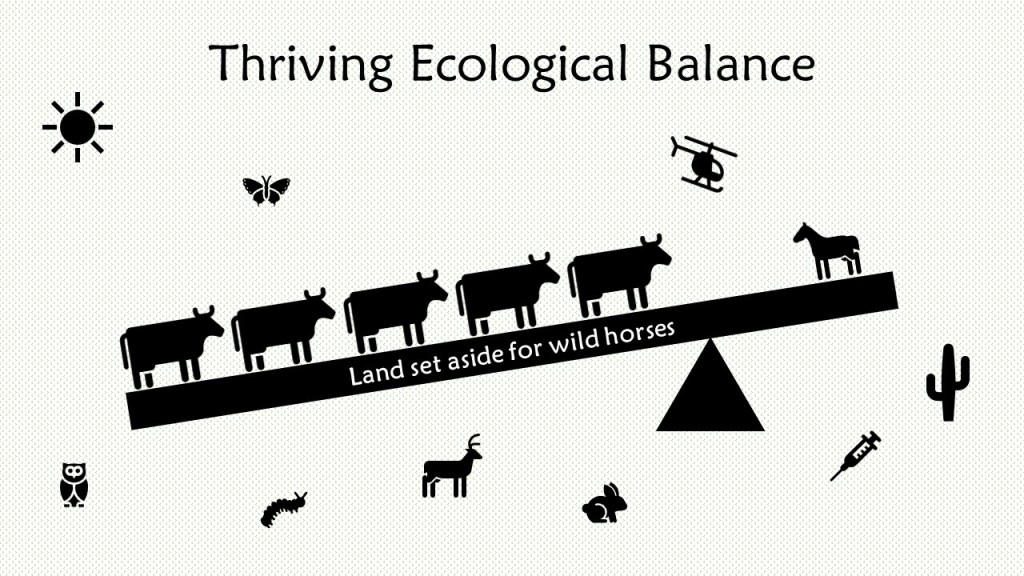
Thriving Ecological Imbalance at Silver King HMA

Table 3 in the Management Evaluation Report gives the allotments that overlap the HMA, including the percentages therein.

The 128 horses allowed by plan receive 1,536 AUMs per year on 574,962 public acres according to the 2025 population dataset, or 0.2 animals per thousand public acres.

The Allotment Master Report provides management status, acreage and active AUMs.

In this case, three field offices are involved so three reports were run.

Caliente

  • Wilson Creek
  • Geyser Ranch
  • Pioche
  • Rattlesnake
  • Ely Springs
  • Highland Peak

Bristlecone

  • Fox Mountain
  • Sunnyside

Basin & Range

  • Narrows

The figures were copied into an Excel spreadsheet as follows:

Silver King livestock receive an estimated 30,356 AUMs per year, assuming the resource is evenly distributed across the allotments, twenty times more than the horses.

The HMA can only support 128 wild horses but it can support livestock equivalent to 2,530 wild horses, for a True AML of 2,658 or 4.6 animals per thousand public acres.

Your faithful public servants claim that public lands in the western U.S. can only support one wild horse per thousand acres (25,500 animals on 25.6 million acres).

The advocates prop up the fairy tale with their darting programs.

RELATED: Scoping Begins for Silver King HMAP.

Foal-Free Friday, Devil in the Details Edition

In a 2020 management plan summary, the Arizona Department of Agriculture noted that the Salt River herd consisted of approximately 450 horses, with a recommendation to reduce it to 100 to 200 horses by the use of birth control and natural attrition.

A third party with a no-cost contract would work to achieve the goal within ten years.

The Salt River Wild Horse Darting Group, an affiliate of the Campaign Against America’s Wild Horses, was recruited for the job.

The weapon of choice was PZP.

The effectiveness of the effort would be assessed in five years and that process has been started.

What the advocates did not tell the bureaucrats, apparently, is that most of the mares would be ruined after five years of treatment and that the herd would not reach the target range but pass through it in irreversible decline.

It’s hard to believe that they would lie about anything, especially EPA-registered pesticides, which they refer to as vaccines.

With few exceptions, their nonprofits revolve around the use of these products, and they’re now trying to position themselves as a humane alternative to motorized removal.

RELATED: Foal-Free Friday, Synonyms for Sterilization Edition.

BLM Imposes Murderer’s Creek DNA

A new project containing one document was opened today in ePlanning and public comments were not requested.

The DNA asserts that a 2024 Environmental Assessment fully analyzes and discloses the effects of the Proposed Action, which isn’t in the EA and was not analyzed.

Instead, the agency concurs with the Forest Service in adopting a modified Alternative 4 that updates the AML, approves an HMAP and authorizes the removal of excess animals from the JMA.

RELATED: Forest Service Issues Murderer’s Creek Final Planning Documents.

AIP Op-Ed Misleads Readers, Gives Cover to Ranchers

A good way to hide a problem is to omit it from the discussion and that’s what the writer does in a May 19 column about wild horses published by The Hill.

From the first paragraph: “With few natural predators and virtually no population control, these animals have multiplied far beyond the landscape’s carrying capacity — leading to degraded rangeland wildlife habitat, brutal horse starvations and mounting taxpayer costs.”

If accuracy was the goal—and it is not—the intro would read “With few exceptions, areas identified for wild horses are overlapped by grazing allotments, and management plans developed by the government favor ranching interests, not wild horses.”

That would explain the symptoms in the opening remarks:

  • Lack of predators
  • Degraded habitats
  • Inadequate food
  • Increasing costs

If the writer was honest, he’d tell you that the bureaucrats assign about 80% of the forage in the lawful homes of with horses to ranchers.

Carrying capacities are much higher than the government admits and the off-range corrals are flooded with wild horses because the government manages the land primarily for livestock.

Curiously, the nonprofit that won the case, halting the adoption incentive, wants the horses gone as much as the ranchers.

But they want it done with pesticides not helicopters.

RELATED: Why Are There So Many Wild Horses in Off-Range Holding?

Rewilding Advocate to Lead Colorado Land Board

The term was defined in a May 16 article by The Fence Post as purchasing agricultural lands and converting them to wildlife refuges.

The Public Lands Council, a ranching trumpet, opposes the concept and hiring decision.

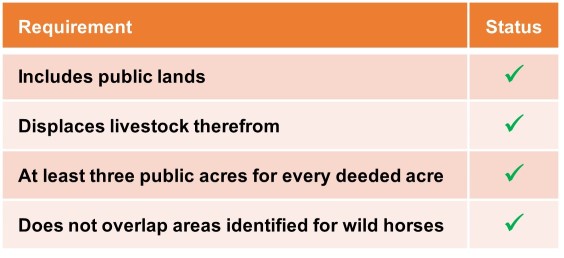
If a proposed refuge for wild horses does not include public lands and does not displace livestock therefrom, it’s not worthy of your support.

RELATED: Key Indicators for New Wild Horse Preserves.

Save Our Wild Horses Conference Moves to Colorado

The event runs from May 23 to 26 in Craig according to a news release on PRN.

A link to the agenda was not provided but some information is available at Save Our Wild Horses and Wildlife.

Last year’s conference in Reno produced a manifesto for HMAPs but now that the plans are rolling out the advocates have opted for another brand of snake oil.

Day 2 includes a tour of Wild Horse Refuge, an example–but not a shining example–of a wild horse preserve.

Day 3 includes a trip to Sand Wash Basin, perhaps to rub shoulders with the pesticide pushers and pay homage to the ranchers.

The last day features a trip to Salt Wells Creek, to be zeroed out this summer in the year’s largest roundup.

Not because of drilling and mining as the advocates would have you believe, but because of permitted grazing.