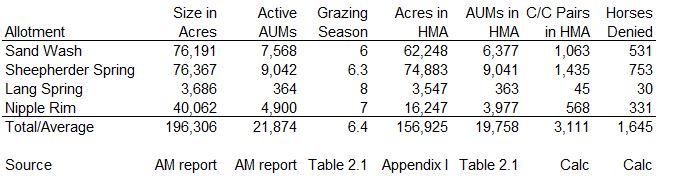
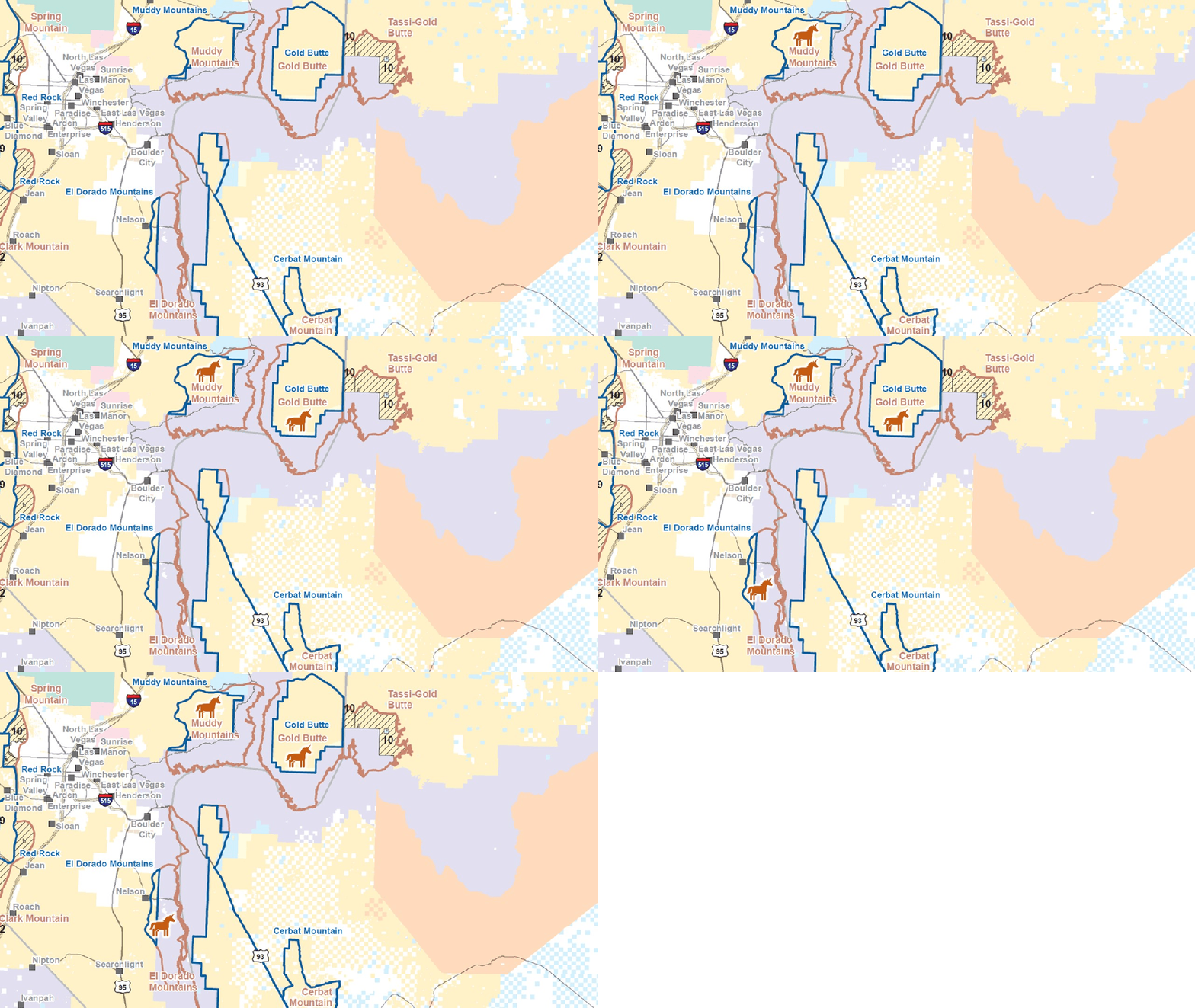
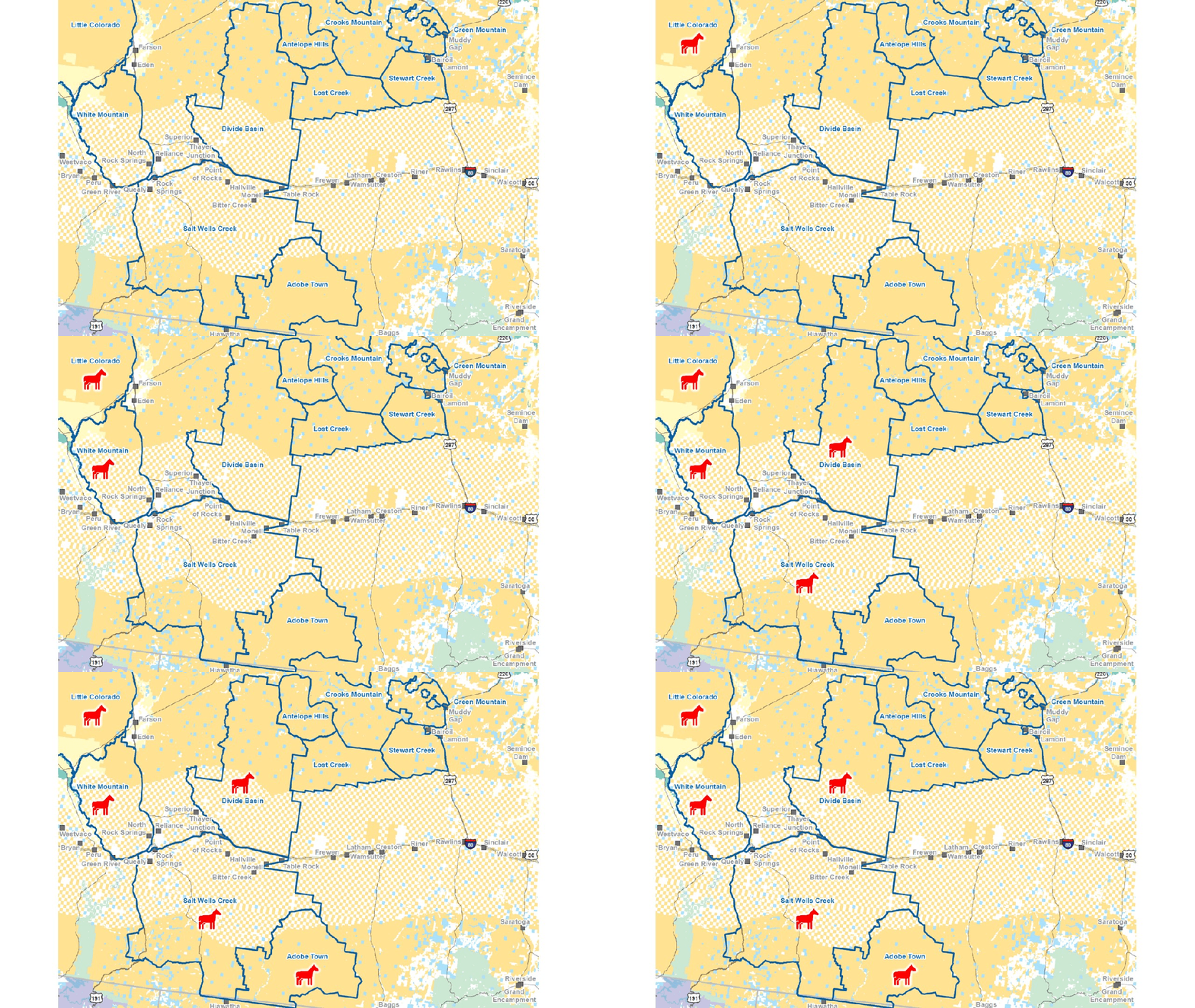
The Colorado gather page says updates will be posted when horses are captured but, as of today, no such activity has occurred. Clicking on the plus sign (+) next to the HMA name will display the daily reports.
RELATED: Gather Schedule Updated.
Western Horse Watchers Association
Exposing the Hypocrisy, Lies and Incompetence of the Wild Horse Advocates
The Colorado gather page says updates will be posted when horses are captured but, as of today, no such activity has occurred. Clicking on the plus sign (+) next to the HMA name will display the daily reports.
RELATED: Gather Schedule Updated.
The Allotment Information report in RAS for all districts and field offices in Wyoming yielded 3,563 unique rows after filtering out 636 duplicates. Those rows corresponded to allotments with more than one permit.
The breakdown by category includes a large number of allotments with custodial status:
Approximately 23% of the allotments are in the Improve category, suggesting that rangeland health in Wyoming is fairly good, although the condition of the custodial allotments is not known.
The breakdown by public acreage tells a different story:
Almost 62% of the land does not meet standards for rangeland health.
The guest column published yesterday by The Hill pinned most of the problems on global warming, not on stocking rates, resource allocations and management priorities of America’s public lands. In fact, it didn’t even acknowledge public-lands ranching!
Privately owned livestock can access over 17 million acres of BLM lands in the state, compared to slightly less than five million acres for wild horses. That acreage will ratchet down if the Rock Springs RMP amendments are approved and carried out.
RELATED: Allotment Status in Utah.
The writer of a guest column appearing today in The Hill argues that deteriorating conditions on public lands in the western U.S. have more to do with climate change than wild horses, and that a massive conservation program is needed to stop it.
Given the political leanings of the publication, those could be code words for deindustrializing and depopulating western rangelands.
The piece could have been written at the behest of ranching interests. Notably absent are terms such as ‘cattle,’ ‘livestock,’ and ‘grazing.’
Yet, approximately 250 million acres have been designated for public-lands ranching, with many of the BLM allotments in the Improve category.
The article includes the usual propaganda, such as “developing a humane contraceptive that will effectively slow the growth of wild horse populations” and incentivizing private landowners to “support the relocation of wild horses to suitable lands.”
How exactly does relocation of wild horses to private sanctuaries and remote wilderness areas achieve the original goals of the WHB Act?
What happens when you use phony problems as a basis for action?
The author is a legal advisor for The CANA Foundation, a non-profit group whose founder supports horse slaughter.
RELATED: CANA Foundation Throws in with Public-Lands Ranchers.
The drug, a hormone replacement that alleviates the symptoms of menopause, is made from the urine of pregnant mares, according to a letter published today by the Johnson City Press of Johnson City, TN.
A search for ‘premarin horses’ suggests that it’s true, and may qualify as animal cruelty, but Western Horse Watchers does not know if the practice goes on today.
Side effects include blood clots, stroke and breast cancer.
Aerial footage of former wild horses in an off-range pasture by Jay Stockhaus.
There are currently six ORPs in Kansas. They are the subject of a 2019 article in Kansas! Magazine.
Horses not adopted or sold are supposed to end up in these facilities.
RELATED: New Off-Range Pastures, Quick Note on Overpopulation.
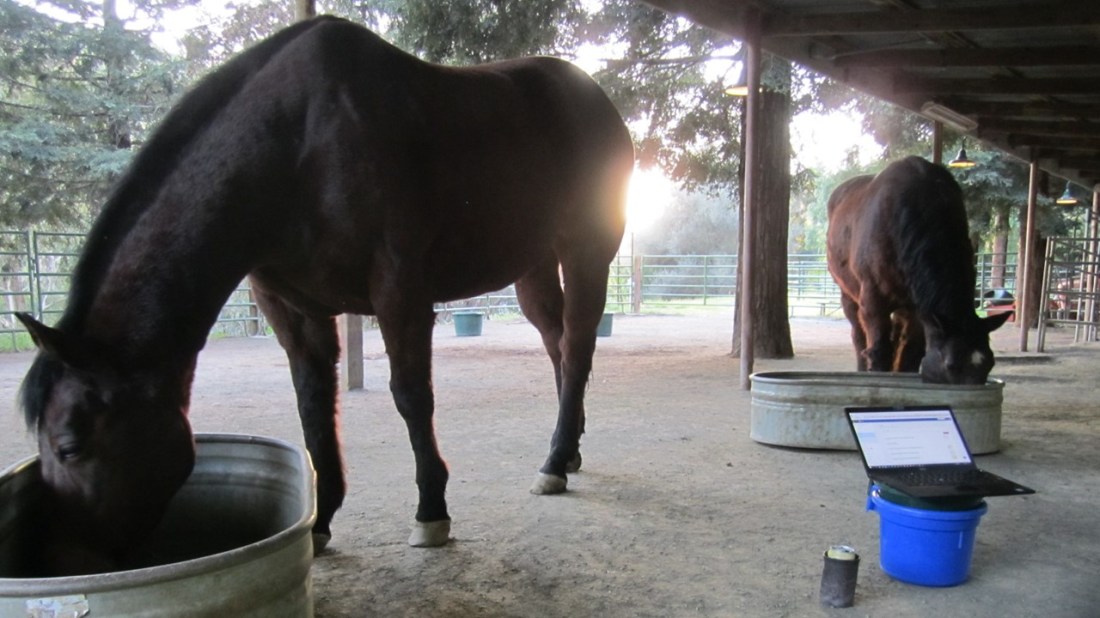
Rain over the last two days has turned the corral into a mudhole again, reducing the feeding area to a dry patch in the shelter.
When you show up with hay, the horses will converge on you, not because they’re mean but because they’re hungry, increasing the risk of foot injury.

There are four of them in this corral and they don’t pay much attention to the location of my feet when they’re exploring the pile for the best spot.
The front feet of an average horse carry around 300 pounds each, with 200 pounds on each of the rear feet, give or take.
In the early days, I had steel-toed boots but when they wore out I never replaced them.
She was born on the Maryland side of the island last week, according to a report by the Maryland Coast Dispatch.
Another census is in progress.
The fertility control program was shut off in 2016 but the herd was still declining as of a year ago.
RELATED: R.I.P. Assateague Horse Census?
Comments are no longer moderated, they should post when you submit them.
The Allotment Information report in RAS for all districts and field offices in Utah yielded 1,391 unique rows after filtering out 946 duplicates. Those rows corresponded to allotments with more than one permit.
The breakdown by category has a fairly even distribution across the defined classes.
With about one third of the allotments in the Improve category, public lands in Utah must be in pretty good shape, right?
The breakdown by acreage tells a different story:
Approximately 57% of the land does not meet standards for rangeland health.
The condition of the custodial allotments is not known.
Privately owned livestock can access over 21 million acres of BLM lands in the state, compared to a little more than two million acres for wild horses and burros.
RELATED: Status of Allotments in Oregon.
The housing development will be built on 81 acres east of Damonte Ranch High School, according to a report by FOX11 News of Reno.

Some of those opposing the project were concerned about the impact on wild horses.
Given the current stocking rate of approximately ten animals per thousand acres, the development would displace slightly less than one horse.
A fence will be built around the community to keep the horses out.
A story posted last night by The Fountain Hills Times said Brownie Troop #6445 donated $300 from this year’s cookie sales to the Salt River Wild Horse Management Group, a non-profit that humanely manages the Salt River wild horses.
The report did not mention that ‘humane management’ means stalking the mares and shooting them with contraceptive darts.
RELATED: Saving the Salt River Horses by Getting Rid of Them.
BLM removed three wild horses from the Calvada Eye today, according to a report in the Pahrump Valley Times.
The animals will be taken to the off-range corrals in Ridgecrest, CA.
RELATED: Don’t Feed Pahrump Horses.
UPDATE: Added video.
The Allotment Information report in RAS for all districts and field offices in Oregon yielded 1,952 unique rows after filtering out 389 duplicates. Those rows corresponded to allotments with more than one permit.
Duplicate rows should not be removed if you want to compute the total AUMs permitted on BLM lands in the state.
Western Horse Watchers has not found a reporting system for allotments managed by the Forest Service.
The breakdown by category includes a large number of allotments with custodial status:
Approximately 22% of the allotments are in the Improve category, suggesting that rangeland health in Oregon is not that bad, although the condition of the custodial allotments is not known.
The breakdown by acreage tells a different story:
Approximately 62% of the land does not meet standards for rangeland health.
There is no category for blaming substandard conditions on wild horses and burros.
Privately owned livestock can access over 15 million acres of BLM lands in the state, compared to three million acres for wild horses and burros.
RELATED: Allotment Status in Idaho.
Twenty five mares that have been treated with contraceptives will be returned to the HMA on March 12, according to a BLM news release posted today.
The event will be open to public observation.
RELATED: Silver King Roundup Over.
At or near the Big Summit WHT with Dan Cady.
Two weeks ago tomorrow, the colt reared up and came down on top of me. Yeah, that colt. Probably around 500 pounds. I got up, dusted myself off, but did not respond in kind. Just a colt acting like a colt, I thought.
As they say, if you can’t take the heat, get out of the kitchen.
I’ve been bitten, kicked, stepped on and knocked to the ground, not by wild horses but by those on lead ropes or in a corral. This was a new experience.
Every youngster, you have to set the limits, teach them what’s okay and what’s not okay.
The whoosh of a hoof going past your ear, you don’t want to hear that very often.

The Allotment Information report in RAS can supply data for all allotments in a state by selecting the state and choosing all of the districts and all of the field offices.
After hitting OK, scroll to the bottom of the bottom of the report and save the results by choosing Export > Data > CSV, which will generate a comma-separated file that you can save to your computer.
Opening the CSV file in Excel should launch the Text Import Wizard, which will copy the data into the rows and columns of a new spreadsheet.
In step 1, choose Delimited. In step 2, put a check mark next to Comma, clearing any other choices. In step 3, hit Finish to complete the process.
Allotments with more than one permittee will appear multiple times in the list but you can use the Remove Duplicates tool to filter them out. Filter on the Allotment Number column only.

A pivot table can be added to the spreadsheet to compute statistics from the dataset.
The filtered list had 2,111 allotments, as of today, with the following breakdown:
The condition of the custodial allotments is unknown.
With a little over one third of the allotments failing to meet standards for rangeland health, grazing activity may not seem to have a very large impact in Idaho.
But if you look at the public acres, you get a different picture:
Seventy percent of the land is in the Improve category!
Given that wild horses in Idaho can access only 418,000 acres in six HMAs, they are probably not responsible for much of the damage.
RELATED: Rangeland Conditions In Horse-Free Areas.
Some HMAs are managed for horses and burros. Some allotments are permitted for cattle and sheep. Sometimes you know the number of animals allowed by plan and other times you know the active AUMs and grazing seasons.
An HMA may fit within an allotment or intersect a large portion of it, resulting in a common area.
What do the resource allocations tell you about the management priorities in that area?
The trick is to put everything on a consistent basis. Don’t try to compare burros to cattle and horses to sheep.
Convert burros to horses and sheep to cattle. The resource requirements of horses and cattle are said to be equivalent, allowing a direct comparison.
Consider this example. The HMA and allotment occupy the same 88,000 acre parcel.
HMA
Allotment
Start by converting burros to horses and sheep to cattle.
Two burros are equivalent to one horse and five sheep are equivalent to one cow, so the equivalent number of horses allowed in the area is 42 + (92 ÷ 2) = 88 and the equivalent number of cattle is 224 + (640 ÷ 5) = 352.
The horses require 88 × 12 = 1,056 AUMs per year and the cattle require 352 × 6 = 2,112 AUMs per year.
Horses receive one third of the authorized forage, neglecting wildlife, and cattle receive two thirds.
The stocking rate for horses is 88 ÷ 88,000 × 1,000 = 1 animal per thousand acres and the stocking rate for cattle is 352 ÷ 88,000 × 1,000 = 4 animals per thousand acres.
The HMA is managed primarily for livestock. The forage assigned to cattle would support an additional 2,112 ÷ 12 = 176 wild horses, for a True AML of 264.
The new AML could be distributed any number of ways among horses and burros, for example, 150 horses and 114 × 2 = 228 burros, as long as the total AUMs are 3,168.
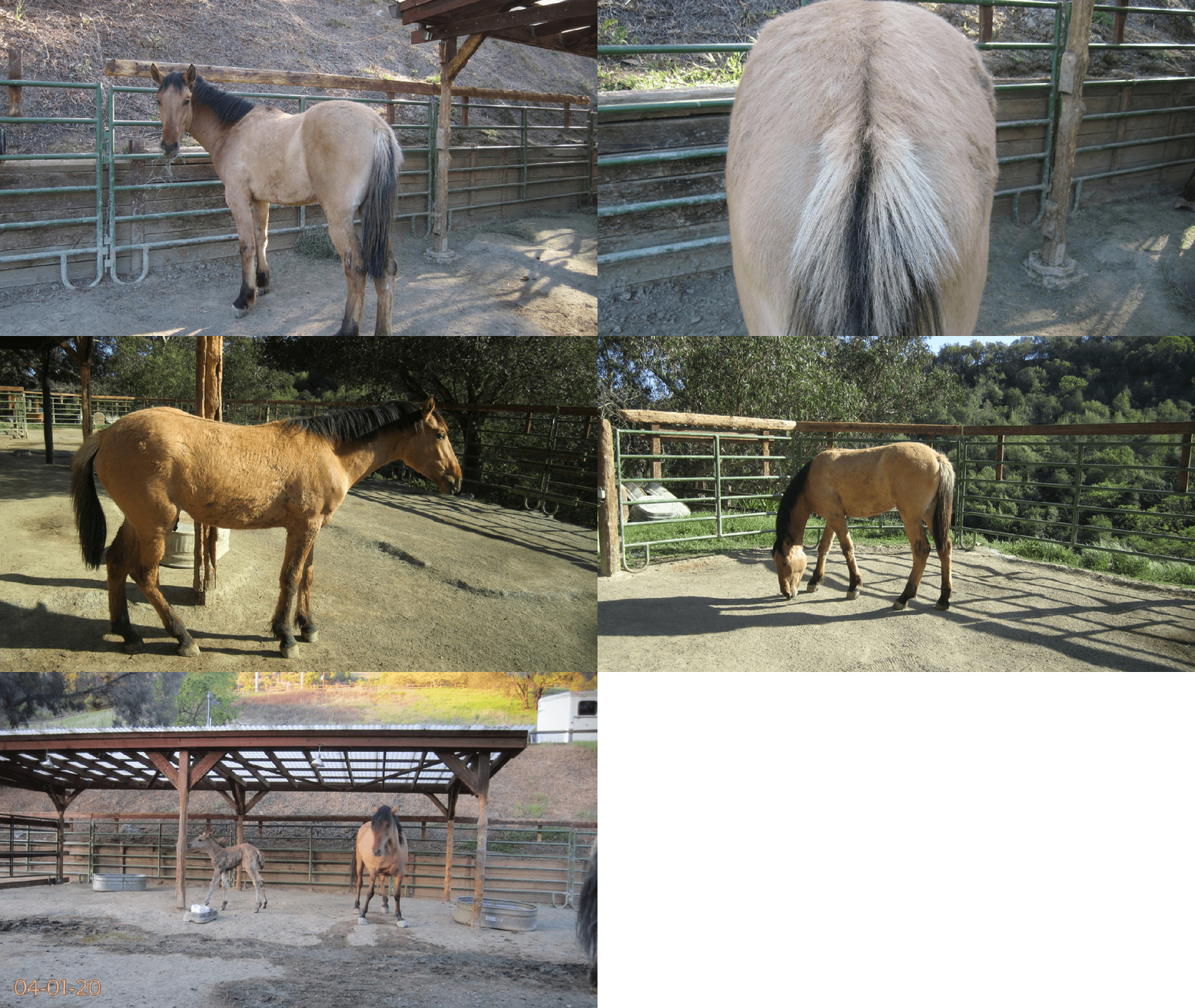
Photo of colt’s mom taken this morning. Conventional wisdom says she’s due mid month, but that doesn’t appear to be the case. These are not randomly selected horses thrown together in a corral, they are family.
One of the theories in the wild horse world is that roundups stimulate reproduction, growth rates are lower when herds are kept intact.
Video of colt at eleven months was posted to YouTube yesterday.
RELATED: Another One on the Way?

The agency is aware of several cases where patients required medical support after self-medicating with the equine dewormer, according to a report published yesterday by The New York Daily News.
RELATED: Safety of Ivermectin Paste?