A small group gathered yesterday demanding answers from the Forest Service, including photos from the holding facility, according to a report by KTNV News.
The band was taken to an undisclosed location in Utah.
The agency may have handed them off to the BLM, which has three off-range corrals in the state: Axtell, Delta and Sutherland.
Unlike the Campaign Against America’s Wild Horses and its army of nitwits, the protesters did not try to sell mass sterilization, the inevitable result of “humane population reduction,” as wild horse conservation.
Snippet from statute: It is the policy of Congress that wild free-roaming horses and burros shall be protected from capture, branding, harassment, or death
Snippet from manual: To protect wild horses and burros from unauthorized capture, branding, harassment or death
The figures above are based on the daily reports.
The capture total includes 11 stallions, 10 mares and 3 foals.
Youngsters represented 12.5% of the animals gathered.
Of the adults, 52.4% were male and 47.6% were female.
The gather page does not indicate if BLM staff are using the permanent trap site.
Up to 15 mares will be treated with PZP and returned to the range according to the July 1 schedule.
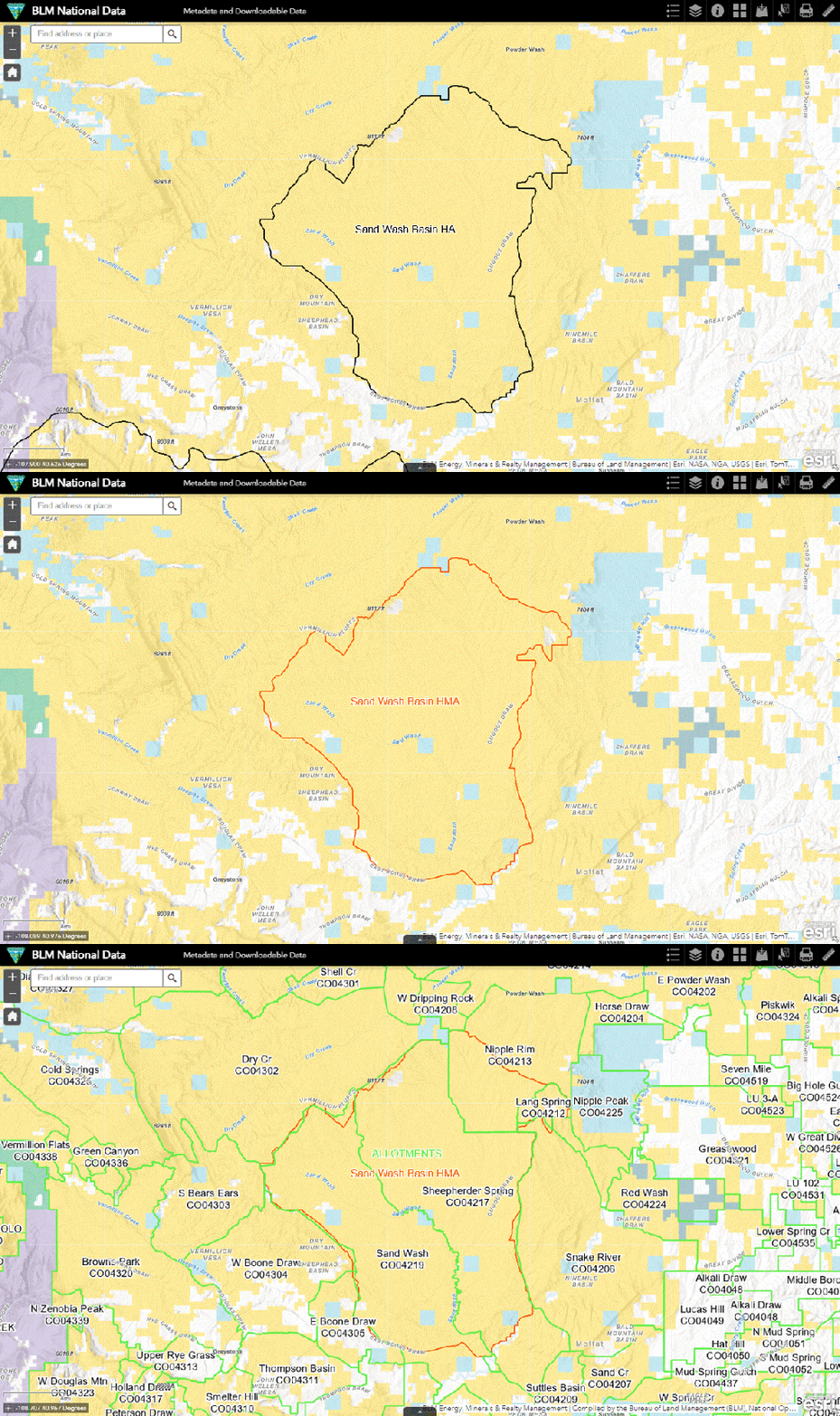
The HMA is subject to permitted grazing. Resources liberated to date:
The co-chair of the House Pesticide Caucus has reintroduced a bill that would stop the roundups but not the removals according to a report by KLAS News.
Predictably, the Campaign Against America’s Wild Horses, a leader in mass sterilization and fierce opponent of principal use, endorsed it.
Originally known as the Save a Horse, Hire a Cowboy Act, the bill supports three tenets of rangeland management, forcing a change in methods but not the goals.
It will likely go nowhere in a Republican-controlled Congress.
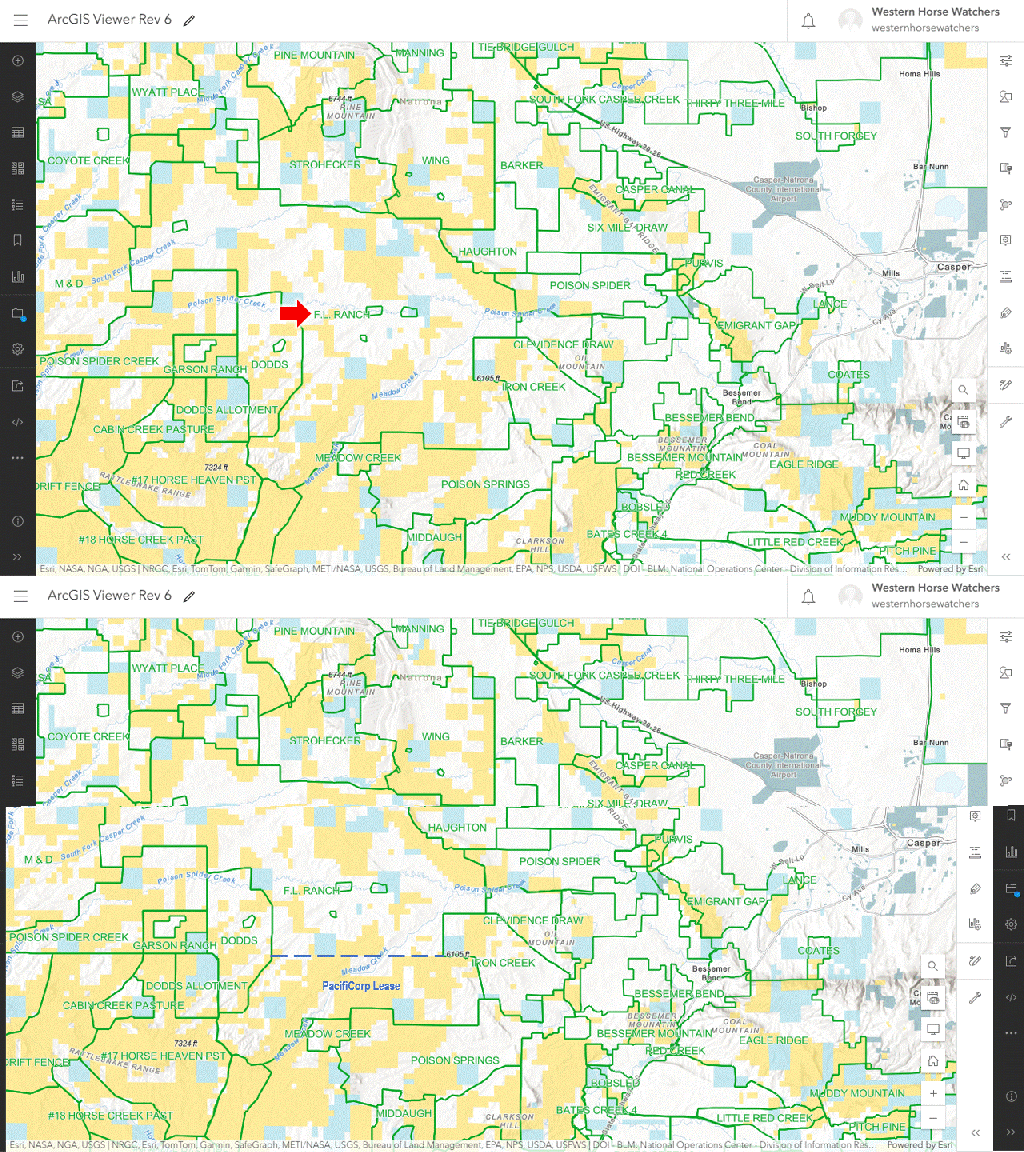
Wild Horse Basin Ranch covers 92,351 acres according to the agent’s listing.
The ranch boundary coincides roughly with that of the FL Ranch Allotment.
The allotment master report puts it in the Improve category, with 5,548 active AUMs on 35,098 public acres, equivalent to 13.2 wild horses per thousand public acres.
Your faithful public servants claim that public lands in the western U.S. can only support one wild horse per thousand acres (25,500 animals on 25.6 million acres).
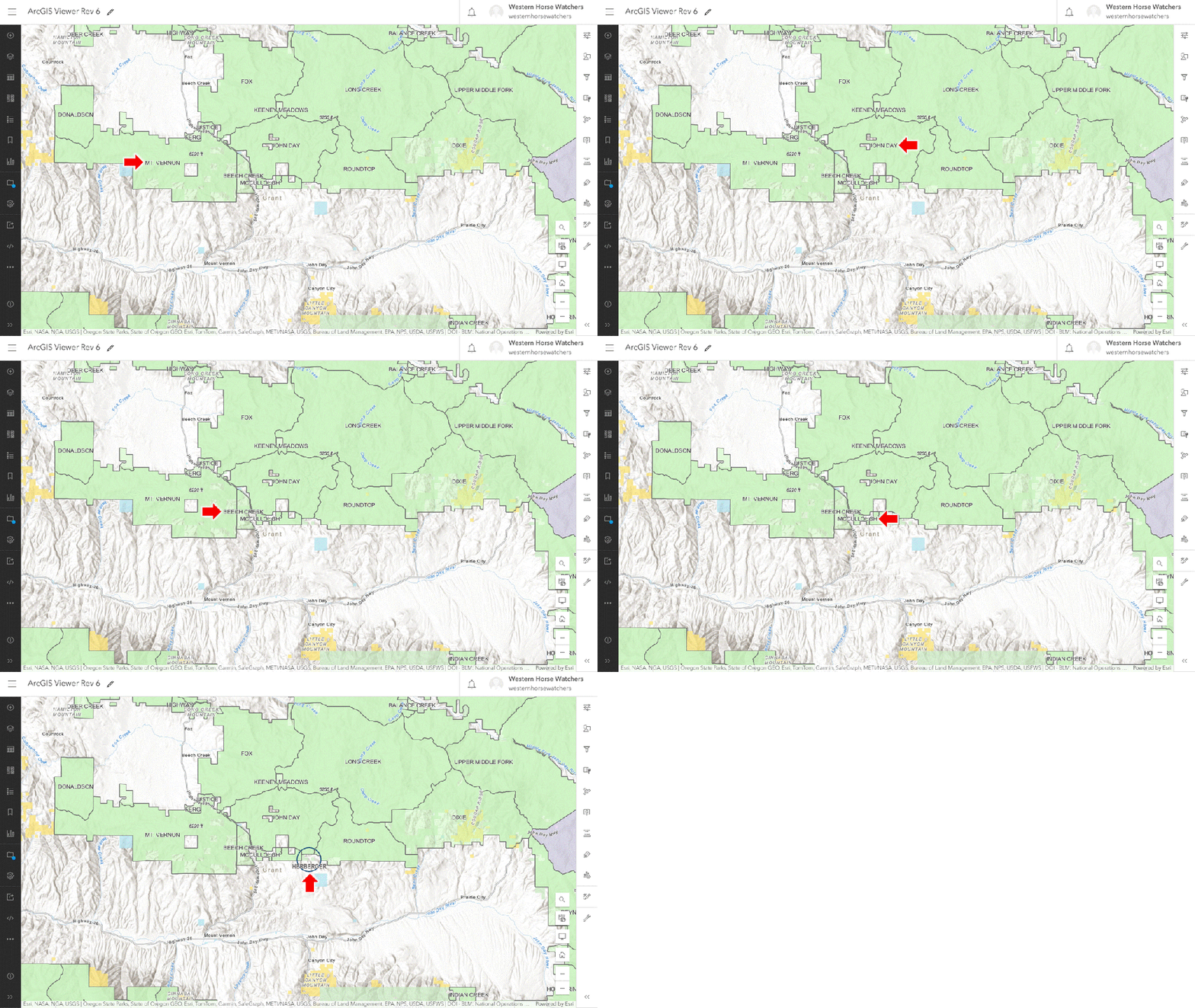
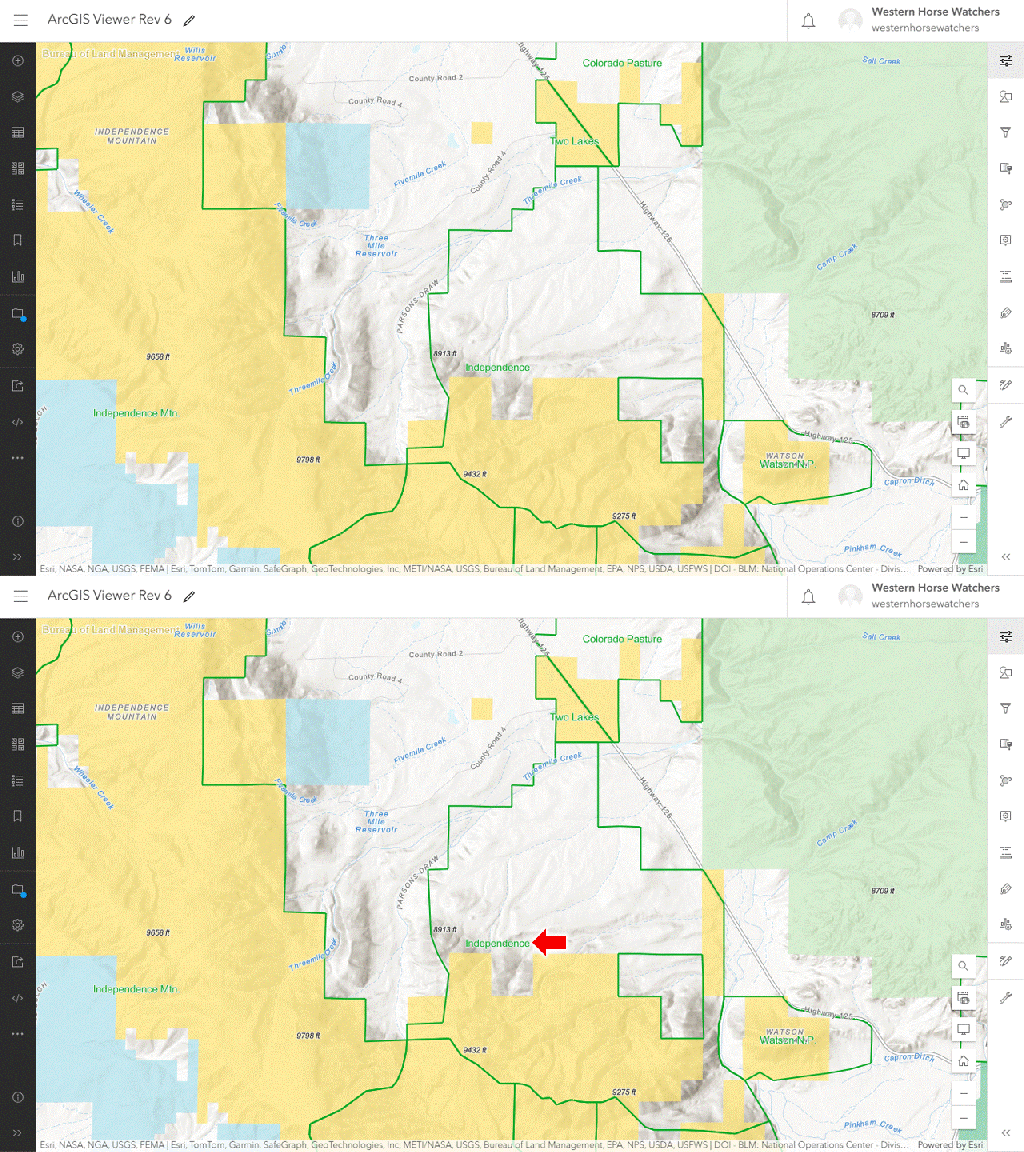
The ArcGIS Viewer shows state and private lands within the allotment but the acreage is not given in the report.
The listing does not give the deeded acreage but the difference between the total acreage and leased acreage is 31,892.
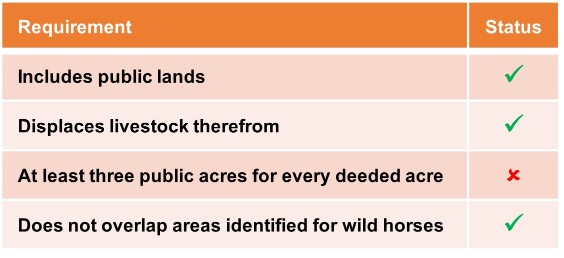
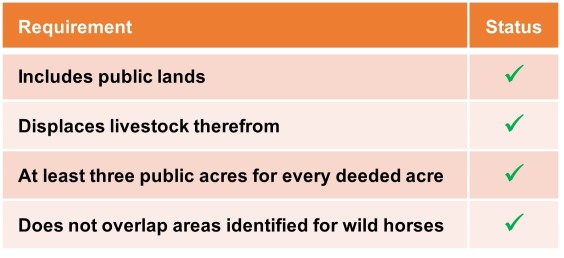
Thus, the ranch meets three out of four requirements for a wild horse refuge.
The agent’s video says the ranch can support 1,000 head year around, so that would be an estimate of the carrying capacity if it was repurposed as a refuge.
Wild horses can be placed on public lands not identified for their use by acquiring or controlling base properties tied to one or more grazing allotments and flipping the preference to horses.
There is no assurance that the stakeholders would agree to such a change and opposition at the state and local levels may be intense.
Snippet from statute: It is the policy of Congress that wild free-roaming horses and burros shall be protected from capture, branding, harassment, or death
Snippet from manual: To protect wild horses and burros from unauthorized capture, branding, harassment or death
The figures above are based on the daily reports.
Results for Days 20 to 28 were posted today.
An abandoned foal was euthanized on Day 25, lifting the death rate to 0.3%.
The capture total includes 311 jacks, 279 jennies and 53 foals.
Youngsters represented 8.2% of the animals gathered.
Of the adults, 52.7% were male and 47.3% were female.
The location of the trap site is not known.
The name of the contractor was not provided.
Eighteen jennies were treated with PZP on Day 19, bringing the total to 78.
The July 1 schedule indicates the pesticide of choice was GonaCon Equine.
The Complex is subject to permitted grazing. Resources liberated to date:
Wild horses can be placed on public lands not identified for their use by acquiring base properties tied to one or more grazing allotments and flipping the preference to horses.
The permittee receives 809 active AUMs on 2,610 public acres. equivalent to 67 wild horses, or 25.7 wild horses per thousand public acres.
Your faithful public servants claim that public lands in the western U.S. can only support one wild horse per thousand acres (25,500 animals on 25.6 million acres).
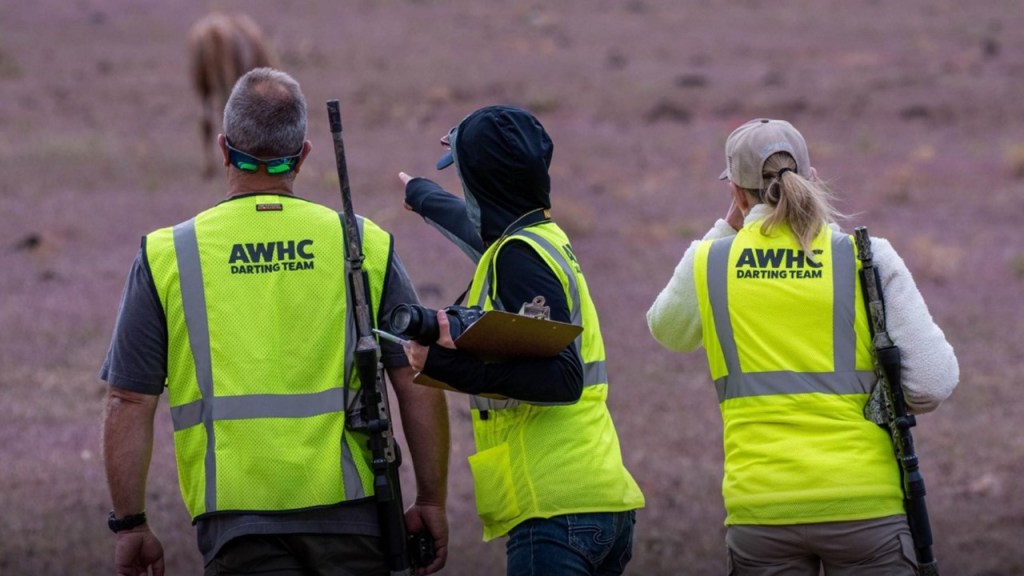
The advocates, allies of the bureaucrats and ranchers, bolster the narrative with their darting programs.
The allotment is too small to be an HMA but if it was, the AML would be 3 and 64 wild horses would be consigned to off-range holding because of permitted grazing.
Wild horses can be placed on public lands not identified for their use by acquiring base properties associated with grazing allotments and flipping the preference to horses.
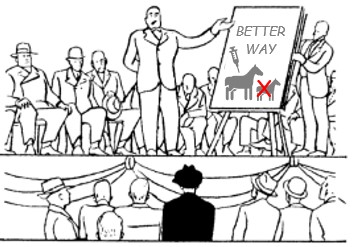
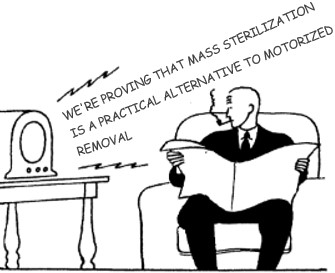
The advocates are trying to sell mass sterilization as a humane alternative to motorized removal.
On the Virginia Range, they’re using PZP to shrink the herd by 80% because 10% of their land has been identified for development.
The stated reason is habitat loss but the real reason is to bring the herd in line with the carrying capacity narrative on public lands: No more than one or two wild horses per thousand acres.
Instead of acting as guardians of wild horses, the advocates have thrown in with their enemies.
A keyword search of a BLM blog post about the May 6 hearing yielded these results:
Allotment – No occurrences
Permit – 0
Grazing – 0
Livestock – 0
Forage – 0
AUM – 0
RMP – 0
Some individuals argued for greater use of fertility control, which the agency recognizes as an important management tool for slowing population growth but not for reducing wild horse and burro overpopulation.
An area is said to be overpopulated when the herd exceeds the low end of AML but is far from the carrying capacity of the land.







 Western Horse Watchers Association