Salt River Advocates Accuse Forest Service of Harming Foals!

A news release dated May 25 by the Salt River Wild Horse Darting Group claims the agency has set up traps in the Apache Sitgreaves National Forest to capture wild horses at the height of foaling season.

Volunteers with Alpine Wild Horse Advocates, an offshoot of SRWHDG, documented the effort, complete with salt blocks and alfalfa pellets.

Last year the Forest Service rejected their offer to poison the mares with their favorite pesticide, and now they’re seeing a growing population, according to the advocates.

Do not be deceived as they feign concern for the horses.

Like their sponsors at the Campaign Against America’s Wild Horses, they hate them.

They hate foals.

They hate families.

They hate reproduction.

They think they have a better way and they want you to pay for it.

RELATED: Salt River Advocates Mobilize in Favor of Alpine Ranchers.

Students Learn About Darting 10-26-22

WHBAB Meeting Returning to Traditional Format

The preliminary agenda appearing in today’s announcement indicates that Day 1 will be devoted to an educational tour of an unnamed HMA in Nevada.

The event will be open to the public.

A good candidate would be the Pine Nut Mountains southeast of Carson City, an hour to the south, where advocates affiliated with the Campaign Against America’s Wild Horses are poisoning the mares with a restricted-use pesticide.

The Virginia Range, where CAAWH operates its flagship darting program, is closer to Reno but most of the land is privately owned and the Nevada Department of Agriculture is responsible for the horses.

On the bright side, the Pine Nut Mountains may offer an opportunity for Board members to observe local volunteers applying an EPA-registered pesticide

Curiously, Day 2 begins with a closed session on ethics, which should include conflicts of interest.

A notable case is that of Tammy Pearson, a Board member and public-lands rancher whose personal fortunes are tied, inversely, to the presence of wild horses in Utah.

RELATED: WHBAB Meeting Next Month.

It’s Back: Helicopter Ban for 2023

The bill would not end wild horse removals from public lands, an idea that keeps livestock operators up at night.

Instead, it would achieve more humane and cost-effective methods to gather equine populations, according to a story posted today by the Las Vegas Sun.

The text has not appeared at Congress.gov as of this evening.

Last year’s version was nicknamed the Save a Horse, Hire a Cowboy Act.

Everything went south when film from the Buffalo Hills roundup showed a wrangler—a hero in the new management method and a steward of our public lands—abusing a foal!

RELATED: New Tagline for Helicopter Ban.

Colorado Wild Horse Project Helps Ranchers, Not Horses

The state is now in the business of achieving and maintaining AMLs with pesticide-laced darts, according to a story by The Daily Sentinel of Grand Junction.

As of this morning, the bill status says “Passed,” not “Became Law,” but an approved version dated May 20 has been posted to the Session Laws tab.

All four of the state’s HMAs are targeted:

  • Sand Wash Basin – Zonastat-H
  • Piceance – GonaCon Equine
  • Little Book Cliffs – Zonastat-H
  • Spring Creek Basin – Zonastat-H

These products appear on the same EPA list as toxic chemicals.

Using them to control free-roaming herds that interfere, or could interfere, with animal agriculture is outside the scope of their registration.

In “woke” America, truth takes a back seat to ideology.

Although you stopped the roundups, you’re still getting rid of the horses, but you can feel good about it.

RELATED: Colorado Wild Horse Project to Become Law Tomorrow?

Unauthorized Use of Pesticides 05-24-23

What a Gal! Woman Rescues Horses, Takes Them to Slaughter

After her run-in with the law, maybe she’ll be content to poison wild mares with a restricted-use pesticide, as the advocates do.

She was a student at the time she took 13 horses from various people, and they were never seen again, according to a story dated May 23 by Advance Local Media.

Like the perp, the advocates tell you they’re protecting wild horses while they’re working quietly on the range to get rid of them.

Advocates are the Predators 11-30-21

SB90 Postmortem

The Nevada Independent confirmed the bill’s demise today, claiming that the measure did not succeed because of tension over land management concerns and degradation of habitat caused by wild horses.

Western Horse Watchers believes the legislators heard the not-so-subtle message of the advocates loud and clear, that wild horses are pests, and that other stakeholders just need to be patient while their volunteers get rid of them.

They owe an apology to the fourth graders at Doral Academy.

The following video from the final hearing on May 16 features a conga line of PZP fanatics testifying on behalf of their cherished wild horses.

The moral of the story: If you want to help wild horses, stay away from the advocates, especially the Campaign Against America’s Wild Horses, its affiliates, offshoots and supporters.  Everything they touch turns to crap.

RELATED: SB90 Dies in Committee?

Stock Tanks Buried

The water system was put back in service yesterday but trailcam photos from February show the tanks covered in snow, well over two feet deep.

This went on for at least three months, as “atmospheric rivers” rolled across California and into Nevada, starting on December 31.

With access to little food and water at the higher elevations, the horses either migrated to lower elevations or died.

All this as the advocates, relentless in their pursuit of the horses and desperate for the approval of the bureaucrats and ranchers, press on with their ruinous darting program, now in its fifth year, putting many of the mares at risk of sterility.

RELATED: Buried on the Virginia Range.

Stock Tanks Buried 02-25-23

SB90 Dies in Committee?

The status on NELIS as of today is no further action allowed per Joint Standing Rule No. 14.3.3.

The bill cleared the Senate but timed out in the Assembly.

The advocates did a great job painting wild horses as pests, a message that resonated with at least one member of the Committee, who asked in the May 16 hearing if any other states had invasive species as their state animal.

Video queued up to the mark, just hit Go.

RELATED: Assembly Committee Hears SB90.

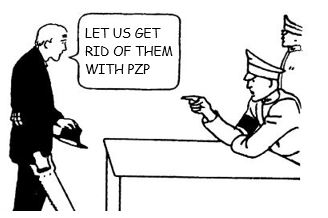
Protecting Them from Removal by Getting Rid of Them with PZP

The real estate agent and PZP darter in the Minden/Gardnerville area did not submit an article for the May edition of Horse Tales, so you’ll have to settle for her testimony at the May 16 hearing on SB90.

Under her leadership, the Pine Nut advocates have snuffed out most new life, setting the stage for implosion of the Fish Springs herd.

Video has been queued up to the mark.  Just hit Go.

RELATED: Sad But Revealing Moments in SB90 Testimony.

BLM to Extend Gray Horse ORP Contract?

A new project has been created in ePlanning but no documents have been posted.

The facility provides long-term care and maintenance for up to 2,750 excess animals on a 26,894-acre off-range pasture located on privately lands in Osage County, OK.

The March 2023 Off-Range Facilities Report indicates two such pastures, East and West, with capacities of 1,735 mares and 1,015 geldings, respectively.

Wild horses are removed from their lawful homes on public lands in the western U.S. and sent to these places to die, because most of their food has been assigned to privately owned livestock.

“Excess animals” means more horses than allowed by plan, not more horses than the land can support.

Chigley ORP Contract Extended

A new project was created this week in ePlanning and a Final DNA has been copied to the documents folder.

There are no opportunities for public comment.

The Proposed Action will continue an existing contract with the Chigley Off-Range Pasture to provide long-term care and maintenance for up to 500 excess animals on a 3,662-acre off-range pasture located on privately owned land in Murray County, OK.

Terms of the agreement were not provided, including duration and rates.

The DNA stated that the agency’s obligation to develop and maintain land use plans is limited to public land and interests in public land, which does not extend to animals, such as wild horses and burros.

The WHB Program Office has authorized periodic increases in the population of up to a 10% to accommodate occasional shipments of excess animals to the facility, which has a capacity of 608 mares according to the March 2023 Off-Range Facilities Report.

Foal-Free Friday, Discussing the Undiscussables Edition

The advocates have their own vocabulary to conceal the effects of their ruinous darting programs.

Sterile mares are described as “self-boosting,” abnormal sex ratios are dismissed as “mares living longer” and “herds aging out” means horses dying with no recruitment.

A “Stay Wild” cap means you’re down with the Montana Solution and protecting them from removal means getting rid of them with PZP.

Some aspects of their programs can’t be discussed in public, let alone be put on paper, such as long-term goals.

The advocates know, and have always known, that Zonastat-H, a pesticide peddled as a vaccine, is a sterilant.

Damage begins with the first injection.

They don’t talk about it.

Non-reproducing herds can be achieved in as little as five years.

They don’t talk about that either.

But that’s what happened on the Maryland side of Assateague Island and is happening now at the Salt River, Virginia Range and other areas where wild horses and burros interfere with animal agriculture.

RELATED: Foal-Free Friday, Getting to the Heart of the Problem Edition.

Calling it a Vaccine 05-01-23

TRNP Wild Horse Rally Coming to Medora?

The tentative date is July 12 – 13 but a venue has not been identified, according to a report dated May 18 by KFYR News of Bismarck, ND.

Speakers have been invited and the event will focus on the new livestock management plan, due this summer.

The original wild horses of TRNP, thought to be descendants of Sitting Bull’s ponies, were removed and replaced by the Park Service.

Some were rescued by the Kuntz brothers and taken to their ranch near Linton.

The herd you see today is only an exhibit, with little if any historical significance.

RELATED: TRNP a Wild Horse Melting Pot?

More Evidence of Harsh Winter Emerging at Mono Lake?

The remains of several wild horses have been discovered near the saltwater lake in the eastern Sierra, according to a story published today by the San Francisco Chronicle.

Personnel with the Forest Service said the deaths were likely tied to heavy snowfall, a product of atmospheric rivers that swept across the state through March.

The first storm hit on December 31.

The horses likely migrated into the area from the Montgomery Pass HMA.

RELATED: Wyoming Wildlife Observers Speculate about Winterkill.