Whose side are they on?
RELATED: Who’s Attacking Wild Horses?

Western Horse Watchers Association
Exposing the Hypocrisy, Lies and Incompetence of the Wild Horse Advocates
The incident began on July 9. Results through July 21:
The figures above are based on the daily reports, not the totals posted by the BLM.
Lameness and club feet were reported as deaths on Day 13, suggesting that the animals were taken alive but killed by the wranglers.
The death rate is 0.9%.
The capture total includes 312 stallions, 440 mares and 211 foals.
Youngsters represented 21.9% of the animals gathered.
Of the adults, 41.5% were male and 58.5% were female, outside the expected range of variation from a simple random process centered at 50% males / 50% females with a sample of 752 adults.

A 22% birth rate corresponds to a growth rate of 17% per year, a bit less than the 20% growth rate used by land managers to predict herd sizes and management actions.
Body condition scores were not provided.
The location of the trap site was not disclosed.
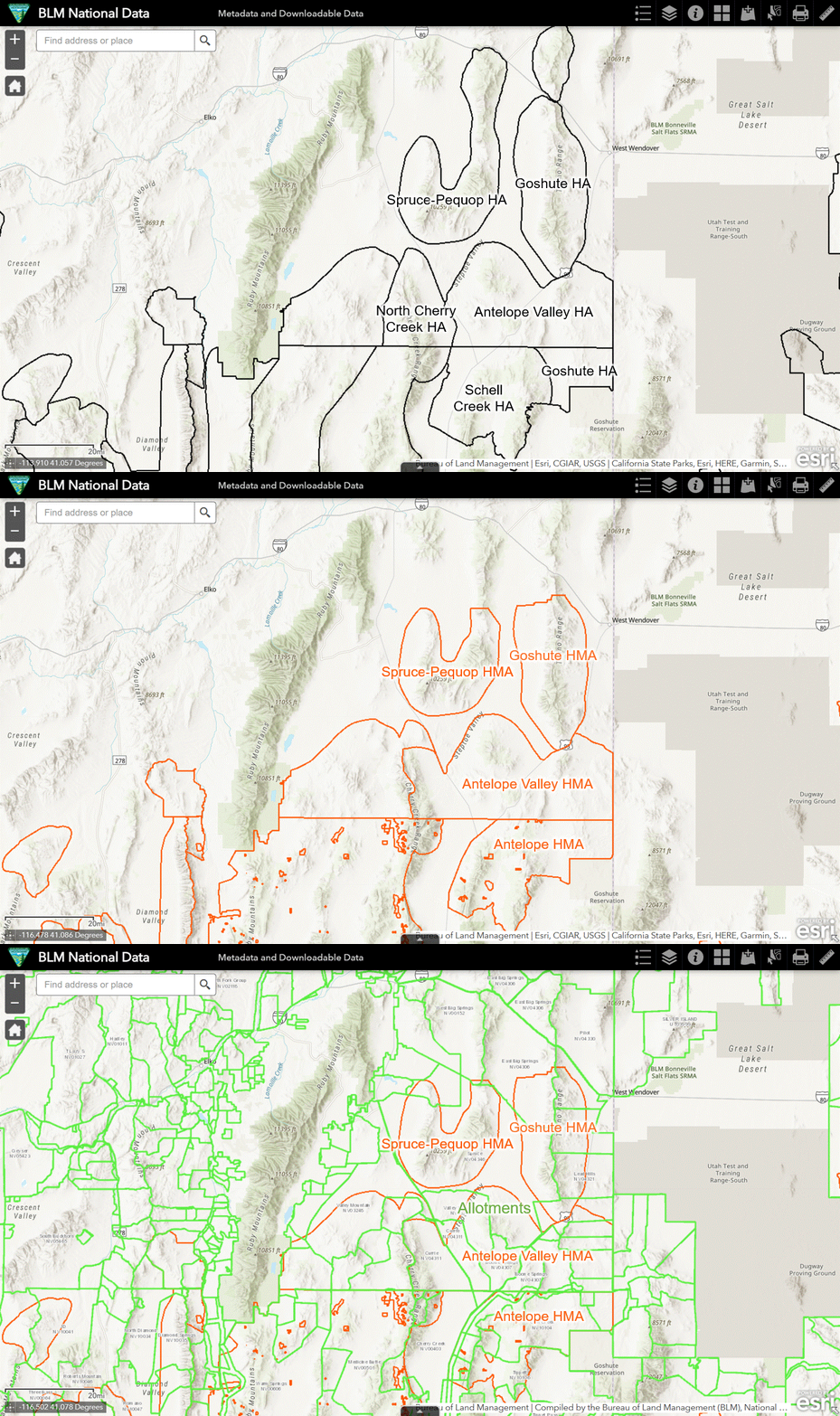
The HMAs and surrounding lands are subject to permitted grazing.
*According to advocates.
Day 13 ended with 96 unaccounted-for animals.
Mares treated with fertility control pesticides will be returned to the area at a later date.
Other statistics:
Overpopulation means more horses than allowed by plan, not necessarily more horses than the land can support.
RELATED: Antelope Roundup South, Day 11.
The July edition of Horse Tales features a brief column about the Antelope roundups titled “What Do You Think?” Go to page 7.
Roundup season is in full swing as the Bureau of Land Management (BLM) continues its attack against thousands of wild horses across the West. Right now, innocent horses on Nevada’s Antelope Complex are being subjected to cruel and brutal helicopter roundups putting them in danger of severe injury and even death.
The writer does not admit that her group advocates for removal of these animals with pesticide-laced darts.
How do you explain this? They’re hypocrites!
They want the horses off the range as much as the bureaucrats and ranchers, but they want it done by non-motorized methods. Why are you still giving them money?
The incident began on July 9. Results through July 21:
The figures above are based on the daily reports, not the totals posted by the BLM.
The number of horses shipped to date is 377 according to the summary.
A stallion was put down on Day 12 due to blindness in one eye, a non-life-threatening condition.
He’d be alive today if there was no roundup, so this “act of mercy” is chargeable thereto.
Two leg fractures were reported as deaths on Day 13, suggesting the animals were also killed by the wranglers, one related to the roundup and one pre-existing.
The death rate is 1.8%.
The capture total includes 152 stallions, 221 mares and 71 foals.
Youngsters represented 16.0% of the animals gathered.
Of the adults, 40.8% were male and 59.2% were female, outside the expected range of variation from a simple random process centered at 50% males / 50% females with a sample of 373 adults.
A 16% birth rate corresponds to a growth rate of 11% per year, considerably less than the 20% growth rate used by land managers to predict herd sizes and management actions.
Body condition scores on Days 12 and 13 ranged from 3 to 4.
The location of the trap site was not disclosed.
The HMAs and surrounding lands are subject to permitted grazing.
*According to advocates.
Day 13 ended with 65 unaccounted-for animals.
There are no plans to treat captured mares with fertility control pesticides and return them to the area.
Other statistics:
Overpopulation means more horses than allowed by plan, not necessarily more horses than the land can support.
RELATED: Antelope Roundup North, Day 11.
The incident started on July 20, according to the gather page, with 12 horses captured and 12 shipped.
The location of the trap site was not given.
RELATED: Johnnie Roundup Announced.
The incidents began on July 9 (North | South). Combined results through July 19:
The figures above are based on the daily reports, not the totals posted by the BLM.
The death rate is 1.0%.
The capture total includes 366 stallions, 557 mares and 250 foals.
Youngsters represented 21.3% of the animals gathered.
Of the adults, 39.7% were male and 60.3% were female, outside the expected range of variation from a simple random process centered at 50% males / 50% females with a sample of 923 adults.
A birth rate of 21% per year corresponds to a growth rate of 16% per year.
Day 11 ended with 108 unaccounted-for animals.
The HMAs and surrounding lands are subject to permitted grazing, with livestock receiving an estimated 7.7 times more forage than horses inside the Complex.
*According to advocates.
RELATED: Antelope Roundup North, Day 11, Antelope Roundup South, Day 11.
The EPA approved PZP (Zonastat-H), so training is required to receive and/or apply the vaccine to cherished/beloved/innocent/treasured equids, according to the Billings School of PZP Darting and Public Deception.

Makes perfect sense, doesn’t it?
When the EPA approved Raid Ant and Roach Killer, you had to attend an eight-hour class before you could use it, right?
You didn’t?
Then why is training necessary for the Montana Solution?
Because it’s a restricted-use pesticide, on the same EPA list as toxic chemicals!
The brochure acknowledges that the product is a pesticide, describing the classification as regrettable, and the closest it comes to admitting that it’s a restricted-use pesticide is to say that there’s no such thing as off-label use (such as control of pests that pose safety hazards or interfere with animal agriculture).
It’s a poison, not a medication, and the sperm-blocking principle of operation is a myth.
RELATED: Foal-Free Friday, We Need to Come Together Edition.

A report dated July 19 by AP News says the stallion that broke his leg trying to escape from the trap was pressured by wranglers, not helicopters.
The advocates point to the incident as justification for their ruinous darting programs while saying almost nothing about the causes of roundups and beneficiaries thereof.
The story has been picked up by major new outlets.
RELATED: Helicopter Ban Is Not the Answer.
The incident began on July 9. Results through July 19:
The figures above are based on the daily reports, not the totals posted by the BLM.
The death rate is 0.8%.
The capture total includes 259 stallions, 377 mares and 190 foals.
Youngsters represented 23.0% of the animals gathered.
Of the adults, 40.7% were male and 59.3% were female. These statistics fall outside the expected range of variation from a simple random process centered at 50% males / 50% females with a sample of 636 adults. The disparity might be explained by the contractor targeting family bands.
A birth rate of 23% per year corresponds to a growth rate of 18% per year.
Land managers often use growth rates of 20% per year to predict herd sizes and management actions.
Body condition scores were not provided.
The location of the trap site was not disclosed.
The HMAs and surrounding lands are subject to permitted grazing.
*According to advocates.
Day 11 ended with 34 unaccounted-for animals.
Mares treated with fertility control pesticides will be returned to the area at a later date.
Other statistics:
Overpopulation means more horses than allowed by plan, not necessarily more horses than the land can support.
RELATED: Antelope Roundup South, Day 9.
Roundups are set for Saturday and Sunday, the swim will occur on Wednesday and the auction will take place on Thursday, according to a story by Delmarva Now.
The return swim is scheduled for Friday, after which the herds resume normal life, minus most of the foals.
It’s massive interference in the natural process, not management at the minimum feasible level.
The incident began on July 9. Results through July 19:
The figures above are based on the daily reports, not the totals posted by the BLM.
The number of horses shipped to date is 274 according to the summary.
The trap was moved on Day 10.
A mare was put down on Day 11 due to blindness in one eye, a non-life-threatening condition.
The death rate is 1.4%.
The capture total includes 107 stallions, 180 mares and 60 foals.
Youngsters represented 17.3% of the animals gathered.
Of the adults, 37.3% were male and 62.7% were female. These statistics fall outside the expected range of variation from a simple random process centered at 50% males / 50% females with a sample of 287 adults. The disparity might be explained by the contractor targeting family bands.
A 17% birth rate corresponds to a herd growth rate of 12% per year.
Land managers often use growth rates of 20% per year to predict herd sizes and management actions.
Body condition scores on Day 11 ranged from 3 to 4.
The location of the trap site was not disclosed.
The HMAs and surrounding lands are subject to permitted grazing.
*According to advocates.
Day 11 ended with 74 unaccounted-for animals.
There are no plans to treat captured mares with fertility control pesticides and return them to the area.
Other statistics:
Overpopulation means more horses than allowed by plan, not necessarily more horses than the land can support.
RELATED: Antelope Roundup North, Day 9.
It’s on the July 13 schedule but not on the June 14 schedule.
Billed as a nuisance roundup, the BLM will remove approximately 25 wild horses and 100 wild burros from private lands near Pahrump, NV, starting on or about July 20.
Animals will be drawn into the traps with bait and operations will not be open to public observation.
Captured animals will be taken to the Ridgecrest off-range corrals.
Gather stats and daily reports will be posted to this page.
The horses and burros are crossing state highways and have entered private properties, damaging fencing, water lines and vegetation, according to today’s news release.
The HMA is managed for burros. The AML for horses is zero.
An announcement dated July 19 in the Federal Register seeks public input on new, proposed, revised and continuing collections of information from those who wish to adopt, purchase, foster or train wild horses or burros.
The agency collects information from individuals to determine (1) if applicants are qualified to adopt or purchase wild horses and burros, (2) whether or not to authorize an adopter or purchaser to maintain more than four wild horses and burros, (3) whether or not to grant requests for replacement animals or refunds, and (4) whether or not to terminate a private maintenance and care agreement.
Your remarks should address these issues:
Written and electronic comments will be accepted through September 18.
The herd on the Maryland side of the island consisted of 14 bands and 81 horses, according to the inventory dated July 16, no change from June.
Seven foals were born this year.
The sex ratio cannot be determined but is likely skewed in favor of females.
If a dominant stallion runs each band, and seven mares are viable, the breeding population is very small, less than 20% of the herd size, seven years after the safe, proven and reversible darting program was shut off.
The BLM WHB Handbook indicates the breeding population should exceed 50 animals to maintain an acceptable level of genetic diversity.
The pesticide of choice was Zonastat-H, a miracle drug according to the advocates.
The Assateague Island Alliance updates the lists monthly.
RELATED: Assateague Pony Census, June 2023.
The current population is at 5X AML and the Federal Government must quickly conduct a herd reduction campaign, implying the use of motorized equipment, according to a story dated July 17 by KRNV News.
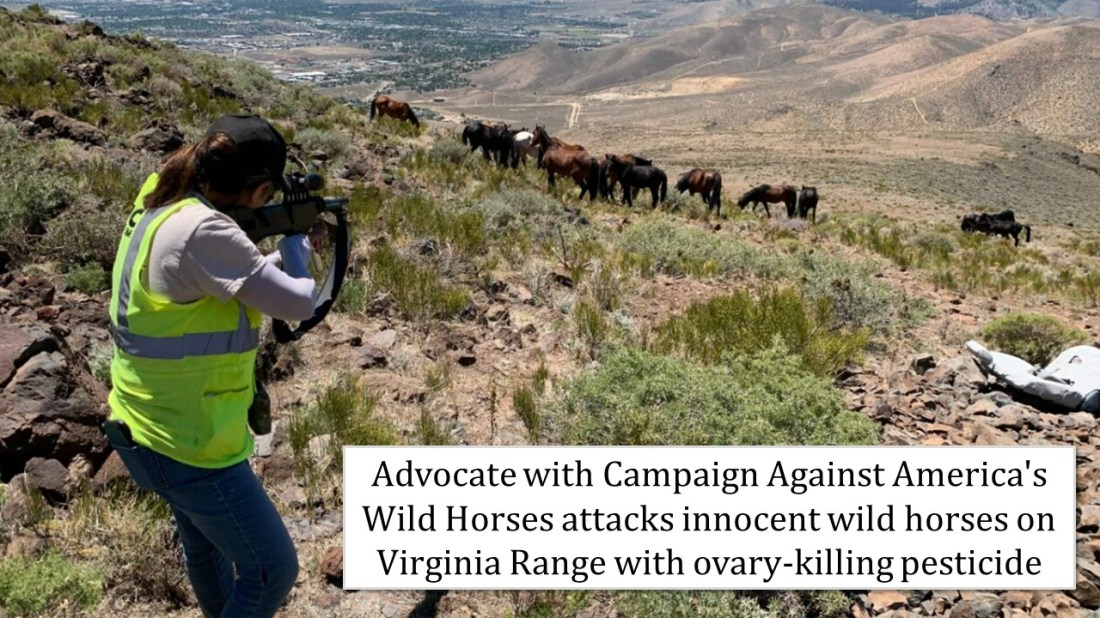
The monster-in-charge of the Campaign Against America’s Wild Horses, a leader in non-motorized removal, said poisoning the mares with ovary-killing pesticides is a better option.

What do we know about AMLs?
Our esteemed colleague is screaming for protection from the pests because his voters, the poor ranchers with their multi-million-dollar base properties, are screaming for protection from the pests.
RELATED: Villains and Victims in Elko County Emergency Declaration.
The incident began on July 9. Results through July 17:
The figures above are based on the daily reports, not the totals posted by the BLM.
Aerial operations were cut short on Days 8 and 9 by temperature and wind.
A mare and stallion died of fractured necks on Day 8, probably due to collisions with pipe panels.
The death rate is 1.0%.
The advocates will point to these losses as justification for their ruinous darting programs.
The capture total includes 212 stallions, 309 mares and 158 foals.
Youngsters represented 23.3% of the animals gathered.
Of the adults, 40.7% were male and 59.3% were female. The proportions fall outside the expected range of variation from a simple random process centered at 50% males / 50% females with a sample of 521 adults. The disparity might be explained by the contractor targeting family bands.
A birth rate of 23% per year corresponds to a growth rate of 18% per year.
Land managers often use growth rates of 20% per year to predict herd sizes and management actions.
Body condition scores were not provided.
The location of the trap site was not disclosed.
The HMAs and surrounding lands are subject to permitted grazing.
*According to advocates.
Day 9 ended with 12 unaccounted-for animals.
Mares treated with fertility control pesticides will be returned to the area at a later date.
Other statistics:
Overpopulation means more horses than allowed by plan, not necessarily more horses than the land can support.
RELATED: Antelope Roundup South, Day 7.
The incident began on July 9. Results through July 17:
The figures above are based on the daily reports, not the totals posted by the BLM.
The number of horses shipped to date, based on the daily reports, is 234, compared to a total of 240 in the summary.
The trap may have been moved on Day 8, possibly to another HMA, because no horses were captured and none were shipped on Day 9.
The death rate is 1.4%.
The capture total includes 93 stallions, 146 mares and 50 foals.
Youngsters represented 17.3% of the animals gathered.
Of the adults, 38.9% were male and 61.1% were female. The proportions fall outside the expected range of variation from a simple random process centered at 50% males / 50% females with a sample of 239 adults. The disparity might be explained by the contractor targeting family bands.
A 17% birth rate corresponds to a herd growth rate of 12% per year.
Land managers often use growth rates of 20% per year to predict herd sizes and management actions.
Body condition scores on Day 9 were 4.
The location of the trap site was not disclosed.
The HMAs and surrounding lands are subject to permitted grazing.
*According to advocates.
Day 9 ended with 51 unaccounted-for animals.
There are no plans to treat captured mares with fertility control pesticides and return them to the area.
Other statistics:
Overpopulation means more horses than allowed by plan, not necessarily more horses than the land can support.
RELATED: Antelope Roundup North, Day 7.
Probably a fair statement. Most of them are frauds.
But what would you say if the writer was an acolyte for the Wild Horse Fire Brigade, a group that wants wild horses moved from areas where they’re not wanted, sometimes referred to as their lawful homes, to remote wilderness areas not particularly suited to livestock grazing?
Pot calling the kettle black?
You can’t judge a book by its cover but you can certainly dismiss an article written by one of the Benedict Arnolds of the wild horse world.
RELATED: Capitulation, Surrender, Defeat.

That was the message on socialist media according to a story posted this morning by Shore Daily News, a service of WESR Radio.
In a few days, volunteers with the fire department will trample the wetlands to corral the herds ahead of the annual pony swim, after which most of the foals will be stripped away at auction.
Refer to this article by WBOC news for more information.
They are not unlike the advocates, who lecture you about approaching wild horses while they get within a few dozen yards to pummel the mares with pesticide-laced darts.
The Animal Defense Council of Tuscon, AZ, will pay $1,000 for information leading to the arrest and conviction of the person(s) responsible, according to a story dated July 16 by KGUN News.
RELATED: Wild Burros Found Dead in Death Valley.

