At the Salt River with Mark Storto.
The absence of youngsters is not an accident.
The breeding population can be counted on one hand.

Western Horse Watchers Association
Exposing the Hypocrisy, Lies and Incompetence of the Wild Horse Advocates
At the Salt River with Mark Storto.
The absence of youngsters is not an accident.
The breeding population can be counted on one hand.
The incident began on November 8. Results through November 18:
A mare was dispatched on Day 11 for a prolapsed uterus.
The death rate is 1.3%.
The capture total includes 411 stallions, 470 mares and 129 foals.
Youngsters represented 12.8% of the animals gathered, suggesting the herd is growing at a rate of 8% per year.
Of the adults, 46.7% were male and 53.3% were female.
Body condition scores were not given.
The HMA and surrounding lands are subject to permitted grazing.
*According to advocates.

Day 11 ended with 194 unaccounted-for animals.
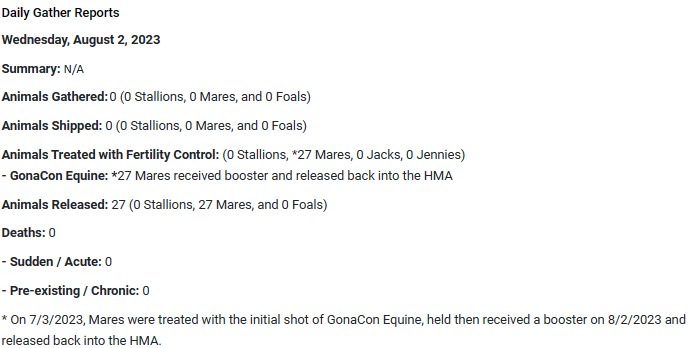
To date, 81 mares have been treated with GonaCon Equine, a fertility control pesticide.
They will be returned the range with up to 121 stallions.
Other statistics:
RELATED: Clan Alpine Roundup, Day 9.
The writer of the November 18 commentary in the Elko Daily Free Press about the way land and wild horse management really work stated:
There is an aspect of emotion that hangs over wild horse roundups. Wild horse advocates openly profess to love wild horses. The livestock industry, state agency officials, even a few badly biased scientific researchers, hate them.
The advocates say they love wild horses but their actions indicate otherwise.
There is love, however, among the players in the Love Triangle, for each other and for their common goal.

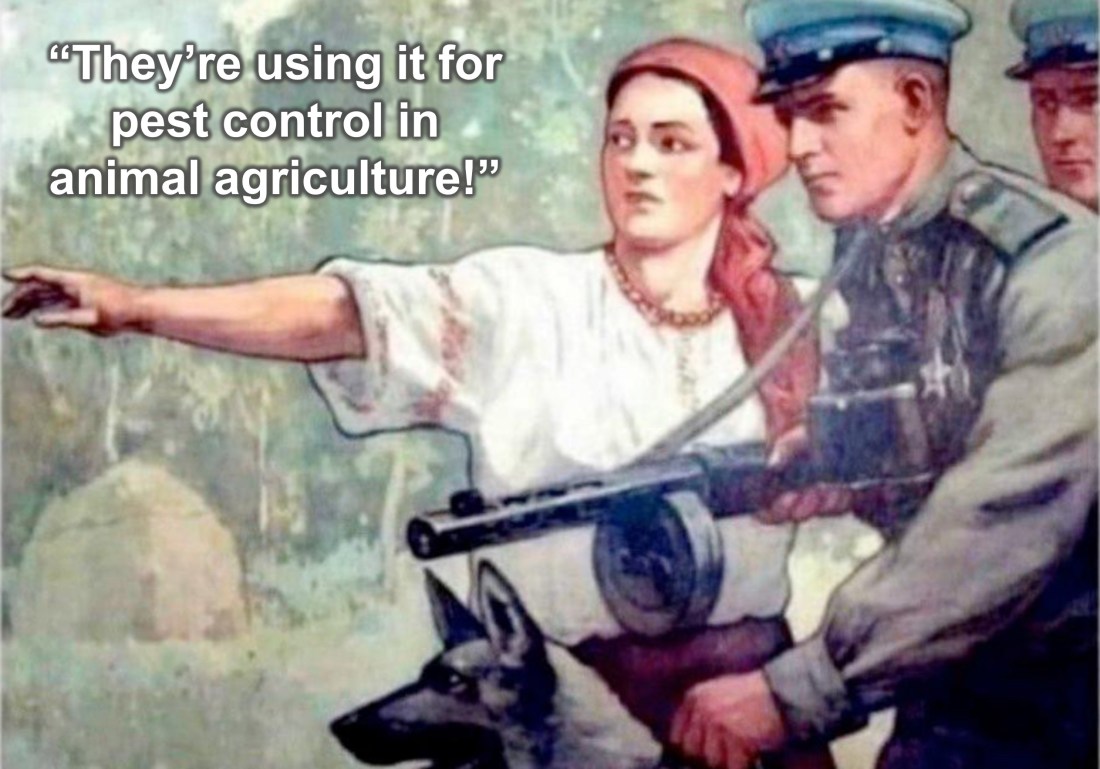
They’re poisoning the mares with ovary-killing pesticides, under the guise of protection and preservation, and they want you to pay for it.
RELATED: How the BLM Really Manages Land and Wild Horses.

The Elko Daily Free Press published a rebuttal today of a November 9 interview about the way the agency manages land and wild horses.
A distinction should be made between the leading consumers of resources on America’s public lands: Those who compete with wild horses and those who don’t.
Drillers and miners are not exploring for forage. Wild horses don’t care about oil, gas, vanadium and uranium.
The conflict is with the public-lands ranchers.
A drill pad might occupy an acre or two and an open pit mine might require a few thousand acres, while permitted grazing devours entire HMAs and beyond.
As for economics, if the BLM pays $60 per AUM for a horse in long-term holding, as noted in the column, while collecting $1.35 per AUM from the permittee whose cow/calf pair replaced him, how can that ever be viewed as a wise use of the public lands?
RELATED: Helicopters Don’t Force Wild Horses to Do Anything?
The Day 9 crash that killed seven wild horses was the subject of a letter signed by Dina Titus but likely drafted or influenced by the Campaign Against America’s Wild Horses.
It was included in a story dated November 17 by KLAS News.
The investigation should show how transportation incidents can be avoided through roundup alternatives like on-site fertility treatment.

The letter provides further evidence that CAAWH is in cahoots with the Democrat Party.
UPDATE: A report by KTVN News, complete with footage from CAAWH, leads to the same conclusion.
Bait trapping will begin the week of December 4, according to today’s news release.
The capture and removal goals, not specified in the announcement, are 235 and 225 according to the FY24 schedule.
The current population is thought to be around 230, suggesting that few horses will remain when the field work ends.
Operations will not be open to public observation.
The HMA covers approximately 19,600 acres in central New Mexico, east of Socorro.
The AML is 40 – 60.
The National Data Viewer shows the arrangement. Click on image to open in new tab.
The stocking rate allowed by plan is 3.1 wild horses per thousand acres, three times higher than the target rate across all HMAs.
If the herd is managed according to plan (no more than 60 horses), genetic diversity will be inadequate.
The fertility control pesticides will make the breeding population even smaller.
The destination of captured animals was not given.
Gather stats and daily reports will be posted to this page.
RELATED: Bordo Atravesado Decision Signed But Not Announced.

The incident began on November 8. Results through November 16:
A stallion was released (escaped?) on Day 6.
A stallion was dispatched on Day 9 for a broken neck. Three mares were also put down because of eye issues.
The death rate is 1.4%.
The capture total includes 347 stallions, 378 mares and 107 foals.
Youngsters represented 12.9% of the animals gathered, suggesting the herd is growing at a rate of 8% per year.
Of the adults, 47.9% were male and 52.1% were female.
Body condition scores were not given.
The HMA and surrounding lands are subject to permitted grazing.
*According to advocates.
Day 9 ended with 229 unaccounted-for animals.
On Day 7, 81 mares were treated with GonaCon Equine, a fertility control pesticide.
They will be returned the range with up to 121 stallions.
Other statistics:
RELATED: Clan Alpine Roundup, Day 7.
The advocates are so far gone and so hopelessly lost in their pesticide paradigm that they actually want the horses to die.
One example is McCullough Peaks, where the average age of the herd is increasing, along with the death rate, because few if any new foals are hitting the ground.
The older horses may not survive the winter, which the advocates anticipate and desire.
Anything to avoid motorized removal. Anything to prove their darting programs are working. Anything to keep the resources shifted in favor of the public-lands ranchers.
At the Virginia Range, where the Campaign Against America’s Wild Horses operates its flagship darting program, they’re driving the birth rate to zero and letting the herd die off.
They’re telling you that they’re saving the horses while they’re telling the bureaucrats that they’re getting rid of them.
Their affiliates in Arizona are doing the same thing to the Salt River herd, where a zero percent birth rate and six percent death rate will be needed for ten consecutive years to achieve the population target.
By then the mares will be sterile and the herd will be lost.
Ditto for the Virginia Range.
These groups should be banned from areas identified for wild horses.
RELATED: Foal-Free Friday, Snubbing the Wild Horse Advocates Edition.
His appointment was mentioned in the August 31 Animal Industry Report to the Nevada Board of Agriculture but no details were given.
Now, a Q&A dated November 16 by The Nevada Independent provides a few answers.
He will oversee the horses, fencing projects, contracts for darting and feeding, and will meet with the advocate groups.
The current population exceeds 3,500, compared to a target of 500.
Natural attrition will not achieve that number in a reasonable timeframe.
A long-term goal is to put more horses into good homes through a relocation process.
On wild horse stocking rates.
The case was brought in response to a complaint last month by livestock operators seeking immediate removal of wild horses, according to today’s news release.
The final planning documents for a new pest control plan were published earlier this year, but, as of today, the HMA has not been added to the FY24 roundup schedule.
RELATED: Stone Cabin Permittees Demand Immediate Removal of Horses.
The incident was reported by UPI in a story dated November 14 and has been covered by other news outlets since but nobody’s asking why the horse was on board and what happened to it after a late arrival in Belgium.
A U.S. District Judge affirmed the findings and recommendations of a magistrate in May, clearing the way for a reduction in AML and management actions to achieve it, according to a report dated November 15 by Courthouse News Service.
The plaintiffs claimed that the Forest Service’s plan will cause the herd’s extinction through an irretrievable loss of genetic diversity.
The WHT lies mostly within the Reservoir Allotment.
RELATED: Judge Hears Arguments in Big Summit Legal Challenge.

The incident began on November 8. Results through November 14:
Capture operations did not occur on Day 7. No details were given.
A mare was dispatched for a fractured pelvis on Day 6.
The death rate is 1.3%.
The capture total includes 253 stallions, 255 mares and 93 foals.
Youngsters represented 15.5% of the animals gathered, suggesting the herd is growing at a rate of 11% per year.
Of the adults, 49.8% were male and 50.2% were female.
Body condition scores were not given.
The HMA and surrounding lands are subject to permitted grazing.
*According to advocates.
Day 7 ended with 126 unaccounted-for animals.
Up to 81 mares will be treated with GonaCon Equine, a fertility control pesticide, before being returned the range with up to 121 stallions.
Other statistics:
RELATED: Clan Alpine Roundup, Day 5.
The incident will begin on November 20, according to today’s news release.
The capture and removal goals are 140 each.
A helicopter will push the horses into the traps and operations will occur inside the China Lake Naval Air Weapons Station, where public access is not available.
The HMA covers 318,499 total acres in southern California, including 71,350 BLM acres, with the remainder controlled by the Department of Defense.
The AML is 134 – 168.
The current population was not given.
The National Data Viewer shows habitat loss and grazing allotments.
Captured animals will be taken to the Ridgecrest off-range corrals.
Gather stats and daily reports will be posted to this page.
A 2021 roundup reduced the population by 214.

The incident was reported this morning, according to a story by KRNV News.
Personnel with LRTC assisted.
The article did not indicate:
The horse was returned to the range around 10 AM.