Caliente Roundup Announced

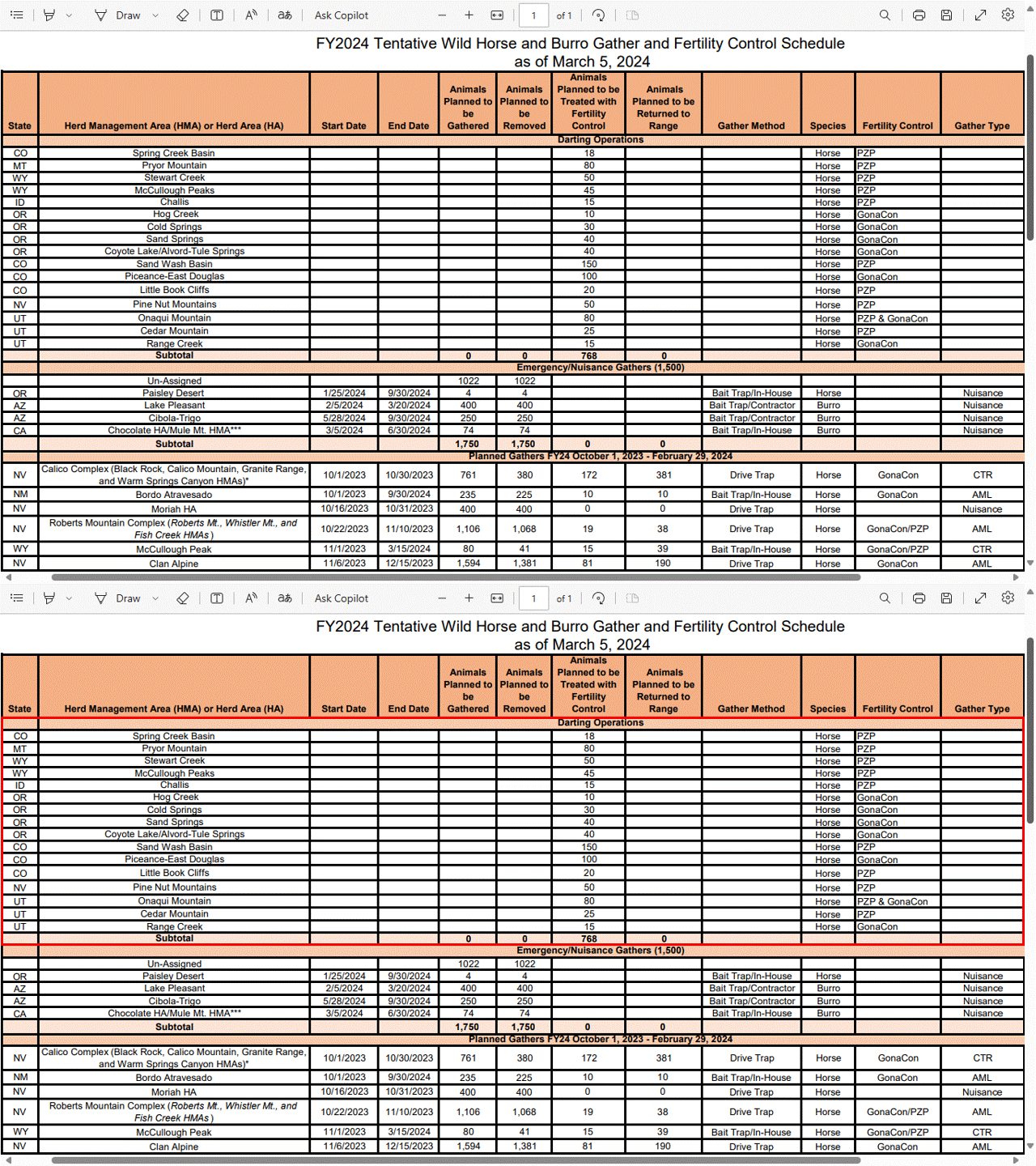
The incident will begin on or about April 1 and will not be open to public observation according to today’s news release.

Horses will be drawn into the traps with bait.

The capture and removal goals are identical at 350 each.

There are no plans to treat any of the mares with fertility control pesticides and return them to the range.

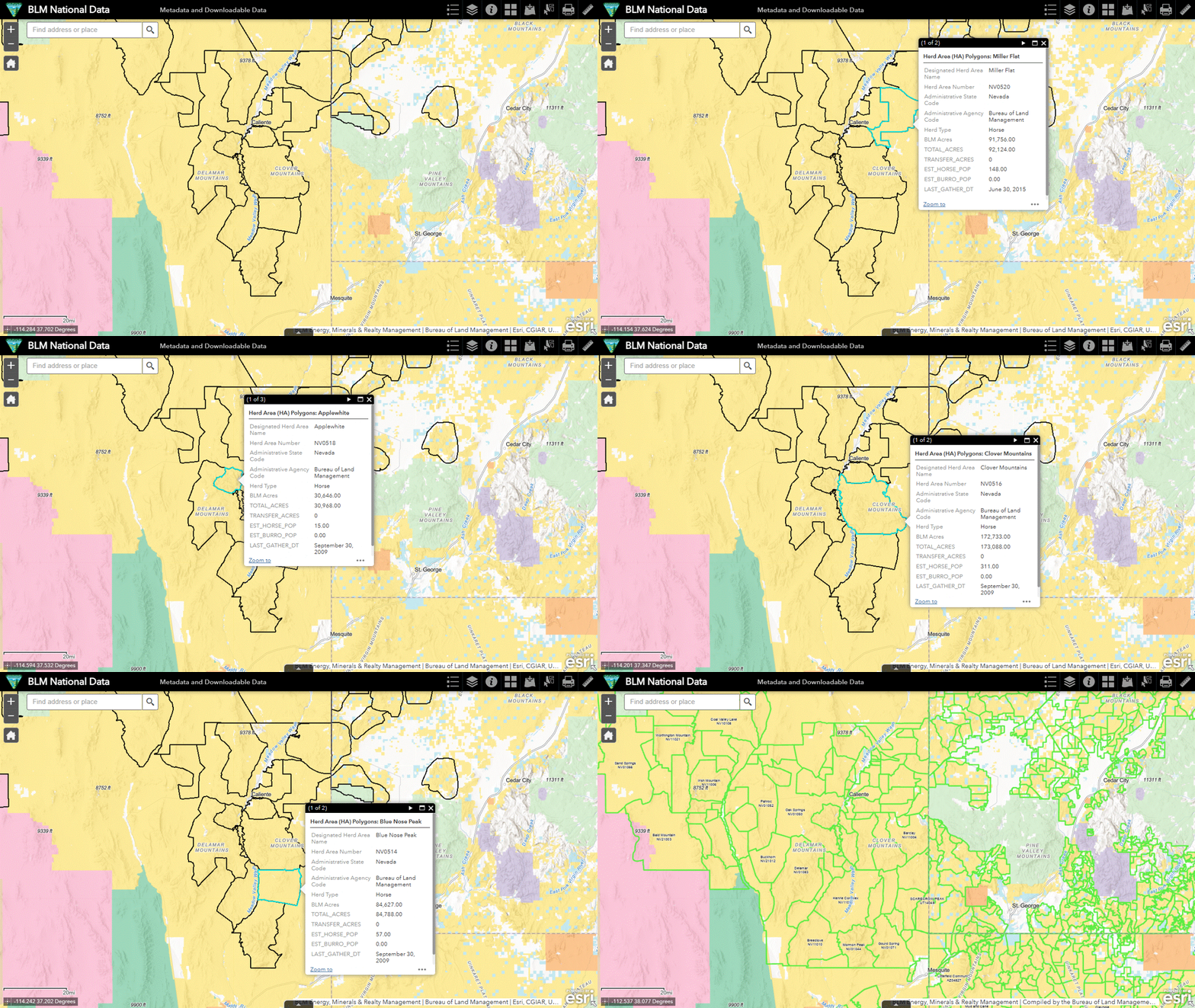
The Complex consists of nine former HMAs in eastern Nevada.

It’s unfit for wild horses but currently supports a population of 1,022 plus an untold number of privately owned livestock.

Captured animals will be taken to the off-range corrals in Axtell, Delta and Sutherland Utah.

Receiving only lukewarm support from Congress in the form of FLPMA, PRIA and the Burns Amendment, the bureaucrats have embarked on a long-term plan of nullifying the WHB Act through the planning process, one HMA at a time.

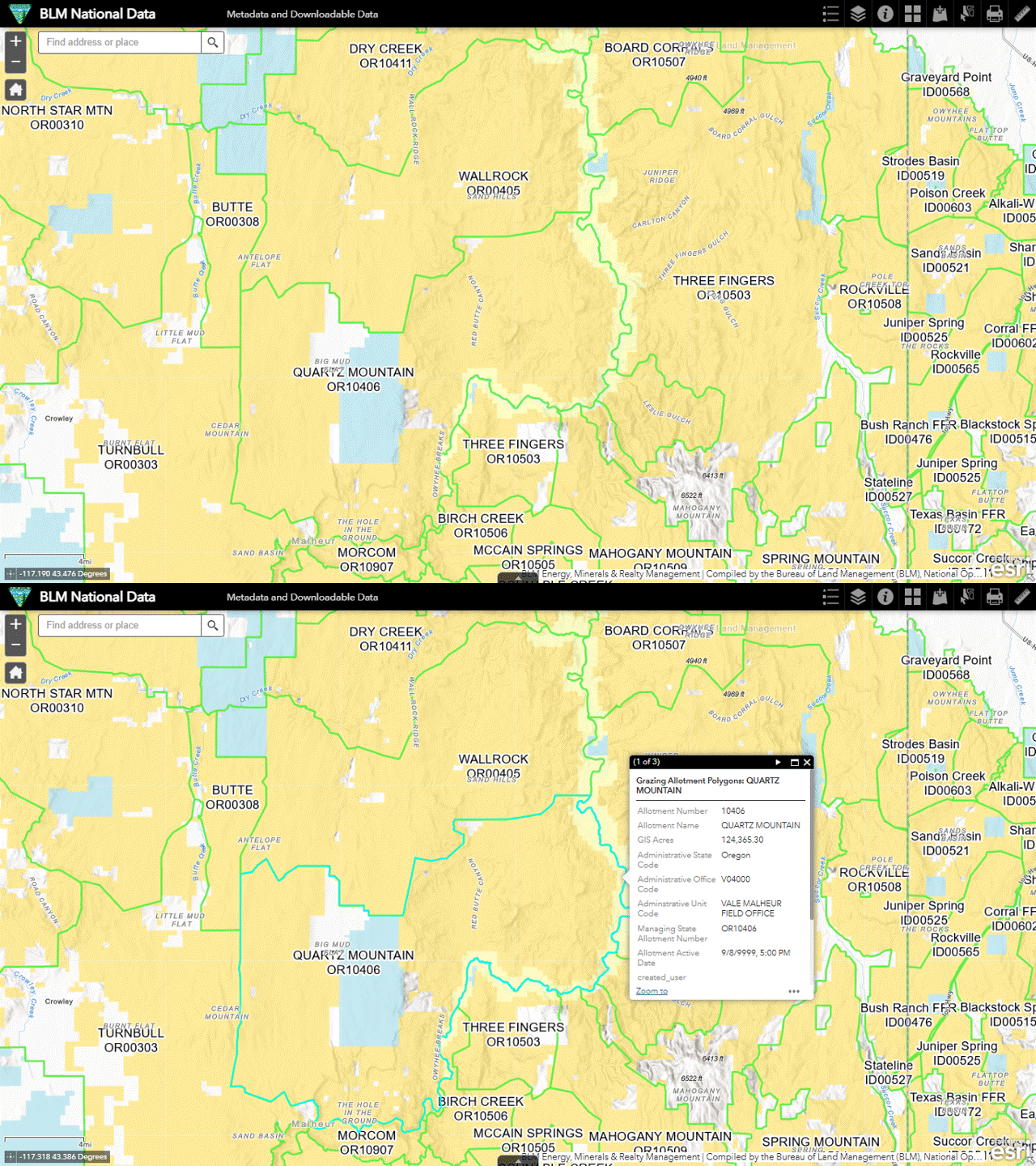
Caliente Complex with Allotments 03-28-24

Nevada’s Fragile Landscape Can’t Handle 33,000 Wild Horses?

So says the writer of an opinion piece in today’s edition of the Reno Gazette Journal.

But it can support privately owned livestock equivalent to 173,000 wild horses!

BLM allotments in the state offer 2,081,076 active AUMs on 40,194,360 public acres according to the Allotment Information Report at RAS.

That’s equivalent to 173,423 wild horses on 40,194,360 acres, or 4.3 wild horses per thousand public acres.

This brings more distress to the bureaucrats and ranchers, who claim that public lands in the western U.S can only support one wild horse per thousand acres (27,000 animals on 27 million acres).

To find the active AUMs, add the numbers in column Q of the unfiltered dataset.

You’ll have to filter the data for duplicate rows to get the total public acreage.

The author of the commentary affiliates with the Coalition for Healthy Nevada Lands.

RELATED: Ranchers Fighting Proxy War Through Wildlife Groups?

Charlatans React to 2024 WHB Population Data

Instead of explaining the lopsided forage allocations that favor the ranchers and drive the roundups, the Campaign Against America’s Wild Horses, a leader in nonmotorized removal, agreed in a statement today that wild horse numbers should be reduced, but they should come down with ovary-killing pesticides, not helicopters.

That’s according to a story by KLAS News.

Better Way 10-25-23

We know from their March 8 testimony in Las Vegas that they’ve bought into the overpopulation narrative and want to help the wild horse detractors.

Overpopulation means more horses than allowed by plan, not necessarily more horses than the land can support.

The bureaucrats and ranchers claim that public lands in the western U.S. can only support one wild horse per thousand acres (27,000 animals on 27 million acres), which is a fairy tale.

For every horse allowed on the range, three to six have been consigned to off-range holding because of permitted grazing, not because of inadequate fertility control.

RELATED: BLM Releases 2024 Wild Horse and Burro Population Dataset.

UPDATE: A March 26 news release by Return to Normal (Before WHB Act) says the same thing: Get rid of them with pesticides, not helicopters.  The ranchers couldn’t have asked for better allies.

McGee Mountain Roundup Over

The incident concluded today with 22 burros captured, 19 shipped, none released and three dead.

There were no unaccounted-for animals.

The death rate was 13.6%.

The capture total included six jacks, fifteen jennies and one foal.

Youngsters represented 4.5% of the animals gathered.

Of the adults, 28.6% were male and 71.4% were female.

There were no plans to treat any of the jennies with fertility control pesticides and return them to the range.

The roundup supported three tenets of rangeland management.

RELATED: McGee Mountain Roundup Starts Next Week.

UPDATE: The BLM news release said the incident restored a thriving natural ecological balance and multiple-use relationship, codewords for maximizing rancher prosperity.

BLM Releases 2024 Wild Horse and Burro Population Dataset

There were an estimated 73,520 wild horses and burros on BLM-managed public lands as of March 1, compared to 82,883 animals at the same time last year, according to today’s news release.

The number of animals in off-range holding was 64,382 as of January 22.

Between 2020 and 2023, the agency removed about 50,000 wild horses and burros from said lands, compared to 27,000 animals between 2016 and 2019.

Overpopulation means more horses and burros than allowed by plan, not necessarily more horses and burros than the land can support.

AMLs are small relative to the available resources because most of them have been assigned to privately owned livestock—a practice the advocates should be fighting instead of perpetuating.

RELATED: FY24 to See More Horses and Burros Off the Range Than On?

If East and West Castle Creek Were a Wild Horse Area

They would have an AML of 1,438 and a stocking rate of 7.4 wild horses per thousand public acres.

The allotments, located west of Bruneau, ID, offer a combined 17,251 active AUMs on 195,240 public acres, according to the Allotment Master Report.

The bureaucrats and ranchers claim that public lands in the western U.S. can only support one wild horse per thousand acres (27,000 animals on 27 million acres).

The advocates bolster the narrative with their darting programs.

If it was an HMA, the AML would be around 200 and 1,238 wild horses would be consigned to off-range holding because of permitted grazing.

RELATED: The Allotments Tell the Story: They’re Lying, All of Them.

East and West Castle Creek Allotments 03-24-24

Codewords for Nonmotorized Removal (of Wild Horses)

The advocates are constantly shifting their vocabulary to keep you in the dark.

Like the bureaucrats, their goal never changes: Ranching superiority in the lawful homes of wild horses, sometimes referred to as achieving and maintaining AMLs.

To fulfill this purpose, they set up PZP darting programs and recruit dummies like you to carry them out.

Euphemisms for the process include:

  • In-the-wild management
  • On-range management
  • Humane management

They all mean the same thing: Sterilizing the mares with ovary-killing pesticides, leading to the destruction of entire herds in just five years.

RELATED: Understanding Advocatespeak.

If Battle Creek Was a Wild Horse Area

It would have an AML of 974 and a stocking rate of 7.6 wild horses per thousand public acres.

The allotment, located west of Bruneau, ID, offers 11,682 active AUMs on 127,954 public acres, according to the Allotment Master Report.

The bureaucrats and ranchers claim that public lands in the western U.S. can only support one wild horse per thousand acres (27,000 animals on 27 million acres).

The advocates prop up the fairy tale with their darting programs.

If it was an HMA, the AML would be around 130 and 844 wild horses would be consigned to off-range holding because of permitted grazing.

Almost 98% of the AUMs go to J.R. Simplot.

RELATED: The Allotments Tell the Story: They’re Lying, All of Them.

Battle Creek Allotment 03-23-24

Foal-Free Friday, Holier Than Thou Edition

Who’s the greater threat to wild horses?  A grifter who sends letters to county wildlife boards seeking their removal from public lands or a real estate agent who’s taking them off the range with ovary-killing pesticides?

That’s the underlying issue in the latest installment of “Wild Horse Tales,” written by a PZP darter and appearing on page 18 of the March edition of Horse Tales.

You will not question the advocates.  You will not doubt their authority.

They are the old guard, allies of the ranchers, leaders of the blind.

RELATED: Foal-Free Friday, Confessing Your Loyalties Edition.

If Big Desert Sheep Was a Wild Horse Area

It would have an AML of 2,492 and a stocking rate of 11.1 wild horses per thousand public acres.

The allotment offers 29,899 active AUMs on 224,268 public acres adjacent to Craters of the Moon National Park, according to the Allotment Master Report.

The bureaucrats and ranchers insist that public lands in the western U.S. can only support one wild horse per thousand acres (27,000 animals on 27 million acres).

The advocates ratify the narrative through their darting programs.

If it was an HMA, the AML would be around 225 and 2,267 wild horses would be consigned to off-range holding because of permitted grazing.

RELATED: The Allotments Tell the Story: They’re Lying, All of Them.

Big Desert Sheep Allotment 03-21-24

McGee Mountain Roundup, Day 3

The incident started on March 18.  Results through March 20:

  • Scope: McGee Mountain HMA
  • Target: Burros
  • Type: Planned
  • Method: Bait
  • Goals: Gather 22, remove 22
  • Captured: 11, up from 3 on Day 1
  • Shipped: None
  • Released: None
  • Deaths: None
  • Average daily take: 3.7
  • Unaccounted-for animals: 11

The figures above are based on the daily reports.

Youngsters represented 9.1% of the animals gathered.

Of the adults, 20% were male and 80% were female.

The HMA is smaller than the HA.  The area is subject to permitted grazing.

  • Forage liberated to date: 66 AUMs per year
  • Water liberated to date: 55 gallons per day

The roundup supports three tenets of rangeland management.

RELATED: McGee Mountain Roundup in Progress.

McGee Mountain HMA with Allotments 03-13-24

If Indian Creek Was a Wild Horse Area

It would have an AML of 710 and a stocking rate of three wild horses per thousand public acres.

The allotment offers 8,518 active AUMs on 234,680 public acres adjacent to Canyonlands National Park, according to the Allotment Master Report.

The bureaucrats and ranchers tell us that public lands in the western U.S. can only support one wild horse per thousand acres (27,000 animals on 27 million acres).

The advocates indicate their agreement through their darting programs.

If it was an HMA, the AML would be around 235 and 475 wild horses would be consigned to off-range holding because of permitted grazing.

The Nature Conservancy receives all of the authorized forage in the allotment, on which it runs cattle, probably in connection with Dugout Ranch.

RELATED: The Allotments Tell the Story: They’re Lying, All of Them.

Indian Creek Allotment 03-20-24

Price of Hay Defies Gravity

The feed store collected $34 per bale today for alfalfa-grass mix, 20 bales minimum, no change from December.

The single-bale price was $35.

Three years ago the price was $19.

A horse would need around five bales per month, putting the cost at $170 per AUM.

At that rate, you’ll burn through your $1,000 adoption incentive in six months.

Ranchers pay $1.35 per AUM on public lands.

RELATED: Price of Hay Unchanged, Still Too High.

Two Men Admit Guilt in Deaths of SoCal Wild Burros

The incident occurred north of Yermo, CA in November 2021 and does not appear to be related to the loss of the Clark Mountain burros, investigation of which continues.

Three animals were killed according to a DOJ news release.

The pleas include one felony count of possession of an unregistered short-barreled rifle and one misdemeanor count of maliciously causing the death of a burro on public lands.

They face up to ten years in federal prison for the firearm charges and up to one year in federal prison for the burro deaths.

Sentencing was set for July 8.

RTF: Surgical Sterilization Bad, Chemical Sterilization Good

The advocates are united in their love for on-range management, which is the same as humane management, which is a codeword for nonmotorized removal.

Thus, on-range management means off the range.

Their attitude toward wild horses differs little from that of the ranchers, evident in a news release dated March 18 by Return to Normal (Before WHB Act).

No surprises, though.  They signed onto the “Path Forward,” a 2019 plan for ranching superiority in the lawful homes of wild horses, sometimes referred to as achieving and maintaining AMLs.

RELATED: Mass Sterilization OK if Done with PZP.