Callaghan Roundup, Day 7

The incident started on July 10.  Results through July 16:

  • Scope: Callaghan, South Shoshone, Bald Mountain, Hickison HMAs
  • Target: Horses
  • AML: 552
  • Pre-gather population: Over 4,500
  • Type: Planned
  • Method: Helicopter
  • Category: Costly and inhumane (according to advocates)
  • Better way: Inhibit the mares with PZP (according to advocates)
  • Capture goal: 2,000
  • Removal goal: 2,000
  • Captured: 1,240, up from 1,046 on Day 5
  • Shipped: 1,050, up from 723 on Day 5
  • Released: None
  • Deaths: 5, up from 3 on Day 5
  • Average daily take: 177.1
  • Unaccounted-for animals: 185
  • Snippet from statute: It is the policy of Congress that wild free-roaming horses and burros shall be protected from capture, branding, harassment, or death
  • Snippet from manual: To protect wild horses and burros from unauthorized capture, branding, harassment or death

The figures above are based on the daily reports.

Helicopters did not fly on Day 6.

Results for Days 1 and 4 were revised.

Two mares were put down on Day 7 due to missing eyes.

The death rate is 0.4%.

The capture total includes 516 stallions, 501 mares and 223 foals.

Youngsters represented 18.0% of the animals gathered, consistent with a herd growth rate of twelve to thirteen percent per year.

Of the adults, 50.7% were male and 49.3% were female.

Body condition scores on Day 7 ranged from 2 to 4.

The location of the trap site is not known.

The name of the contractor was not specified.

There are no plans to treat any of the mares with fertility control pesticides and return them to the range.

The Complex is subject to permitted grazing.  Resources liberated to date:

  • Forage: 14,880 AUMs per year
  • Water: 12,400 gallons per day

The project area covers 1,145,515 acres.

PREVIOUS: Callaghan Roundup, Day 5.

► Get the truth about wild horses and the wild horse advocates at westernhorsewatchers.com.

Foal-Free Friday, Greater of Two Evils Edition

The wild horse world is corrupt from top to bottom, especially in the space occupied by the advocates.

With roundup season in full swing, they’re going all out to sell nonmotorized removal.

Except they don’t call it that.  They call it conservation.

They may even post images of wild horses grazing peacefully near a water hole.

Except there are no foals.

If you’re a hunter or rancher, you should recognize the limitations of motorized removal and the advantages of their approach:

  • Helicopters can’t sterilize mares
  • They can’t reduce the breeding populations to unsustainable levels
  • They can’t destroy genetic diversity and long-term viability
  • They can’t increase the average age along with the death rate
  • They can’t make the herds disappear forever

But fertility control can.

So think twice before criticizing the advocates.  They offer the greater of two evils.

► Get the truth about wild horses and the wild horse advocates at westernhorsewatchers.com.

Double Devil Corrals Closed to Public Access?

An alert by the Modoc National Forest says that entering or being in the Wild Horse Holding Facility Closure Area is prohibited from July 9 to August 3.

The map shows a development in S35 T43N R11E but does not identify it.

The ArcGIS Viewer puts it on Airport Road which may correspond to County Road 74, the address given in a Google search.

The order did not indicate if the closure was related to the Montgomery Pass roundup.

► Get the truth about wild horses and the wild horse advocates at westernhorsewatchers.com.
Callaghan Roundup, Day 5

The incident started on July 10.  Results through July 14:

  • Scope: Callaghan, South Shoshone, Bald Mountain, Hickison HMAs
  • Target: Horses
  • AML: 552
  • Pre-gather population: Over 4,500
  • Type: Planned
  • Method: Helicopter
  • Category: Costly and inhumane (according to advocates)
  • Better way: Beat the population down with PZP (according to advocates)
  • Capture goal: 2,000
  • Removal goal: 2,000
  • Captured: 1,046, up from 542 on Day 3
  • Shipped: 723, up from 325 on Day 3
  • Released: None
  • Deaths: 3, no change from Day 3
  • Average daily take: 209.2
  • Unaccounted-for animals: 320
  • Snippet from statute: It is the policy of Congress that wild free-roaming horses and burros shall be protected from capture, branding, harassment, or death
  • Snippet from manual: To protect wild horses and burros from unauthorized capture, branding, harassment or death

The figures above are based on the daily reports.

The death rate is 0.3%.

The capture total includes 446 stallions, 422 mares and 178 foals.

Youngsters represented 17.0% of the animals gathered.

Of the adults, 51.4% were male and 48.6% were female.

Body condition scores were not given.

The location of the trap site is not known.

The name of the contractor was not specified.

There are no plans to treat any of the mares with fertility control pesticides and return them to the range.

The Complex is subject to permitted grazing.  Resources liberated to date:

  • Forage: 12,552 AUMs per year
  • Water: 10,460 gallons per day

The project area covers 1,145,515 acres.

PREVIOUS: Callaghan Roundup, Day 3.

► Get the truth about wild horses and the wild horse advocates at westernhorsewatchers.com.
BLM Announces Private Care Blitz

The news release rolled out on the same day that the comment period for the grazing rule update closed.

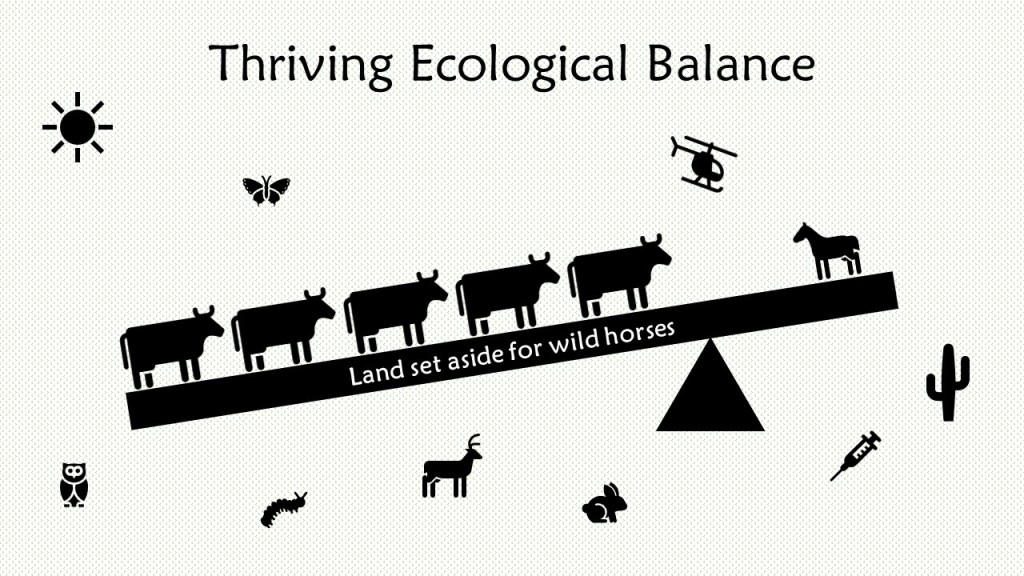
The new rules would prohibit wild horse preserves on public lands.

You will put them on your own property and you will like it.  Public lands are for cattle and sheep only.

The campaign, which starts on July 23, includes in-person and online adoption events.

► Get the truth about wild horses and the wild horse advocates at westernhorsewatchers.com.
Chincoteague Foal Population Still Growing

The total climbed to 83 on July 10, up from 73 on June 21.

Last year’s record was 103.

Thunderbolt was the top producer, credited with eight foals.

There was a three-way tie for second place and a four-way tie for third.

Colts led fillies 43 to 39 with one undetermined.

Refer to this spreadsheet for a ranking of sires.

The herd has been engineered for maximum production and revenues, despite a limit of 150 horses in the refuge.

The pony swim will occur on July 29 according to the guide, followed by the auction on July 30.

PREVIOUS: Chincoteague’s Top Producer on Father’s Day.

► Get the truth about wild horses and the wild horse advocates at westernhorsewatchers.com.

Callaghan Roundup, Day 3

The incident started on July 10.  Results through July 12:

  • Scope: Callaghan, South Shoshone, Bald Mountain, Hickison HMAs
  • Target: Horses
  • AML: 552
  • Pre-gather population: Over 4,500
  • Type: Planned
  • Method: Helicopter
  • Category: Costly and inhumane (according to advocates)
  • Better way: Snuff out new life with PZP (according to advocates)
  • Capture goal: 2,000
  • Removal goal: 2,000
  • Captured: 542, up from 329 on Day 1
  • Shipped: 325, up from zero on Day 1
  • Released: None
  • Deaths: 3, up from 1 on Day 1
  • Average daily take: 180.7
  • Unaccounted-for animals: 214
  • Snippet from statute: It is the policy of Congress that wild free-roaming horses and burros shall be protected from capture, branding, harassment, or death
  • Snippet from manual: To protect wild horses and burros from unauthorized capture, branding, harassment or death

The figures above are based on the daily reports.

Helicopters did not fly on Day 2.

Two horses died unintentionally the same day.

The death rate is 0.6%.

The capture total includes 228 stallions, 229 mares and 85 foals.

Youngsters represented 15.7% of the animals gathered.

Of the adults, 49.9% were male and 50.1% were female.

Body condition scores were not given on Day 3.

The location of the trap site is not known.

The name of the contractor was not specified.

There are no plans to treat any of the mares with fertility control pesticides and return them to the range.

The Complex is subject to permitted grazing.  Resources liberated to date:

  • Forage: 6,504 AUMs per year
  • Water: 5,420 gallons per day

The project area covers 1,145,515 acres.

PREVIOUS: Callaghan Roundup in Progress.

► Get the truth about wild horses and the wild horse advocates at westernhorsewatchers.com.
Last Day to Comment on Changes to Grazing Rules

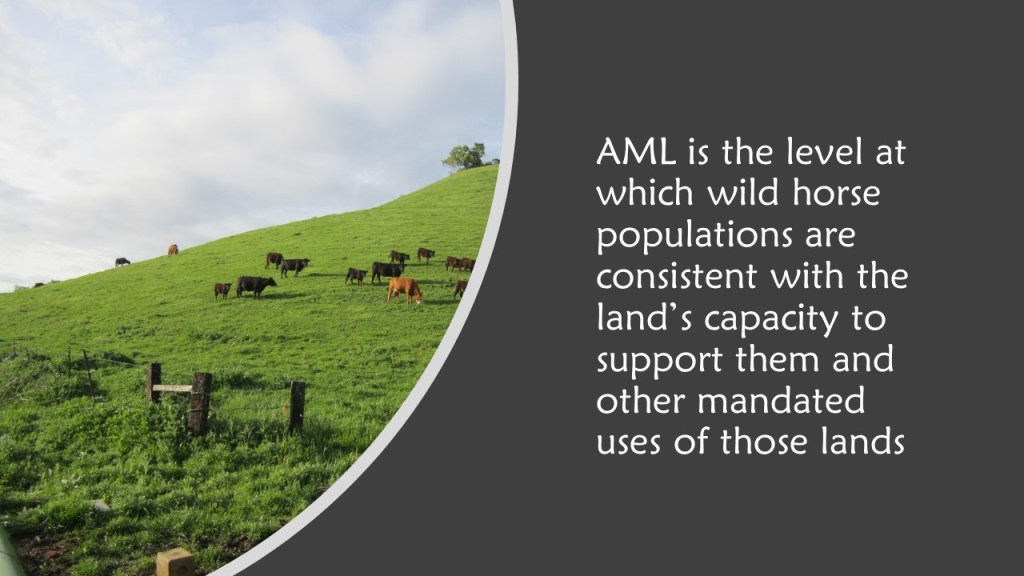
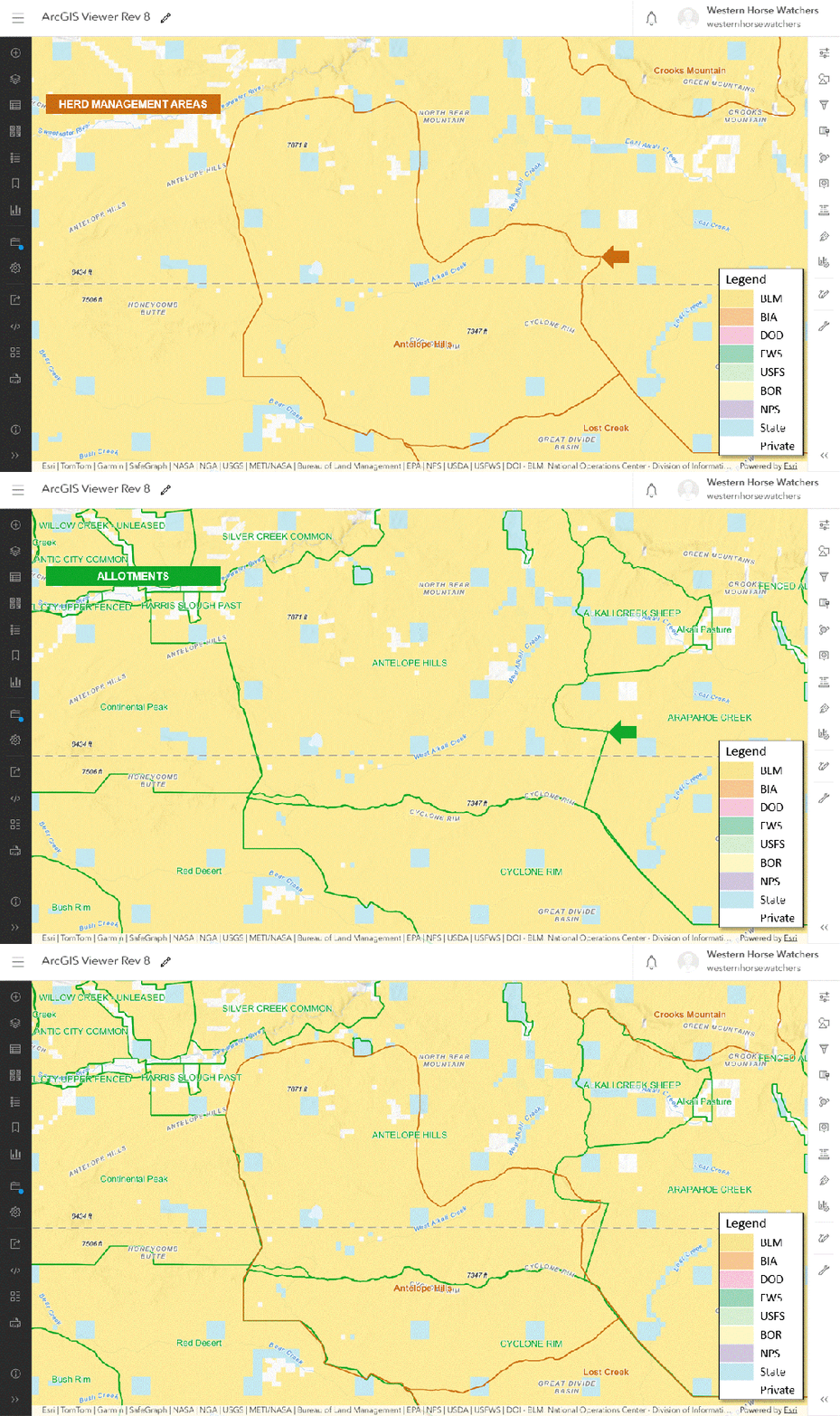
Ranchers, with the cooperation of your faithful public servants, want to control how grazing allotments are used.

Permits would be limited to animals they like, such as cattle and sheep.

Grazing would no longer be authorized for undesirable species such as bison and horses, precluding the use of public lands for wild animal preserves.

It’s anti-competitive, a barrier to those who would lawfully acquire base properties and petition the government for changes in livestock types and seasons of use.

It’s also the middle finger to those who bear the costs of off-range holding.

You can comment against the proposal at the Federal Register.

PREVIOUS: Allotment Conversion Not Illegal.

► Get the truth about wild horses and the wild horse advocates at westernhorsewatchers.com.
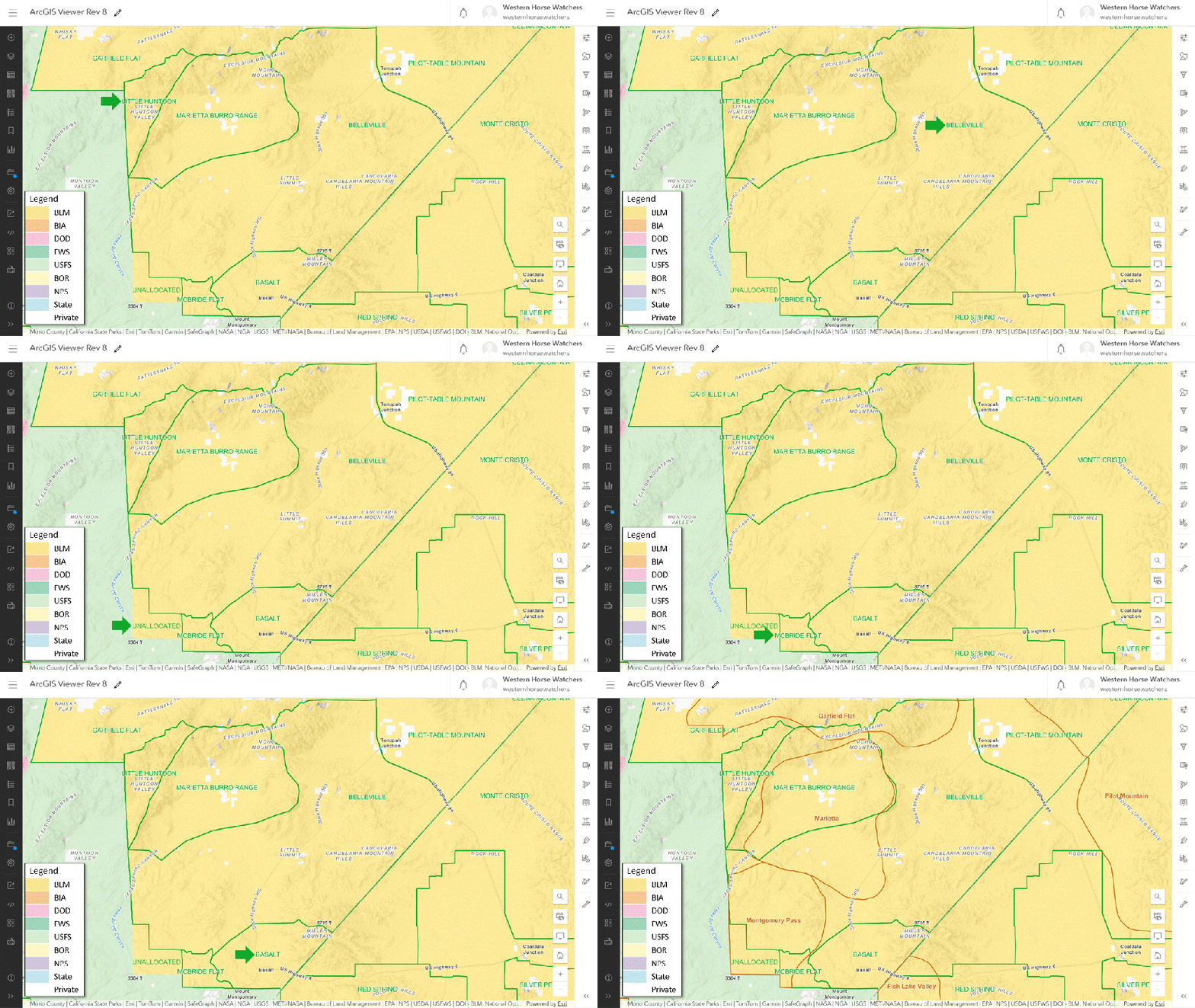
► Search for other posts about grazing rule changes.

Montgomery Pass Q&A

Q. Did the helicopters sterilize any mares?

A. No, fertility control programs do that.

Q. Was genetic diversity compromised?

A. No, fertility control programs do that.

Q. Did the incident reduce the breeding population to an unsustainable level?

A. No, fertility control programs do that.

Q. Did the roundup attract women?

A. No, fertility control programs do that.

Q. Will the herd collapse?

A. No, fertility control programs do that.

Q. Are you surprised that the advocates push for the greater of two evils?

A. No, they want the ranchers to win.

PREVIOUS: Montgomery Pass Roundup Almost Over.

► Get the truth about wild horses and the wild horse advocates at westernhorsewatchers.com.
Roundup Season: Boon to Pesticide Salesmen

In the following video one of the founding members of the Pesticide Caucus complains about motorized removal at the Callaghan Complex, which she describes as costly and inhumane, and the benefits of immunocontraceptives.

The capture and removal goals are 2,000 according to the gather page, not 5,000, and there are no plans to treat any of the mares with such pesticides and return them to the range, much to her chagrin.

Remember, “humane management,” “protecting them from removal” and “a better way” are codewords for long-term use of PZP, with the inevitable result of permanent infertility and herd collapse.

Refer to the AdvocateSpeak decoder for more examples.

RELATED: Callaghan Roundup Not a Rescue?

► Get the truth about wild horses and the wild horse advocates at westernhorsewatchers.com.
Callaghan Roundup Not a Rescue?

Of course it is!  It’s the government throwing a lifeline to high-net-worth individuals whose livelihood is threatened by pests that are robbing forage from the most noble and deserving nonnative species on Nevada’s public lands.

The Day 1 results at the gather page give body condition scores of 3 to 5, discrediting the starvation hypothesis, at least for now.

Animals removed from their lawful homes will be placed in off-range holding at a cost of $6 per head per day, while the government collects about five cents per head per day for livestock grazing in their stead.

Makes perfect sense.

Pay no attention to the Campaign Against America’s Wild Horses and its army of nitwits, they are public enemy #1 of America’s wild horses.

PREVIOUS: Callaghan Roundup in Progress.

► Get the truth about wild horses and the wild horse advocates at westernhorsewatchers.com.

Montgomery Pass Roundup Almost Over

The final day (for aerial operations) was July 10 according to the Inyo horse page, with 461 horses captured and three dead.

All deaths were intentional.

Some horses may still be on site awaiting shipment.

Foals represented 18% of the animals captured, too small to support a herd growth rate of 20% per year.

Of the adults, 50% were male and 50% were female.

The incident liberated 5,532 AUMs per year for other mandated uses of public lands.

PREVIOUS: Montgomery Pass Roundup in Progress.

UPDATE: A July 16 news release says it’s complete but does not give any information on horses shipped or released and does not acknowledge that the gather area included numerous grazing allotments.

► Get the truth about wild horses and the wild horse advocates at westernhorsewatchers.com.

Slater Base Property Available for $27.5 Million

The ranch covers 44,311 total acres, including 9,006 deeded acres, according to the listing.

The nearest towns are Slater, Craig and Steamboat Springs, Colorado.

Most of the public acreage is in the Roaring Fork and Stewardship allotments of the Routt National Forest.

One is in Colorado and the other is in Wyoming.

The ranch also has preference on three BLM allotments.

Overall, the land ratio is good, 3.8 public acres per deeded acre.

The ranch does not overlap areas identified for wild horses.

Management as a wild horse preserve might be difficult because the allotments are not contiguous and multiple government agencies are involved.

Allotment conversion is not illegal, but your faithful public servants are trying to make it so—at least on BLM lands— by changing the Part 4100 grazing regulations.

You can comment against the proposal through July 13.

RELATED: Key Indicators for New Wild Horse Preserves.

► Get the truth about wild horses and the wild horse advocates at westernhorsewatchers.com.

Search for other posts about base properties.

Hypocrite Alert: Salt River Advocates Feign Compassion

Exhibit A:

They’re obsessed with pesticides.

They’re as ruthless as the helicopter pilots and wranglers.

All in a day’s work: Misplaced shot goes unnoticed by public.

They hate foals.

They hate families.

They hate nature’s way.

The Salt River Wild Horse Darting Group is a forward base of the Campaign Against America’s Wild Horses in Arizona.

RELATED: Salt River Advocates Hitting Mares in the Back?

► Get the truth about wild horses and the wild horse advocates at westernhorsewatchers.com.