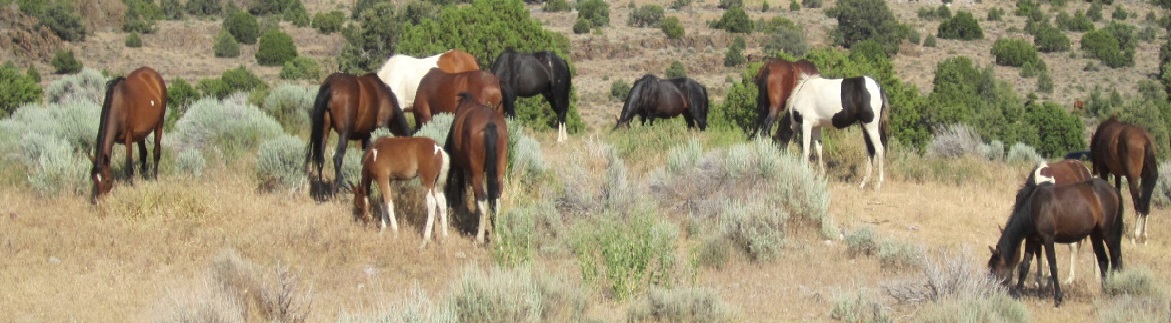
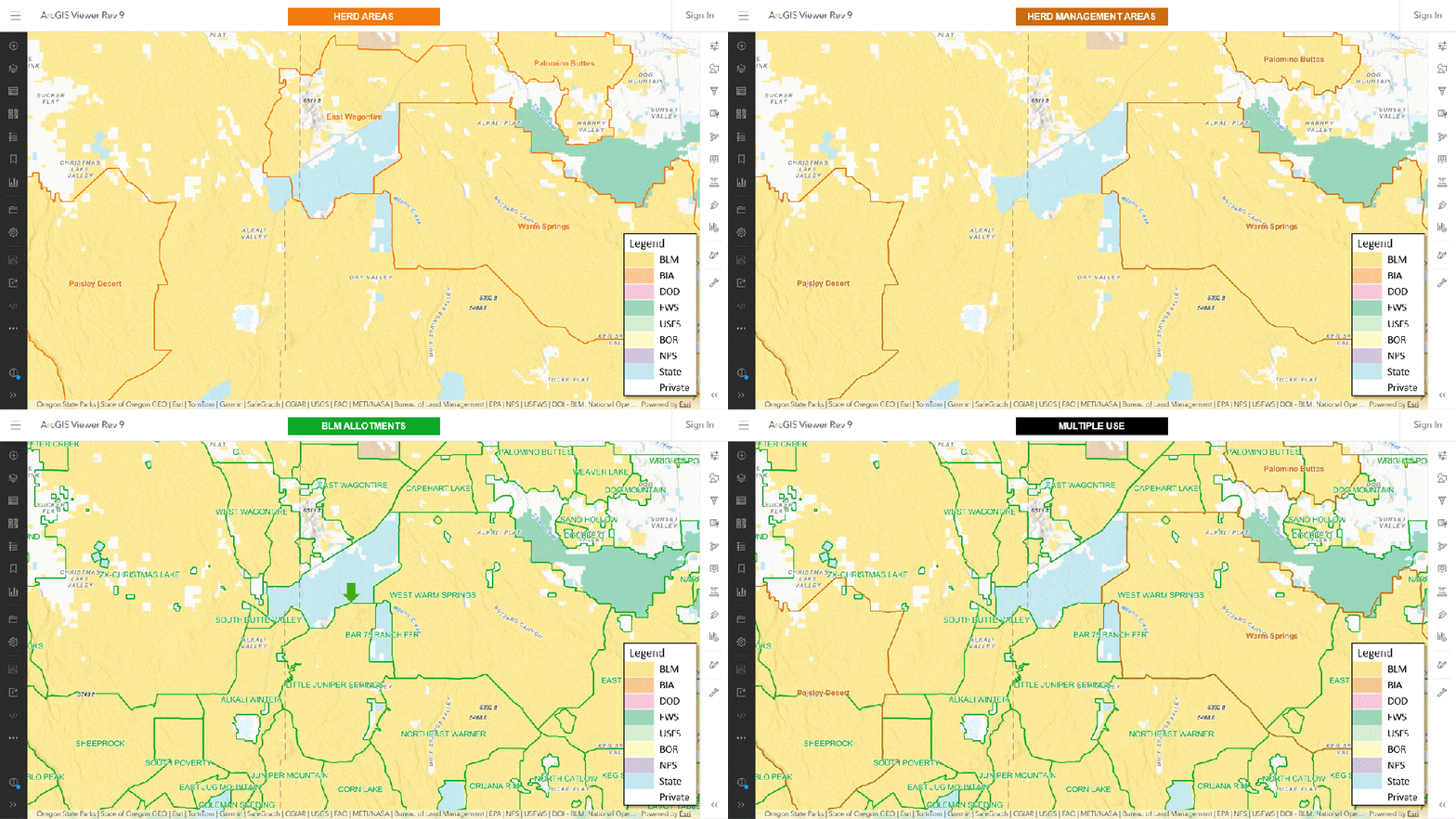
The allotment borders the East Wagontire HA on the north side, which was zeroed out for wild horses and is now managed principally for livestock.
To the east is the Warm Springs HMA, which is managed primarily for livestock.
To reduce the need for temporary water hauling, two of the permittees would like to drill new wells, referred to as Venator Creek and South Draw in the Draft EA.
Comments on the project will be accepted through November 26.
The allotment is in the Improve category with no AUMs in the suspended column to help the land recover.
Four permittees receive 5,417 active AUMs on 116,836 public acres, according to the allotment master report, equivalent to 451 wild horses.
Returning 451 wild horses to public lands would save an estimated $987,690 per year in short-term holding costs, while sacrificing $9,155 per year in grazing fees.
A problem with the idea is that you may have to purchase or control several base properties to access all of the AUMs.
Another possibility is that you go through the planning process to eliminate livestock grazing, converting the allotment to a wild horse range.
The project would likely face stiff opposition from ranchers, even though it’s the right thing to do for American taxpayers.
RELATED: Key Indicators for New Wild Horse Preserves.
► Get the truth about wild horses and the wild horse advocates at westernhorsewatchers.com.

