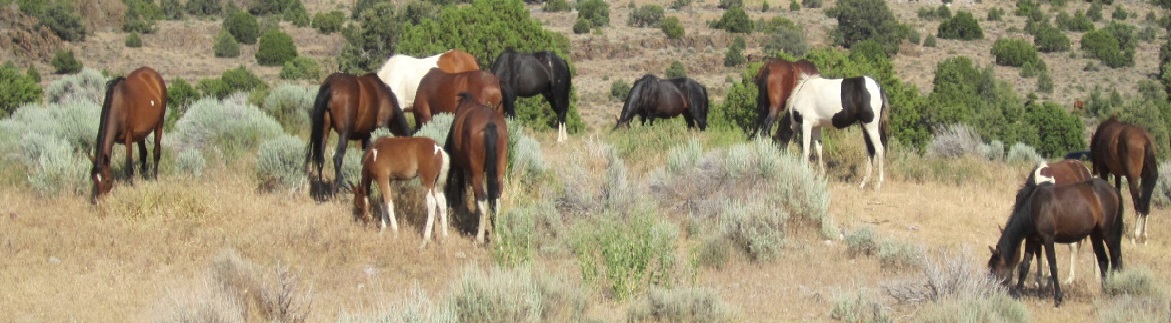
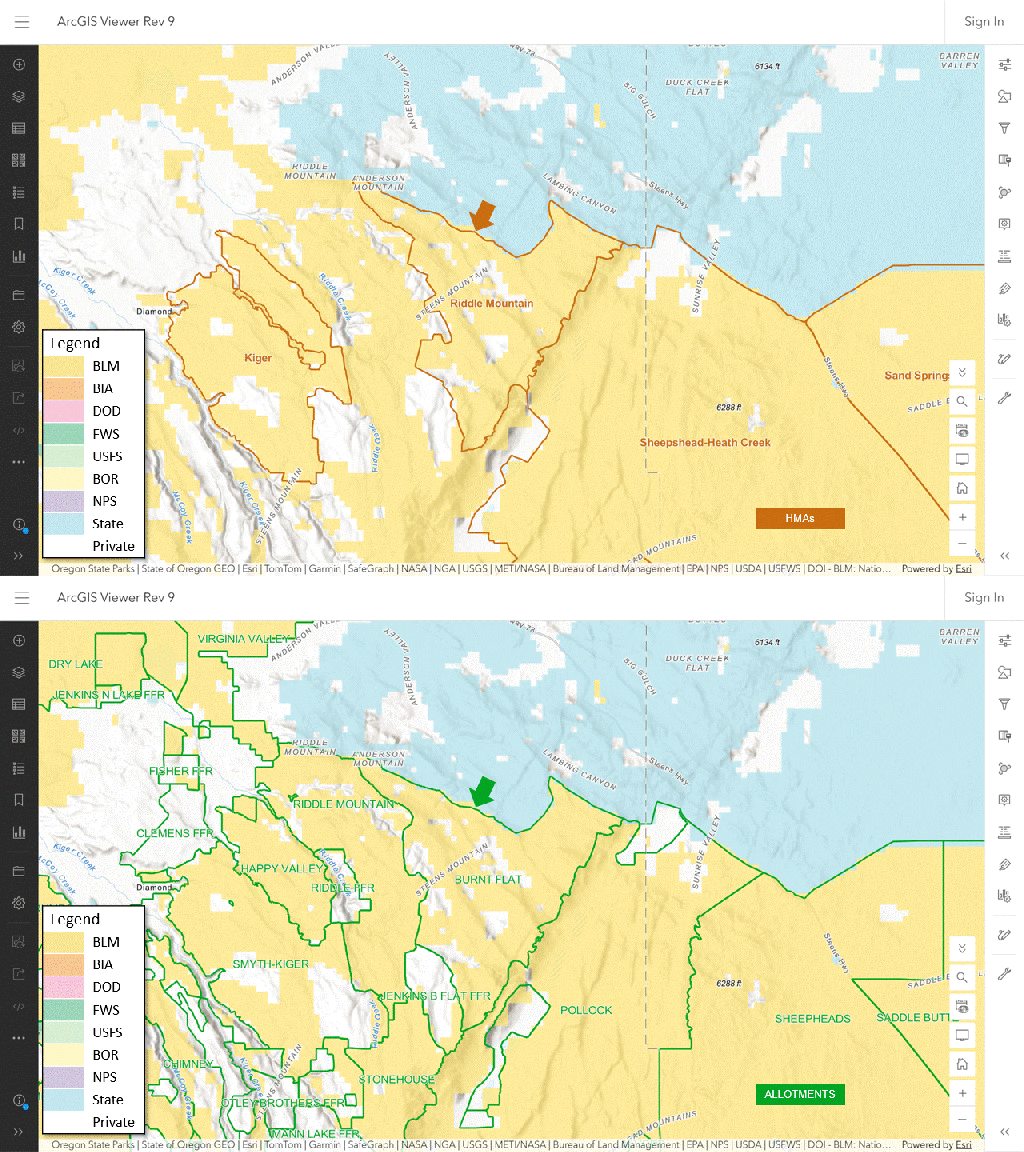
The management plan allows 56 wild horses on 28,331 public acres, or two wild horses per thousand public acres.
In an October 7 hearing about the emergency roundup, the plaintiffs testified that, based on the current literature, a minimum population of 278 is necessary for the herd to be genetically viable.
The court agreed, specifying that limit in its October 15 ruling.
A roundup this week took 140 off the range, leaving 278.
The court did not stipulate that the herd be protected from chemical extermination, sometimes referred to as sustained fertility control, so the order does not guarantee its future.
A population of 278 requires 3,336 AUMs per year.
The management plan offers 672.
The judge did not order the BLM to update the AML and forage allocations to sustain a herd of 278.
If that number is a minimum, the upper end of the AML would be around 500, allowing for a doubling of herd size every four to five years (a sign of genetic vigor).
Where are those resources coming from?
The Burnt Flat Allotment, which contains the HMA, offers 3,716 AUMs per year, which would support a herd of 278 but not 500.
The stocking rate would be 9.8 wild horses per thousand public acres, despite claims by your faithful public servants that public lands in the western U.S. can only support one wild horse per thousand acres.
Shifting AUMs from livestock to horses, a frequent request in EAs for roundups, is not easy:
“Changes to livestock grazing cannot be made through a wild horse gather decision and are only possible if BLM first revises the land-use plans to re-allocate livestock forage to wild horses and to eliminate or reduce livestock grazing.”
The allotment would have to be zeroed out and the HMA enlarged, triggering a lengthy NEPA review and strong opposition from ranching interests.
RELATED: Management Priorities at Riddle Mountain.
► Get the truth about wild horses and the wild horse advocates at westernhorsewatchers.com.

