Story by FOX5 News in Las Vegas.
The petition has 1,260 signatures as of this morning.
RELATED: Forest Service Mulls Wild Horse Removal at Mount Charleston?

Western Horse Watchers Association
Exposing the Hypocrisy, Lies and Incompetence of the Wild Horse Advocates
Story by FOX5 News in Las Vegas.
The petition has 1,260 signatures as of this morning.
RELATED: Forest Service Mulls Wild Horse Removal at Mount Charleston?
The May 16 meeting, which was to be held at the off-range farm in Grandy according to the minutes of the February 15 meeting, has been cancelled.
No explanation was given in the notice.
In other news, the herd of slightly over 100 has produced three foals this year as noted in a story dated May 7 by WAVY News.
The PZP darting program has been suspended since 2022 but the number of viable mares and the size of the breeding population are not known.
Previously, birth rates and breeding patterns were determined by the advocates, not the horses.
RELATED: Currituck Outer Banks to Become Like Assateague Island?
The incident, set to begin on October 1 of last year, started on May 1 with nine horses captured, none shipped, none released and no deaths.
The incident started on April 29. Results through May 5:
The figures above are based on the daily reports.
Horses
The death rate is 1.8%.
The capture total includes 46 stallions, 45 mares and 18 foals.
Youngsters represented 16.5% of the animals gathered.
Of the adults, 50.5% were male and 49.5% were female.
Body condition scores were not given.
Burros
The death rate is 2.2%.
The capture total includes 19 jacks, 23 jennies and three foals.
Youngsters represented 6.7% of the animals gathered.
Of the adults, 45.2% were male and 54.8% were female.
General
The location of the trap site was not given.
The HMA is not subject to permitted grazing.
Up to ten mares will be treated with GonaCon Equine, a fertility control pesticide, and be returned to the range with up to ten stallions.
There are no such plans for the burros.
RELATED: Red Rock Roundup, Day 5.

He does not need any help and there are no plans to intervene, according to a report dated May 7 by OBX Today.
He’s around 30 years old and deserves the chance to die as naturally as he lived, without ever having human hands on him.
However, if the management team and veterinarian determine that he has reached the end of his life and needs to be humanely euthanized, they will step in immediately.
RELATED: Currituck Herd Expands by One.
That’s according to Tracy “You need to manage the numbers to fit what’s available for the horses” Wilson of the Campaign Against America’s Wild Horses in a story dated May 6 by KTVN News about fences and water for the Virginia Range mustangs.
The video shows a foal tangled in the wires.
This is nonsense.
She oversees the PZP darting program that has put many of the mares at risk of sterility.
That’s how nonmotorized removal works: You snuff out new life and pray for the older horses to die, especially when you’re trying to convince the bureaucrats and ranchers that it’s a viable alternative to motorized removal.
RELATED: Virginia Range Darting Update for April 2024.

Participants will be escorted by wagon according to today’s announcement.
Registration is required and tours are limited to 20 persons each.
The privately owned facility has a capacity of 7,600 animals and the population as of January 11 was 3,804 wild horses and one wild burro.
The corrals support three tenets of rangeland management.
RELATED: Sour Grapes: Advocates Criticize Indian Lakes Wild Horse Deaths.
At Grayson Highlands State Park with Bonnie K Hunter.
WARNING: Images of foals! Will be disturbing to most wild horse advocates.
The incident started on April 29. Results through May 3:
The figures above are based on the daily reports.
Trapping shifted from horses to burros on Day 5.
Horses
Two stallions were dispatched on Day 3, bringing the death rate to 2.1%.
The capture total includes 44 stallions, 38 mares and 15 foals.
Youngsters represented 15.5% of the animals gathered.
Of the adults, 53.7% were male and 46.3% were female.
Body condition scores were not given.
Burros
A jack was found dead in an open trap on Day 5, putting the death rate at 2.5%.
The capture total includes 18 jacks, 21 jennies and one foal.
Youngsters represented 2.5% of the animals gathered.
Of the adults, 46.2% were male and 53.8% were female.
General
The location of the trap site was given.
The HMA is not subject to permitted grazing.
Up to ten mares will be treated with GonaCon Equine, a fertility control pesticide, and be returned to the range with up to ten stallions.
There are no such plans for the burros.
RELATED: Red Rock Roundup, Day 3.
The BLM’s April 18 news release said it would appear in the Federal Register in the coming days, but a search of that site for “Conservation and Landscape Health,” the subject of the unofficial prepublication version, yields no new results.
A search of Regulations dot gov for the same term also yields no new results.
The rule would put conservation on equal footing with other multiple uses of public lands, an attempt to amend FLPMA while bypassing the people’s representatives.

The principal or major uses of public lands are limited to domestic livestock grazing, fish and wildlife development and utilization, mineral exploration and production, rights-of-way, outdoor recreation and timber production according to the statute.
You know the rule is bad for the country and good for our enemies because it was promulgated by liberals.
In a similar way, you know an idea is bad for wild horses if the advocates promote it.

RELATED: Comment Period Extended for Proposed Public Lands Rule.
The current population is 326 and the AML is 178 according to the 2024 HA/HMA Report.
Of course they should go, if you’re an advocate. The HMA is overpopulated.
Best way to being the numbers down is nonmotorized removal, also known as humane management or in-the-wild management.
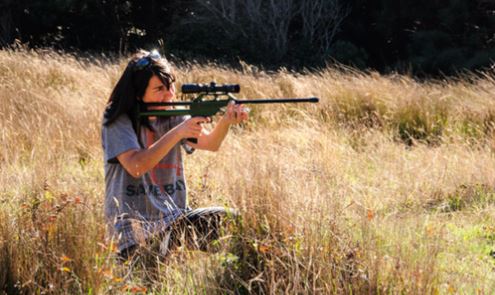
Mind not required.
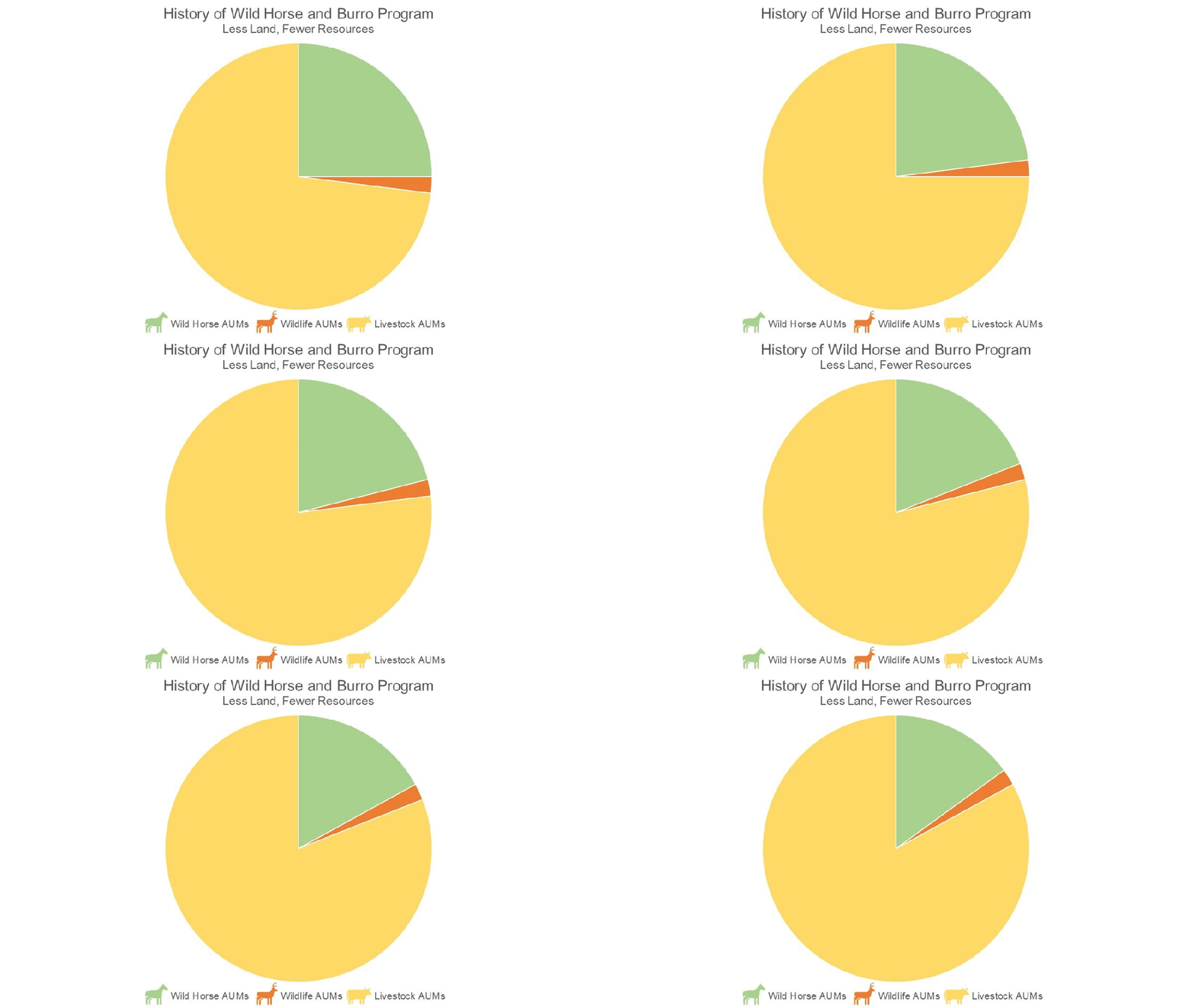
Consider these data from a 2018 EA for population management in the HMA (page 17 in the pdf).

The forage allocation for horses tells you the AML was 2,424 ÷ 12 = 202, which is consistent with the HMA page but not the HA/HMA Report.
The forage allocation for livestock tells you the HMA supports cattle equivalent to 19,392 ÷ 12 = 1,616 wild horses, so the True AML is 202 + 1,616 = 1,818 which far exceeds the current population.
The horses can stay.
Mind required, plus a sincere desire to help wild horses.
The advocates have neither.

RELATED: SHOCKER: Advocates Don’t Know What to Do.
Let’s see, the WHB Act no longer affords the protections sought by Velma, roughly half of their land is managed principally for livestock and the other half is managed primarily for livestock, and you don’t know what to do?
An organizer of the Save Our Wild Horses conference told KRNV News in a story dated May 2 “We don’t know if [the horses] should be rounded up at all, but we also don’t know can we improve the range conditions and leave the horses on the range where it doesn’t cost the taxpayers any money? Right now, we’re doing these expensive roundups, putting horses in holding where we’re keeping them.”
A schoolboy could figure this out but we’re not dealing with schoolboys.
If forage demand exceeds forage supply, you have a problem.
Once you understand that AMLs correspond to a small portion of the total authorized forage, and that most of the resource has been assigned to privately owned livestock, you’ll realize that public lands in the western U.S. can support many more horses than the bureaucrats and ranchers admit and that overpopulation is a myth.
RELATED: The Allotments Tell the Story: They’re Lying, All of Them.
At one point it topped $100,000 but as of today stands at $36,000 according to a BLM update.
Remarks by those pledging the funds are especially troubling: The Humane Society of the United States, the PZP registrant who looks the other way as the Campaign Against America’s Wild Horses, another sponsor, uses the pesticide to wipe out entire herds.
When will these charlatans be brought to justice?
RELATED: Vehicles-of-Interest Identified in Clark Mountain Burro Shooting.
The signatory to the “Path Forward,” a 2019 plan for ranching superiority in the lawful homes of wild horses, has placed an undated job ad in High Country News for a wild horse population field coordinator and technician.
The successful candidate will report to Celeste Carlisle, RTF science advisor, chair of the Wild Horse and Burro Advisory Board and co-leader of the FREES Population Management Working Group.
In this role, you will work with RTF staff to identify wild equine herds in several herd management areas to determine tractability and appropriateness for current and future range projects.
You should be familiar with 4WD travel, firearms, hiking, camping, map reading, fixing flat tires and bringing survival gear into field, such as extra food and water, layers, batteries, flashlights, blankets or sleeping bags and first aid supplies.
In short, you’ll help RTF leadership transform the organization into a government contractor specializing in nonmotorized removal, just like the Campaign Against America’s Wild Horses.
Join the race to the bottom today!
RELATED: RTF: Surgical Sterilization Bad, Chemical Sterilization Good.

A young bachelor stallion spends his days trying to steal mares from the family bands as discussed in the April edition of Horse Tales. Go to “Wild Horse Tales” at the bottom of page 7.
It’s risky business and injuries do occur, but that’s how nature operates.
Speed, strength and shrewdness are passed on. Weakness is not.
If he succeeds, he faces a more formidable challenge: The advocates.
They don’t like families. They don’t like procreation. They don’t like Velma, principal use and the 92nd Congress.
They like ranchers. They like pesticides. They like thriving ecological balances in the lawful homes of wild horses.
They rank among the lowest and sleaziest of the nonprofits.
They are phonies, leaders of the blind, irrelevant.
RELATED: Foal-Free Friday, Selecting for Weakness Edition.

The Campaign Against America’s Wild Horses, an appendage of the BLM and leader in mass sterilization, reported today that 201 mares received 205 doses of PZP during the month, 61 given as a primer and 144 as a booster.
Over the life of the program, which began in 2019, the advocates have pumped 9,140 doses of the pesticide into 2,027 mares, for an average of 4.5 doses per mare.
Sixty-four foals have been born year-to-date. Four died of unspecified causes.
The current population is thought to be 3,519 with 370 horses listed as missing, compared to 3,480 with 353 horses listed as missing in March.
The population was 3,444 with 338 horses listed as missing in February and 3,465 with 342 horses listed as missing in January.
The agreement with NDA expired on April 30 but the report indicates the following goal for May: “Continue to maximize booster treatments to mares across the Virginia Range as we move through the rest of spring breeding season to prevent pregnancies, and continuing to allow for humane population decrease.”
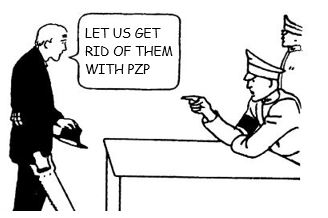
Not discussed:
PZP is a restricted-use pesticide that tricks the immune system into attacking the ovaries, resulting in sterility after five years of treatment.
The report will be submitted to the Nevada Department of Agriculture.
RELATED: Virginia Range Darting Update for March 2024.

A new project has been created in ePlanning and three files have been placed in the documents folder.
The Scoping Statement brings forth certain requirements from the RMP that the new plan must satisfy.
The goal is to achieve and maintain a thriving ecological balance and multiple-use relationship on public lands, codewords for ranching superiority in the lawful homes of wild horses and burros.
The Blue Wing Complex consists of eleven HAs that were reconfigured into five HMAs lying within the Blue Wing / Seven Troughs Allotment.
The new HMAP cannot
The advocates would have you believe it’s panacea for the Blue Wing horses and burros.
Comments will be accepted through June 1 according to today’s announcement.
RELATED: Blue Wing Legal Action Centers Around HMAPs.

The incident started on April 29. Results through May 1:
The figures above are based on the daily reports.
The capture total includes 39 stallions, 33 mares and 12 foals.
Youngsters represented 14.3% of the animals gathered.
Of the adults, 54.2% were male and 45.8% were female.
Body condition scores were not given.
The HMA is not subject to permitted grazing.
Up to ten mares will be treated with GonaCon Equine, a fertility control pesticide, and be returned to the range with up to ten stallions.
RELATED: Red Rock Roundup in Progress.
The privately owned ranch covers approximately 26,000 acres of grassland in northeastern Oklahoma according to yesterday’s news release.
The January Facility Report shows two pastures, Gray Horse East, with a capacity of 1,735 mares, and Gray Horse West with a capacity of 1,015 geldings.
The populations as of January 1 were 1,783 mares and 775 geldings.
These animals were removed from public lands in the western U.S. and sent here to die not because of inadequate resources but because the bureaucrats have assigned most of their food to privately owned livestock.
Thus, the facility plays an important role in achieving and maintaining AMLs, sometimes referred to as ranching superiority in the lawful homes of wild horses.
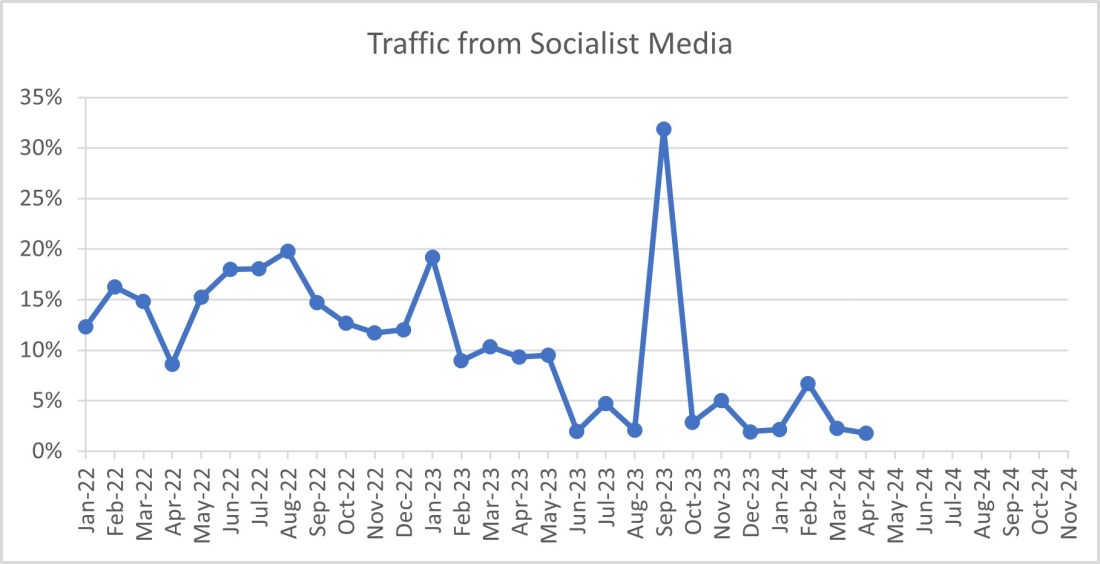
Traffic from Facebook and Twitter accounted for 1.8% of the total during the month, down considerably from the same period two years ago.
The bureaucrats, ranchers and advocates don’t want a free and fair debate.
If you won’t go along with their off-the-range philosophy, you are silenced.
RELATED: Socialist Media Update for March 2024.
 Western Horse Watchers Association