Virginia Range Darting Update for December 2023

The Campaign Against America’s Wild Horses indicated in the December report that 123 mares received 125 doses of Zonastat-H during the month, 20 given as a primer and 105 as a booster.

Over the life of the program, which began in 2019, the advocates have pumped 8,527 doses of the ovary-killing pesticide into 1,989 mares.

Of the 176 foals born during the year in the primary target zone, 100 died, yielding a 43% chance of survival.

The current population is thought to be 3,471 with 336 horses listed as missing, compared to 3,479 with 350 listed as missing in November.

A goal for January is to “Continue to maximize booster treatments to mares across the Virginia Range before spring breeding season to prevent pregnancies, and continuing to allow for population decrease.”
Protect Wild Horses from Advocates 08-29-21

Not discussed in the report:

  • Long-term population goal
  • Size of breeding population
  • Loss of genetic diversity
  • Herd demographics
  • Changes in death rates as herd ages

The program is now in its fifth year and many of the mares are at risk of sterility.

We Can Do What Helicopters Can't 12-27-23

The report will be submitted to the Nevada Department of Agriculture.

The Campaign Against America’s Wild Horses is a leader in nonmotorized removal.

RELATED: Virginia Range Darting Update for November 2023.
Pesticides R Us Better Way 11-07-23

CAAWH Upset with East Pershing Roundup, Envies Contractor?

In a January 7 article by the Las Vegas Sun, Suzanne Roy, ringleader of the Campaign Against America’s Wild Horses, said “These practices should be relegated to the past where they belong and should be replaced by modern, humane conservation practices that keep wild horses wild.”

Refer to the decoder for the meaning of this statement.  Roy lumps several concepts together in one sentence.

Getting Rid of Wild Horses Is Our Job 10-14-23

Like most advocates, she wants the roundups to stop but not the removals.

She wants helicopters replaced with pesticides.

Zonastat Ingredients 12-20-23

She doesn’t tell the reporter why roundups occur.

She doesn’t discuss habitat loss and the difference between HAs and HMAs.

She doesn’t comment on the prevalence of livestock and the mismanagement of resources in the lawful home of wild horses.

In short, Roy and her staff want the ranchers to prevail and they want to be active participants in their victory.

RELATED: CAAWH Now an Appendage of BLM, Wants Ranchers to Win.

East Pershing Roundup, Day 11

The incident began on December 28.  Results through January 7:

The figures above are based on the daily reports, not the totals posted by the BLM.

The trap site was moved to the Humboldt HA on Day 11.

A stallion was dispatched on Day 10 due to blindness in one eye.  A colt was put down due to injuries sustained in capture.

The death rate is 1.2%.

The capture total includes 408 stallions, 447 mares and 85 foals.  The sidebar at the gather page says 441 mares captured.

Youngsters represented 9.0% of the animals gathered, consistent with a herd growth rate of four percent per year.

Of the adults, 47.7% were male and 52.3% were female, no evidence of an abnormal sex ratio.

Body condition scores ranged from 2.5 to 3.5 on Days 10 and 11.

The Complex is managed primarily for animal agriculture.  The National Data Viewer shows habitat loss and grazing allotments.  Click on image to open in new tab.

*According to advocates.

East Pershing Complex with Allotments 12-30-23

Day 11 ended with 88 unaccounted-for animals.

There are no plans to treat any of the captured mares with fertility control pesticides and return them to the range.

Other statistics:

  • Forage liberated to date: 11,280 AUMs per year
  • Water liberated to date: 9,400 gallons per day
  • Horses allowed by plan: 555
  • Pre-gather population: 3,375
  • Forage assigned to horses: 6,660 AUMs per year
  • Forage assigned to livestock: Not determined
  • Horses displaced from Complex by permitted grazing: Not determined
  • True AML: Not determined
  • Stocking rate at new AML: Not determined
  • Horses displaced by drilling and mining: Ask the advocates

Overpopulation means more horses than allowed by plan, not necessarily more horses than the land can support.

The ability of the Complex to sustain wild horses has been limited by the bureaucrats, who have assigned most of their food to the public-lands ranchers.

Refer to these reports for an indication of the problem:

RELATED: East Pershing Roundup, Day 9.

Understanding Advocatespeak

Provided as a public service.

What They SayWhat They Mean
Cherished/beloved/innocent/majestic wild horsesPests
Fertility control vaccineOvary-killing pesticide
Humane managementNonmotorized removal
Mares living longerAbnormal sex ratio
Stay wildStay barren
Self-boostingSterile
Keeping them in balance with their environmentWe want the ranchers to win
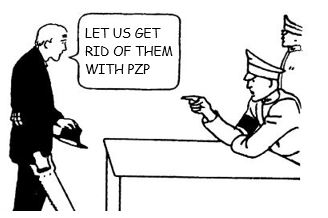
Protecting them from removalGetting rid of them with PZP
ConservationEradication
Better wayPummel mares with pesticide-laced darts

RELATED: How to Bring the Advocates to Their Knees.

Goicoechea’s Focus on Virginia Range Not About Public Safety

In the January 4 article by SFGATE about horse-car collisions near Reno, Nevada Department of Agriculture Director J.J. Goicoechea put the carrying capacity of the Virginia Range at 500 to 600 wild horses, even though it’s been supporting around 3,000 for years.

At roughly 300,000 acres, the stocking rate is ten wild horses per thousand acres.

That’s what the bureaucrats don’t like about it.  The area defies their carrying capacity narrative, namely, that western rangelands can only support one wild horse per thousand acres (27,000 animals on 27 million acres).

They repeat the lie to conceal their mismanagement of said rangelands: For every AUM assigned to wild horses, livestock receive three to five.

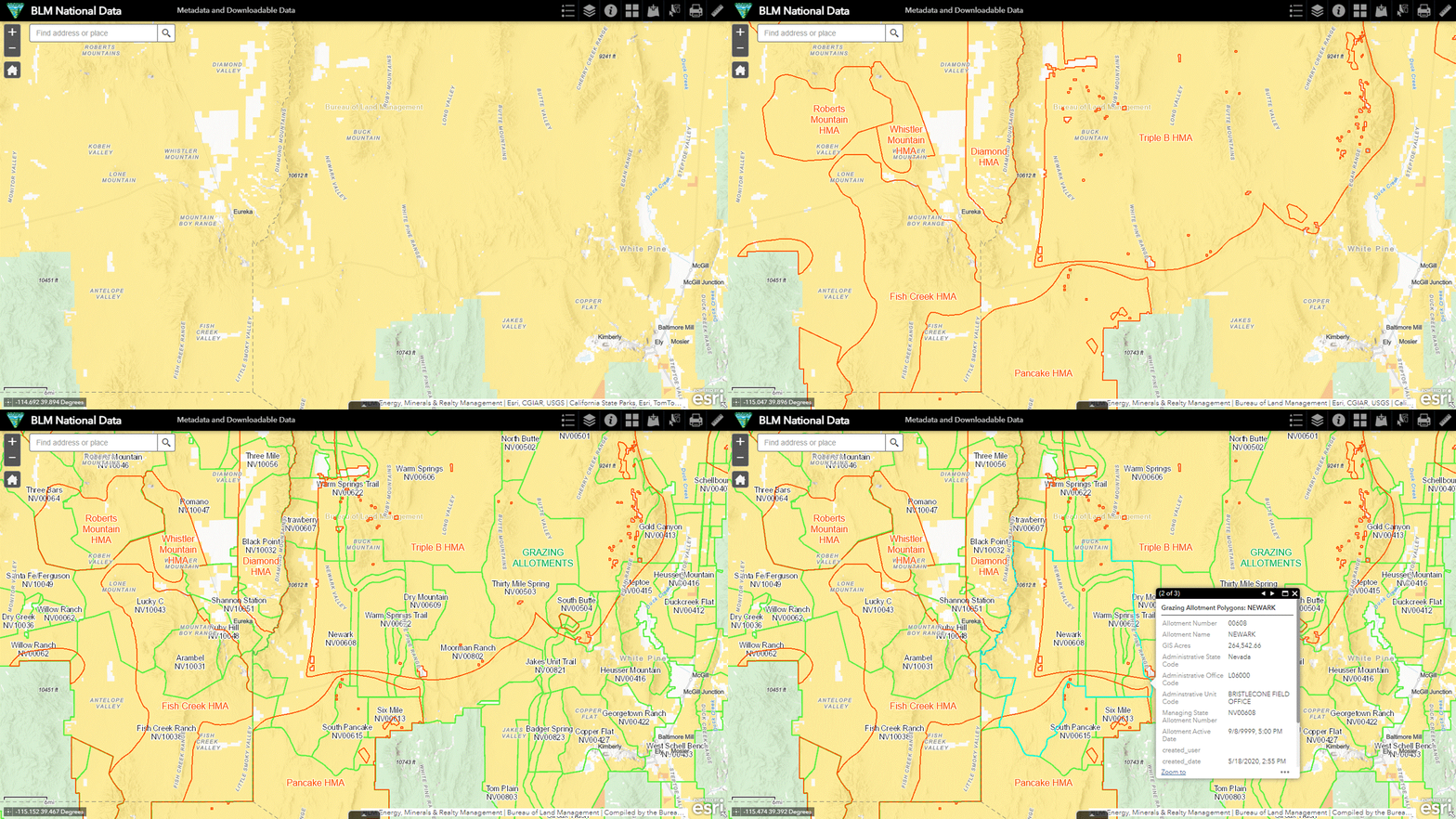
Let’s take a look at Goicoechea’s home range, the Newark Allotment.  It’s a few miles east of Eureka, NV and overlaps the Triple B and Pancake HMAs.

The National Data Viewer shows the arrangement.  Click on image to open in new tab.

Goicoechea receives a very modest 158 AUMs per year, a symbolic gesture that gins up support of the public-lands ranchers.

But the allotment offers 9,867 AUMs per year on 218,105 acres, or 45.2 AUMs per thousand acres, equivalent to 3.8 wild horses per thousand acres.

That’s almost four times higher than the carrying capacity lie!

The NDV does not show pastures within the allotment but given that it’s surrounded by HMAs, Goicoechea’s financial interests are likely affected.

In the old days we called that a conflict of interest.

RELATED: NDA Program to Reduce Horse-Car Collisions on Virginia Range?

Newark Allotment with HMAs 01-06-24

Pesticide Pushers Concerned about Alpine Wild Horses?

Both parties in this story by ABC 15 News of Phoenix, the Salt River Wild Horse Darting Group and the Forest Service, are unsavory.

There are no heroes in the wild horse world, only sellouts.  Get over it.

Let Us Fix Your Wild Horse Problem 02-18-23

The three tenets of rangeland management also apply to the Forest Service.

The Salt River Wild Horse Darting Group is an affiliate of the Campaign Against America’s Wild Horses.

RELATED: Alpine Horses Wild or Feral?

East Pershing Roundup, Day 9

The incident began on December 28.  Results through January 5:

The figures above are based on the daily reports, not the totals posted by the BLM.

Helicopters did not fly on Day 9.  No explanation was given.

A stallion was dispatched on Day 8 due to a previous leg injury.

The death rate is 1.1%.

The capture total includes 363 stallions, 405 mares and 70 foals.

Youngsters represented 8.4% of the animals gathered, consistent with a herd growth rate of three percent per year.

Of the adults, 47.3% were male and 52.7% were female, no indication of an abnormal sex ratio.

Body condition scores ranged from 2 to 4 on Day 8.

The location of the trap site was not given.

The Complex is managed primarily for animal agriculture.  The National Data Viewer shows habitat loss and grazing allotments.  Click on image to open in new tab.

*According to advocates.

East Pershing Complex with Allotments 12-30-23

Day 9 ended with 26 unaccounted-for animals.

There are no plans to treat any of the captured mares with fertility control pesticides and return them to the range.

Other statistics:

  • Forage liberated to date: 10,056 AUMs per year
  • Water liberated to date: 8,380 gallons per day
  • Horses allowed by plan: 555
  • Pre-gather population: 3,375
  • Forage assigned to horses: 6,660 AUMs per year
  • Forage assigned to livestock: Not determined
  • Horses displaced from Complex by permitted grazing: Not determined
  • True AML: Not determined
  • Stocking rate at new AML: Not determined
  • Horses displaced by drilling and mining: Ask the advocates

Overpopulation means more horses than allowed by plan, not necessarily more horses than the land can support.

The ability of the Complex to sustain wild horses has been limited by the bureaucrats, who have assigned most of their food to the public-lands ranchers.

Refer to these reports for an indication of the problem:

RELATED: East Pershing Roundup, Day 7.

Foal-Free Friday, Go Forth but Don’t Multiply Edition

That’s what the advocates mean by “keeping them wild and free.”

The mares are barren, the herd is shrinking, and the ranchers are winning, but there have been no motorized removals, so the program is a success.

Protecting Them From Removal 12-03-23

Meanwhile, hundreds of cow/calf pairs have been turned loose in the same HMA to consume 80% of the authorized forage.

Good work, guys.

RELATED: Foal-Free Friday, Truth or Consequences Edition.

AML-1

NDA Program to Reduce Horse-Car Collisions on Virginia Range?

An article dated January 4 by SFGate says the Nevada Department of Agriculture is close to announcing a new program, headed by a to-be-announced new hire: a Virginia Range feral and estray horse program manager, who will oversee programs set by Director J.J. Goicoechea and his team.

WARNING: The story contains images of family bands with foals, which will be disturbing to most advocates.

The author claims the Virginia Range is part of the Sierra Nevada, which your host disputes.

The mustangs arrived later in the 1980s and 1990s, according to Goicoechea, who said there were no wild horses in the area in 1984 according to NDA records.

He may be referring to a declaration by the BLM that there were no unbranded and unclaimed horses eligible for protection under the WHB Act.

But that doesn’t mean the Virginia Range was a horse-free area.  We know that horses were present because of Velma’s encounter in 1950.

Further, the declaration may have pertained only to public lands administered by the BLM, which represent a third or less of the total landmass.

The Virginia Range covers almost 300,000 acres, not 2,800 acres as stated in the report.

NDA already hired a VRE program manager.

As for population growth and horse-car collisions in Reno, how much of the problem can be attributed to liberal lunacy in California that’s driving people out?

Goicoechea, a large-animal vet and public-lands rancher, holds 158 active AUMs on the Newark Allotment in the Bristlecone Field Office.

His dad receives 6,681 AUMs per year on the same parcel, equivalent to 556 wild horses.

RELATED: What’s So Important about the Virginia Range?

Assateague Pony Census, January 2024

The herd on the Maryland side of the island consisted of 14 bands and 79 horses according to the January 3 inventory, compared to 15 bands and 81 horses in December.

Two older stallions died of natural causes.

One small bachelor band and an unattached mom/baby pair were noted.

No new foals were reported.

Two mares(?) were listed as “presumed missing.”

The safe, proven and reversible darting program was shut off in 2016 but the herd has not rebounded.

Not included in the update:

  • Ratio of females to males
  • Size of breeding population
  • Number of viable mares

The BLM WHB Handbook indicates the breeding population should exceed 50 animals to maintain an acceptable level of genetic diversity.

The herd likely has an abnormal sex ratio, with many more females than males, and this may explain why there are so few unattached stallions.

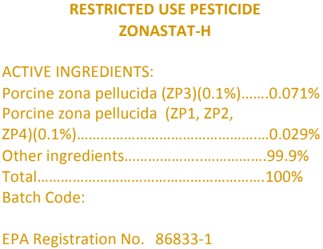
Western Horse Watchers believes the reports are intentionally vague because the herd has been ruined by Zonastat-H, a miracle drug according to the advocates.

The Assateague Island Alliance updates the lists.

RELATED: Assateague Pony Census, December 2023.

How Many Wild Horses Can the Augusta Mountains HMA Carry?

Augusta Mountains is one of three Herd Management Areas in the East Pershing Complex, now subject to the largest roundup of FY24.

The HMA covers 177,570 total acres, including 176,208 public acres, according to the 2023 HA/HMA Report.  The figures for acreage at the HMA page are incorrect.

The 308 horses allowed by plan receive 3,696 AUMs per year.

The stocking rate allowed by plan is 1.7 wild horses per thousand acres, slightly higher than the target rate across all HMAs of one wild horse per thousand acres (27,000 animals on 27 million acres).

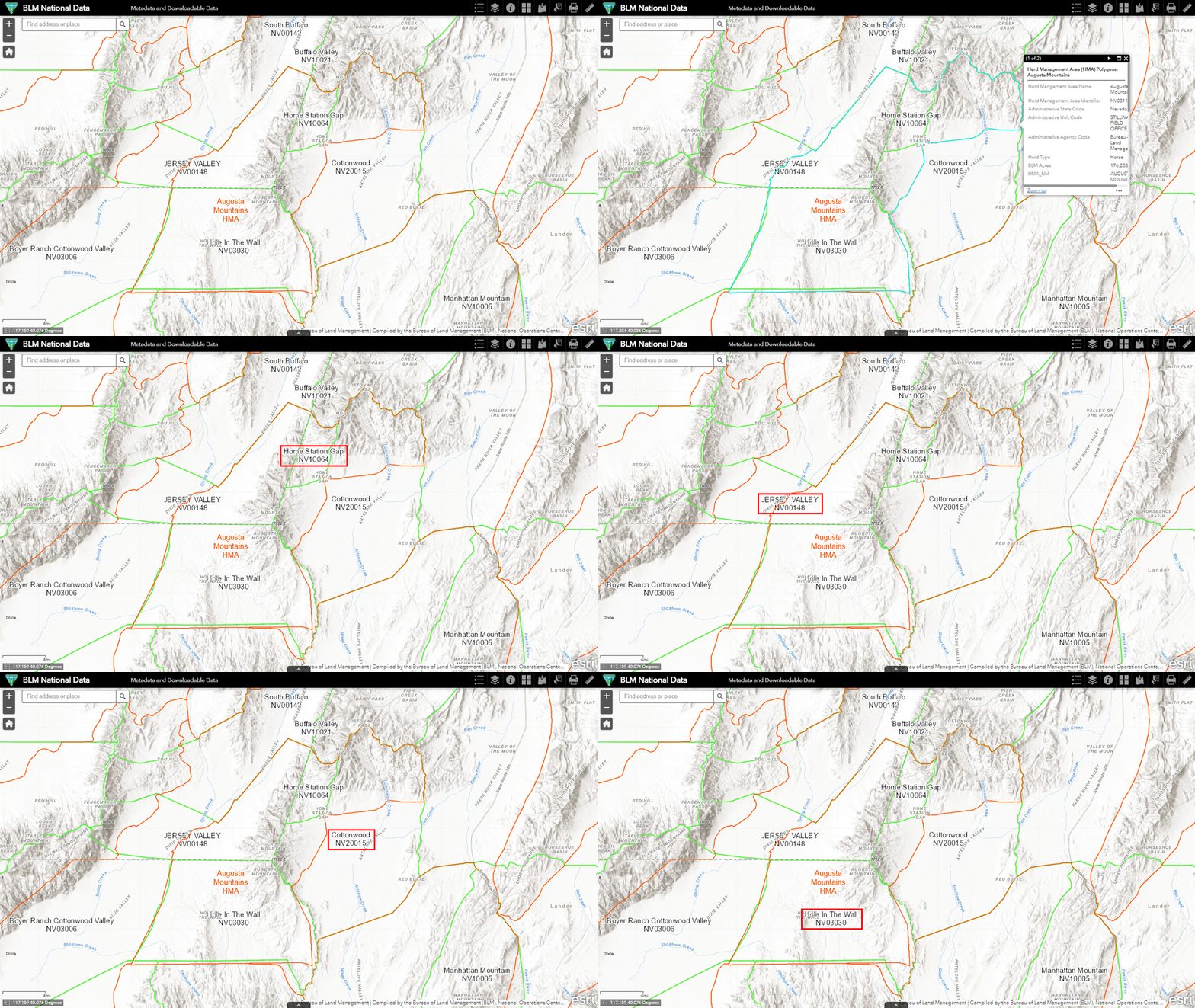
Table 8 in the Final EA for pest control and resource enforcement in the Complex shows four allotments that overlap the HMA.

The strategy for answering the question involves three more steps: (1) Determine the forage assigned to livestock inside the HMA, (2) Convert that number to wild horses and (3) Add the result to the current AML.

The Allotment Master Report at RAS provides acreage, management status and active AUMs.

Three allotments are managed by the Humboldt River Field Office and one is managed by the Mount Lewis Field Office so two reports were created (HRFO | MLFO).

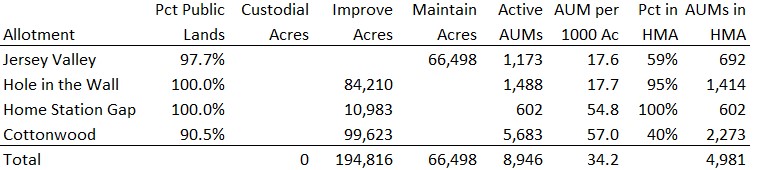
The overlap percentage in Table 8 for Hole in the Wall is 100% but the National Data Viewer shows a small portion outside the HMA so 95% will be used in the calculations.

Table 8 indicates 100% of Cottonwood is inside the HMA but the NDV shows much of it outside, so 40% will be used.

Augusta Mountains Calcs 01-03-24

The bureaucrats have assigned an estimated 4,981 AUMs per year to livestock inside the HMA, equivalent to 415 wild horses.  This is the number of horses displaced from the HMA by permitted grazing.

The True AML, the number of horses the HMA could support if it was managed principally for them as specified in the original statute, is 723.

The stocking rate at the new AML would be 4.1 wild horses per thousand public acres.

Hey Western Horse Watchers, is that a lot?  The Virginia Range was carrying ten before the advocates got involved.

The BLM will collect 4,981 × 1.35 = $6,724.35 per year from ranching activity inside the HMA while it spends 415 × 5 × 365 = $757,375 per year to care for the horses displaced thereby.

Would you say that’s a wise use of the public lands?

The True AML can be achieved by confining the ranchers to their (multi-million dollar) base properties in a year-round off season.

RELATED: How Many Wild Horses Can the Tobin Range HMA Support?

Augusta Mountains HMA with Allotments 01-03-24

East Pershing Roundup, Day 7

The incident began on December 28.  Results through January 3:

Helicopters did not fly on Day 7 due to snow.

The death rate is 1.1%.

The capture total includes 316 stallions, 360 mares and 57 foals.

Youngsters represented 7.8% of the animals gathered, consistent with a herd growth rate of two to three percent per year.

Of the adults, 46.7% were male and 53.3% were female, no evidence of an abnormal sex ratio.

Body condition scores averaged 3 on Day 6.

The location of the trap site was not given.

The Complex is managed primarily for animal agriculture.  The National Data Viewer shows habitat loss and grazing allotments.  Click on image to open in new tab.

*According to advocates.

East Pershing Complex with Allotments 12-30-23

Day 7 ended with 117 unaccounted-for animals.

There are no plans to treat any of the captured mares with fertility control pesticides and return them to the range.

Other statistics:

  • Forage liberated to date: 8,796 AUMs per year
  • Water liberated to date: 7,330 gallons per day
  • Horses allowed by plan: 555
  • Pre-gather population: 3,375
  • Forage assigned to horses: 6,660 AUMs per year
  • Forage assigned to livestock: Not determined
  • Horses displaced from Complex by permitted grazing: Not determined
  • True AML: Not determined
  • Stocking rate at new AML: Not determined
  • Horses displaced by drilling and mining: Ask the advocates

Overpopulation means more horses than allowed by plan, not necessarily more horses than the land can support.

The ability of the Complex to sustain wild horses has been severely limited by the bureaucrats, who have assigned most of their food to the public-lands ranchers.

RELATED: East Pershing Roundup, Day 5.

You Can Help CAAWH Sterilize the Virginia Range Mares!

Just give them thirty bucks as requested in this news flash, enough to buy one dose of their favorite pesticide.

Adjectives used in the exhortation: Innocent.

The darting program, described as conservation by Tracy “You need to manage the numbers to fit what’s available for the horses” Wilson, ensures the herd remains wild and free in the face of shrinking habitat and rapid development.

Nonsense!

While there is some growth on the outskirts of Reno and in the Tahoe Reno Industrial Center, most of the original 300,000 acres is lightly populated and still available to the horses, with the exception of BLM lands consigned to grazing.

There are other more sinister reasons for getting rid of the horses.

Wilson is a sellout and, like others at the Campaign Against America’s Wild Horses, is interested primarily in developing their pest control business and cementing their relationship with the bureaucrats and ranchers.

Worse, there are thousands of followers, mostly women, who will come to the aid of these frauds, begging the question “Are there any voices for wild horses in America?”

RELATED: Assessing the Risk of Sterility in PZP Darting Programs.

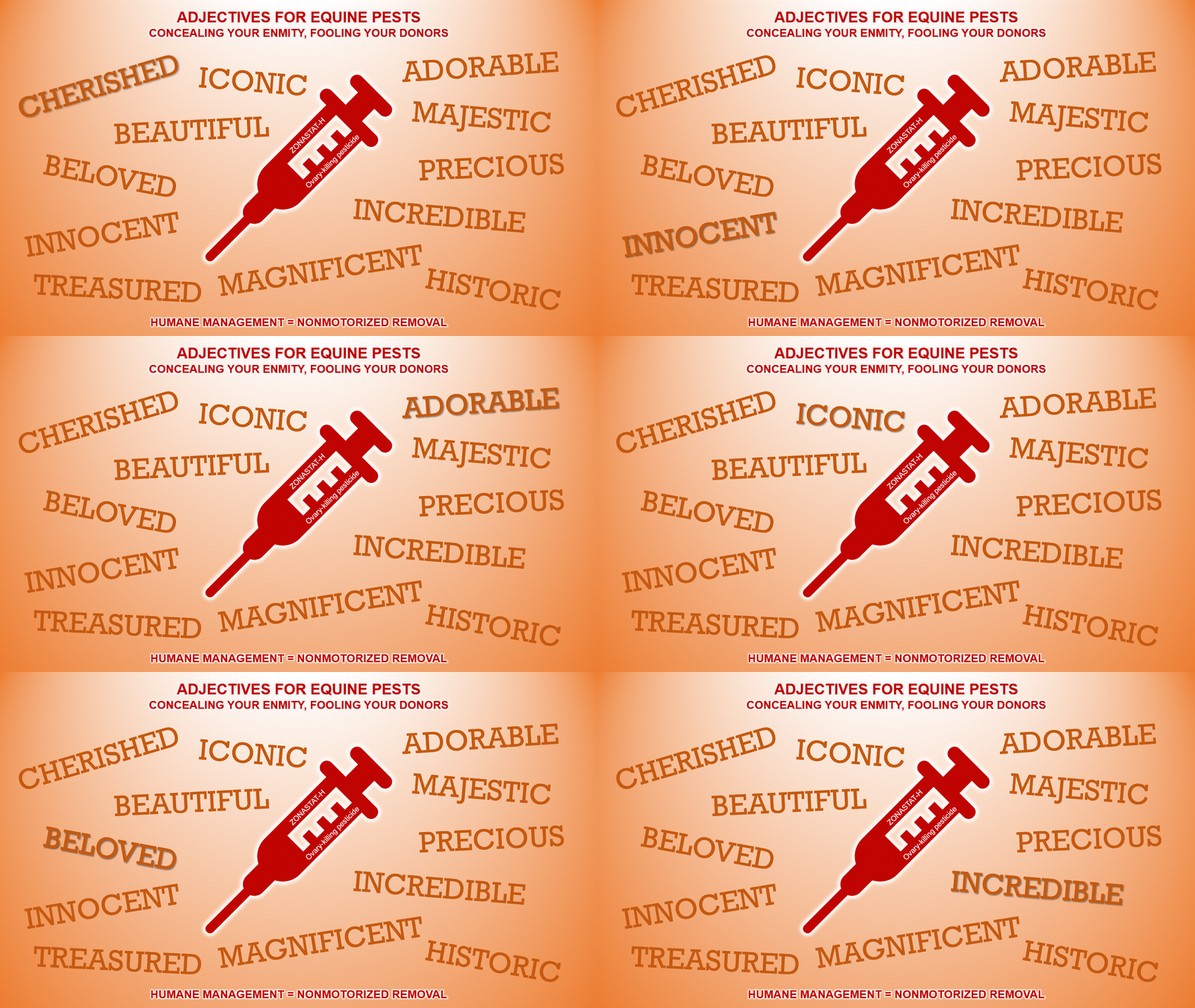
Adjectives for Equine Pests 01-03-24

How Many Wild Horses Can the Tobin Range HMA Support?

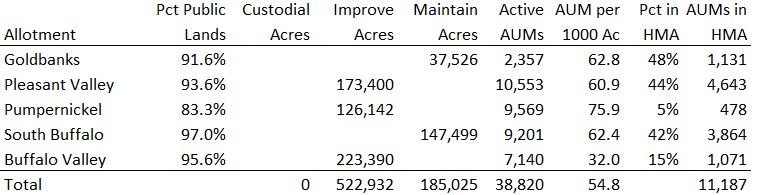
The Tobin Range HMA, one of three Herd Management Areas in the East Pershing Complex, covers 198,236 total acres, including 186,654 public acres.

The 42 horses allowed by plan receive 504 AUMs per year, or 2.7 AUMs per year per thousand public acres.

The stocking rate allowed by plan is 0.2 wild horses per thousand acres, compared to a target rate across all HMAs of one wild horse per thousand acres (27,000 animals on 27 million acres).

Why is it so low?

Table 8 in the Final EA for pest control and resource enforcement in the Complex shows five allotments that overlap the HMA.

The overlap percentages seem reasonable based on the arrangement in the National Data Viewer, except for Buffalo Valley.  Western Horse Watchers believes the figure is closer to 15%, not 27%, so that amount will be used in the calculations.

The Allotment Master Report at RAS supplies acreage, management status and active AUMs.

Three of the allotments are managed by the Humboldt River Field Office and two are managed by the Mount Lewis Field Office, so two reports were created (HRFO | MLFO).

Tobin Range Calcs 01-02-24

The allotments offer a weighted average 54.8 AUMs per year per thousand public acres, 20 times more than the land can produce for horses!

How is this possible?

The land-use plan has assigned most of the forage to livestock—in the lawful home of wild horses.  Thus it is true that the horses have been cheated by the bureaucrats in favor of the ranchers with the cooperation of the advocates.  (The advocates don’t like to talk about resource management.  They want the ranchers to win.)

How many horses have been displaced from the HMA by permitted grazing?

Horses displaced = 11,187 ÷ 12 = 932

What’s the True AML?

True AML = 42 + 932 = 974

What’s the stocking rate at the new AML?

Stocking rate = 974 ÷ 186,654 × 1,000 = 5.2 horses per thousand public acres

The HMA is managed principally for livestock, with the horses receiving just 4.3% of the authorized forage, neglecting wildlife.

The BLM will collect 11,187 × 1.35 = $15,102.45 per year from ranching activity inside the HMA while it spends 932 × 5 × 365 = $1,700,900 per year to care for the horses displaced thereby.

Would you say that’s a wise use of the public lands?

The calculations above assume considerable dietary overlap between horses and livestock and uniform distribution of forage across the allotments.

RELATED: How Many Wild Horses Can the East Range HA Support?

Tobin Range HMA with Allotments 01-02-24

East Pershing Roundup, Day 5

The incident began on December 28.  Results through January 1:

Three stallions and one mare were dispatched on Day 4 due to blindness in one eye, a non-life-threatening condition.

The death rate is 1.3%.

The capture total includes 260 stallions, 302 mares and 43 foals.

Youngsters represented 7.1% of the animals gathered, consistent with a herd growth rate of one to two percent per year.

Of the adults, 46.3% were male and 53.7% were female, no indication of an abnormal sex ratio.

Body condition scores averaged 3 on Days 4 and 5.

The location of the trap site was not given.

The Complex is managed primarily for animal agriculture.  The National Data Viewer shows habitat loss and grazing allotments.  Click on image to open in new tab.

*According to advocates.

East Pershing Complex with Allotments 12-30-23

Day 5 ended with 199 unaccounted-for animals.

There are no plans to treat any of the captured mares with fertility control pesticides and return them to the range.

Other statistics:

  • Forage liberated to date: 7,260 AUMs per year
  • Water liberated to date: 6,050 gallons per day
  • Horses allowed by plan: 555
  • Pre-gather population: 3,375
  • Forage assigned to horses: 6,660 AUMs per year
  • Forage assigned to livestock: Not determined
  • Horses displaced from Complex by permitted grazing: Not determined
  • True AML: Not determined
  • Stocking rate at new AML: Not determined
  • Horses displaced by drilling and mining: Ask the advocates

Overpopulation means more horses than allowed by plan, not necessarily more horses than the land can support.

The ability of the Complex to sustain wild horses has been severely limited by the bureaucrats, who have assigned most of their food to the public-lands ranchers.

RELATED: East Pershing Roundup, Day 3.