
At or near the Heber WHT with Russ Field.
Month: December 2023
CAAWH Rakes in $146,690 on Defund the Advocates Day
Every penny will support the fight for freedom and safety of America’s wild horses and burros, according to a news flash posted by Lucky Three Ranch.

This means poisoning the mares with ovary-killing pesticides so ranchers can access most of their food and water.
Wouldn’t you love to see their donor list?
RELATED: CAAWH Has No Scruples.
Price of Hay Unchanged, Still Too High
A bale of alfalfa-grass mix sold for $34 yesterday, 20 bales minimum, no change from last month.
The single-bale price was $35.
Although it’s off its high of $36 per bale earlier this year, it’s up 79% from the summer of 2021, when Bidenomics was unleashed on the American people.
An average horse would need around five bales per month, putting the cost at $170 per AUM.
The poor ranchers, forced to live in multi-million-dollar base properties, pay $1.35 per AUM to access forage on public lands.
Curiously, a headline today on Drudge says “Animal shelters across USA overflowing.”
RELATED: Cost of Hay Dropped Slightly!
How Much Private Land Do the Public-Lands Ranchers Control?
Nearly 120 million acres according to the Public Lands Council, with grazing privileges on more than 250 million acres managed by the USFS and BLM.
Consider the new off-range corrals north of Winnemucca.
If a private owner can care for 4,000 horses on 100 acres, the ranchers should be able to maintain 4.8 billion (4,800,000,000) cow/calf pairs on their deeded acreage.
There’s no need for permitted grazing!
Why do they want access to public lands? Why do they view it as their birthright?
Profit, greed. It’s a gravy train, a government giveaway.
They pay pennies on the dollar to feed their animals, compared to the Winnemucca corrals, which are subsidized by taxpayers.
Solution? Confine the ranchers to their (multi-million-dollar) base properties, which they’re already doing, but make the off-season twelve months per year and let them pay the going rate to feed their animals.
As a result, AMLs can be increased and the landmass identified for wild horses and burros in 1971 (around 53 million acres) can be managed principally for them, as specified in the original statute.
RELATED: Winnemucca Base Property Hits Market for $11.2 Million.

Western Horse Watchers Microcast #13
On livestock fencing.
Which side of this fence do you suppose the horses are on?
More Hypocrisy at CAAWH
What about their ongoing effort to eliminate the herd on the Virginia Range?
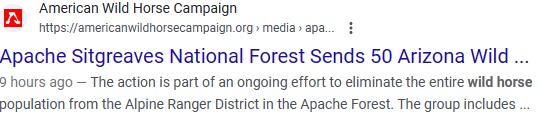
December is Defund the Advocates Month.
Refer to this page for a list of organizations to disown.
Adjectives for Equine Pests
The BLM recently paid the Campaign Against America’s Wild Horses $91,865.50 to poison the Cedar Mountain mares with Zonastat-H, an ovary-killing pesticide.
CAAWH now refers to the herd as majestic, expanding the list of adjectives they use to describe the animals they’re trying to exterminate.

Apparently, they’ve found that this and other such terms are very effective in separating well-intentioned donors from their money.
RELATED: What Is a Cherished Horse or Burro?

Status of Clan Alpine Roundup?
No activity has been reported since November 28.
The capture goal has been reached.
There are 257 unaccounted-for animals.
Gather page not marked complete.
No news release.
Socialist Media Update for November 2023
Traffic from Facebook and Twitter continued at the new normal level in November.
The downward trend in 2023 may indicate that the Love Triangle and its minions have stepped up efforts to bury the site.
WordPress started reporting traffic again from Twitter sometime during the month.
RELATED: Socialist Media Update for October 2023.

Foal-Free Friday, Defunding the Advocates Edition
They’re poisoning the mares with ovary-killing pesticides.
They’re wasting your money on frivolous lawsuits.
They’re silent about resource management.
They carry water for the bureaucrats and ranchers.
They won’t let nature run its course.
Resolve now to cut them off!
RELATED: Foal-Free Friday, on the Verge of Collapse Edition.

 Western Horse Watchers Association