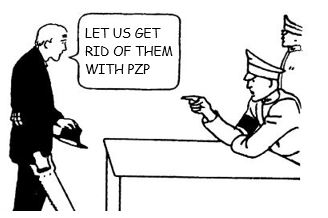
Clan Alpine Roundup, Day 15

The incident began on November 8.  Results through November 22:

  • Scope: Clan Alpine HMA
  • Purpose: Pest control, resource enforcement, rancher protection
  • Target: Horses
  • Type: Planned
  • Method: Helicopter
  • Category: Cruel and costly*
  • Better way: Sterilize mares with pesticide-laced darts*
  • Captured: 1,198, up from 1,062 on Day 13
  • Average daily take: 79.9
  • Capture goal: 1,594
  • Removal goal: 1,381
  • Returned: 1, no change from Day 13
  • Deaths: 18, up from 13 on Day 13
  • Shipped: 964, up from 922 on Day 13

Three horses were dispatched on Day 15 for blindness.  A stallion was put down because of a club foot and another for a fractured knee, lifting the death rate to 1.5%.

The capture total includes 481 stallions, 555 mares and 162 foals.

Youngsters represented 13.5% of the animals gathered, suggesting the herd is growing at a rate of eight to nine percent per year.

Of the adults, 46.4% were male and 53.6% were female.

Body condition scores on Days 14 and 15 ranged from 3 to 4.

The HMA and surrounding lands are subject to permitted grazing.

*According to advocates.

Clan Alpine HMA with Allotments 06-17-23

Day 15 ended with 215 unaccounted-for animals.

To date, 81 mares have been treated with GonaCon Equine, a fertility control pesticide.

They will be returned the range with up to 121 stallions.

Other statistics:

  • Forage liberated to date: 14,364 AUMs per year
  • Water liberated to date: 11,970 gallons per day
  • Horses allowed by plan: 979
  • Pre-gather population: 1,661 plus this year’s foals
  • Forage assigned to horses: 11,748 AUMs per year
  • Forage assigned to livestock: 6,796 AUMs per year
  • Horses displaced from HMA by permitted grazing: 566
  • True AML: 1,545
  • Stocking rate at new AML: 5.2 wild horses per thousand public acres
  • Horses displaced by drilling and mining: Ask the advocates

RELATED: Clan Alpine Roundup, Day 13.
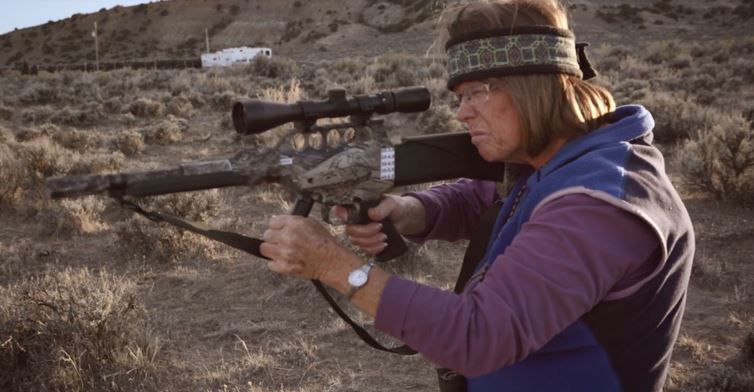
Foal-Free Friday, on the Verge of Collapse Edition

With the possibility of a harsh winter on an aging population, the prospects for the McCullough Peaks herd are not great.

But the advocates don’t see that as a problem, they see it as an achievement, an indication that their darting programs are far more effective in the long run than helicopter roundups.

The idea of fully contracepted herds dying off resonates with the American public, where declining moral standards make it an easy sell.

The concept explains why the population grew only 7.4% between 2010 and 2020, and why programs for the elderly, such as Social Security and Medicare, are going bust.

Not enough youngsters to hold up the lower end.

Thus, McCullough Peaks, and other areas where the advocates are snuffing out new life, are microcosms of leftist ideology and a nation that’s destroying itself.

RELATED: Foal-Free Friday, Praying for the Horses to Die Edition.

Advocates are the Predators 11-30-21

Hard Truths about TRNP Horses

The comment period closes tomorrow.

A story dated November 22 by AP News has been picked up by major news outlets.

The herd you see today is only an exhibit.  It has little if any historical significance.

The original wild horses of TRNP, thought to be descendants of Sitting Bull’s ponies, were removed by the Park Service.

Some were rescued by the Kuntz brothers and taken to their ranch near Linton.

They called them Nokotas.

Their story is told in the 2011 documentary “Nokota Heart,” available on YouTube.

Most of this is ignored in the current discussion.

Those who claim to be voices for the horses are as phony as $3 bills.

All the talk about genetic diversity and minimum herd size means nothing when you’re poisoning the mares with ovary-killing pesticides and driving the breeding populations into the single digits.

RELATED: Bold Prediction for Wild Horses at TRNP.

McCullough Advocates Support Wild Horse Removal

The executive director of FOAL sent a letter to the Cody Enterprise endorsing the roundup, noting that population control is a critical element to maintaining the health of the herd and the habitat.

The opinion was disclosed in a story posted today.

Removal of “excess” animals, combined with application of PZP and GonaCon Equine, will ensure the ranchers receive the lion’s share of the resources for many years to come.

RELATED: What the McCullough Advocates Are Trying to Protect.

What the McCullough Advocates Are Trying to Protect

This article by the Casper Star-Tribune features remarks from a PZP darter and a ranching sympathizer, both held up as voices for the horses.

The management plan assigns 3.9 times more forage to livestock than it does to wild horses, in the lawful home of wild horses.

As of today, the horses are consuming more than their allocated share of the forage, not more than the land can produce.

That is the meaning of overpopulation.

The BLM wants the resource allocations enforced with baited traps and pesticides while the advocates say the traps aren’t necessary, the pesticides will achieve the results by themselves.

Like the bureaucrats, they want the ranchers to prosper, not the horses.

Protect Wild Horses from Advocates 08-29-21

A BLM spokesman said they’re just following the law that the American people through Congress have already established, which is not true.

There’s nothing in the current statute that says AMLs must correspond to 20% of the authorized forage or less.

Good grief, the term isn’t even defined!

AMLs are small relative to the available resources because the bureaucrats, who never have to face the voters, said so.

RELATED: CAAWH Worried about Viability of McCullough Herd?

UPDATE: In this video, the PZP darter is on the left and the ranching sympathizer is on the right.

Clan Alpine Roundup, Day 13

The incident began on November 8.  Results through November 20:

  • Scope: Clan Alpine HMA
  • Purpose: Pest control, resource enforcement, rancher protection
  • Target: Horses
  • Type: Planned
  • Method: Helicopter
  • Category: Cruel and costly*
  • Better way: Sterilize mares with pesticide-laced darts*
  • Captured: 1,062, up from 1,010 on Day 11
  • Average daily take: 81.7
  • Capture goal: 1,594
  • Removal goal: 1,381
  • Returned: 1, no change from Day 11
  • Deaths: 13, no change from Day 11
  • Shipped: 922, up from 802 on Day 11

Data quality has been good.

The death rate is 1.2%.

The capture total includes 430 stallions, 490 mares and 142 foals.

Youngsters represented 13.4% of the animals gathered, suggesting the herd is growing at a rate of 8% per year.

Of the adults, 46.7% were male and 53.3% were female.

Body condition scores on Days 12 and 13 ranged from 3 to 4.

The HMA and surrounding lands are subject to permitted grazing.

*According to advocates.

Clan Alpine HMA with Allotments 06-17-23

Day 13 ended with 126 unaccounted-for animals.

To date, 81 mares have been treated with GonaCon Equine, a fertility control pesticide.

Approximately 96% of captured stallions have been shipped, with 78% of captured mares, suggesting that they are being held on site, possibly awaiting a second dose, which is to be given no sooner than 90 days after the primer according to the label.

They will be returned the range with up to 121 stallions.

Other statistics:

  • Forage liberated to date: 12,732 AUMs per year
  • Water liberated to date: 10,610 gallons per day
  • Horses allowed by plan: 979
  • Pre-gather population: 1,661 plus this year’s foals
  • Forage assigned to horses: 11,748 AUMs per year
  • Forage assigned to livestock: 6,796 AUMs per year
  • Horses displaced from HMA by permitted grazing: 566
  • True AML: 1,545
  • Stocking rate at new AML: 5.2 wild horses per thousand public acres
  • Horses displaced by drilling and mining: Ask the advocates

RELATED: Clan Alpine Roundup, Day 11.

CAAWH Run by Lead Mares?

Their target audience is female, liberal and innumerate, apparently, most of whom are aborting, contracepting and sterilizing in their own lives and see the world not as it is but the way it should be according to their ideology.

Consider this remark from a November 10 news flash posted by Lucky Three Ranch:

In the West, wild horses travel in herds that typically consist of one or two stallions, a group of mares, and their offspring.  While the dominant stallion protects the herd and steps in when danger arises, the leader is usually a seasoned mare, often called the lead mare.

How many stallions and mares does Suzanne Roy have at her ranch?

If she actually had a family band in her care, uncut and undarted, she’d realize that stallions run the show and would never allow such statements to be sent to donors.

But truth is a handicap for these people.

They don’t care about wild horses.

They care about separating you from your money and using the proceeds to advance the ranching agenda.

And what about the offspring?  They are few and far between wherever the Campaign Against America’s Wild Horses is involved.

RELATED: How Wild Horse Advocacy Really Works.

Working Together for a Horse-Free Future 12-21-22

CAAWH Worried about Viability of McCullough Herd?

Removal of 41 horses, particularly young, reproductive-age animals, when combined with winter mortality, could create catastrophic consequences for the herd, according to a story posted today by the Cody Enterprise.

The group, a leader in nonmotorized removal, sent a letter to the BLM on November 1 offering money and staff to continue the darting program.

Getting Rid of Wild Horses Is Our Job 10-14-23

What would be the consequences if you sterilized most of the mares in a herd with your favorite pesticide?

That would be you, on the Virginia Range.

Seven of the McCullough mares have never given birth.

Because the advocates ruined them?  Only seven?

The article indicated the breeding population consisted of just 17 mares (plus a few stallions) but did not cite that as a problem or threat to long-term genetic viability!

RELATED: Advocates, Not BLM, Ruined McCullough Peaks Herd.

Rule Changes Would Affect Closure Notices on Public Lands

If adopted, temporary closure and restriction orders would no longer appear in the Federal Register and would instead be disseminated though modern communications channels such as socialist media.

These orders would go into effect upon signature, according to today’s news release.

When does the comment period start?

When the proposal is announced in the Federal Register.

Clan Alpine Roundup, Day 11

The incident began on November 8.  Results through November 18:

  • Scope: Clan Alpine HMA
  • Purpose: Pest control, resource enforcement, rancher protection
  • Target: Horses
  • Type: Planned
  • Method: Helicopter
  • Category: Cruel and costly*
  • Better way: Sterilize mares with pesticide-laced darts*
  • Captured: 1,010, up from 832 on Day 9
  • Average daily take: 91.8
  • Capture goal: 1,594
  • Removal goal: 1,381
  • Returned: 1, no change from Day 9
  • Deaths: 13, up from 12 on Day 9
  • Shipped: 802, up from 590 on Day 9

A mare was dispatched on Day 11 for a prolapsed uterus.

The death rate is 1.3%.

The capture total includes 411 stallions, 470 mares and 129 foals.

Youngsters represented 12.8% of the animals gathered, suggesting the herd is growing at a rate of 8% per year.

Of the adults, 46.7% were male and 53.3% were female.

Body condition scores were not given.

The HMA and surrounding lands are subject to permitted grazing.

*According to advocates.

Clan Alpine HMA with Allotments 06-17-23

Day 11 ended with 194 unaccounted-for animals.

To date, 81 mares have been treated with GonaCon Equine, a fertility control pesticide.

They will be returned the range with up to 121 stallions.

Other statistics:

  • Forage liberated to date: 12,108 AUMs per year
  • Water liberated to date: 10,090 gallons per day
  • Horses allowed by plan: 979
  • Pre-gather population: 1,661 plus this year’s foals
  • Forage assigned to horses: 11,748 AUMs per year
  • Forage assigned to livestock: 6,796 AUMs per year
  • Horses displaced from HMA by permitted grazing: 566
  • True AML: 1,545
  • Stocking rate at new AML: 5.2 wild horses per thousand public acres
  • Horses displaced by drilling and mining: Ask the advocates

RELATED: Clan Alpine Roundup, Day 9.

How Wild Horse Advocacy Really Works

The writer of the November 18 commentary in the Elko Daily Free Press about the way land and wild horse management really work stated:

There is an aspect of emotion that hangs over wild horse roundups.  Wild horse advocates openly profess to love wild horses.  The livestock industry, state agency officials, even a few badly biased scientific researchers, hate them.

The advocates say they love wild horses but their actions indicate otherwise.

There is love, however, among the players in the Love Triangle, for each other and for their common goal.

Donate 08-17-23

They’re poisoning the mares with ovary-killing pesticides, under the guise of protection and preservation, and they want you to pay for it.

RELATED: How the BLM Really Manages Land and Wild Horses.

Pesticide Patrol 08-16-23

How the BLM Really Manages Land and Wild Horses

The Elko Daily Free Press published a rebuttal today of a November 9 interview about the way the agency manages land and wild horses.

A distinction should be made between the leading consumers of resources on America’s public lands: Those who compete with wild horses and those who don’t.

Drillers and miners are not exploring for forage.  Wild horses don’t care about oil, gas, vanadium and uranium.

The conflict is with the public-lands ranchers.

A drill pad might occupy an acre or two and an open pit mine might require a few thousand acres, while permitted grazing devours entire HMAs and beyond.

As for economics, if the BLM pays $60 per AUM for a horse in long-term holding, as noted in the column, while collecting $1.35 per AUM from the permittee whose cow/calf pair replaced him, how can that ever be viewed as a wise use of the public lands?

RELATED: Helicopters Don’t Force Wild Horses to Do Anything?

CAAWH Uses Roberts Mountain Rollover to Promote Pesticides

The Day 9 crash that killed seven wild horses was the subject of a letter signed by Dina Titus but likely drafted or influenced by the Campaign Against America’s Wild Horses.

It was included in a story dated November 17 by KLAS News.

The investigation should show how transportation incidents can be avoided through roundup alternatives like on-site fertility treatment.

Better Way 10-25-23

The letter provides further evidence that CAAWH is in cahoots with the Democrat Party.

UPDATE: A report by KTVN News, complete with footage from CAAWH, leads to the same conclusion.

Bordo Atravesado Wild Horse Roundup Announced

Bait trapping will begin the week of December 4, according to today’s news release.

The capture and removal goals, not specified in the announcement, are 235 and 225 according to the FY24 schedule.

The current population is thought to be around 230, suggesting that few horses will remain when the field work ends.

Operations will not be open to public observation.

The HMA covers approximately 19,600 acres in central New Mexico, east of Socorro.

The AML is 40 – 60.

The National Data Viewer shows the arrangement.  Click on image to open in new tab.

The stocking rate allowed by plan is 3.1 wild horses per thousand acres, three times higher than the target rate across all HMAs.

If the herd is managed according to plan (no more than 60 horses), genetic diversity will be inadequate.

The fertility control pesticides will make the breeding population even smaller.

The destination of captured animals was not given.

Gather stats and daily reports will be posted to this page.

RELATED: Bordo Atravesado Decision Signed But Not Announced.

Bordo Atravesado HMA with Allotments 11-17-23