They’re not conserving anything. They’re leaders in nonmotorized removal!

RELATED: CAAWH Run by Lead Mares?

Western Horse Watchers Association
Exposing the Hypocrisy, Lies and Incompetence of the Wild Horse Advocates
They’re not conserving anything. They’re leaders in nonmotorized removal!
RELATED: CAAWH Run by Lead Mares?
On defunding the advocates.
Let December be Defunding the Advocates Month.
A BLM news release dated November 30 indicates 97 mares will be returned to the range on December 4, some or all having received two doses of GonaCon Equine 30 days apart, which constitutes unlawful use of a registered pesticide.

RELATED: Calico After-Action Report.
The daily report for November 28 said the 81 mares treated with GonaCon Equine on November 14 would be released on December 14.
If they only received one dose they could be returned now.
The December 14 release date suggests they will receive two doses just 30 days apart, a violation of federal law.
RELATED: Clan Alpine Roundup, Day 21.
The incident began on November 8. Results through November 28:
The sidebar shows two stallions released but only one was documented in the daily reports.
The capture goal has been reached.
A mare was dispatched on Day 20 due to blindness along with a stallion for a broken leg.
The death rate is 1.4%.
The capture total includes 658 stallions, 737 mares and 210 foals.
Youngsters represented 13.1% of the animals gathered, suggesting the herd is growing at a rate of eight percent per year.
Of the adults, 47.2% were male and 52.8% were female.
Body condition scores on Days 20 and 21 ranged from 3 to 4.
The HMA and surrounding lands are subject to permitted grazing.
*According to advocates.

Day 21 ended with 257 unaccounted-for animals.
To date, 81 mares have been treated with GonaCon Equine, a fertility control pesticide.
They will be returned the range with up to 121 stallions.
Operations will likely conclude this week.
Other statistics:
RELATED: Clan Alpine Roundup, Day 19.
The successful candidate will be responsible for developing and implementing effective communication strategies to promote the organization’s mission, raise awareness and engage the public, according to the description on Idealist.
In this role, you’ll convince reporters, donors and the public that you’re protecting wild horses while pushing back against the bureaucrats and ranchers when in reality you’re doing exactly the opposite.
The following org chart shows where you fit in:

The job is not for normal people.
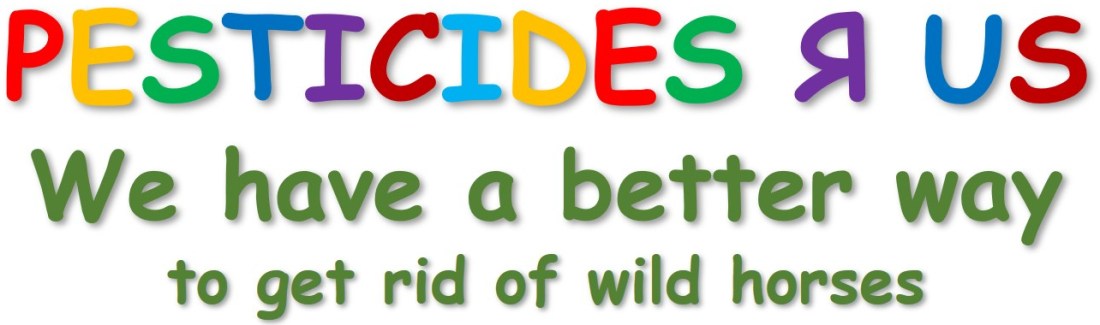
You will refer to Zonastat-H as a vaccine not a pesticide.
You will insist that it’s reversible.
You will claim that it is harmless.
You will describe it as a better way.
You will downplay concerns by other writers about baren mares, confused stallions, scattered bands, shrinking herds, injuries and infections, abnormal sex ratios, tiny breeding populations, loss of genetic diversity and subordination to livestock.
Salary $70,000 to $125,000 per year.
Advocates with the Campaign Against America’s Wild Horses will need a zero percent birth rate and six percent death rate for 30 consecutive years to bring the herd of 3,500 wild horses close to the target of 500.
Future population = 3,500 * .94 ^ 30 = 547
Most of the mares will be sterile after five consecutive years, the current age of the program, so the field work can taper off and the herd will still implode.
The assumption of a constant death rate is probably not valid.
The average age of the herd is increasing, along with the death rate, because few if any new foals are hitting the ground, so the end may come sooner than expected.
The Virginia Range was easily carrying ten wild horses per thousand acres, which causes great embarrassment to the bureaucrats and ranchers, who claim the high desert can only support one wild horse per thousand acres (27,000 animals on 27 million acres).
Instead of pushing back against the lies, the advocates ratify and reinforce them through their participation in the removals.
Sisti puts on a good show in this video by KTVQ News but when you’re not looking she’s pummeling mares with PZP, an ovary-killing pesticide.
Contrary to the remarks by the BLM representative, there is no statutory warrant for cheating the horses in favor of the ranchers.
It is policy of the unelected bureaucracy.

As of today, no activity has been reported at the gather page, wherein the BLM admits an abnormal sex ratio, a documented side effect sold as mares living longer.
RELATED: What the McCullough Advocates Are Trying to Protect.
They’re not who they say they are.
They protect the ranchers not the horses.
What should you give them on Giving Tuesday?
The boot!
Refer to this page for a list of organizations to disown.
RELATED: Let Giving Tuesday Become Defund the Advocates Day.
The incident occurred today along Toll Road, according to a story by KOLO News.
The article did not indicate if it was female, which would take a little pressure off the darting program and save the Campaign Against America’s Wild Horses a few bucks.
Regardless, the death moves the herd size in the direction they want it to go.
RELATED: Reno to Install New Barrier for Virginia Range Mustangs.
The incident began on November 8. Results through November 26:
The sidebar shows two stallions released but only one was documented in the daily reports.
A mare was dispatched on Day 19 due to blindness along with a stallion for a broken leg.
The death rate is 1.4%.
The capture total includes 604 stallions, 673 mares and 191 foals.
Youngsters represented 13.0% of the animals gathered, suggesting the herd is growing at a rate of eight percent per year.
Of the adults, 47.3% were male and 52.7% were female.
Body condition scores on Days 18 and 19 ranged from 3 to 4.
The HMA and surrounding lands are subject to permitted grazing.
*According to advocates.
Day 19 ended with 210 unaccounted-for animals.
To date, 81 mares have been treated with GonaCon Equine, a fertility control pesticide.
They will be returned the range with up to 121 stallions.
Operations will likely conclude this week.
Other statistics:
RELATED: Clan Alpine Roundup, Day 17.
The permittee received an undisclosed sum from The National Wildlife Federation for vacating five BLM allotments and five FS allotments totaling over 100,000 acres in a mountainous area southeast of Telluride.
The deal will separate a herd of Rocky Mountain bighorns from nonnative domestic sheep according to a story dated November 26 by CBS News, reducing the risk of disease and death in the native sheep.
Although optimistic about the agreement, the executive director of the Rocky Mountain Bighorn Society said he remains dismayed by inaction of federal land management agencies, noting that grazing is a privilege not a right, and that “We should not be relying upon third party NGOs to negotiate settlements and raise hundreds of thousands of dollars in private funds to protect our bighorn sheep herds.”
Touché! But the foot dragging makes sense if you understand the prime directive.
The article suggests that the permittee obtained access to some other allotments closer to home as part of the deal.
The Operator Information Report at RAS tied the permittee to five BLM authorizations and fifteen allotments. The last two authorizations cover the vacated allotments.
Utilization on FS lands cannot be determined at this time.
The Allotment Master Report for the vacated parcels puts all five in the Maintain category, offering a weighted average 68.3 AUMs per year per thousand public acres.

That resource would support 5.7 wild horses per thousand acres, defying claims by the bureaucrats that public lands in the western U.S. can only support one wild horse per thousand acres (27,000 animals on 27 million acres).
Although the arrangement offers another approach to protecting wild horses and burros, can you imagine a headline that reads “__________ negotiates a settlement and raises hundreds of thousands of dollars to protect our wild horse herds?”
Fill in the blank with your favorite advocacy group.
You’re much more likely to see a news flash about that same group beating the numbers down with ovary-killing pesticides, much to the delight of the public-lands ranchers.
Horses have the day off. On the Bullfrog HMA with Desert Explorer 302.
On the defensive side you have wild horses and burros.
On the offensive side you have the ranching juggernaut, referred to as the Love Triangle on these pages, and its minions.
Who do you suppose will win?
If you take a position on the defensive side, you will be crushed.

Removal of wild horses and burros from their lawful homes, by any means, supports these principles:
1. Pest Control
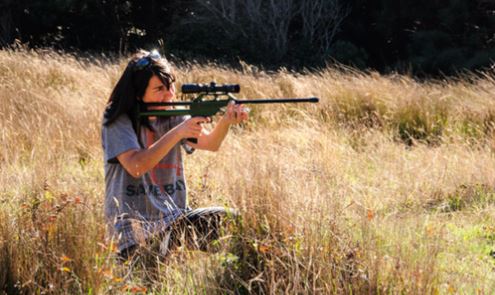
Most HMAs are managed primarily for livestock. The HAs are managed almost exclusively for livestock. Horses and burros are a nuisance. The advocates underscore this principle in their attempts to shrink the populations with pesticides.
2. Resource Enforcement
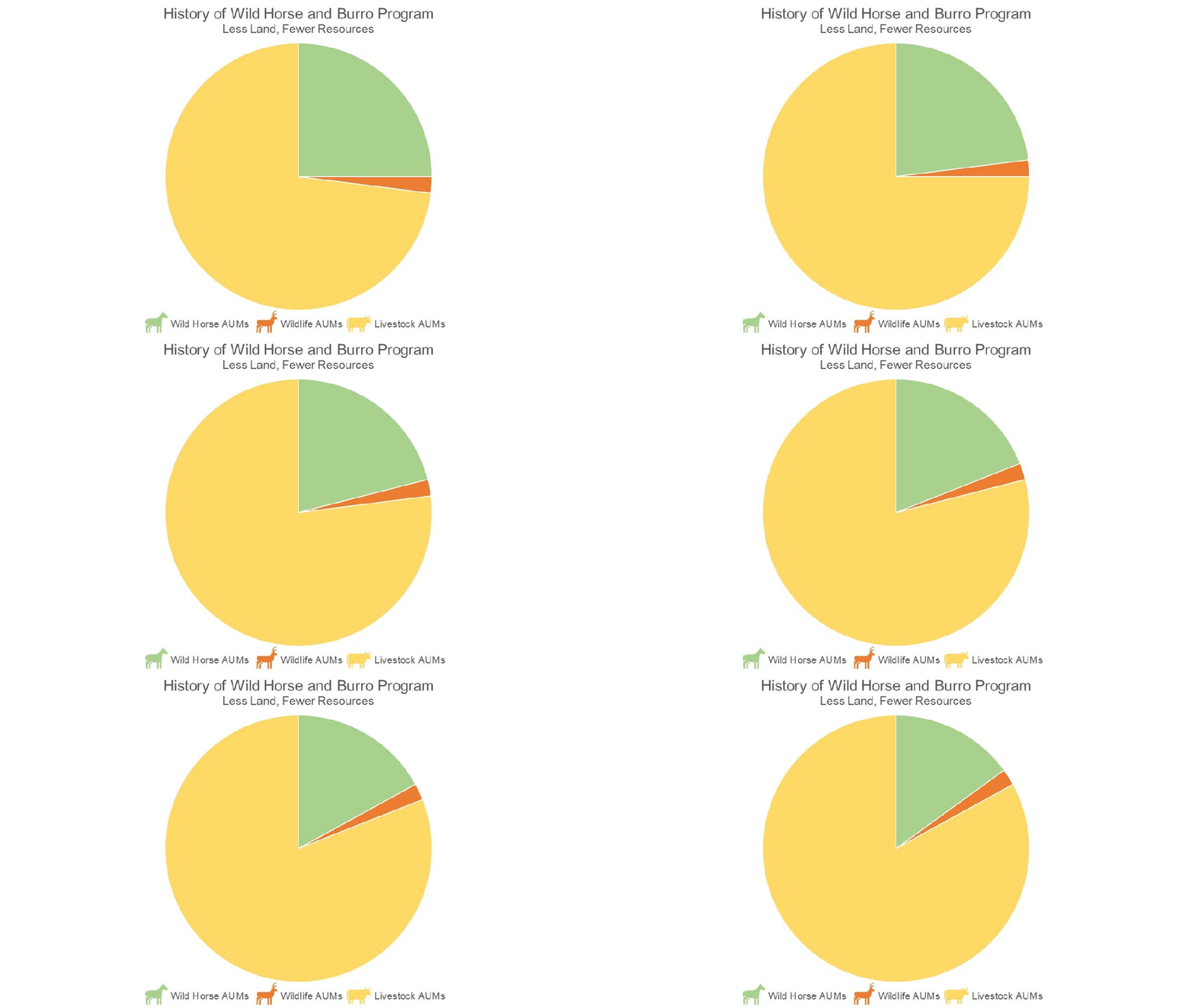
If the management plan assigns 80% of the forage in an HMA to livestock, horses and burros will be removed until the ranchers receive 80% of forage. There is no statutory basis for such proportions, they are bureaucratic diktats.
3. Rancher Protection
Public lands in the western U.S. shall be managed not for the benefit of the American people, but for the benefit of a select few. This is the prime directive, the goal of Tenets 1 and 2. Collect a few million dollars per year in grazing fees for privately owned cattle and sheep while you spend tens of millions of dollars every year stockpiling wild horses and burros displaced thereby. Stick taxpayers with the difference.

The incident began on November 8. Results through November 24:
The sidebar shows two stallions released but only one was documented in the daily reports.
Two domestic horses were picked up on Day 16 and turned over to the state.
The death rate is 1.4%.
The capture total includes 525 stallions, 606 mares and 171 foals.
Youngsters represented 13.1% of the animals gathered, suggesting the herd is growing at a rate of eight percent per year.
Of the adults, 46.4% were male and 53.6% were female.
Body condition scores on Days 16 and 17 ranged from 3 to 4.
The HMA and surrounding lands are subject to permitted grazing.
*According to advocates.
Day 17 ended with 181 unaccounted-for animals.
To date, 81 mares have been treated with GonaCon Equine, a fertility control pesticide.
They will be returned the range with up to 121 stallions.
Other statistics:
RELATED: Clan Alpine Roundup, Day 15.
They’re as phony as $3 bills!
The admission by FOAL earlier this week is just the latest revelation.
They’re telling you that they’re saving wild horses while they’re telling the bureaucrats that they’re getting rid of them.
Why support a bunch of liars, defeatists, pesticide pushers and ranching sympathizers?

RELATED: Warning for Giving Tuesday.
An article published today by the Las Vegas Review-Journal says she was found on November 19 east of Lockwood, caught in an illegally set snare.
The Campaign Against America’s Wild Horses, a leader in nonmotorized removal and operator of the Virginia Range darting program, offered a reward of $6,000.
The story did not indicate if the mare had been targeted by its field workers and if she had reached the point of no return.
The trap could have been set for other animals, as explained in an October 18 report by Nevada Current.
Your host found an old trap on the Virginia Range in July.
What CAAWH is doing to the herd is far more destructive than anything hunters or trappers have done.

On McCullough Peaks overpopulation.
No information was posted to the gather page until today.
The start date is unknown.
The incident was set to begin on November 20 with capture and removal goals of 140.
The sidebar indicates 56 horses captured, 56 shipped, none released and no deaths, along with 92 burros captured, 92 shipped, none released and no deaths.
There were no unaccounted-for animals.
Of the horses captured, 22 were stallions, 24 were mares and 10 were foals.
For the burros, 46 were jacks, 30 were jennies and 16 were foals.
The incident was not open to public observation.
RELATED: Centennial Roundup Announced.

 Western Horse Watchers Association