The guard had to be cut and the horse suffered serious injuries, according to a story posted today by KPNX News of Phoenix.
BONUS QUESTION: Were any of the advocates involved in the rescue wearing ‘Stay Wild’ caps?

Western Horse Watchers Association
Exposing the Hypocrisy, Lies and Incompetence of the Wild Horse Advocates
The guard had to be cut and the horse suffered serious injuries, according to a story posted today by KPNX News of Phoenix.
BONUS QUESTION: Were any of the advocates involved in the rescue wearing ‘Stay Wild’ caps?
It’s how they signal their support for the ranching agenda.
Given that the area is covered with grazing allotments it would be a smart thing to do.
The Western Watersheds map shows the area around Alpine in eastern Arizona, habitat for the New Mexico Jumping Mouse according to yesterday’s story by Arizona’s Family, is covered by grazing allotments. (Click on image to open in new tab.)

The advocate interviewed for the report, ringleader of the Salt River Wild Horse Darting Group and field marshal for the Campaign Against America’s Wild Horses, is not a voice for the horses and discussions later this week with the Forest Service will likely include options for humane management, code words for getting rid of them with PZP.
Western Horse Watchers was unable to find a project associated with the removal at the ASNF NEPA site.
RELATED: Forest Service to Remove Horses from Apache-Sitgreaves Forests.
The incident, prompted by legal action, will begin on March 21, according to a report posted today by KPHO News of Phoenix, AZ.
Western Horse Watchers was unable to find an announcement on the ASNF news page.
The horses will be drawn into the traps by bait.
The pre-gather population is thought to be around 400.
Delegates from the Salt River Wild Horse Darting Group will meet with Forest Service personnel later this week to discuss options.
The story did not indicate if the area was subject to permitted grazing.
It was signed by the President today according to the Actions Overview for H.R. 2471 at Congress.gov. Confirmed by White House news release.
Explanatory statements were posted to this page. Division G covers the Bureau of Land Management and Forest Service.
The bill was presented to the President yesterday according to the Actions Overview for H.R. 2471 at Congress.gov.
Provisions for the Wild Horse and Burro Program, as of last week, include:
The continuing resolution that funded the federal government expires today.
The task force will have monthly meetings to review performance metrics, monitor outcomes, and address any delays or setbacks to the implementation of the May 2020 Report to Congress.
A keyword search of the report yielded these results:
The long-term goal is to achieve and maintain AMLs, which are small relative to the available resources.
The aim of the wild horse and burro program is to minimize its impact on the grazing program.
High Country News looks at a new report by the Public Employees for Environmental Responsibility in an article posted this morning.
The story precedes a news release just issued by PEER.
The measure, formally known as the Wild Horse and Burro Protection Act of 2022, has been referred to the House Committee on Natural Resources, according to the overview at Congress.gov.
The title is a misnomer. Like the Montana Solution, it’s a different way of protecting the public-lands ranchers.
RELATED: Titus Admits Helicopter Ban Won’t Help Wild Horses.

In Shannon County, MO with Tim Layton.
The horses will be drawn into the traps with bait, but the chute ordered by the Forest Service to process them was the wrong size, according to a story posted today by the Bend Bulletin of Bend, OR.
RELARED: Big Summit Roundup Attracts Legal Action.
The BLM plans to remove 50% more wild horses from their home range this year than last year, while its budget increased just 18% over the same period according to figures on page 203 of the Division G Explanatory Statement for the FY 2022 Consolidated Appropriations Act.
Worse, the cost of fuel for motorized equipment has skyrocketed, along with the price of feed, so how exactly will the agency achieve those goals?
Removal of excess animals, sometimes referred to as achieving and maintaining AMLs, means shifting the resources back to the public-lands ranchers in areas set aside for wild horses.
Helicopters do the achieving while the advocates do the maintaining.
RELATED: BLM to Receive $137.1 Million in FY 2022 for WHB Program.
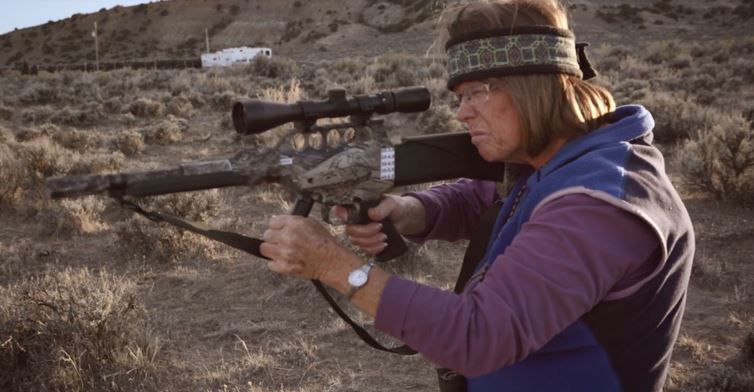
The event has been moved to June of next year.
Attendance was light last year.
Protect the Harvest and the Campaign Against America’s Wild Horses, cheerleaders for the public-lands ranchers, didn’t show up.
They’re wrong about almost everything in the wild horse world.
They say they’re protecting the horses while they’re getting rid of them with PZP.
Most are defenders of the public-lands ranchers.
They couldn’t convert an AML to AUMs if their lives depended on it, much less compute a forage allocation for livestock in an area set aside for the horses, but they know exactly how much adjuvant to add to the pesticide and how long to mix them.
Don’t give them a penny!
You know them not by their words but by their deeds.
RELATED: Congress Authorizes $11 Million for Montana Solution in FY 2022?

On page 11 of the Division G Explanatory Statement for the FY 2022 Consolidated Appropriations Act, Congress directs the BLM to:
A similar order for the Forest Service appears on page 68.
The bill includes the customary $10 million payment for range improvements, derived from grazing fees paid by the ranchers. Page 12.
Fifty percent of grazing receipts or $10 million, whichever is greater, is returned to the program every year, as authorized by §1751 of FLPMA.
RELATED: Congress Orders New Wild Horse and Burro Task Force?
The highest bid for a horse from the “overpopulated, drought-stricken” HMA was $14,100, according to a report by the Steamboat Pilot & Today.
Others received no bids.
As for the fanatics at SWAT, don’t give them a penny. They are protecting the public-lands ranchers, not the horses.
RELATED: Sand Wash Basin Aftermath.
Described as a national crisis on page 3 of the Division G Explanatory Statement for the 2022 omnibus spending bill, the BLM should not have to shoulder the problem of rising horse populations, degraded range, climate change and invasive species alone.
The Secretary of the Interior shall establish a task force with representation from the Bureau of Land Management, U.S. Fish and Wildlife Service, U.S. Geological Survey, and any other Bureau the Secretary deems appropriate.
Task force membership will be expanded in the future to include representatives of the U.S. Department of Agriculture and other agencies with essential skills and expertise.
The Secretary will report to Congress within 90 days of enactment of the bill on the establishment of the task force and a proposed meeting schedule.
The relationship between the task force and the public lands foundation announced in January was not explained in the statement.
RELATED: Congress Authorizes $11 Million for Montana Solution in FY 2022?
The Division G Explanatory Statement for the omnibus spending bill, linked in a March 9 news release by the Senate Committee on Appropriations, indicates on page 8 that up to $11,000,000 shall be used this year “for administration of and research on reversible immunocontraceptive fertility control.”
The Montana Solution is not safe, humane or reversible, despite claims to the contrary by the advocates. You only need to look at the data for the herd on the Maryland side of Assateague Island, where it was applied for over 20 years.
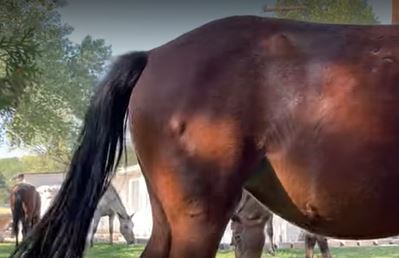
On the other hand, if you’re in business to protect the public-lands ranchers, are you going to care about any of that?
RELATED: BLM to Receive $137.1 Million in FY 2022 for WHB Program.
Go to page 300, Division G, Title I, of the Consolidated Appropriations Act, 2022, which has been approved by Congress but not yet signed into law.
The bill includes a provision for long-term care and maintenance of excess animals by nonprofit organizations and other appropriate entities. Section 108, page 327.
Details of the spending plan may be spelled out in a separate report.
A government shutdown was avoided by another continuing resolution that expires on March 15.
On the Salt River with Mark Storto, an area subject to the Montana Solution.
The advocates claim to protect the horses but they’re actually getting rid of them.
RELATED: Barren.

 Western Horse Watchers Association