Nope, his job is to be wild and free on his home range. This may be hard to understand, but for that to happen he first has to be conceived and born on the range.

Western Horse Watchers Association
Exposing the Hypocrisy, Lies and Incompetence of the Wild Horse Advocates
Nope, his job is to be wild and free on his home range. This may be hard to understand, but for that to happen he first has to be conceived and born on the range.
Refer to this story by The Outer Banks Voice. They’re not predators but desensitizing them to humans is not a good idea. What happens if they approach you?
RELATED: Keeping a Safe Distance.
The dished out area in the center of the foot suggests that most of the weight is carried by the hoof wall, not the sole. With roughly 60% of the weight carried by the front legs, that means about 300 pounds per hoof for an average horse.
Wild horse tech: Estimate the contact pressure in pounds per square inch.
RELATED: What Is the Mustang Roll?
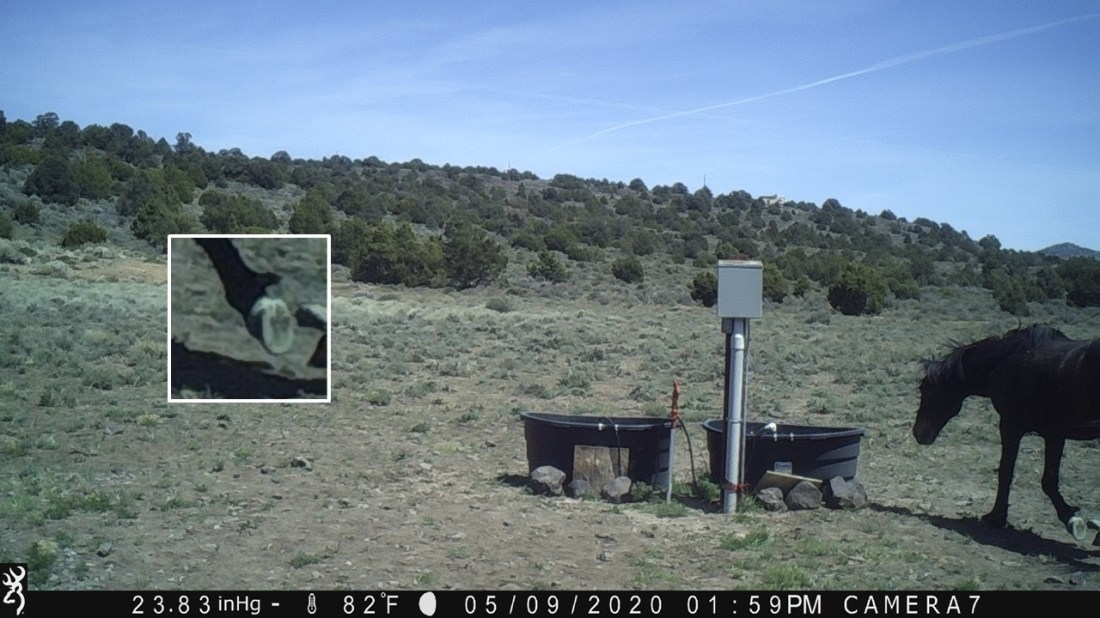
Is that a mare in the distance?
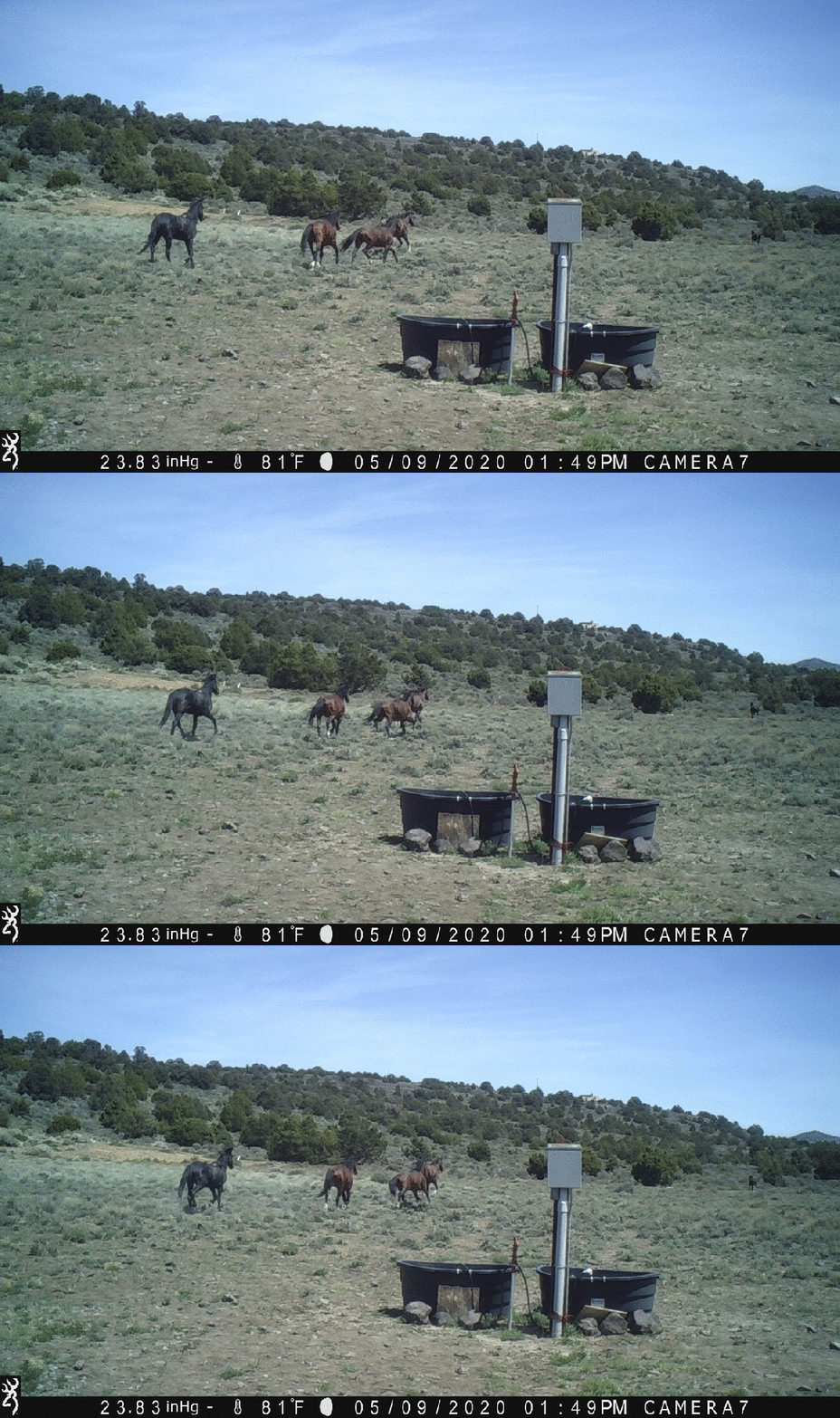
BLM announced today the beginning of a 30-day comment period on an environmental assessment for wild horse and burro management in the Nevada WHR.
The WHR, one of four areas in the western U.S. (out of 177) managed primarily for wild horses, covers 1.3 million acres and has an AML of 500, for an aimed-at stocking rate of 0.4 wild horses per thousand acres. Normally a rate that low could be sign of trouble—if it was an HMA—but livestock grazing is not allowed on the WHR.
Amendments to the land use plan restricted wild horse management to approximately 484,000 acres in the northern part of the WHR.

Actions to control herd size could also include sex ratio skewing, contraception and sterilization. Options are discussed in Section 2.0.
Substantive comments can be submitted at this page.
The last roundup occurred in August 2018, with a 3.9% death rate.
Today the agency cited recent efforts to combat wild horse overpopulation, including the adoption incentive program, fertility control research and report to Congress.
The news release said that an estimated 95,000 wild horses and burros inhabit lands that can only support 27,000.
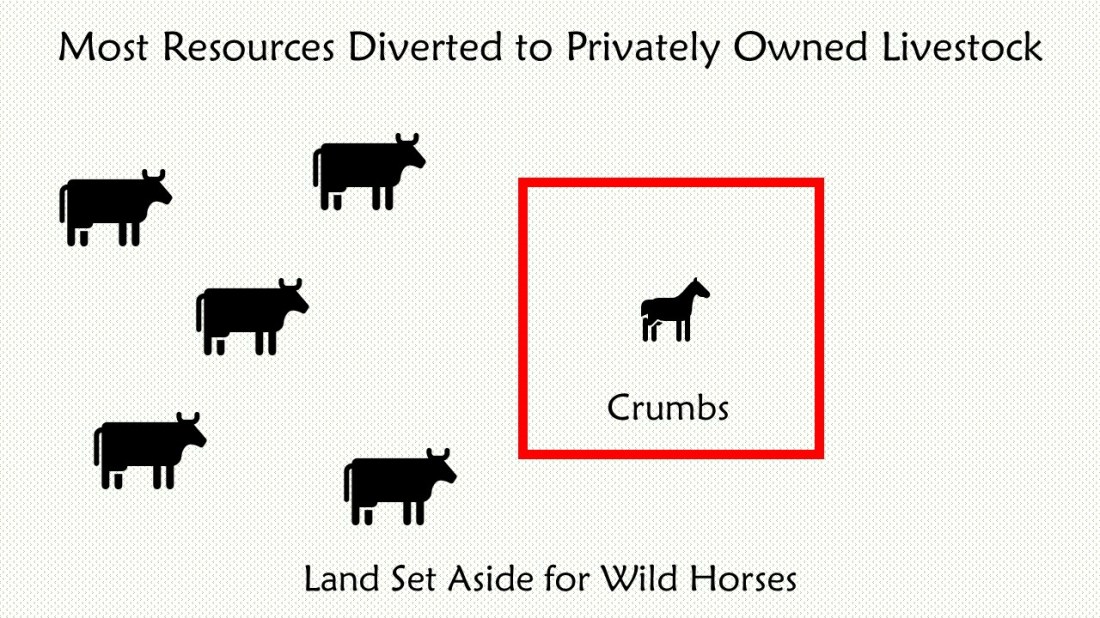
Why can’t the land support more than 27,000? Refer to the following image but don’t say anything, because nobody’s allowed to talk about it.
RELATED: Hypothesis Revisited.
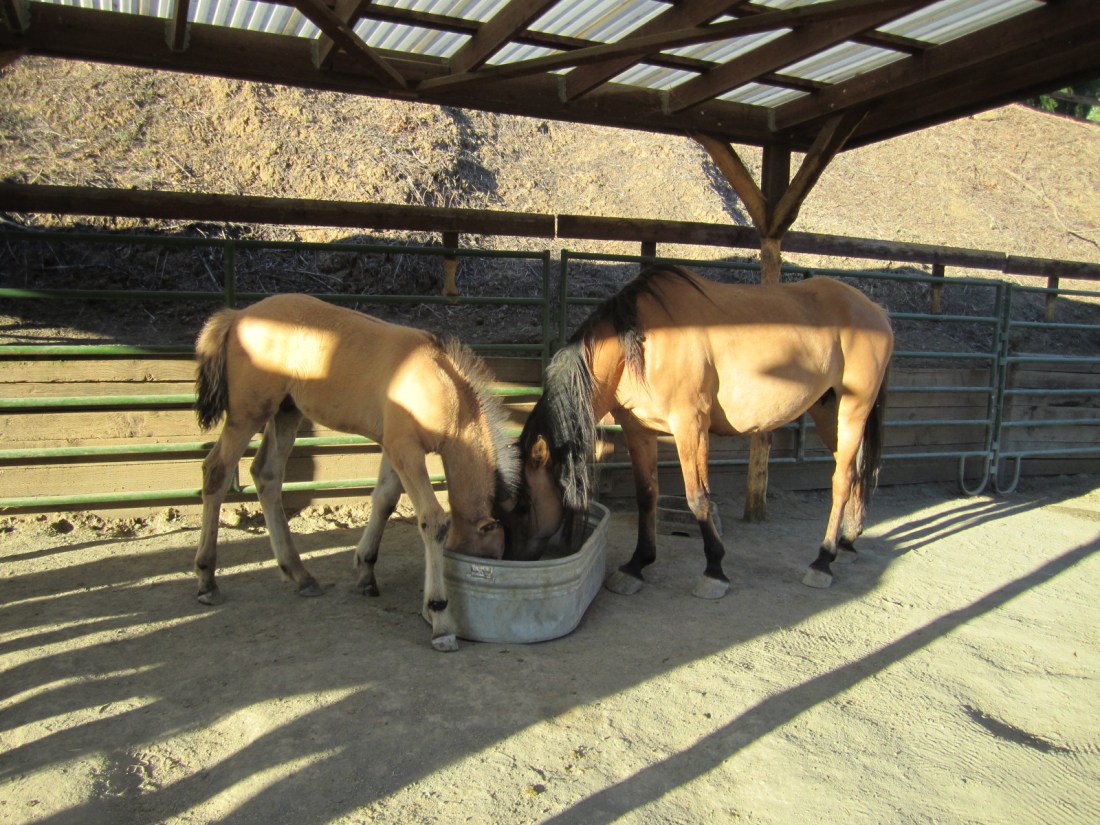
Sporting a mohawk mane, typical for this age. Dark spots on legs reveal his true colors, when baby fur goes away. Photo taken yesterday.
You can camp on site all four days! The event is still set for July 16 – 19 at the Murieta Equestrian Center, east of Sacramento.
RELATED: WSHE Rescheduled.
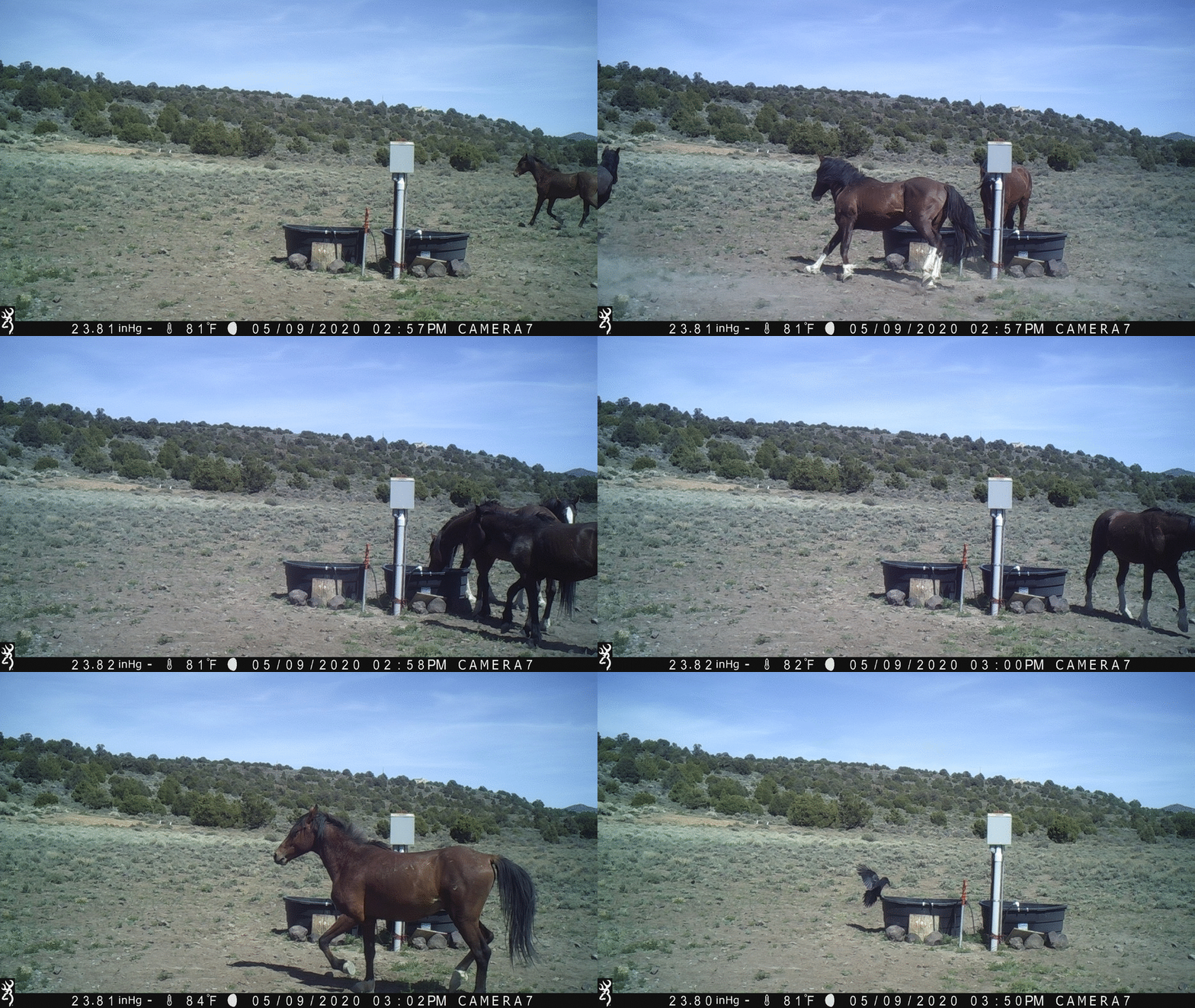
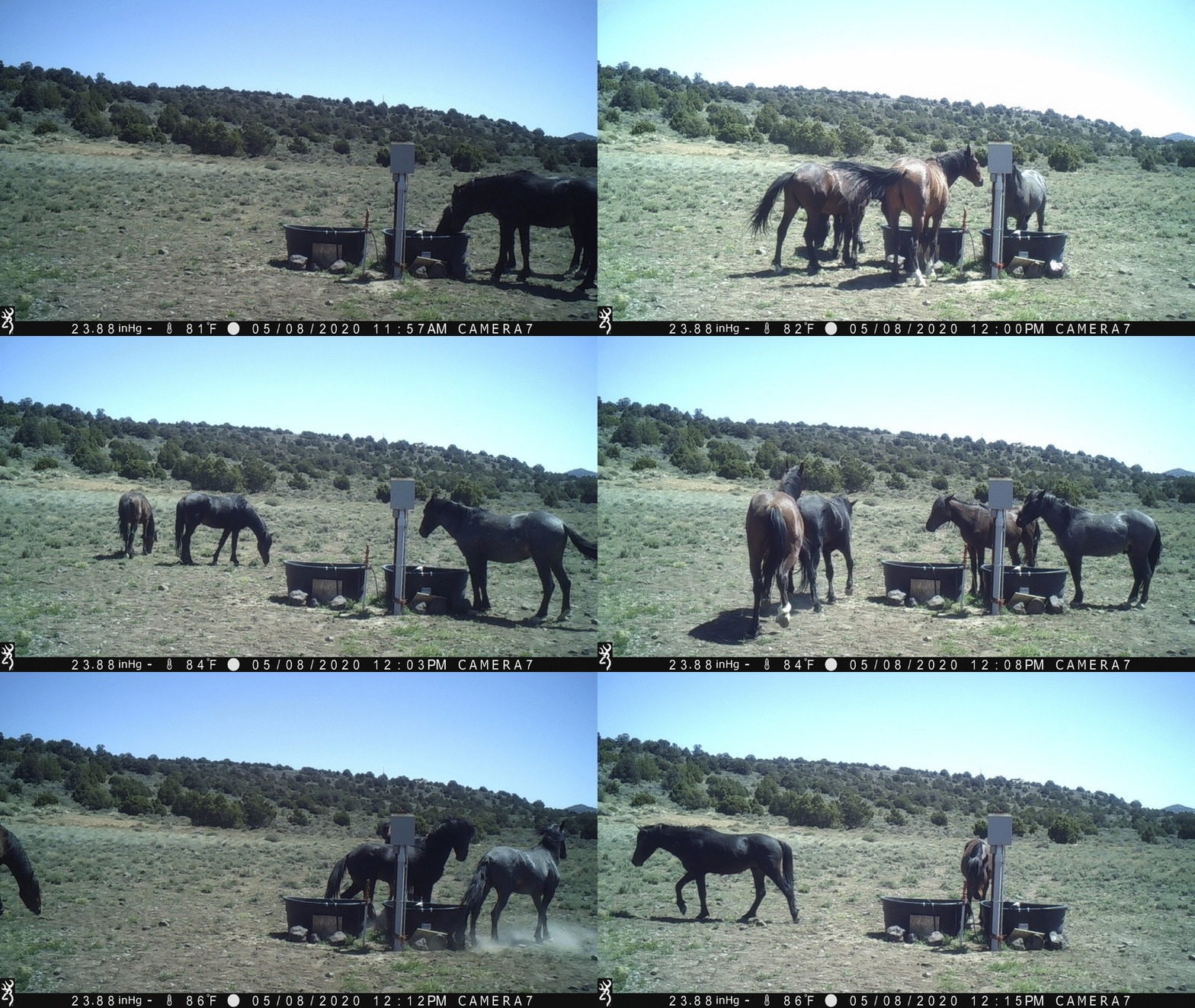
Trailcam photos of some Virginia Range bachelors.
BLM staff will take over later this summer, according to the daily reports. Thirty burros and twenty five horses had been captured as of May 13, with one death reported.
The Forest Service is working on an environmental assessment for the Heber wild horse management plan, according to a story posted this morning by the White Mountain Independent of Show Low, AZ.
Comments on the management plan ended March 16.
The draft EA will be released for public comments around September 1.
RELATED: Forest Service Reviewing Heber Comments.
She was put down on Saturday due to infection, according to a report by OBX Today.
On the Virginia Range with Stephen Schrader.
The Charlotte Observer has it on film. Two minutes of horses being horses.
KPNX News of Phoenix, AZ reported today that a man was caught on video harassing wild horses while they were drinking from the river.
The term is not defined in the statute that protects the horses so there is not much that law enforcement can do, according to the story.
Of course, shooting wild mares with contraceptive darts is not harassment because the PZP zealots said so.
One thing it’s not good for on the Virginia Range: Transmitting life, thanks to the nutjobs at AWHC and their local volunteers.
They’ll point to the project as a ‘solution’ to wild horse ‘overpopulation’ in other areas, which means keeping their numbers in check because most of their food has been consigned to public-lands ranchers. They conveniently ignore that part, while giving aid and comfort to the ranchers.

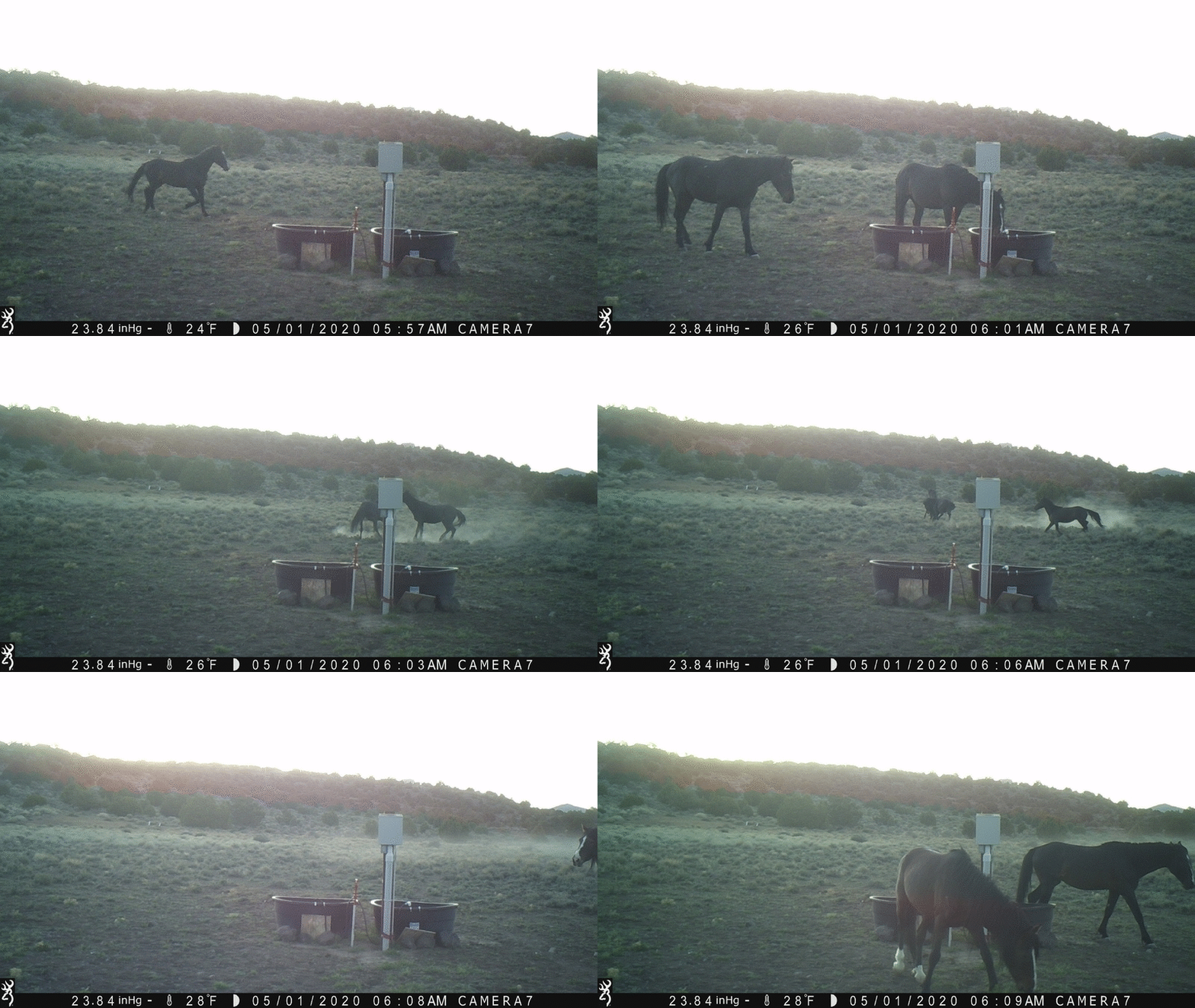
This is the time of year when you see more activity at the higher elevations of the Virginia Range. Trailcam photo sequence begins at 05:57 AM.
Notably absent are family bands with youngsters, thanks to the fertility control program administered by AWHC.
A very productive day and their colors are spectacular. The horses, that is.
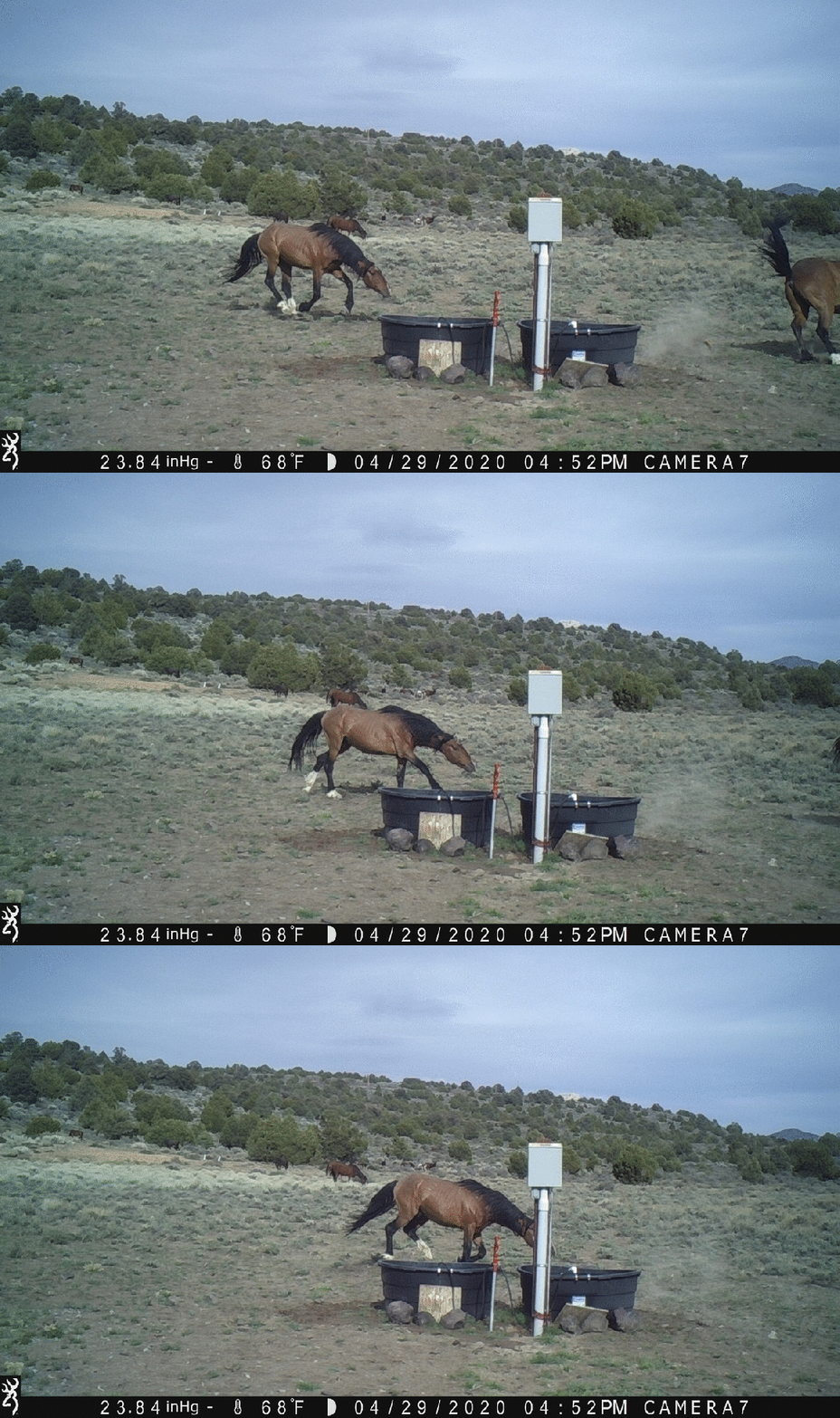
It’s the manner in which a wild stallion moves other horses, with ears pinned and neck extended but head close to the ground. Resembles the front end of a snake.
RELATED: Virginia Range Stallion Snaking His Mares.
 Western Horse Watchers Association