
On the Salt River with Sasha DeKasha.
Month: June 2019
BLM to Renew Burning Man SRP
The environmental impact statement is complete and the special recreation permit should be renewed within 30 days, according to a news release dated 06/14/19.
The festival usually runs from late August through Labor Day weekend on the Black Rock playa northeast of Gerlach, NV.

The anti-family event, which occurs in the middle of wild horse country, is brought to you by the multiple-use mandate of FLPMA, the ‘No Rancher Left Behind Act.’
Lies at Pauls Valley
Adoption event last month at Pauls Valley Off-Range Corral in southern Oklahoma.
Remarks by the woman beginning at 5:11 are false. The land can support way more than 26,000 horses and burros. Herd sizes do not double every three years. BLM forces these animals off their home range (public lands in Western U.S.) so their food can be sold to privately owned cattle and sheep.
Thanks to Camille’s Mustangs for getting this on film.
RELATED: Wild Horse Overpopulation?
Story of Velma Johnston
Good job Elizabeth!
The WHB Act has been amended several times by ranching interests (visible at top of frame at 1:50) and no longer affords the protections sought by Velma. This is the challenge going forward: Roll back the changes and put an end to public-lands ranching.
Today, more and more horses are being forced off their home range (public lands) so their food can be sold to privately owned cattle and sheep.
Adoptions don’t keep pace with the roundups so most of them end up in government corrals or contracted pastures. No family, no foals, no legacy.
Seven Troughs Gather On Hold
Bait-trapping was suspended today, with 104 animals removed from their home range.
Refer to this page for gather stats and daily reports. Body condition scores have been averaging 4 to 5.
An eight year old jenny died of a broken neck on the first day of the roundup.
Operations will resume on June 25 according to today’s announcement.
Slaughter is Good for Horses?
Horse owners don’t have enough options for disposing of animals that aren’t wanted because they’re sick, old, unmanageable or fail to meet expectations, according to a ‘guest column‘ that appeared yesterday in Beef magazine.
Land managers can’t use it as a means of population control for wild horses.
And it’s a damn shame because it’s in the best interest of the animals to be killed, you see.
Just like abortion. Saves hundreds of thousands of kids from lives of poverty and crime every year.
Legalizing slaughter would alleviate the pain and suffering of horses driven from their home range so their food can be sold to public-lands ranchers. You know, families torn apart, pregnant mares dropping colts in feedlots and all that. So unnecessary.
With today’s technology, the process could become highly efficient, opening the door to mass removals from western rangelands, putting an end once and for all to the ‘wild horse problem.’
Call it the Final Solution.
The Way We Manage Western Rangelands Needs to Change
Lawmakers from Montana should endorse the ‘creative’ wild horse management plan announced on 04/22/19, according to an op-ed that appeared today in the Bozeman Daily Chronicle. It’s the only way to stop the endless cycle of roundups.
The alternative, according to the writer, is the use of lethal tools, such as slaughter and mass killings, to manage wild horse and burro populations.
Although she criticizes current management practices, she does not ask why the roundups occur (as if wild horse overpopulation is an established fact, self-evident).
You can’t solve a problem by treating the symptoms, you to have to remove the causes.
The management plan focuses the symptoms (‘excess’ horses displaced from their home range) but ignores the causes (too many privately owned livestock grazing on public lands set aside for the horses).
In 1971 Velma Johnston won protections for wild horses but not for their land.
It’s time to end public-lands ranching, along with the bureaucracy that supports it.
Gossip About Motives in Heber Wild Horse Shootings?
A statement by the Forest Service dated 05/02/19, which coincides with the date that a photographer saw a man shooting at the horses, says “Rumors about possible suspects, gossip about motives, and general misinformation quickly spread throughout social media.” Are they trying to downplay the incident?
Let’s look at facts:
- The Heber WHT is composed of, and surrounded by, grazing allotments.
- Ranchers benefit from reductions in wild horse numbers.
- Ranchers have a well-established history of taking wild horses off the range.
That they have a motive for killing wild horses is not an accusation, it’s a reasoned conclusion.
RELATED: Group Criticizes Forest Service for Response to Heber Shootings.
Wild Horse Advocates Protest in Salt Lake City
Protesters returned to the state capital yesterday, according to a report by FOX-13 News, in response to a planned roundup of the Onaqui Mountain horses.
Critics of the horses—most of them shills for the public-lands ranchers—say they’re suffering because they don’t have enough food and water.
But the problem is privately owned livestock on public lands set aside for the horses, fences and gates that impede their movement, water sources commandeered for fee-paying animals.

The big-name advocacy groups should be going after the misappropriation of these lands, the failure of government to manage them primarily for wild horses and burros, instead of spreading their contraceptive venom across the fruited plain.
RELATED: Onaqui Mountain Protesters Gather in Salt Lake City, Livestock Grazing in Utah, BLM Puts Crosshairs On Onaqui Mountain Horses.
Mustang Monday
On the Virginia Range.
Advocates Ask Politicians for Help with Heber Shootings
Refer to this story, posted yesterday by ABC15 News of Phoenix, AZ.
Unlike the public-lands ranchers, wild horses have no friends in government.
RELATED: Group Criticizes Forest Service for Response to Heber Shootings.
Not in My Back Yard
Multiple Use Minute
Match the term on the left with the meaning on the right. Use the Lexicon if necessary.
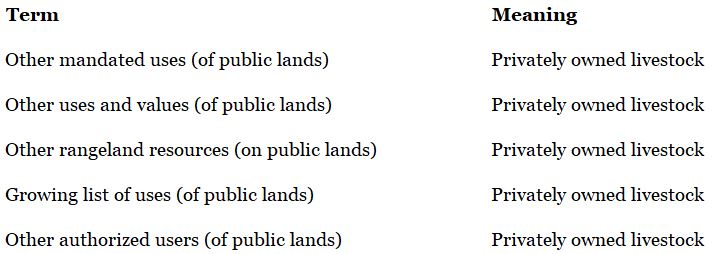
These terms appear frequently in news releases about wild horse roundups.
PZP Zealots in Action on the Virginia Range
Refer to this video by the Reno Gazette Journal.
These people are enemies of the horses. How much of the story was filmed on private property? How many of those landowners agree with their twisted worldview?
The public-lands ranchers are smiling tonight because of idiots like these.
RELATED: Barren, PZP Zealots Toot Their Own Horns On the Virginia Range.
Flashback Friday
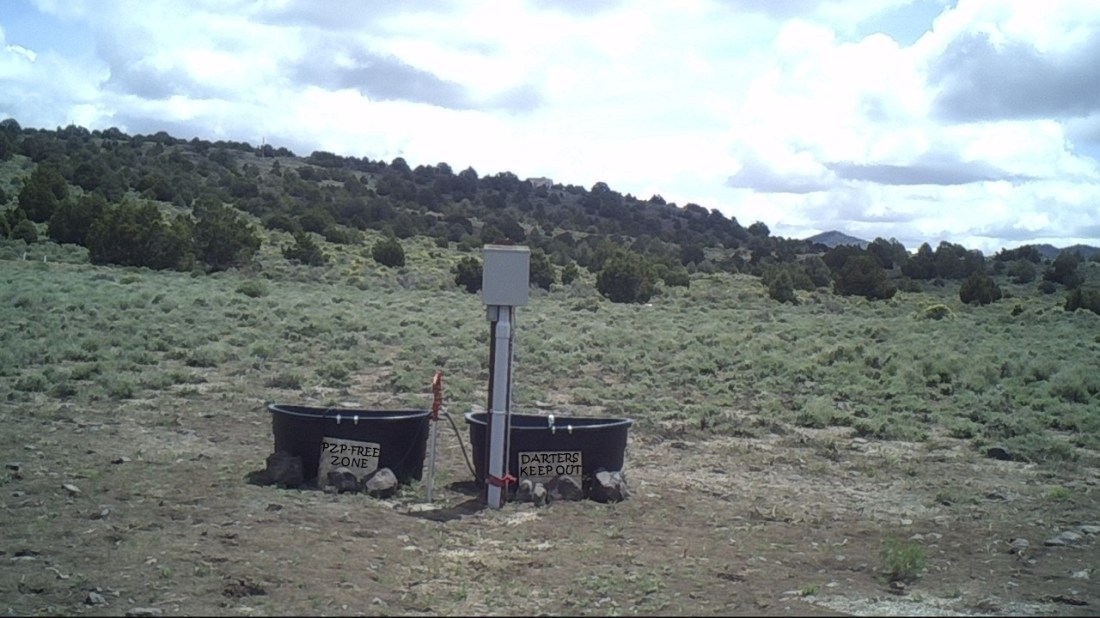
Virginia Range mustangs gather at water tanks when one of them had automatic refill with a temporary water supply.

WHBAB Meetings Set
The Wild Horse and Burro Advisory Board will meet on these dates in 2019, according to a pre-announcement filed today:
- July 9 – 11, Boise, ID
- October 29 – 31, Washington, DC
The meeting in Boise will kick off with a field trip to Sands Basin HMA, which was burned in the Soda Fire of 2015.
Meetings are open to the public and will be live-streamed at this page.
Boat Ride to Shackleford Banks
Searching for wild horses: A family outing by Our National Adventure. The island was hit hard by Hurricane Florence last September but the horses survived.
Do As I Say Not As I Do
These people have a lot of nerve telling us not to disturb the natural behavior of these horses (4:58 in the video), when they’re out there with dart guns shooting mares in the ass with contraceptives!
With this much human involvement—breeding patterns determined by them—the horses are no longer wild, they are a carefully managed exhibit, a hint of what was.
Salt River Orphan Rescued
A story posted today by AZ Family, the CBS affiliate in Phoenix, says an eight week old filly was taken off the range after its mother was found dead near the Salt River in central Arizona. The mom was the oldest mare in the herd according to the report.
Common Ground in the Wild Horse Debate?
Not when the other side wants you wiped off the map. There is no two-state solution in the wild horse world. Public-lands ranching has to go.
See also these remarks, published today by The Wildlife Society, one of the anti-horse groups that participated last week in the ‘Equid Summit.’
By the way, what happened to the Summit? It was in the news on Wednesday but went dark after that. The conference ran through Friday.
 Western Horse Watchers Association