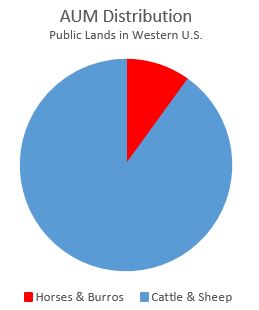
Wild horses and burros consume one million AUMs per year, cattle and sheep consume nine million AUMs per year. Ten percent vs. ninety percent. A ‘thriving ecological balance’ is only a few more roundups away.

Western Horse Watchers Association
Exposing the Hypocrisy, Lies and Incompetence of the Wild Horse Advocates
Wild horses and burros consume one million AUMs per year, cattle and sheep consume nine million AUMs per year. Ten percent vs. ninety percent. A ‘thriving ecological balance’ is only a few more roundups away.
Looking up and down the valley on 11/10/18. Smoke from northern California wildfires gives everything an orange tint.


Looking west around 4:00 PM on 11/09/18, Contra Costa County, CA. Wildfires about 150 miles to the north.

Ten wild stallions will be removed from the Fish Springs area next week, according to a report posted today by The Record-Courier of Gardnerville, NV. Written complaints to the BLM have described their behavior as ‘aggressive.’ Damage to private property and a concern for personal safety were also cited in the complaints.
“A formal request for their removal was submitted by the Pine Nuts Wild Horse Advocates group.”
Bait traps will be used to capture the ‘excess’ stallions.
In September the BLM demanded that the Fish Springs herd be reduced from 78 horses to 58 by 2020. Could it be that the PN ‘advocates’ see this as opportunity to partially achieve that goal? Will they help the BLM set the traps?
The Fish Springs horses reside in the Pine Nut Mountains Herd Area, south of the Pine Nut Mountains HMA.
See also this news release issued today by the BLM.
RELATED: BLM Dictates Terms of Surrender to Fish Springs Advocates.
Sessions is out. Who’s next? See the report posted yesterday by The Hill.
One million AUMs consumed by horses and burros on western rangelands in a year, compared to nine million AUMs for cattle and sheep. Eighty thousand horses and burros, millions of cattle and sheep.
But the helicopters never chase any livestock, only the horses and burros. Who will clean up this mess? Classic ‘swamp.’
That’s what ranchers in northern Colorado said about wild horses in 1904. Although the story is much the same across western rangelands today, the horses have survived and some have become rock stars. One such example is the Sand Wash Basin. Refer to this story posted 11/06/18 by the Craig Press for a perspective of this herd.
Refer to this post which appeared this evening in Carol Walker’s Wild Hoofbeats blog.
“…the BLM has withdrawn completely…”
RELATED: Sterilization Delay in the News.
UPDATE: See this report by Oregon Live, dated 11/07/18.
Fifty wild burros will be the subject of an emergency gather this week north of Lake Havasu City, AZ, due to safety concerns along Highway 95. Refer to this story, posted this morning by Havasu News.
The burros may be associated with the Havasu HMA, which surrounds the city, or Black Mountain HMA, the southern tip of which appears at the top of the map (blue borders).

The report did not indicate how the roundup would be conducted and if it would be open to public observation. Captured animals will be taken to a BLM facility in Florence, AZ where they will be prepared for adoption.
A formal announcement from the BLM had not been released at the time of writing.
One of the speakers at the WHB Advisory Board meeting last month presented these statistics on wild horses and burros in 2018:
Also presented at the meeting were some stats on livestock in 2017. The BLM livestock page provides the available land.
The WHB data yield a stocking rate of 2.6 animals per thousand acres (71,000 divided by 27,000,000 times 1000).
The aimed-at stocking rate for WHB is one animal per thousand acres (27,000 divided by 27,000,000 times 1000). This will be an indicator of a successful program, in the eyes of the public-lands ranchers and their allies at the BLM, along with many of the wild horse advocates.

The livestock data yield 1.5 million cow/calf pairs on western rangelands (per previous post), for a stocking rate of 19.4 animals per thousand acres (3,000,000 divided by 155,000,000 times 1000).
The livestock population target is 2 million cow/calf pairs (per previous post), which yields an aimed-at stocking rate of 25.8 animals per thousand acres (4,000,000 divided by 155,000,000 times 1000). This is another indicator of a ‘successful’ program.
So, if you’re talking about wild horses, public lands can only support one of them per thousand acres. If you’re talking about domestic cattle, the range can support 26 of them per thousand acres. In some cases it’s the same land!
This casts a long shadow over the concept of Appropriate Management Levels (AMLs), which supposedly represent the carrying capacity of the land. In view of these results, they only denote forage consumption the ranchers are willing to tolerate. They should be renamed Acceptable Forage Losses (AFLs)—the number of horses for a given area that won’t rob too much of the ranchers’ birthright.
Also keep in mind that many wild horse advocacy groups, large and small, agree with the overpopulation narrative, and that is the basis of their fertility control efforts.
They’re not friends of the horses.
RELATED: They’re All Starving, Public-Lands Ranching: How Bad Is It?
Election’s over, swamp prevailed. This photo from the Drudge Report tells the story.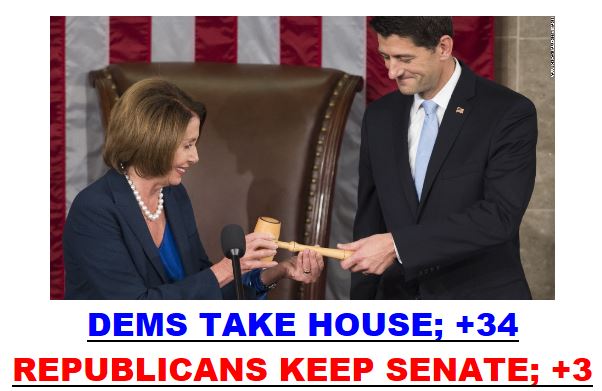
Could be subtitled ‘Emasculated Speaker Yields Control to Satan’s Sister.’ Butt sex and baby slaughter are back!
Drain the swamp. Make western rangelands great again!
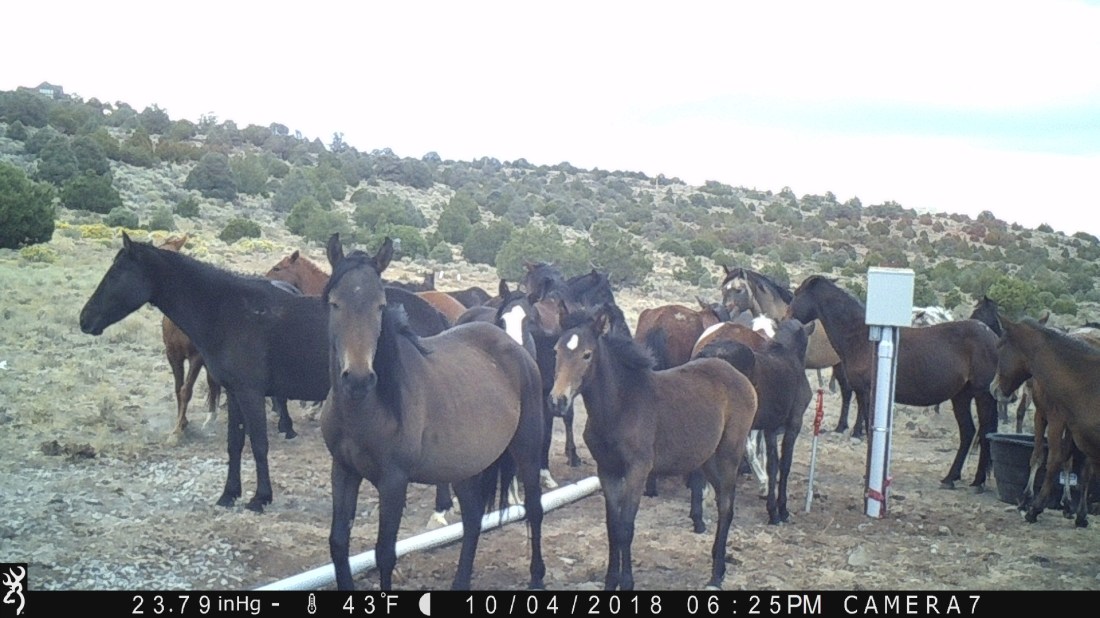
A report published yesterday by Santa Cruz Sentinel said 130,000 more residents left California for other states last year than arrived from them, with many fleeing the high cost of living. The overall population grew, however, due to births and immigration.
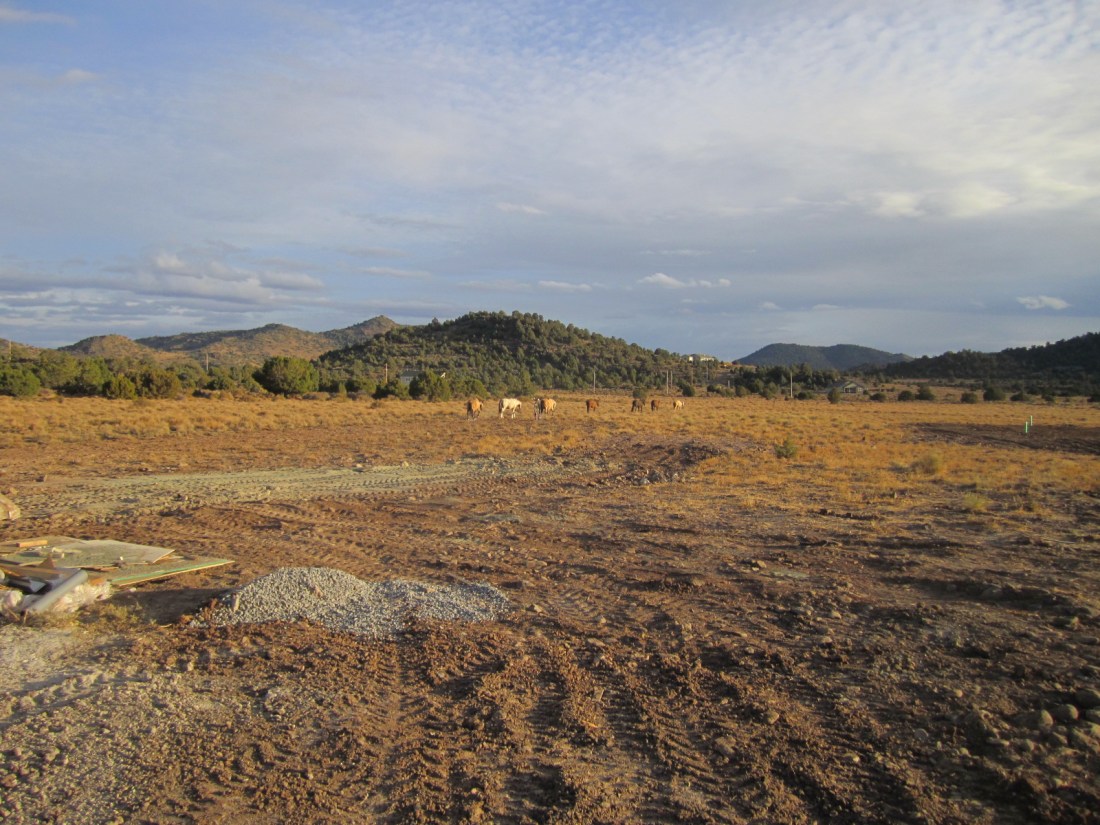
Unlike the Spruce-Pequop Incident, a judge’s decision to halt the sterilization of mares at the BLM wild horse corrals in Hines, OR has been picked up by national news outlets.
Wild horse enthusiasts may be pleased with the ruling, but it’s still a win for the public-lands ranchers, who have access to most of the Warm Springs HMA, and it’s now devoid of horses (grazing allotments denoted by green in the following map from 2014, HMA boundary highlighted in yellow).

If the project is stopped for a few years, will the HMA be restored to pre-gather conditions? If not, will the 200 horses that were to be returned after sterilization be allowed to go back?
The HMA contains 475,460 acres and has an AML of 202, for an aimed-at population density of 0.42 animals per thousand acres, the lowest of all HMAs in Oregon.
RELATED: Federal Judge Says No to BLM Sterilization Experiments.
Near the Salt River. H/T Robin Bender Knight.
To raise funds, Mustangs Mend of Redmond, OR, a 501c3 nonprofit that teaches participants to gentle wild mustangs and rehabilitate those that have been neglected and abused, has partnered with KR Northwest to make caps with wild horse freeze marks.

Price $30 each, includes shipping. Mustangs Mend receives $10 from each purchase.
To order call 503-708-3849. Credit cards accepted. Use code Mustangs Mend. For more information, send email to krnorthwest@gmail.com.
Video by Mustang Girls.
All of the 27 former wild horses, removed from the Little Bookcliffs Wild Horse Range last month, were adopted yesterday according to a story posted yesterday by KJCT8, the ABC affiliate in Grand Junction, CO. It was not a cash-and-carry event, which bypasses customary rules for wild horse ownership.
The WHR contains just 36,000 acres and is one of only three areas in the western U.S. managed ‘principally but not exclusively’ for wild horses. The AML is barely large enough for genetic viability of the herd. Would be nice if the so-called advocates pushed for more territory, at least 150,000 acres, instead of helping the BLM set the traps.
Congress intended that all lands where wild horses and burros were found, when the WHB Act became law, be managed principally but not exclusively for those animals (in keeping with the concept of multiple use).
Today, 40% of that land, perhaps a bit more, is no longer managed for wild horses and burros, and livestock vastly outnumber them on western rangelands, marking a return to the ‘fast disappearing’ days of the Act.
RELATED: Little Bookcliffs Adoption This Weekend.
They’re getting re-acquainted with their old digs after being returned to the range on 10/27/18. But volunteers are concerned about their safety near Highway 48 and have asked the New Mexico Department of Transportation to install warning signs to remind motorists of their presence. Refer to this story, posted 11/02/18 by Ruidoso News.
RELATED: Alto Horses Free Again.
At the Wild Horse & Burro Advisory Board meeting last month, one of the speakers provided these statistics for livestock grazing in 2017:
As noted in this post, there were approximately 82,000 wild horses and burros on western rangelands earlier this year, compared to 1.5 million cow/calf pairs or cow/calf equivalents (e.g., if they were all sheep there would be 7.5 million of them because one cow/calf pair = one horse = five sheep).
Wild horses and burros accounted for 1 million AUMs compared to 8.8 million AUMs for livestock. Are the livestock confined to HMAs and HAs? No. Do wild horses and burros stay inside the HMAs and HAs? No. But they all graze on western rangelands.
If livestock AUMs were sold out, there would be over 2 million cow/calf pairs on western rangelands (12.3 million divided by 6).
How much worse could it get?
The BLM and USFS, along with the public-lands ranchers, want WHB populations reduced to AML, which is 27,000. They are pursuing that goal aggressively, with over 10,000 WHB removed from western rangelands this year. If they hit both targets, WHB would account for 0.3 million AUMs annually (27,000 times 12), while livestock consume 12.3 million AUMs.
Two million cow/calf pairs (four million head), privately owned, on public lands, compared to 27,000 horses and burros.
If they had their way, there’d be few if any horses and burros on public lands, taking the scheme to the limit. Keep in mind the ranchers pay $1.41 to graze a cow/calf pair for one month. You couldn’t feed a parakeet for that!
The greatest threat to wild horses and burros is public-lands ranching, which has the appearance of rugged individualism but is actually a form of government dependency.
Which political party wants more and more people dependent on an all-powerful centralized government?
Which party believes in contraception, sterilization and euthanasia?
Which party hates private property, free markets and self-reliance?
If the mainstream media want a story on collusion, let them investigate the ties between the BLM, USFS and ranching industry. Classic ‘swamp.’
Liberalism, which is devoid of truth and The One Who Is Truth, can never be an answer to our problems.
It’s time to do something for our horses not to our horses.
Vote.
Twenty seven horses captured last month will be offered for adoption tomorrow in Fruita, CO, according to a report posted this evening by Western Slope Now.
Meanwhile, back on the range, livestock graze peacefully on land that belongs to the horses.
RELATED: Little Bookcliffs Gather Over?
 Western Horse Watchers Association