Foal-Free Friday, Toxic Relationships Edition

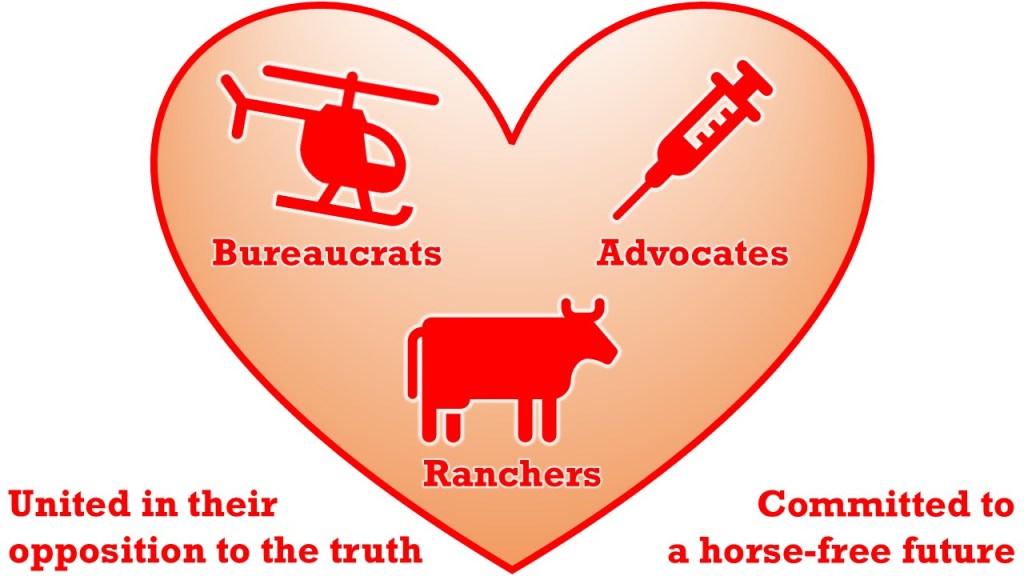
Like radioactive decay, the advocates emit a steady stream of harmful information about wild horses.

Equating mass sterilization with wild horse conservation is one example.

Lying about rapid development is another.

Their followers don’t realize they’re being exposed to propaganda that promotes rancher prosperity, not equine welfare.

The only hope for these nitwits is to get them to Betty Ford clinics or similar institutions where they can be deprogrammed and educated in rational thought.

RELATED Foal-Free Friday, Managing to Extinction Edition.

HR 5829 (LASSO Act) Not About Equine Welfare

It’s about rancher prosperity.

The bill would authorize research to determine if unmanned aerial systems can be used to gather and manage wild horses and burros, including application of fertility control, according to the text.

If successful, the technology could advance mass sterilization as an alternative to motorized removal, a dream-come-true for the advocates.

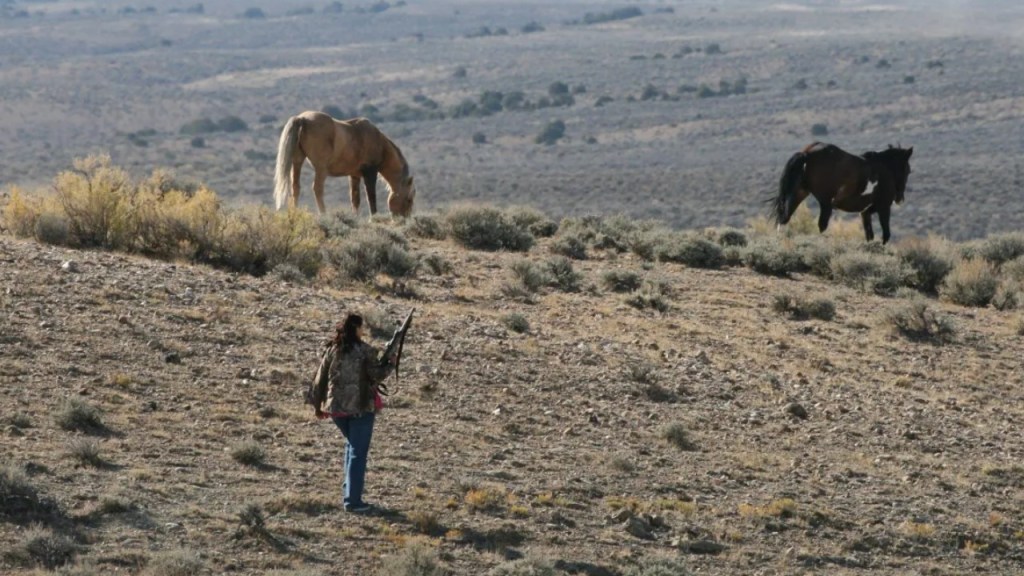
No more bouncing over rough terrain in a 4WD and stalking the animals with clipboards and darting rifles.

Unlike the automatic darting machine developed by Wildlife Protection Management, which must be stocked with hay to attract the animals, drones can go on the offensive, taking the pesticides to them.

RELATED: Unmanned Aerial Systems for Wild Horse Roundups?

What Happens When Wild Horse Populations Exceed AMLs?

They rob too much forage from the most noble and deserving nonnative species on America’s public lands, placed there by high-net-worth individuals who pay almost nothing for the resource and the services rendered on their behalf by the government.

Put simply, they interfere with redistribution of wealth, a hallmark of liberalism.

(Don’t be fooled by politicians who try to market themselves as conservatives while defending the practice.)

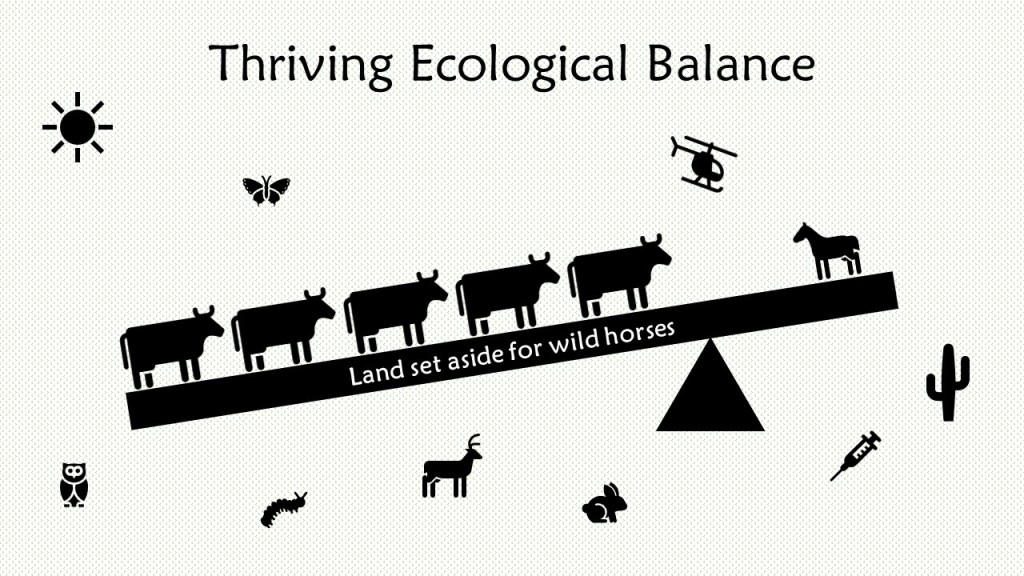
With few exceptions, Appropriate Management Levels are artificially low and do not reflect genetic viability or carrying capacity.

They represent the number of horses allowed by plan, a limit the bureaucrats and ranchers are willing to tolerate.

Carrying capacity = Horses allowed by plan + Horses equivalent to livestock

The advocates reinforce the scam with their darting programs.

RELATED: Equivalent Horses and Stocking Rates for Allotments.

Khan Panders to Ranchers, Paints Them as Victims Not Villains

Contrary to his October 27 op-ed in The Blaze, the wild horse and burro program is a grazing program ancillary, supporting three tenets of rangeland management:

  • Pest control
  • Resource enforcement
  • Rancher protection

It’s not “a war on wildlife, propping up special interests while ranchers and communities bear the brunt of unbalanced ecosystems and federal overreach” as stated in the commentary.

Ranchers are the special interest.

Then there’s the unsubstantiated claim that horse meat derived from public lands re-enters U.S. markets illegally from Mexico and Canada as a diluent of ground beef.

And the misallocation of water.

The guy’s as ill-informed about wild horses as the wild horse advocates.

RELATED: Who’s Advising Bobby Khan About Wild Horses?

Should PLC Recognize Advocates as Affiliates or Partners?

Its affiliates page displays logos of trade groups representing meat and wool producers but none from the wild horse advocates.

Its policy statement acknowledges the support of some groups in developing the “Path Forward,” a 2019 plan for ranching superiority in the lawful homes of wild horses.

Since then other groups have stepped forward with projects that demonstrate the feasibility of mass sterilization as an alternative to motorized removal, notably at the Salt River and Virginia Range.

So why won’t PLC bring them on board and recognize their contributions to the ranching agenda?

A partners page would be a great way to do that.

RELATED: What Makes the Advocates Evil?

NCBA Has a Cow Over Proposed Beef Imports, PLC Mum

The ranching advocacy group voiced its opposition in an October 22 news release.

The President’s plan to boost supply suggests that domestic cattle production is low but does not indicate why.

If producers were holding back to boost prices, the way OPEC does to raise the price of oil, the proposal would indeed be misguided.

They should be investigated for collusion and restraint of trade.

Curiously, the Public Lands Council, a subsidiary of NCBA and cheerleader for the public-lands ranchers, released no such statement.

What are the odds that its lobbyists are working the rooms in Washington to accelerate wild horse roundups in favor of cattle production?

The advocates, in the tank for the ranchers, are always ready to augment or supplant the removals with their mass sterilization programs.

Women Ruin Everything

The problem goes all the way back to Eve.

Nowhere is it more evident than in the wild horse world.

Refer to this opinion piece in Compact for a survey of the situation.

It is still controversial, even in conservative circles, to say that there are too many women in a given field or that women in large numbers can transform institutions beyond recognition in ways that make them cease to function well. 

The Great Feminization

Chincoteague Ponies Struggle with Brackish Water

The southern herd had no fresh water for nearly two weeks according to a story by Shore Daily News.

High tides from Hurricane Erin and lack of rain are thought to be responsible for the contamination.

The northern herd was not affected.

The ponies are unique as stated in the article, not because of adaption to island life, but because of the highly abnormal sex ratio and unprecedented birth rate.

In August, after the pony swim but before the hurricane, the herd consisted of 23 males and 126 females.

The population limit is 150.

The saltwater cowboys have turned the wildlife refuge into a puppy mill for wild horses, raking in over $1 million from this year’s auction.

RELATED: Chincoteague Stallions Produce 103rd Foal of 2025.

Costs Go Up as Cañon City Wild Horse Program Ends

The BLM must pay $4.78 per head per day for the contract extension, according to a report by The Colorado Sun, up from $4.45.

That works out to about $143 per AUM.

The agency receives $1.35 from ranchers for every AUM on public lands liberated by removal of wild horses therefrom, an irrational and unsustainable practice.

The advocates would solve the problem by poisoning the mares with ovary-killing pesticides, leaving everything for the ranchers.

The article said that alfalfa hay is higher in nutrients and more expensive than grass hay or alfalfa-grass mix, which is contrary to experience.

In this area alfalfa usually costs a few dollars less per bale than grass or mix, which explains why it’s a mainstay of diets in off-range corrals.

Some horses cannot adapt to the feed, which is not found in their lawful homes.

RELATED: BLM Pulling Wild Horses and Burros from Cañon City Prison.

FOA Returns to Court to Appeal Winnemucca Decision

Despite testimony from veterinarians who said the facility is inhumane, a three-judge panel is likely to uphold a 2024 decision approving construction of the off-range corrals, according to a report by Courthouse News.

Plaintiffs were unable to demonstrate that the occurrence of sickness, injury or death was higher in Winnemucca than other such facilities.

An attorney for the government argued that plaintiffs’ claims pertained to stresses caused by the method of capture but the decision to build and operate the corrals did not depend on how the horses would get there.

RELATED: Court Rejects FOA’s Complaint Regarding Winnemucca Corrals.

Flipping the Buckeye Preference to Horses

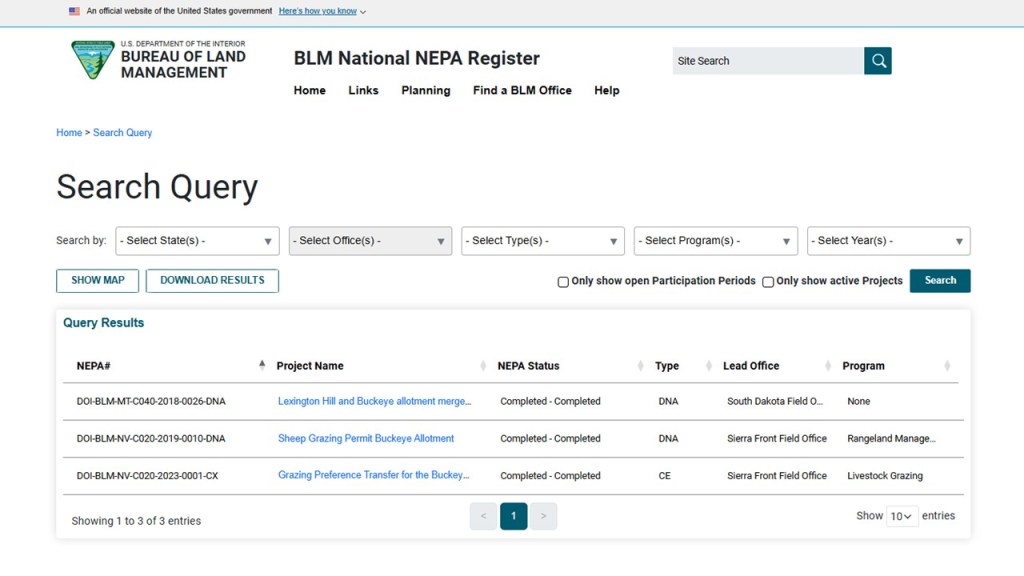
The allotment master report gives authorization #2700562 for the Campaign Against America’s Wild Horses.

The authorization use report indicates 267 cattle on a 5.5-month grazing season.

How many horses would the resource support?

The livestock type and grazing season would change but not the AUMs.

AUMs for horses = AUMs for livestock

The grazing season would be 12 months.

Let x = number of horses.

12x = 5.5(267)

Solve for x.

x = 122

The permit would be written for 122 wild horses.

RELATED: How Would Buckeye Rate as a Wild Horse Refuge?

SHOCKER: Wild Horses Adapt, Thrive on Variety of Forage

Researchers at the University of Wyoming found that the animals can maintain good body condition across a variety of landscapes and different seasons according to an October 16 news release.

The study confirms previous research showing high dietary overlap of free-roaming horses and cattle.

Let’s put that finding into practice.

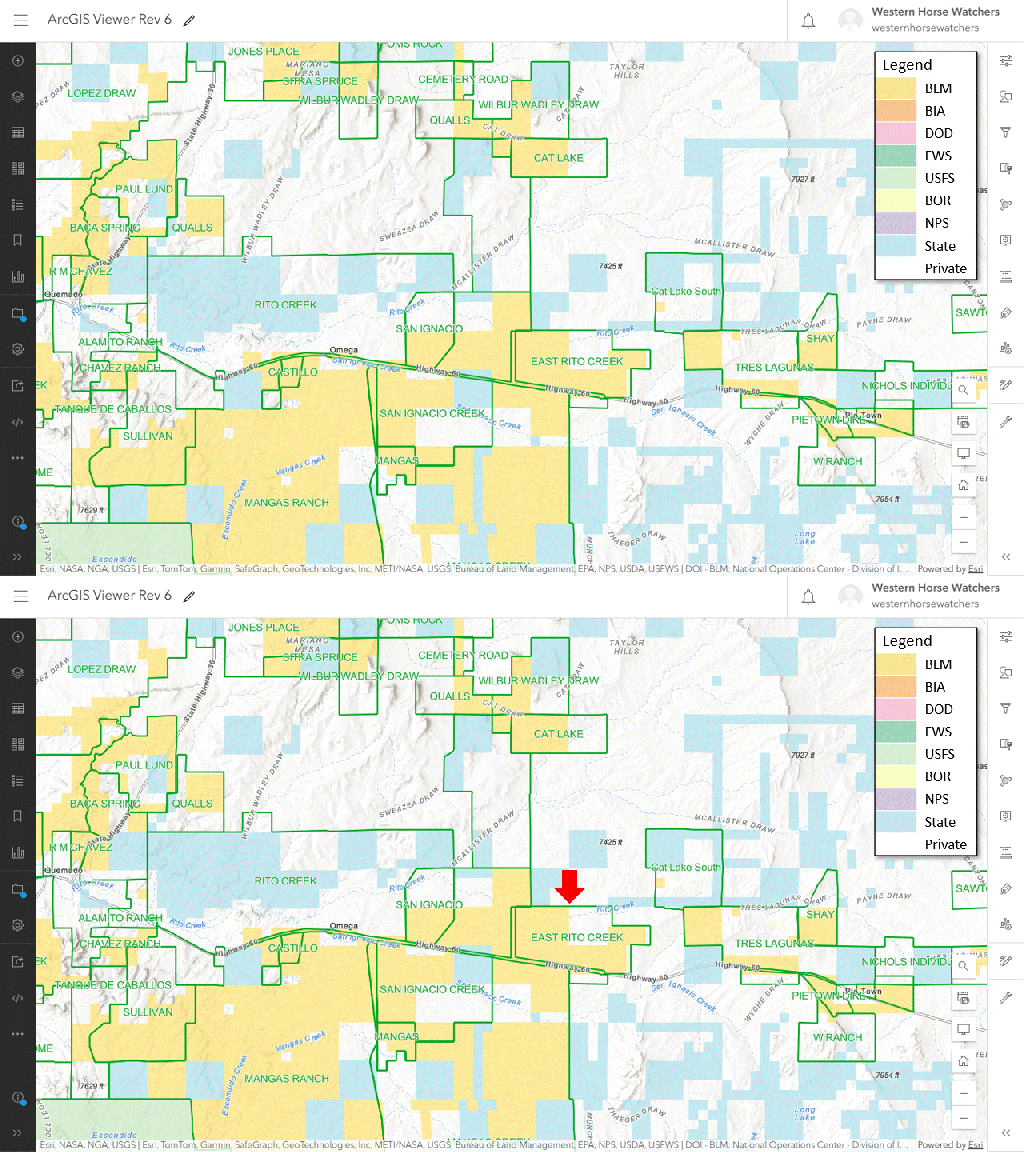
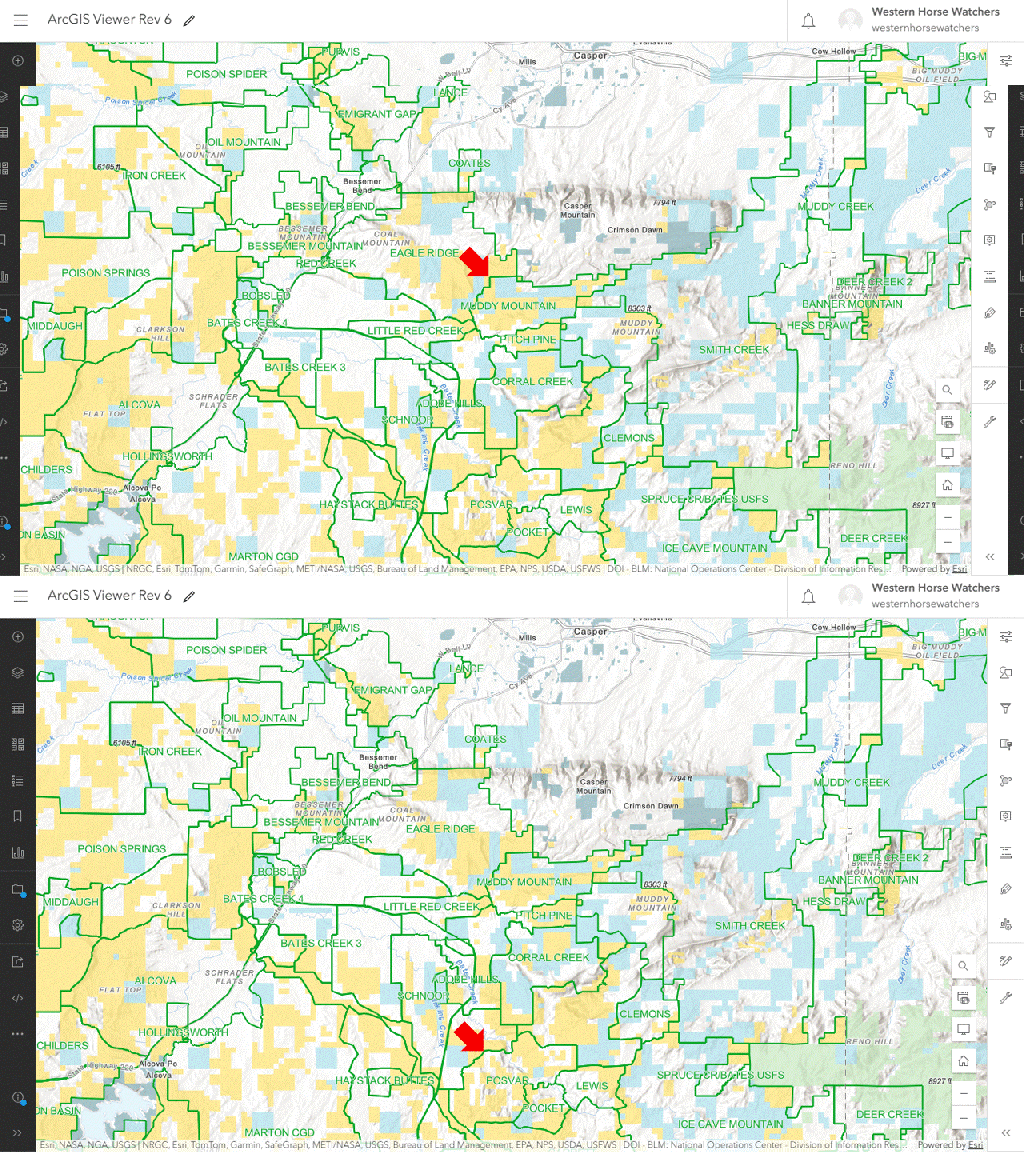
The Stewart Creek HMA lies within the Stewart Creek Allotment.  Their borders coincide, more or less, except for the northeast corner.

The 175 horses allowed by plan receive 2,100 AUMs per year.

The permittees receive 8,267 AUMs per year, equivalent to 689 wild horses due to the interchangeability of forage.

Therefore, the land should be able to support 175 + 689 = 864 wild horses.

The herd is held to 20% of carrying capacity because the HMA is managed primarily for livestock.

Advocates with the Wyoming Wild Horse Improvement Partnership enforce the plan by beating the horse numbers down with ovary-killing pesticides.

RELATED: History of Consent Decree and Rock Springs RMP Amendments.

Foal-Free Friday, Massive Human Involvement Edition

The advocates convert free-roaming self-reliant herds into curated horse exhibits with their darting and feeding programs.

Signs of their presence:

  • Barren mares
  • Confused stallions
  • Shrinking herds
  • Injuries and infections
  • Abnormal sex ratios
  • Increasing death rates
  • Tiny breeding populations
  • Loss of genetic diversity
  • Sterility
  • Acclimation to people
  • Prevalence of livestock

They talk about wild horses and put photos of such on socialist media, but when they get through the herds are anything but.

RELATED: Foal-Free Friday, the Great Replacement Edition.

History of Consent Decree and Rock Springs RMP Amendments

Three interesting characteristics of the in-depth article by WyoFile:

  • The author did not include remarks from the Campaign Against America’s Wild Horses, a departure from established practice when writing about wild horses
  • He did not imply that drillers and miners were the greatest threat to said animals
  • He did not try to sell mass sterilization as wild horse conservation

However, he did give considerable airtime to Christi Chapman, co-founder of the Wyoming Wild Horse Improvement Partnership, who, according to an undated brochure posted by the state legislature, was raised in a ranching lifestyle, received a formal education in soils and livestock production and has worked in the agriculture industry for over 20 years.

Volunteers with WYWHIP are certified in the remote delivery of PZP and are active in the Stewart Creek HMA, earning the nonprofit a spot on the list of charlatans.

RELATED: Advocates Prevail in Rock Springs RMP Appeal.

Advocates Dispatch, Eulogize Currituck Stallion

He was taken off the beach and treated for colic but last week his condition went south so they put him down according to a report by The Outer Banks Voice.

They said he lived the kind of life they want for every foal born on the beach but did not mention the declining number of foals born on the beach or anywhere else, thanks to their use of PZP, so the long-term prospects for the herd remain uncertain.