Horses have the day off. At or near the Lake Pleasant HMA with Get Out And Go.
► Get the truth about wild horses and the wild horse advocates at westernhorsewatchers.com.

Exposing the Hypocrisy, Lies and Incompetence of the Wild Horse Advocates
Horses have the day off. At or near the Lake Pleasant HMA with Get Out And Go.
► Get the truth about wild horses and the wild horse advocates at westernhorsewatchers.com.
Federal land management agencies are supposed to serve the people and protect the environment according to an article in today’s edition of This Is Reno.
But the Trump administration has gutted them and directed them to only work on projects that help oil and gas companies, ranchers and mining companies.
Which has the greatest impact on wild horses and burros?
Drilling and mining affect anywhere from a few acres to a few thousand acres while public lands ranching devours entire HMAs and beyond.
► Get the truth about wild horses and the wild horse advocates at westernhorsewatchers.com.
The advocates won’t say it.
The bureaucrats tiptoe around it.
The politicians throw money at it.
What are they trying to accomplish?
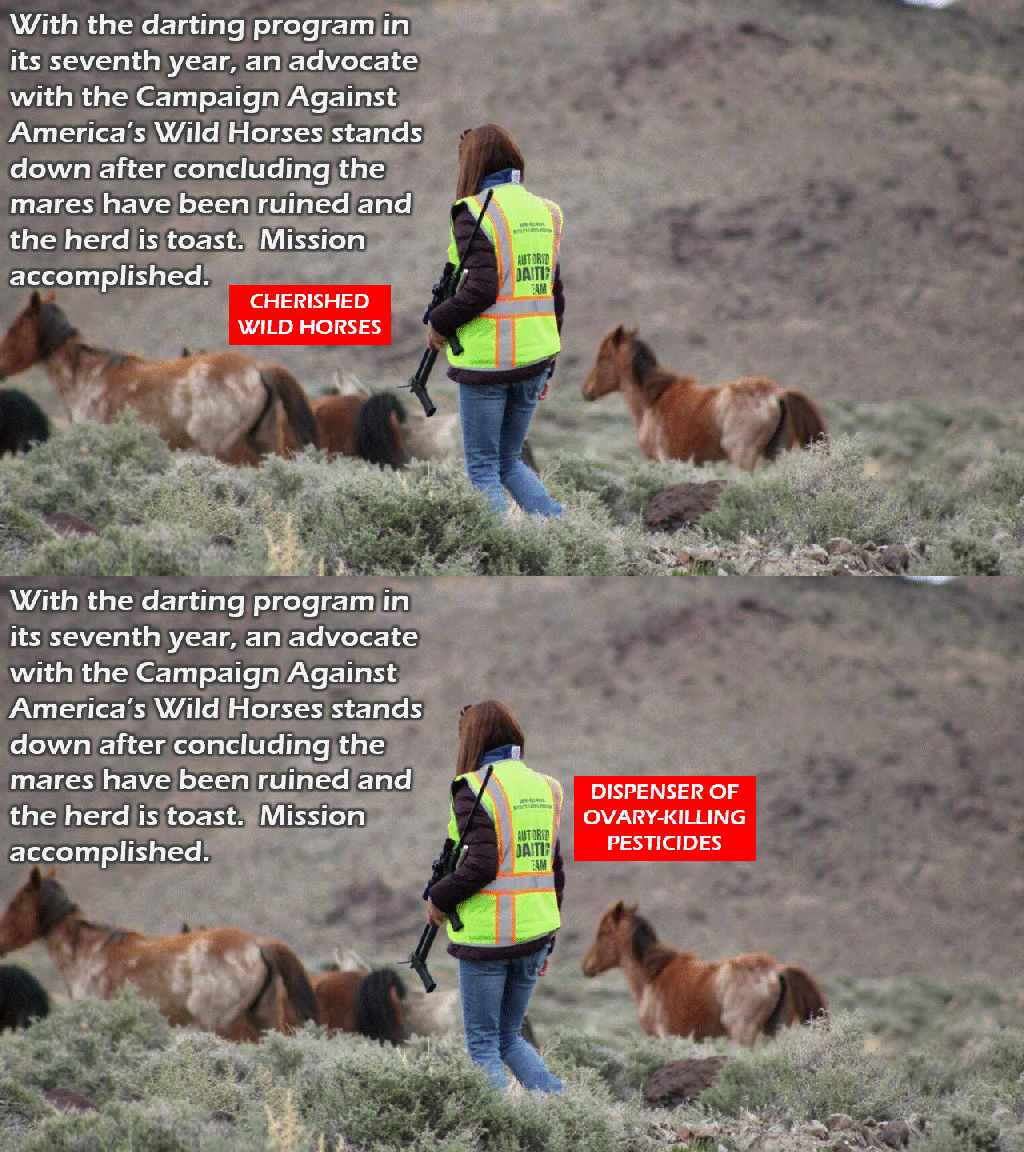
The BLM page concerning range and herd health, which applies to the wild horse and burro program not the grazing program, says PZP is only effective for approximately one year, unless four or more shots are given over time.
What do you suppose they mean by that?
PREVIOUS: Foal-Free Friday, Wicked Women of the West Edition.
► Get the truth about wild horses and the wild horse advocates at westernhorsewatchers.com.
The new fee, effective March 1, is $1.69 per AUM, up from $1.35 in 2025.
The BLM news release said changes to the fee cannot exceed 25% of the previous year’s price, which is the case this year.
For comparison, the price of alfalfa-grass hay this week was $27 per bale, 20 bales minimum, putting the cost of feed at $135 per AUM (five bales per horse per month).
RELATED: CRS Publishes FAQ for Livestock Grazing on Public Lands.
► Get the truth about wild horses and the wild horse advocates at westernhorsewatchers.com.
An environmental assessment for grazing permit renewals says in section 1.1 that the field office authorizes 380,544 active AUMs on 1,947,890 federal acres, equivalent to 16.3 wild horses per thousand federal acres.
Your faithful public servants claim that public lands in the western U.S. can only support one wild horse per thousand acres.
The EA did not indicate how many of the acres were in the Improve category.
Comments on the project will be accepted through February 14.
► Get the truth about wild horses and the wild horse advocates at westernhorsewatchers.com.
If the BLM hears too many complaints about the situation they may order a nuisance roundup.
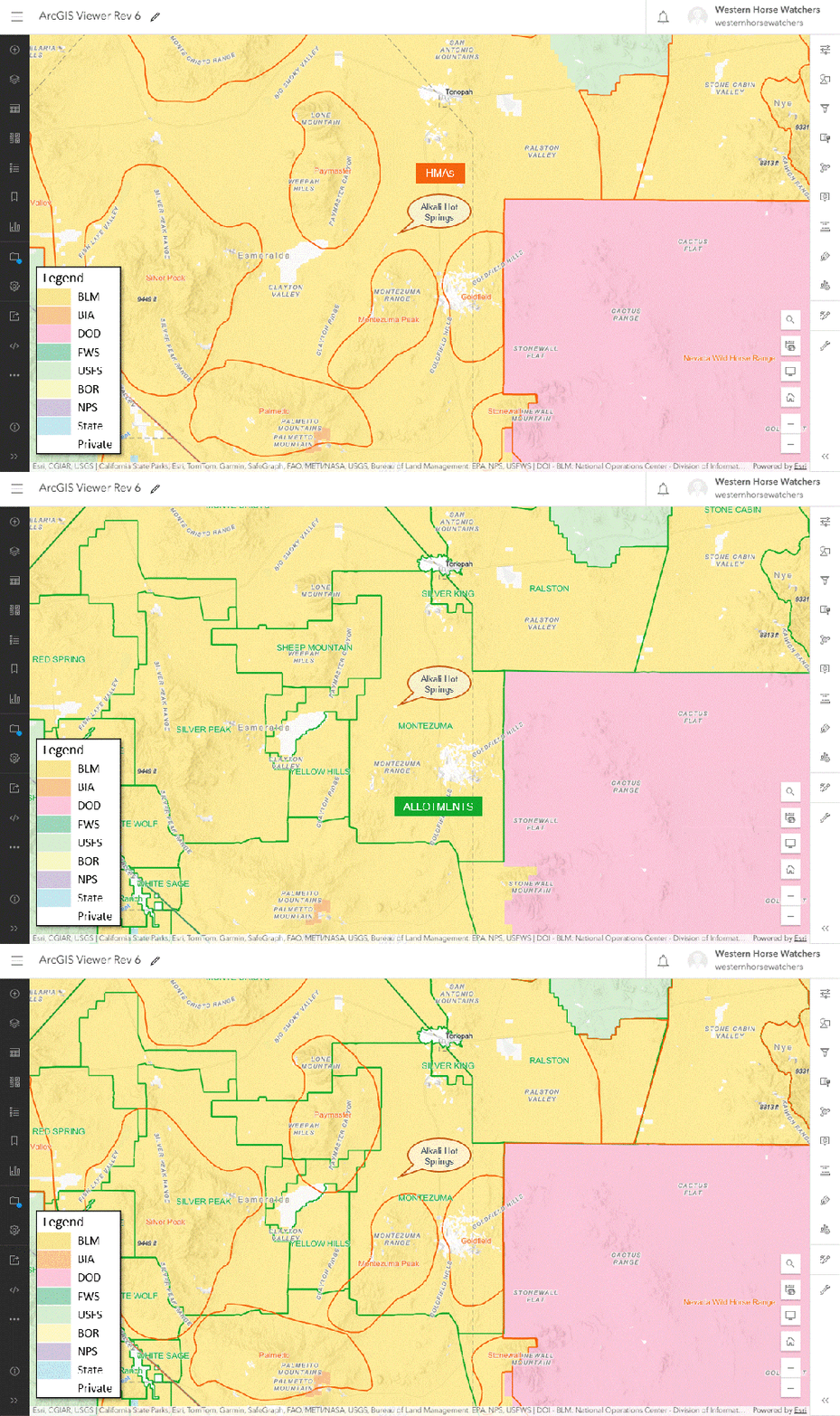
The 80-acre parcel serving as a laydown yard for Project Greenlink is surrounded by public lands identified for cattle, not wild horses and burros.
A solution might be for the contractor to build a sturdier fence while letting the water run onto public lands as it does now so the animals can continue to drink.
Any talk about new trenches or pipes or tanks on public lands would likely trigger a NEPA review and months or years of delay before anything happens in the field.
RELATED: BLM Monitoring the Situation at Alkali Hot Springs?
► Get the truth about wild horses and the wild horse advocates at westernhorsewatchers.com.
The BLM will extend the season of use by two months to test virtual fencing and targeted fall grazing according to yesterday’s news release.
The authorization use report shows the current season.
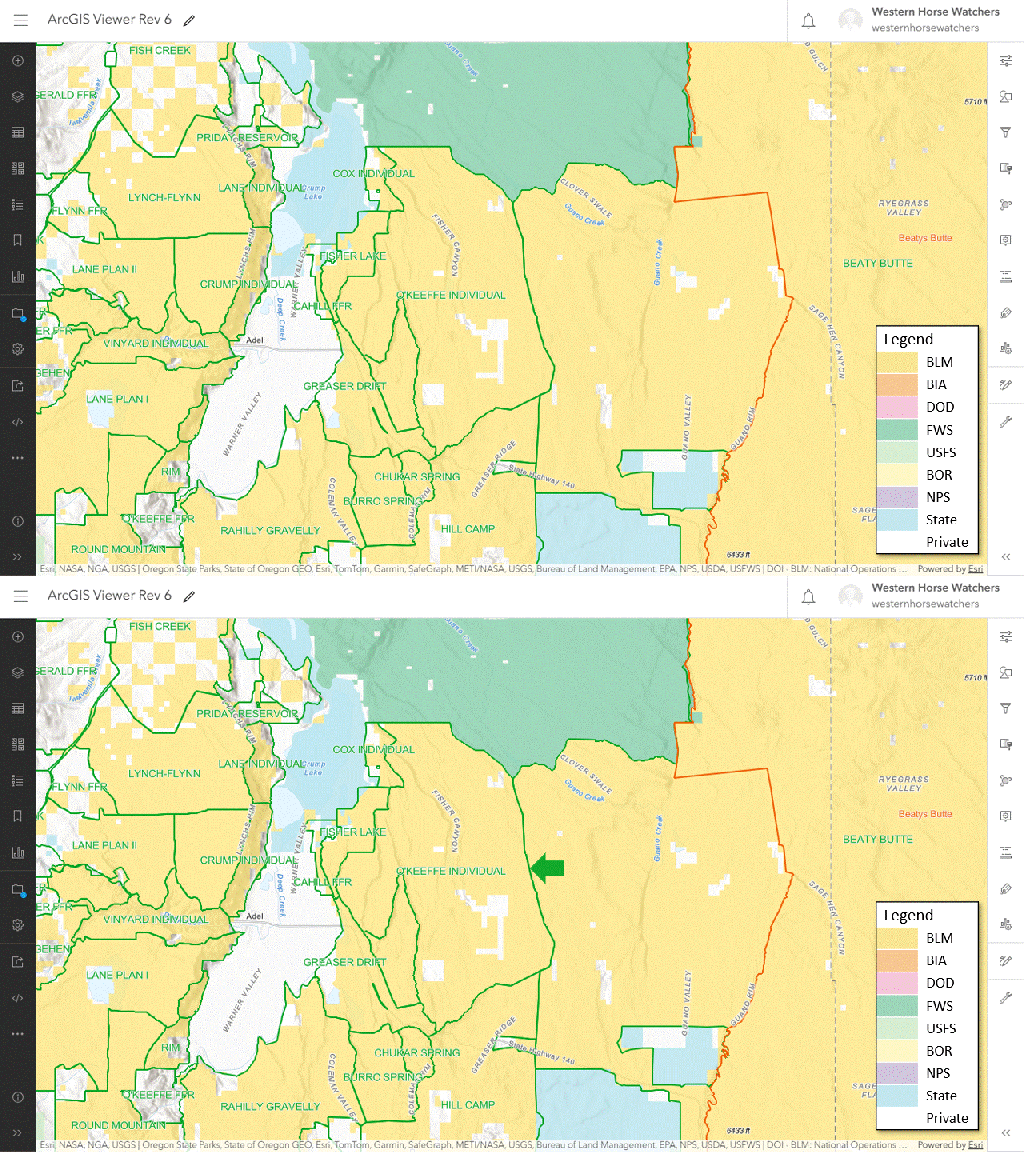
The allotment, located between the town of Adel and Beatys Butte HMA, offers 4,808 AUMs on 51,785 public acres, equivalent to 7.7 wild horses per thousand public acres.
The allotment master report puts it in the Improve category, probably because it’s in a priority management area for greater sage-grouse, not because of the exceptional stocking rate.
Your faithful public servants claim that rangeland health will suffer if wild horse populations exceed AML, which corresponds to a stocking rate of one wild horse per thousand acres.
There is only one permittee, suggesting that grazing privileges can be obtained through one base property, which may correspond to some or all of the private acreage inside the allotment.
With an estimated carrying capacity of 400 wild horses, the project might be worth a closer look—if the base property is offered for sale along with the permit.
Wild horses can be placed on public lands not identified for their use by acquiring base properties tied to grazing allotments and flipping the preference to horses.
The advocacy groups could have special funds for such efforts.
Instead, they use your donations to buy pesticides so they can beat the horse numbers down in favor of livestock.

RELATED: Key Indicators for New Wild Horse Preserves.
► Get the truth about wild horses and the wild horse advocates at westernhorsewatchers.com.
That’s what Forest Service personnel said according to a story by KPHO News.
Why are they offering a reward for information on the deaths of trespass livestock?
RELATED: Heber Shootings Resume.
► Get the truth about wild horses and the wild horse advocates at westernhorsewatchers.com.
If you’re not up to speed on the case watch yesterday’s episode of Mustang Monday.
Nevada is a fence-out state.
The fence around the property should meet the requirements of NRS 569.431.
If the agency receives complaints about the horses and burros and determines that they’re damaging property or posing a safety hazard to the construction crew, it may order a roundup.
They won’t capture the animals and take them back to their HMAs.
They’ll be permanently removed from the range.
The property is not in an area identified for their use.
RELATED: Will Greenlink West Pass Through Alkali Hot Springs?
► Get the truth about wild horses and the wild horse advocates at westernhorsewatchers.com.
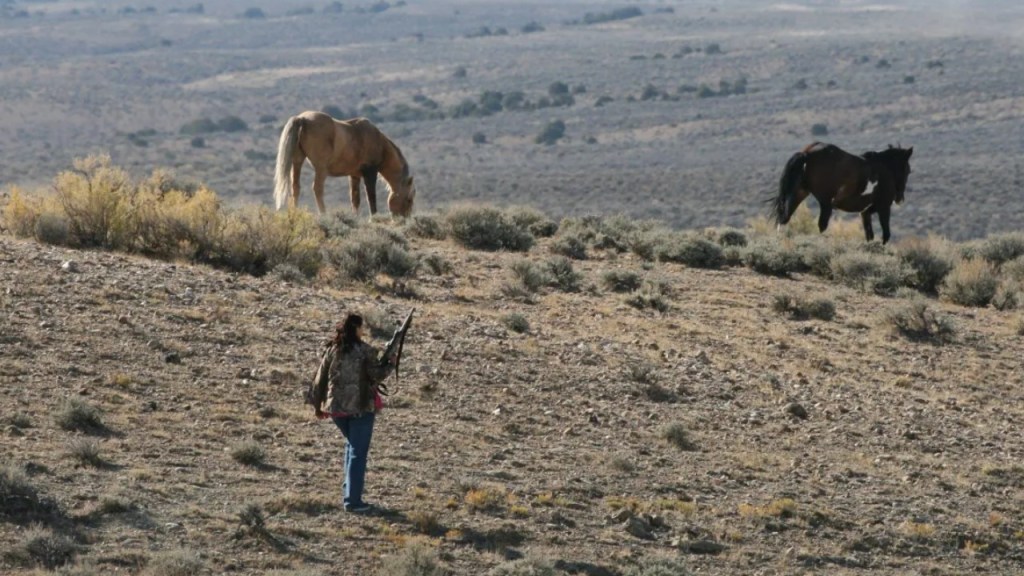
The loss of nine free-roaming horses in the Apache-Sitgreaves National Forest is just another day at the office for the advocates.
At the Salt River, they’ve taken the herd from 450 to 280.
The largest attempted eradication of wild horses is not being carried out by the BLM in Wyoming but by the advocates at the Virginia Range.
The number of horses lost is not known because they scrubbed their darting resources page and the monthly reports posted thereto. The final result could go as high as 3,000.
New programs are springing up wherever they can convince the bureaucrats that they have a better way.
They are enemies of America’s wild horses and don’t deserve a penny of your support.
RELATED: Heber Shootings Resume.
► Get the truth about wild horses and the wild horse advocates at westernhorsewatchers.com.
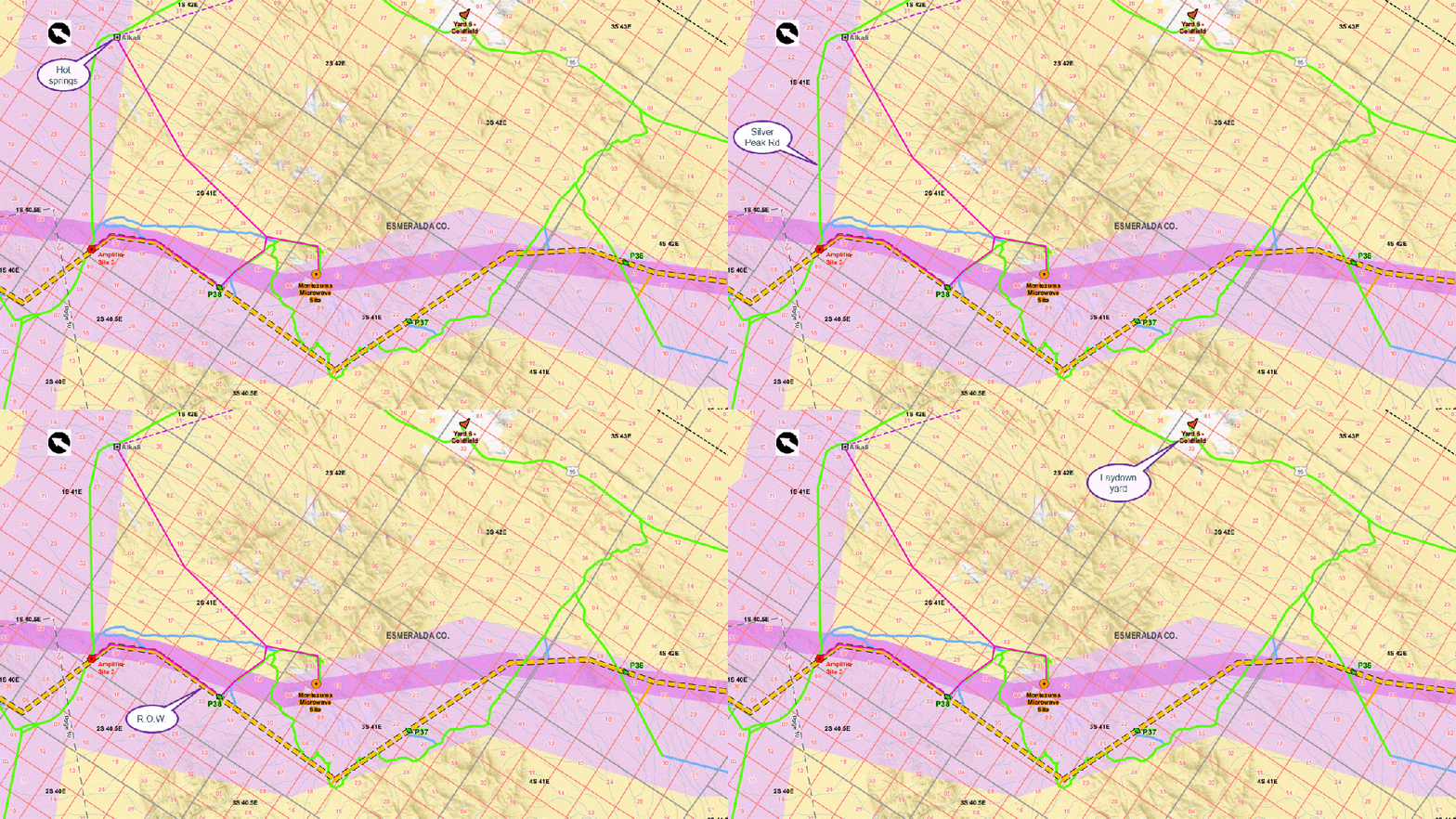
The right-of-way zigzags to the northwest about two miles west of Alkali according to map 11 in Attachment B, one of the appendices to the Final EIS.
The map shows a laydown yard in Goldfield but not Alkali.
RELATED: Wild Horses and Burros Losing Access to Alkali Hot Springs?
► Get the truth about wild horses and the wild horse advocates at westernhorsewatchers.com.
An update from Alkali Hot Springs by Desert Water.
One of the horses gets caught in the new fence. Not pretty.
RELATED: Wild Horses and Burros Losing Access to Alkali Hot Springs?
► Get the truth about wild horses and the wild horse advocates at westernhorsewatchers.com.
The Prognosticator of Punxsutawney said earlier today that winter’s not going anywhere according to a report by CBS News.
Neither are the lies about wild horse behavior, carrying capacity of public lands and the reversibility of PZP.
You can bring an early spring by giving the advocates the boot.

► Get the truth about wild horses and the wild horse advocates at westernhorsewatchers.com.
A fence has been built around the property as a part of its conversion to a laydown yard for NV Energy’s Greenlink West project.
Runoff from the spring will go under the fence as shown in the following video but access to the other water holes will be cut off.
The Esmeralda County assessor does not show any sales history for the property.
The APN is 006-261-05 and the current owner is HRH NEVADA RESOURCES, LTD.
The parcel map shows one 80-acre tract, 1,320 ft × 2,640 ft, minus 3.48 acres for Silver Peak Road.
Most of the new transmission line will run across BLM land.
The Decision Record and Final EIS can be found in the NEPA review by clicking on the Documents link near the top of the page.
A map in the January construction report shows the portion near Alkali as Segment 2.
RELATED: Wild Horses and Burros at Alkali Hot Springs?
► Get the truth about wild horses and the wild horse advocates at westernhorsewatchers.com.
The allotment is too small but nearly 1,500 acres will be treated for cheatgrass next year according to a BLM news release.
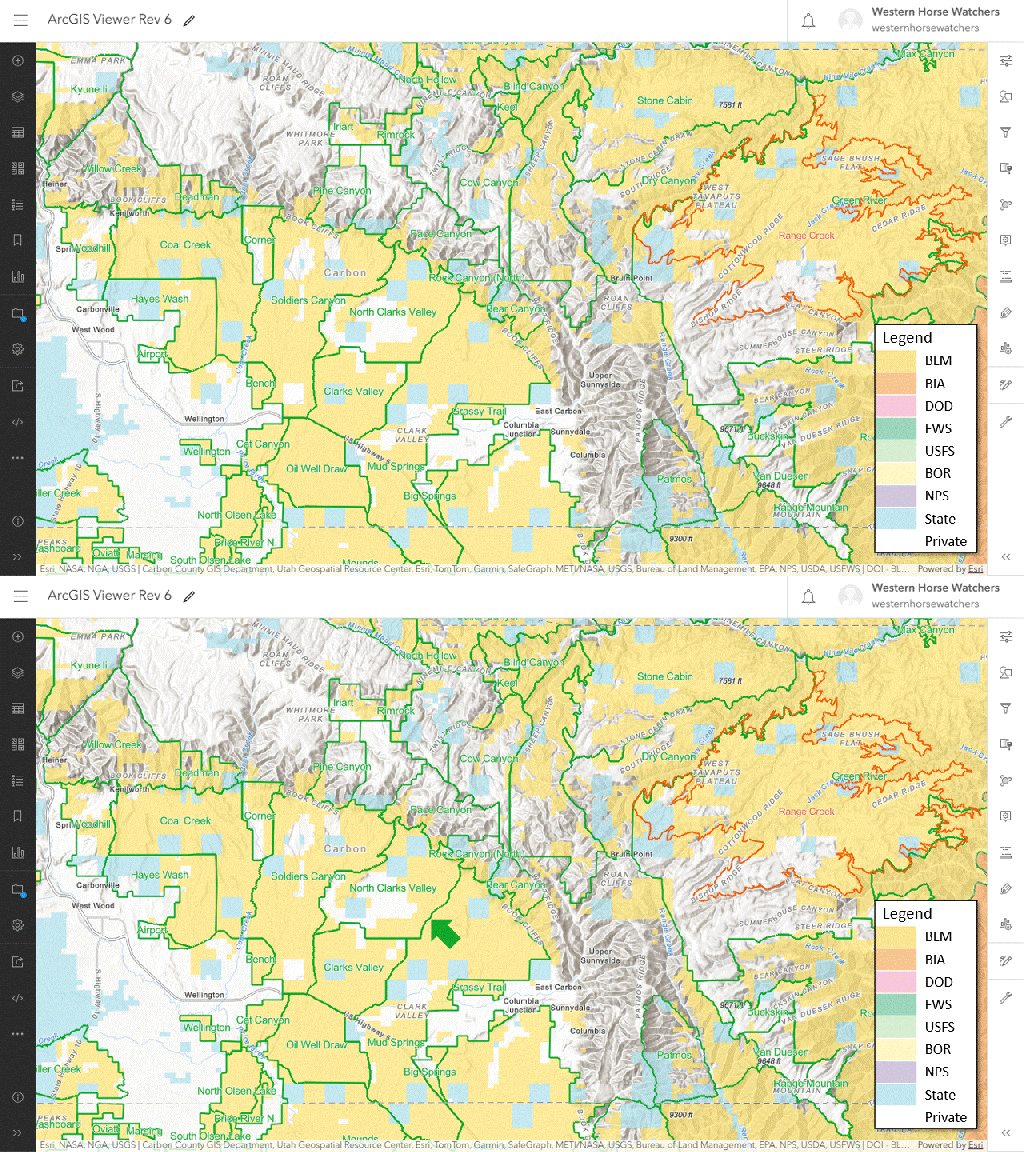
Your faithful public servants claim that rangeland health will deteriorate if wild horse populations exceed one animal per thousand acres but the allotment supports livestock equivalent to three wild horses per thousand acres and it’s in the Maintain category.
The Range Creek HMA, with a target stocking rate of 2.9 wild horses per thousand public acres, is a few miles to the east.
RELATED: Suitability of Allotments for Wild Horse Preserves.
► Get the truth about wild horses and the wild horse advocates at westernhorsewatchers.com.
The incident concluded on January 30 with 180 horses captured, 173 shipped, one released and seven dead.
The capture goal was 182.
A stallion escaped from the trap on the final day but this is not reflected in the data.
180 ≠ 173 + 7 + 1
The death rate was 3.9%.
The capture total consisted of 87 stallions and 93 mares.
No foals were caught.
The average daily take was 36.
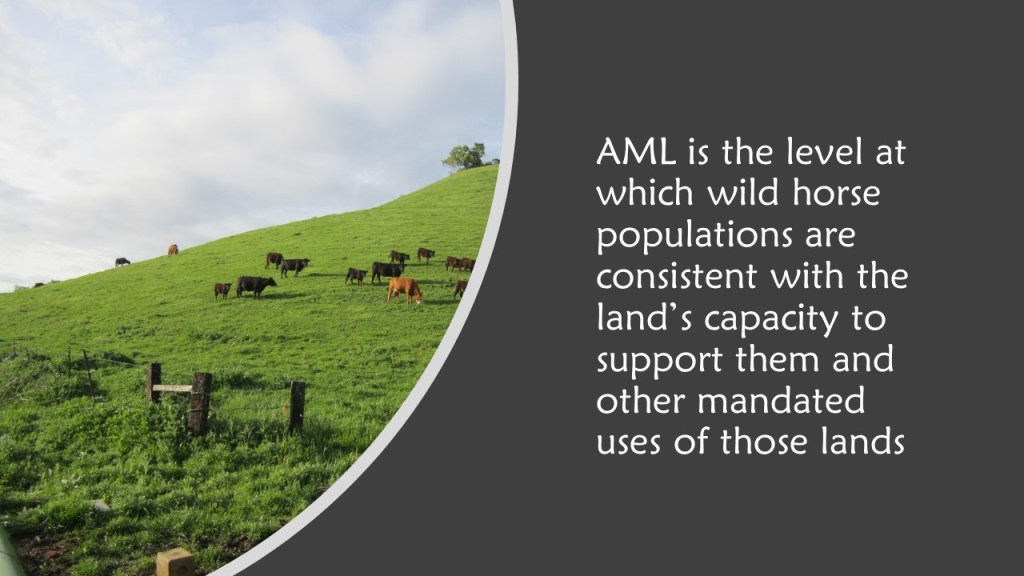
The operation liberated 2,148 AUMs per year for other mandated uses of public lands.
There were no plans to treat any of the mares with fertility control pesticides and return them to the range, a huge disappointment to the advocates.
RELATED: Jakes Fire Emergency Roundup Announced.
UPDATE: The February 3 news release does not provide any new information.
► Get the truth about wild horses and the wild horse advocates at westernhorsewatchers.com.
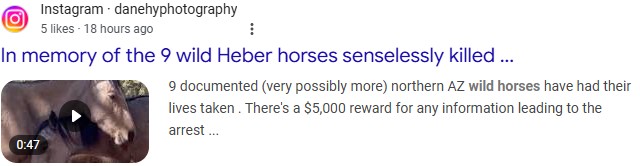
Nine wild horses have been found dead in the Black Mesa Ranger District according to a report by KNAU News.
A news release by ASNF confirms the $5,000 reward for information leading to the arrest and conviction of those responsible.
RELATED: TIME Looks at Heber Wild Horse Shootings.
► Get the truth about wild horses and the wild horse advocates at westernhorsewatchers.com.
The incident started on January 26.
*According to advocates.
Results for Days 3 and 4 were not posted until today.
All deaths were intentional, the result of pre-existing conditions.
The death rate is 4.5%.
The capture total includes 76 stallions and 78 mares.
No foals have been caught.
The location of the trap site is not known.
The name of the contractor was not given.
The operation has liberated 1,848 AUMs per year.
RELATED: Jakes Fire Roundup Begins.
► Get the truth about wild horses and the wild horse advocates at westernhorsewatchers.com.
Remnants of the old spa are on deeded acreage in the Montezuma Allotment, between the Paymaster and Montezuma Peak HMAs.
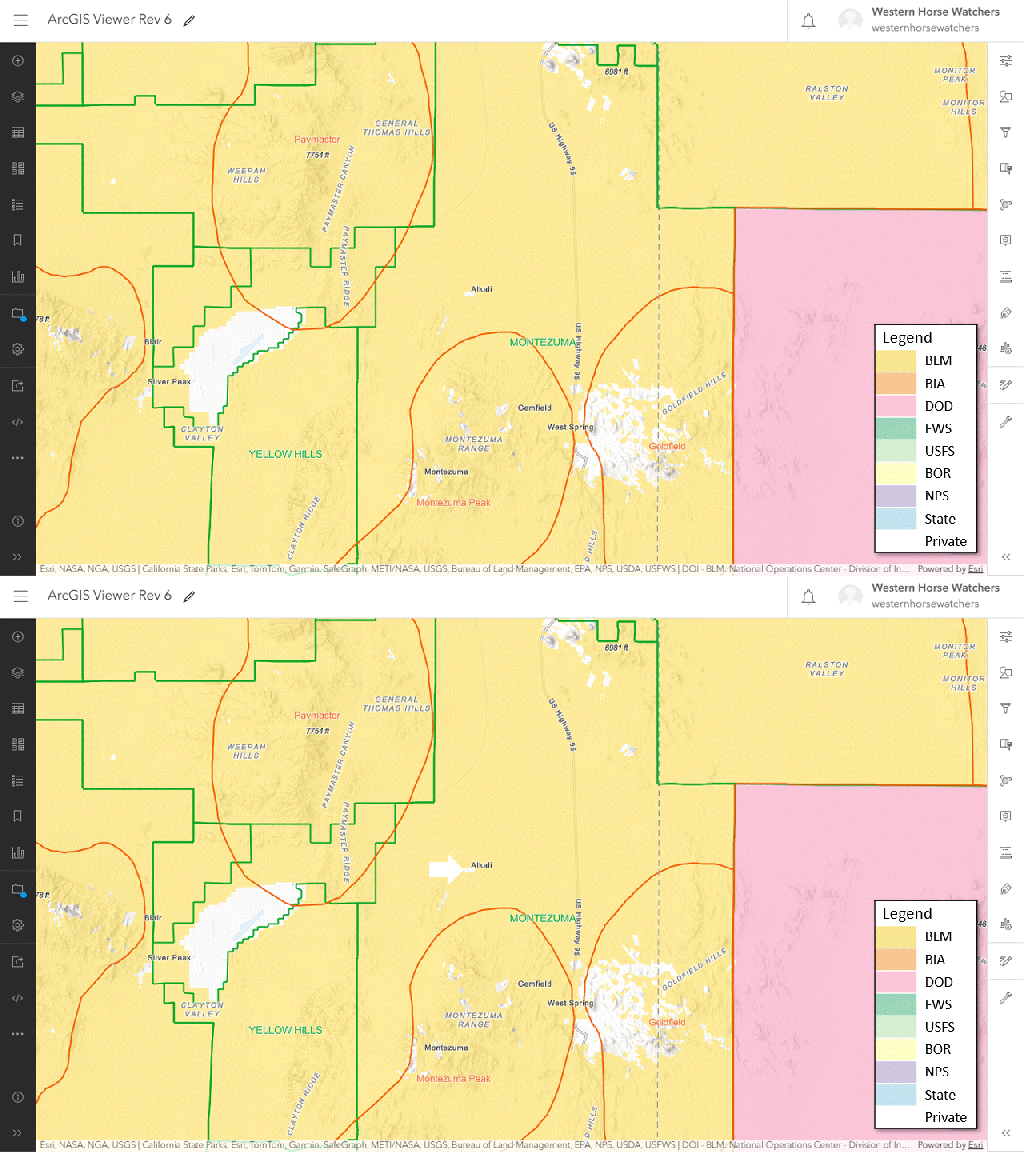
The PLSS layer in the ArcGIS Viewer indicates the property covers two 40-acre parcels in section 26 of T1S R41E, MDB&M.
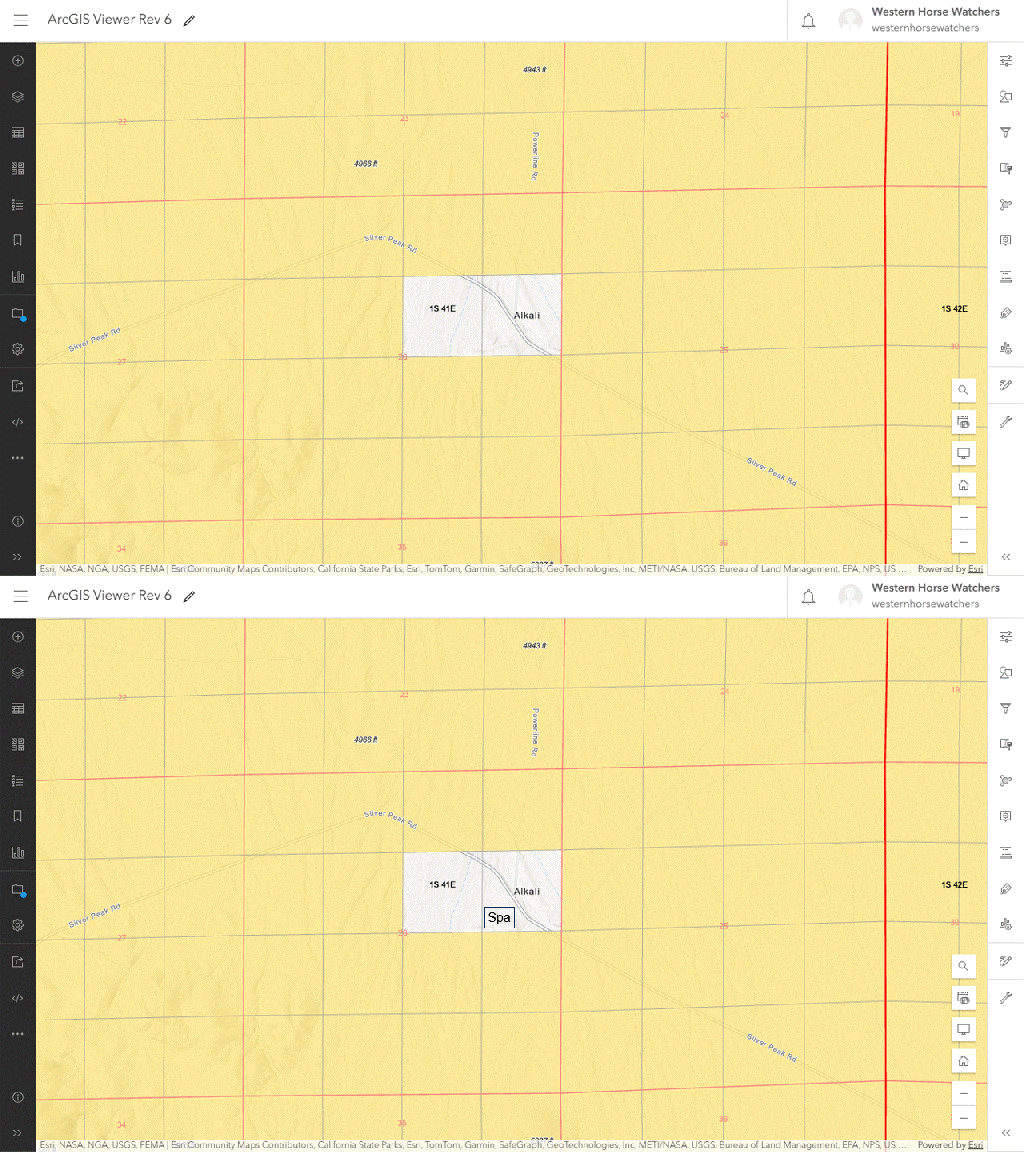
The spa is in the southwest quadrant of the easterly parcel.
The allotment master report puts forage availability on the public lands at 13.6 AUMs per year per thousand public acres, barely enough to support one wild horse or two wild burros per thousand acres.
The landscape and animals are documented in this video by Windy Bill.
► Get the truth about wild horses and the wild horse advocates at westernhorsewatchers.com.
They are the pesticide pushers, enemies of America’s wild horses and servants of the public-lands ranchers.
They couldn’t convert an AML to AUMs if their lives depended on it, much less compute a forage allocation for livestock in an area identified for wild horses.
But they know how much adjuvant to add to the PZP and how long to mix them.
Resolve now to cut them off.
PREVIOUS: Foal-Free Friday, Turncoats and Sellouts Edition.
► Get the truth about wild horses and the wild horse advocates at westernhorsewatchers.com.
 Western Horse Watchers Association