Suitability of Allotments for Wild Horse Preserves

A first-pass assessment can be carried out if you know the forage availability or stocking rate, both of which can be determined from the Allotment Master Report at RAS.

Forage availability = Active AUMs ÷ Public acres × 1,000

Stocking rate = Forage availability ÷ 12

Forage availability (AUMs per thousand public acres)RatingStocking rate (Wild horses per thousand public acres)
Less than 36PoorLess than 3
36 t0 60Fair3 to 5
More than 60GoodMore than 5

For example, the Wallrock Allotment in Oregon offers 6,656 active AUMs on 100,167 public acres according to the report.

That’s 66.4 AUMs per thousand public acres or 5.5 wild horses per thousand public acres, putting it in the Good category.

If the base property tied to the allotment was on the market, you might want to take a closer look.

The allotment supports livestock equivalent to 555 wild horses, which would be the carrying capacity of the new refuge, assuming no on-site hay production.

RELATED: Scoping Out a New Wild Horse Refuge.
What Does Herd Implosion Look Like?

It’s not apparent to the untrained eye.

But it’s occurring across the American west, as the advocates sterilize the mares and birth rates fall irreversibly below death rates.

In this example from the Salt River, the white horse at 1:42 shows a subtle indicator of their involvement.

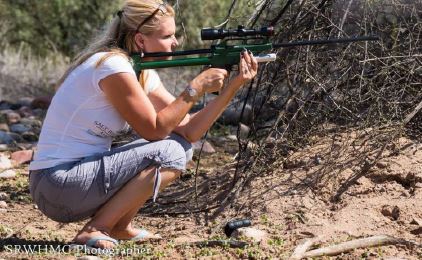
The Salt River Wild Horse Darting Group works closely with the Campaign Against America’s Wild Horses.

RELATED: When Will PLC Endorse Salt River and Virginia Range Advocates?

When Will PLC Endorse Salt River and Virginia Range Advocates?

They’re using PZP to reduce wild horse populations, with the inevitable result of mass sterilization.

The technique was pioneered at Assateague Island, where, as of last year, the herd was still shrinking eight years after the darting program was shut off.

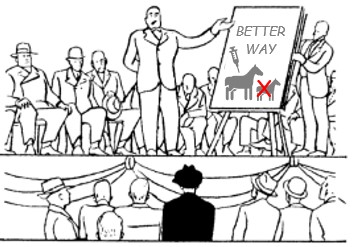
Better Way 10-25-23

The advocates sell it as a humane alternative to motorized removal, claiming the pesticide is safe and reversible.

The Public Lands Council represents cattle and sheep producers who hold grazing permits on public lands across the western U.S.

RELATED: Salt River Darting Program by the Numbers.

Colorado Wild Horse Working Group Mulls New Refuge

The agenda from last week’s meeting indicates that Day 2 was devoted to consideration of a new preserve.

The legislature expects the group to identify and pursue long-term solutions for wild horses that are removed from federal horse management areas or held in federal facilities according to the Year One Report.

The best option is to acquire base properties tied to one or more grazing allotments, such as the ranch near Dinosaur, and flip the preference to horses.

The pattern has already been established by the Wild Horse Refuge.

RELATED: Criteria for Colorado’s New Wild Horse Preserve.

Foal-Free Friday, Rangelands and Lovers Edition

Proponents of pesticides, helicopters and livestock will share a special moment today as they renew their vows of ranching superiority in the lawful homes of wild horses.

They may not always agree on fine points but a belief in the overpopulation narrative and the necessity of achieving AMLs helps them overcome their differences.

RELATED: Foal-Free Friday, Science-Based Conservation Edition.

Working Together for a Horse-Free Future 12-21-22

Hinsdale Base Property Available for $10 Million

Black Ranch covers 3,710 deeded acres in northeastern Montana, with grazing privileges on 26,600 BLM acres and 4,680 state acres according to the agent’s listing.

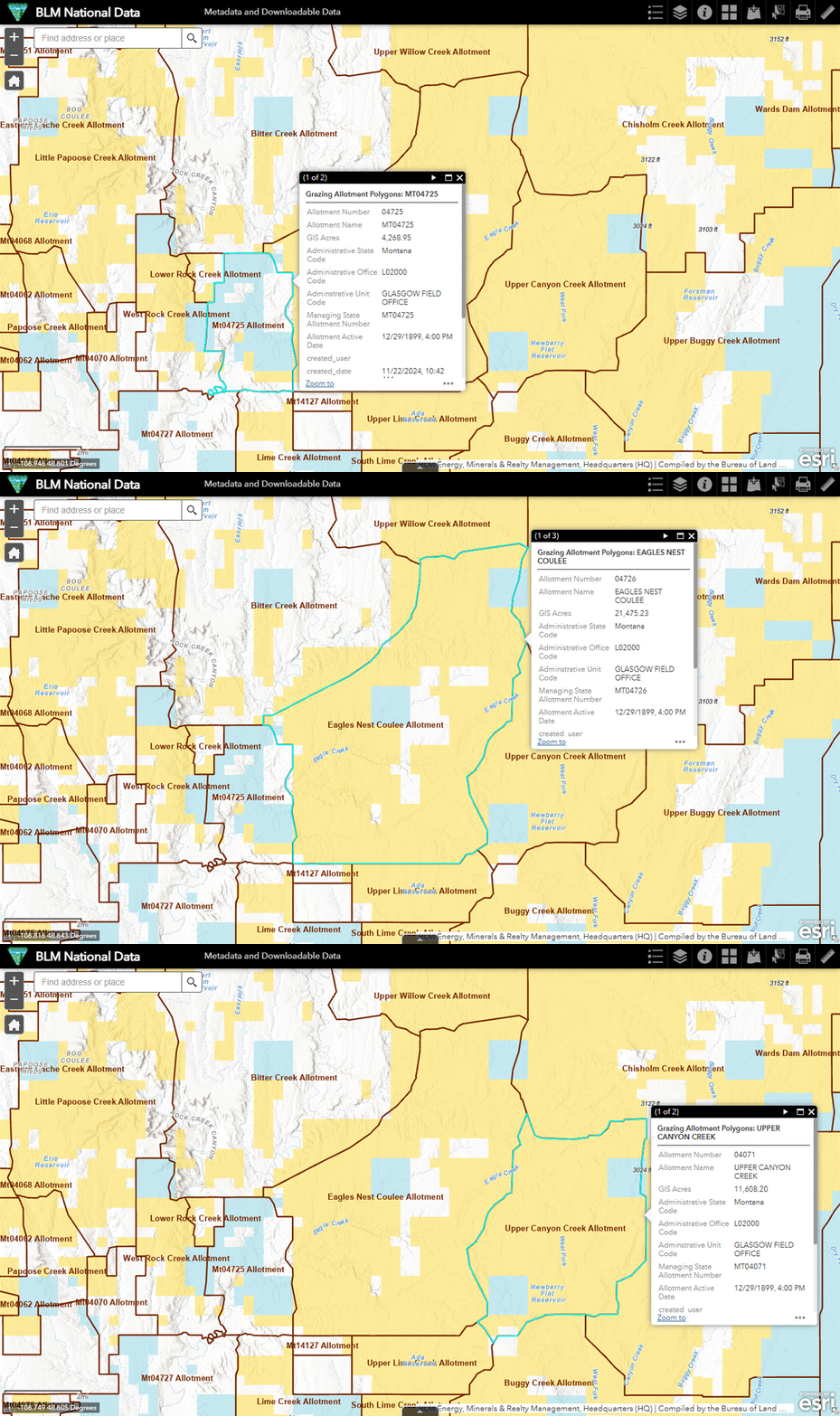
The map indicates the BLM grazing preference is tied to the Upper Canyon Creek, MT04725 and Eagles Nest Coulee allotments, which offer a combined 4,346 active AUMs on 28,661 public acres, according to the allotment master report.

That’s equivalent to 362 wild horses or 12.6 wild horses per thousand public acres.

Your faithful public servants claim that public lands in the western U.S. can only support one wild horse per thousand acres (27,000 animals on 27 million acres).

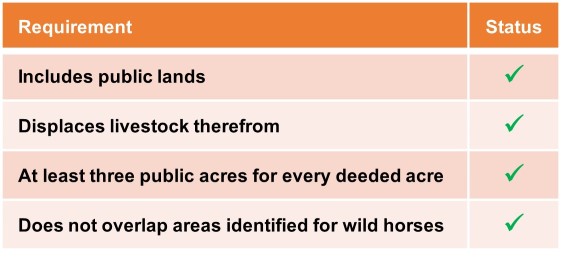
The land ratio, using the agent’s data, is 7.2 public acres per deeded acre.

The ranch does not overlap any areas identified for wild horses.

The best option for wild horses removed from their lawful homes is to put them back on public lands at the expense of privately owned livestock.

This can be accomplished by acquiring base properties such as this one and flipping the grazing preference to horses.

Black Ranch Scorecard 02-12-25

The investment ratio would be $27,624 per rescued horse, assuming the ranch operated in self-sustaining mode.

On-site hay production would increase capacity, driving the investment ratio down.

The listing says the ranch supports 750 head for seven months per year but does not give the status of livestock during the off season.  Normally the animals would retreat to the deeded acreage or rented pastures.

RELATED: Starting a Nonprofit That Actually Helps Wild Horses.

Black Ranch Allotments 02-12-25

Canyonlands Wild Burro Roundup Announced

The URL of the news release puts it at the BLM Announcements page but as of this evening it’s not there.  Very strange.

The incident will begin on February 24 as scheduled.

The capture and removal goals are 100 each.

A helicopter will push the animals into the trap and operations will be open to public observation.

Burros identified for removal will be taken to the Axtell off-range corrals.

Daily reports will be posted to the gather page.

There are no plans to treat any of the jennies with fertility control pesticides and return them to the range.

The HMA can only support 100 burros on 77,311 public acres, equivalent to 50 wild horses or 0.6 wild horses per thousand public acres.  The target stocking rate across all HMAs is one wild horse per thousand acres.

The roundup supports three tenets of rangeland management.

A one-day roundup last year took 46 burros off the range.

RELATED: Canyonlands Roundup Begins, Ends on Same Day.

Canyonlands HMA with Allotments 01-10-24

BLM Releases Map Package

The app appears to be a streamlined version of the National Data Viewer, with a subset of its features, but real-time plotting of your position.

Refer to the news release for installation instructions.

Supported layers include:

  • Surface management agency
  • Public land survey system
  • National recreation sites
  • National conservation areas

Only the Navigation basemap is available.

The app does not show allotments, HMAs or WHTs, which would be nice if you’re exploring, trying to find wild horses or do your own land health assessments.

Murderer’s Creek Roundup, Day 73

The incident started on November 29.  Results through February 9:

  • Scope: Murderer’s Creek HMA, WHT
  • Target: Wild horses
  • AML: 140
  • Pre-gather population: 650
  • True AML: TBD
  • Type: Emergency
  • Method: Bait
  • Capture goal: 350 – 400
  • Removal goal: 350 – 400
  • Captured: 373, up from 350 on Day 66
  • Shipped: 340, no change from Day 66
  • Released: None
  • Deaths: 6, up from 5 on Day 66
  • Average daily take: 5.1
  • Unaccounted-for animals: 27
  • Snippet from statute: It is the policy of Congress that wild free-roaming horses and burros shall be protected from capture, branding, harassment, or death
  • Snippet from manual: To protect wild horses and burros from unauthorized capture, branding, harassment or death

Results for Days 68, 71, 72 and 73 were posted today.  No reports were given for Days 67, 69 and 70.

The low end of the capture goal has been reached.

A stallion died of colic on Day 68, lifting the death rate to 1.6%.

The capture total includes 135 stallions, 148 mares and 90 foals.  The gather page says 135/153/85.

Youngsters represented 24.1% of the animals gathered, consistent with a herd growth rate of 19% per year.  The Rule of 72 says the herd size would double in 3.8 years.

Of the adults, 47.7% were male and 52.3% were female, no indication of an abnormal sex ratio in the population at large.

Body condition scores were not given.

The location of the trap site was not disclosed.

The name of the contractor was not provided.

There are no plans to treat any of the mares with fertility control pesticides and return them to the range.

No decisions have made regarding the long-term disposition of horses, which means they could be treated or altered in off range holding, including the stallions.

The status of livestock grazing in the burned area is not known.

RELATED: Murderer’s Creek Roundup, Day 66.

Murderers Creek HMA with Allotments 10-24-24

When Will Elko County Endorse the Virginia Range Advocates?

They’re obliterating one of the largest wild horse herds in the American west, proving that mass sterilization is more effective in the long run than motorized removal.

They’re pioneering a two-part management philosophy:

  • Ruining the mares with PZP
  • Praying for the older horses to die

Added benefits include:

  • Tiny breeding populations
  • Loss of genetic diversity
  • Abnormal sex ratios
  • Selection for faulty immune systems

They sell this scam as wild horse conservation and many have fallen for it.

RELATED: Modus Operandi of the Wild Horse Advocates.

Pesticide Pushers 07-17-23