Next WHBAB Meeting Set for Early January

An unpublished announcement will appear in the Federal Register tomorrow.

The meeting runs from January 7 to 9 in Sacramento.

Days 1 and 2 include a public comment session.

The third day is devoted to a tour of the Rio Cosumnes Correctional Center.

The meeting is open to the public and will be livestreamed.

The agenda does not include a session on the unlawful use of pesticides, a growing problem in areas identified for wild horses.

The Wild Horse and Burro Advisory Board supports three tenets of rangeland management.

UPDATE: The announcement has been published.

Triple B Roundup, Day 23

The incident started on November 2.  Results through November 24:

  • Scope: Triple B Complex
  • Target: Wild horses
  • AML: 889
  • Pre-gather population: 3,335
  • True AML: 4,551
  • Type: Planned
  • Method: Helicopter
  • Category: Cruel and costly (according to advocates)
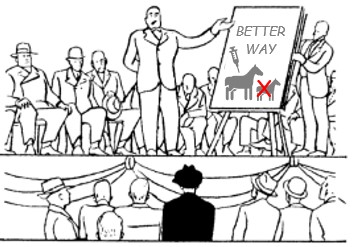
  • Better way: Sterilize mares with PZP (according to advocates)
  • Capture goal: 2,255
  • Removal goal: 2,155
  • Captured: 1,785, up from 1,679 on Day 21
  • Shipped: 1,586, up from 1,459 on Day 21
  • Released: 20, no change from Day 21
  • Deaths: 18, up from 17 on Day 21
  • Average daily take: 77.6
  • Unaccounted-for animals: 161
  • Snippet from statute: It is the policy of Congress that wild free-roaming horses and burros shall be protected from capture, branding, harassment, or death
  • Snippet from manual: To protect wild horses and burros from unauthorized capture, branding, harassment or death

The figures above are based on the daily reports.

The sidebar says 1,589 shipped.

A mare was put down on Day 23 for poor body condition.

The death rate is 1.0%.

The capture total includes 680 stallions, 700 mares and 405 foals.

Youngsters represented 22.7% of the animals gathered, consistent with a herd growth rate of 17% per year.

Of the adults, 49.3% were male and 50.7% were female, no indication of an abnormal sex ratio.

Body condition scores were not given.

The location of the trap site was not disclosed.

The name of the contractor was not provided.

Three HMAs are affected.

Twelve mares have been treated with GonaCon Equine.  The plan calls for up to 50 to receive the pesticide and be returned to the range with up to 50 stallions.

The roundup supports three tenets of rangeland management.

Resources liberated to date:

  • Forage: 21,180 AUMs per year
  • Water: 17,650 gallons per day

RELATED: Triple B Roundup, Day 21.

Triple B Complex with Allotments 11-04-24

Why Separate the Virginia Range Mustangs from Washoe Lake?

Because the herd defies the carrying capacity narrative.

You can’t be telling the American people that public lands in the western U.S. can only support one wild horse per thousand acres (27,000 animals on 27 million acres) when the Virginia Range is carrying ten.

Advocates with the Campaign Against America’s Wild Horses are trying to erase the outlier with the approval of the Nevada Department of Agriculture—the same agency pushing for the fences.

If areas identified for wild horses were managed principally for them, as specified in the original statute, there’d be no reason to cram 70,000 wild animals into government feedlots at taxpayer expense.

BLM allotments in ten western states support livestock equivalent to seven wild horses per thousand acres, another indication that the bureaucrats, ranchers and advocates aren’t telling you the truth.

Messrs. Burgum, Musk and Ramaswamy, are you listening?

RELATED: Washoe Lake Fencing Not a New Idea?

Working Together for a Horse-Free Future 12-21-22

BLM Not Following GonaCon Treatment Plan at Buffalo Hills

The gather page indicates that boosters will be given after 30 days.

Buffalo Hills Treatment Plan 11-24-24

This corresponds to neither of the options in the response to comments of the DNA.

GonaCon Comment Buffalo Hills DNA 11-08-24

As of today, the EPA has not published an update to the pesticide label, so the 90-day interval holds.

RELATED: Buffalo Hills Roundup Ends Early.

UPDATE: The BLM news release reiterates the 30-day interval.

Buffalo Hills Treatment Interval 11-25-24

Buffalo Hills Roundup Ends Early

The incident concluded today with 138 horses captured, 32 shipped, 50 released and four dead.

Thirty-three burros were caught and shipped.

There were 52 unaccounted-for horses.

The capture goals were 235 horses and 33 burros.

Fifty-seven mares were treated GonaCon Equine and five were released.

The sidebar indicates that the remainder, representing the unaccounted-for animals, will receive a booster after 30 days, making the HMA another GonaCon crime scene.

The minimum interval is 90 days according to the pesticide label.

The death rate was 2.9%.

Youngsters represented 12.3% of the horses captured.

Of the adults, 43.8% were male and 56.2% were female.

The roundup liberated 1,254 AUMs per year and 1,045 gallons of water per day but these numbers will go down when the treated mares are released.

RELATED: Buffalo Hills Roundup Set for Next Week.

UPDATE: The BLM news release reiterates the 30-day interval.

Washoe Lake Fencing Not a New Idea?

The Animal Industry Report for the third quarter Board of Agriculture meeting indicates on page three, under Livestock Identification, that

  • NDA has entered into a contract with a vendor for reconstruction of BLM fences and construction of new fences pending the completion of the NEPA study, in the Virginia Range Area
  • All funding is sourced from the NDA Feral Horse Management Project
  • John Axtell has taken over as project manager

Axtell’s predecessor may have been Jim Wheeler, who was hired for a 15-month term on a USDA grant.

Wheeler noted last year that many wild horses have moved into Washoe Lake State Park, in part because the state hasn’t maintained the fencing.

As for the third quarter meeting, it was cancelled.

A fourth quarter meeting has not been scheduled.

RELATED: NDA Installing Fence Around Washoe Lake?

Triple B Roundup, Day 21

The incident started on November 2.  Results through November 22:

  • Scope: Triple B Complex
  • Target: Wild horses
  • AML: 889
  • Pre-gather population: 3,335
  • True AML: 4,551
  • Type: Planned
  • Method: Helicopter
  • Category: Cruel and costly (according to advocates)
  • Better way: Sterilize mares with PZP (according to advocates)
  • Capture goal: 2,255
  • Removal goal: 2,155
  • Captured: 1,679, up from 1,431 on Day 19
  • Shipped: 1,459, up from 1,324 on Day 19
  • Released: 20, no change from Day 19
  • Deaths: 17, up from 15 on Day 19
  • Average daily take: 80.0
  • Unaccounted-for animals: 183
  • Snippet from statute: It is the policy of Congress that wild free-roaming horses and burros shall be protected from capture, branding, harassment, or death
  • Snippet from manual: To protect wild horses and burros from unauthorized capture, branding, harassment or death

The figures above are based on the daily reports.

The sidebar says 1,462 shipped.

A stallion was put down on Day 21 for a wry nose and a foal died during transportation.

The death rate is 1.0%.

The capture total includes 646 stallions, 652 mares and 381 foals.

Youngsters represented 22.7% of the animals gathered, consistent with a herd growth rate of 17% per year.

Of the adults, 49.8% were male and 50.2% were female, no indication of an abnormal sex ratio.

Body condition scores were not given.

The location of the trap site was not disclosed.

The name of the contractor was not provided.

Three HMAs are affected.

Twelve mares have been treated with GonaCon Equine.  The plan calls for up to 50 to receive the pesticide and be returned to the range with up to 50 stallions.

The roundup supports three tenets of rangeland management.

Resources liberated to date:

  • Forage: 19,908 AUMs per year
  • Water: 16,590 gallons per day

RELATED: Triple B Roundup, Day 19.

Triple B Complex with Allotments 11-04-24

Murderer’s Creek Emergency Roundup Announced

The DNA and DR were copied to the project folder on November 15.

Bait trapping will begin on November 25 according to a USFS news release.

The removal goal is 350 to 400 wild horses, but those numbers could go up throughout the winter depending on forage availability.

The pre-gather population is thought to be around 650.

The announcement did not indicate if operations would be open public observation.

Captured animals will be taken to holding facilities in Burns, OR (probably the Hines corrals) and Alturas, CA (probably Litchfield).

The name of the contractor was not provided.

A link to the daily reports was not given.

The project area covers BLM and Forest Serice lands (HMA | WHT).

RELATED: Murderer’s Creek DNA Out for Public Review.

UPDATE: BLM created a page for gather stats and daily reports.

UPDATE: The BLM news release does not indicate how many horses will be returned to the area when conditions improve.

Carter Reservoir EA Refers to Old GonaCon Registrations

From page 49 in the Draft EA (page 50 in the pdf): “GonaCon-Equine is approved for use by authorized federal, state, tribal, public, and private personnel, for application to wild and feral equids in the United States (EPA, 2013; 2015).”

An updated registration was issued in 2017.

On page 178 in the pdf: “The EPA-required product label associated with the registration for GonaCon-Equine is cited in the EA as EPA (2013).  That label states that ‘If longer contraceptive effect is desired, a second vaccination may be given 30 or more days after the first injection or during the following year with no known adverse health effects to the vaccinated animal.’”

The 2017 amendment extended the interval to 90 days.

Page 179 mentions the certification requirement for PZP: “In keeping with the EPA registration for ZonaStat-H (EPA, 2012; reg. no. 86833-1), certification through the Science and Conservation Center in Billings Montana is required to apply that vaccine to equids.”

The 2017 update dropped the certification requirement for GonaCon-Equine.

But it should be there if they’re following the 2013 or 2015 registrations.  A search of the document for “certification” yielded only one result, the remark about PZP above.

Today is last day to comment on the project.

RELATED: Carter Reservoir EA Out for Public Review.

DOGE Establishes Outpost in Congress

The House Oversight and Accountability Committee is expected to approve a Delivering on Government Efficiency (DOGE) Subcommittee when it meets in January to ratify its rules according to a November 22 report by The Hill.

The new subcommittee will support the Oversight and Accountability Committee’s mission to root out waste, fraud and abuse in the federal government.

Public-lands ranching is one example.

For every AUM assigned to livestock in areas identified for wild horses, the BLM collects $1.35 in grazing fees while it spends $150 to care for the horse displaced thereby.

Messrs. Burgum, Musk and Ramaswamy, are you listening?

RELATED: DOGE Seeks Cost-Cutting Ideas, Hiring High-IQ Individuals.

Foal-Free Friday, Crime and Punishment Edition

Shooting wild horses and burros is a matter for law enforcement.  The cases are usually not solved but at least they’re investigated.

What about these actions?

  • Referring to outdated pesticide registrations in official planning documents when you knew they had been superseded
  • Following the directions of outdated pesticide registrations in the field when you knew they were no longer valid

Welcome to Gonacongate.  Unlike the shootings, there’s lots of evidence in these cases.

RELATED: Foal-Free Friday, Catching Them Red-Handed Edition.

Buffalo Hills Roundup, Day 7

The incident started on November 15.  Results through November 21:

  • Scope: Buffalo Hills HMA
  • Target: Wild horses and burros
  • AML: 314 horses, no burros
  • Pre-gather population: 314 horses, 33 burros
  • True AML: 408 horses
  • Type: Planned
  • Method: Helicopter
  • Category: Cruel and costly (according to advocates)
  • Better way: Sterilize mares with PZP (according to advocates)
  • Capture goal: 235 horses, 33 burros
  • Removal goal: 32 horses, 33 burros
  • Horses captured: 138, up from 116 on Day 5
  • Burros captured: 33, no change from Day 5
  • Horses shipped: 15, up from zero on Day 5
  • Burros shipped: 33, no change from Day 5
  • Horses released: None
  • Burros released: None
  • Horse deaths: 4, up from 3 on Day 5
  • Burro deaths: None
  • Average daily take: 19.7 horses
  • Unaccounted-for animals: 119 horses, zero burros
  • Snippet from statute: It is the policy of Congress that wild free-roaming horses and burros shall be protected from capture, branding, harassment, or death
  • Snippet from manual: To protect wild horses and burros from unauthorized capture, branding, harassment or death

The figures above are based on the daily reports.

Burros

The capture goal has been reached.

All animals have been shipped.

There were no deaths.

The capture total includes 5 jacks, 21 jennies and 7 foals.

Horses

A death was reported on Day 6.  No details were given.

The death rate is 2.9%.

The capture total includes 53 stallions, 68 mares and 17 foals.  The sidebar says 53, 67 and 18.

Youngsters represented 12.3% of the animals gathered, consistent with a herd growth rate of 7% per year.

Of the adults, 43.8% were male and 56.2% were female, no indication of an abnormal sex ratio.

Body condition scores were not given.

The location of the trap site was not disclosed.

The name of the contractor was not provided.

Up to 100 mares will be treated with GonaCon Equine and released back to the range with up to 103 stallions.

The roundup supports three tenets of rangeland management.

Resources liberated to date (based on horses and burros):

  • Forage: 1,854 AUMs per year
  • Water: 1,545 gallons per day

RELATED: Buffalo Hills Roundup, Day 5.

Buffalo Hills HMA with Allotments 10-02-24

Short List of Probable GonaCon Crime Scenes

If the volunteers and contractors applying two doses of GonaCon Equine to wild or captured mares are not certified according to EPA standards, they, and the agency overseeing the work, are following the 2017 registration.

If they are certified or they’re applying the doses 30 days apart, they’re following the 2013 or 2015 registrations.

As of today, the product is not an RUP, persons applying it need not be certified and the minimum interval between treatments is 90 days.

Mares in these herds were likely subject to the 30-day window, contrary to federal law:

If the field office overseeing the work did not require the persons applying the pesticide to be certified applicators, then they were following the 2017 registration and should have known about the 90-day window.

HMAs subject to field darting, such as Hog Creek, Cold Springs, Sand Springs and Coyote Lake/Alvord-Tule Springs in Oregon, Piceance-East Douglas in Colorado, and Onaqui Mountain and Range Creek in Utah should also be investigated.

RELATED: Gonacongate: What Did They Know and When Did They Know It?

New Management Plan in the Works for Adobe Town HMA?

A new project was started in ePlanning yesterday but no documents have been posted.

The description says the BLM will remove horses from the HMA in the summer or fall of 2026 and will use population growth suppression to slow the rate of reproduction.

The plan would apply to the portion not zeroed out by the RSGA decision.

In June, the BLM opened a project in ePlanning to implement that decision, although it has been challenged by several advocacy groups.

New Path Forward?

Do you think you can get an accurate picture of the situation on public lands in the western U.S. from an agent that facilitates and profits from real estate transactions involving ranchers and ranching sympathizers?

If so, you’ll want to read the latest installment of “Wild Horse Tales,” starting at the bottom of page seven in the November edition of Horse Tales.

The writer, a PZP darter and close supporter of the Campaign Against America’s Wild Horses, calls for a New Path Forward that prioritizes the well-being of the animals while balancing the needs of ranchers, wildlife, and the public lands that belong to all of us.

Use PZP 11-21-24

It’s a shameless attempt to promote their pest control services and supplant helicopter roundups with mass sterilization.

The original Path Forward, a 2019 plan for ranching superiority in the lawful homes of wild horses, offered ideas for achieving and maintaining AMLs.

RELATED: If You Want to Help the Ranchers Give Money to the Advocates.