Who Has Grazing Preference on the Buckeye Allotment?

The Allotment Master Report indicates BORDA LAND AND SHEEP, with 481 active AUMs, and BENTLY FAMILY LIMITED PARTNERSHIP with 1,471.

However, a 2022 project in ePlanning transferred Bently’s preference from one base property to another.

The CX said the grazing preference moved from SE1/4, NW1/4, S13, T13N, R20E, a parcel of approximately 40 acres, to SW1/4, SW1/4, S27, T13N, R22E, another parcel of approximately 40 acres, with no change in grazing authorization.  (To understand these callouts, watch this video.)

Normally this would not be a problem if both parcels had the same owner.

Douglas County does not recognize the destination as a standalone parcel.

It’s part of APN 1322-00-002-067, a 944-acre tract in the CAAWH land trust.

The transfer occurred before Bently sold the land to CAAWH.

If the intent was to shift the preference from Bently to CAAWH, and a 2023 article by The Record-Courier suggests it was, it’s not reflected in the BLM documentation.

The Authorization Use Report shows the AUMs are still assigned to livestock.

Buckeye Base Property 12-09-24

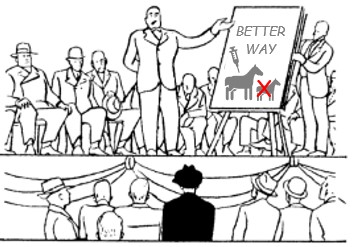
How to Build Support for Wild Horse Roundups

Call a press conference.

Ask the High Priestess of Pesticides and her acolyte in Nevada to join you at the podium, one on your right and one on your left.

Announce that you’ve decided to get rid of the herd with PZP.

Better Way 10-25-23

A sigh of relief will go up from their followers.

Tell the press you need assistance from NGOs.

Let your guests step forward to pledge their support.

Tell the public you want healthy horses on healthy rangelands.

Tell the ranchers (privately) that the herd will implode in five years as the birth rate sinks irreversibly below the death rate.

Point to Assateague Island as an example of what can be achieved if they would just be patient.

Lahontan Roundup in the Works?

A new project was opened in ePlanning on December 6 but no documents were posted.

The scoping period would run from December 11 to January 10.

The project was placed under Rangeland Management, not Wild Horses and Burros.

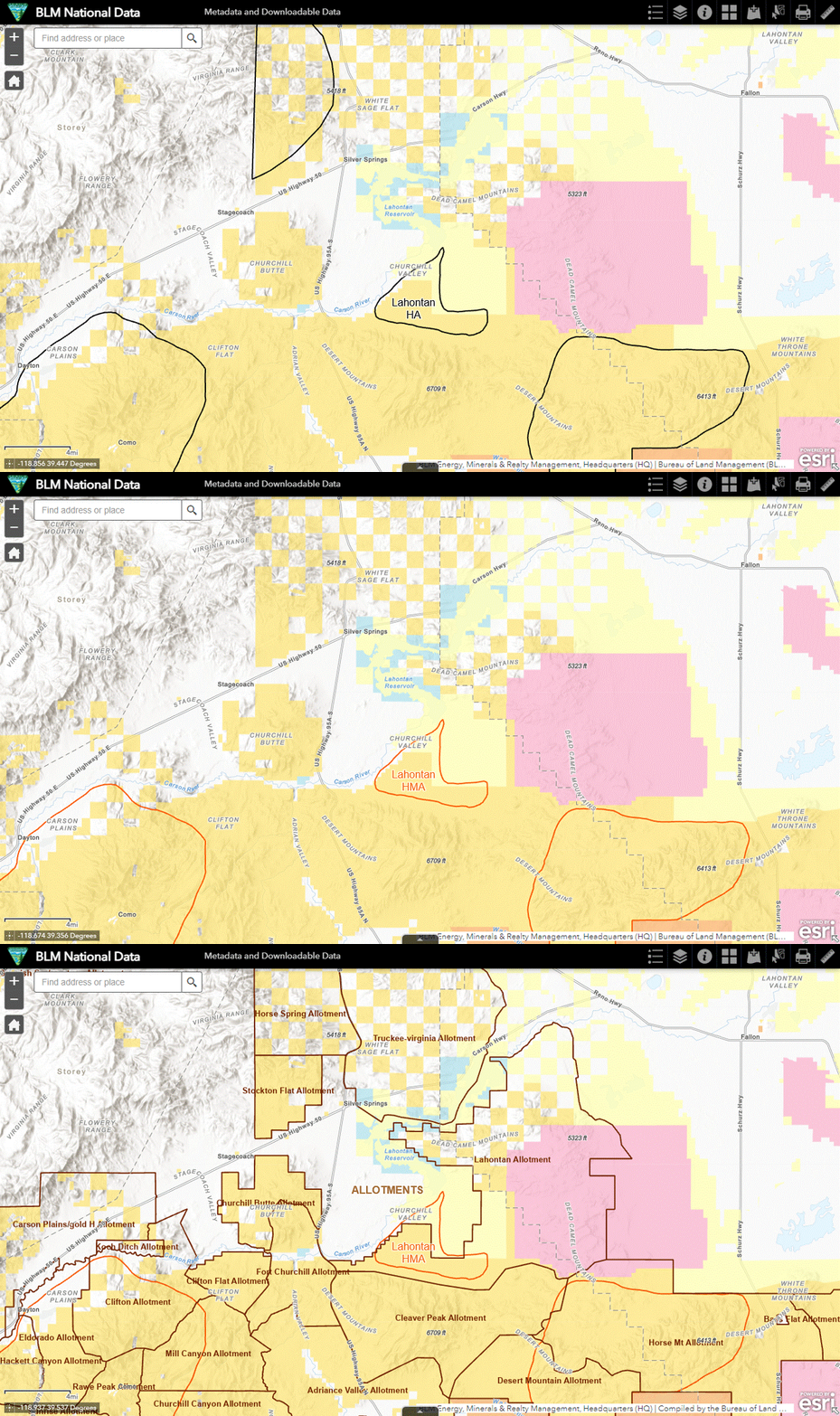
The HMA covers 9,578 total acres near Silver Springs, NV, including 6,937 public acres, and has an AML of ten.

The National Data Viewer shows most of the acreage in the Lahontan Allotment but the portion beyond is on BOR land.

The 2024 population dataset puts the herd size at 353.

Lahontan HMA with Allotments 12-08-24

Devil’s Garden Roundup Over?

Aerial operations concluded on November 30 according to the gather page but the status of bait trapping was not provided.

No updates have been posted since.

The capture total was 341 with three deaths.

The number of horses shipped was not specified.

The number of unaccounted-for animals is not known.

There were no plans to treat any of the mares with fertility control pesticides and return them to the range.

The roundup liberated 4,092 AUMs per year, assuming all horses were removed, giving new hope to the Devil’s Garden permittees.

RELATED: Seventh Annual Devil’s Garden Roundup Announced.

Pesticides, Not Fences, Greatest Threat to Virginia Range Herd

Water may soon be harder to find, thanks to the NDA fencing project, but foals will be even harder, thanks to the advocates.

How many of the protesters in this report by KRNV News are field workers with the Campaign Against America’s Wild Horses or supporters thereof?

They claim to be protecting the horses but they’re getting rid of as many as possible with pesticide-laced darts, a process known as mass sterilization.

RELATED: NDA Sitting on Fence After Yesterday’s BOA Meeting?

NDA Sitting on Fence After Yesterday’s BOA Meeting?

It’s not evident in this report by KOLO News.

Although they heard comments in opposition to the Washoe Lake fencing project, they are unlikely to change course.

After all, the man at the top is a public-lands rancher.

You can’t be telling the American people that public lands in the western U.S. can only support one wild horse per thousand acres when the Virginia Range is carrying ten.

RELATED: NDA Posts Public Comments About Washoe Lake Fence.

DOGE Should Eliminate Wild Horse and Burro Program?

The biggest threat to those animals comes from the bureaucracy charged with protecting them according to a December 7 opinion piece in Townhall.

WARNING: The article has been tainted with links to the Campaign Against America’s Wild Horses and the Property and Environment Research Center.

The approach seems reasonable.  If you’re trying to reduce government waste, go after the programs that aren’t fulfilling their mandates.

But you can’t limit your analysis to things on the surface.  The Wild Horse and Burro Program is a grazing program ancillary.

This is where conservatives will go all wobbly.

You don’t expect us to take those ranchers off the public lands?

Yeah we do.  They’re a shining example of government dependence and redistribution of wealth.

Confine them to their base properties in a year-round off season and let them pay the going rate to feed their animals.

The problem is not the bureaucracy charged with protecting the horses and burros, it’s the special interests that have co-opted the bureaucracy charged with protecting them.

They have invaded the agency the same way cancer invades cells.

RELATED: What Are Musk and Ramaswamy Being Told About Wild Horses?

Side Trips While in SacTown for WHBAB Meeting

Forget about Napa and Sonoma.  The best time to visit those wineries was in the 70s.

Same for the Bay Area.

Instead, drop by a nearby Walmart and try to buy socks and underwear without calling an attendant.  You can’t, they’re behind glass doors.

Go to a Home Depot and see how many items are in locked cages.

Try to buy a gas trimmer or chainsaw.  You can’t, they’re banned.  Still available in Reno, a few hours to the east.

Check out the prices at Safeway.

While at Walmart and Home Depot, you might not notice the fastest shrinking demographic in the state—white folks.

This is what happens when you put liberals in charge.

Homes in established neighborhoods are well above $1 million.  For real sticker shock, try North Bay or South Bay.

And the traffic.  You are free to move about the area from 10:00 AM to 2:00 PM.

On the bright side, Davis is only a few miles to the west—if you can get past the Yolo Causeway.

It’s home to the Campaign Against America’s Wild Horses, a leader in nonmotorized removal and fierce opponent of principal use.

Mass Sterilization and Motorized Removal 08-10-24

Unfortunately, their 2022 Form 990, the most recent posted by the IRS, only gives a PO Box, not a street address.

Maybe they’ll have an open house or similar function.  It’s a great opportunity to build rapport with the bureaucrats and ranchers while maintaining the illusion of support for America’s wild horses.

RELATED: Next WHBAB Meeting Set for Early January.

UPDATE: The Douglas County Assessor gives the address as 216 F St #131.  Refer to APN 1322-00-002-067, one of the parcels in the land trust.

Murderer’s Creek Roundup, Day 7

The incident started on November 29.  Results through December 5:

  • Scope: Murderer’s Creek HMA, WHT
  • Target: Wild horses
  • AML: 140
  • Pre-gather population: 650
  • True AML: TBD
  • Type: Emergency
  • Method: Bait
  • Capture goal: 350 – 400
  • Removal goal: 350 – 400
  • Captured: 89, up from 68 on Day 5
  • Shipped: 56, no change from Day 5
  • Released: None
  • Deaths: 2, no change from Day 5
  • Average daily take: 12.7
  • Unaccounted-for animals: 31
  • Snippet from statute: It is the policy of Congress that wild free-roaming horses and burros shall be protected from capture, branding, harassment, or death
  • Snippet from manual: To protect wild horses and burros from unauthorized capture, branding, harassment or death

The figures above are based on the daily reports.

The death rate is 2.2%.

The capture total includes 31 stallions, 39 mares and 19 foals.

Youngsters represented 21.3% of the animals gathered.

Of the adults, 44.3% were male and 55.7% were female.

Body condition scores were not given.

The location of the trap site was not disclosed.

The name of the contractor was not provided.

There are no plans to treat any of the mares with fertility control pesticides and return them to the range.

No decisions have made regarding the long-term disposition of horses, which means they could be treated or altered in off range holding, including the stallions.

The status of livestock grazing in the burned area is not known.

RELATED: Murderer’s Creek Roundup, Day 5.

Murderers Creek HMA with Allotments 10-24-24

Foal-Free Friday, Spending Wisely Edition

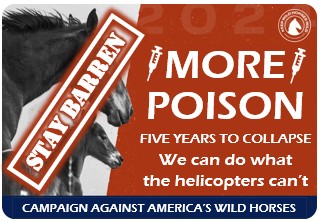
The advocates use your donations to buy pesticides.

They want to replace motorized removal with mass sterilization, abnormal sex ratios and faulty immune systems.

They oppose principal use, management at the minimum feasible level and nature’s way.

They care most about their standing with the bureaucrats and ranchers.

Why are you still giving them money?

Withholding your financial support is easy, sensible and costs nothing.

RELATED: Foal-Free Friday, Raising Them Right Edition.

Pesticide Pushers 07-17-23

Head of WHB Program Not a Political Appointee

The position is filled through job postings at USA Jobs according to Dorothea Boothe, Wild Horse and Burro Program Outreach Specialist.

The job title is Division Chief, not Director.

A 2021 handout suggests the On-Range and Off-Range Branch Chiefs report to the Division Chief, currently manned by Scott Fleur.

WHBAB meetings usually include updates from the two branches.

The Wild Horse and Burro Division, HQ-260, accomplishes its mission through the two branches, HQ-261 and HQ-262.

The handout provides an example of an adverse finding during field audits of darting teams (unlawful use of pesticides, failure to wear proper PPE).

Unlawful Use of Pesticides Missing PPE 12-05-24

The November 15 edition of Foal-Free Friday tells you where to report such incidents.

RELATED: Nominee for Director of Wild Horse and Burro Program?

Triple B Roundup Ends

The incident concluded on December 4 with 2,196 horses captured, 2,131 shipped, 39 released and 27 dead, according to figures in the sidebar.

The number of horses processed exceeded the number captured by one.

The daily reports indicate 2,130 shipped, making the numbers balance.

The number of horses removed was 2,157.

The capture and removal goals were 2,255 and 2,155, respectively.

The death rate was 1.2%.

The average daily take was 66.5.

The capture total included 804 stallions, 881 mares, and 511 foals.

Youngsters represented 23.3% of the animals gathered, consistent with a herd growth rate of 18% per year.

Of the adults, 47.7% were male and 52.3% were female, no indication of an abnormal sex ratio.

Two of the mares were not wild and were reunited with their owner.

Twenty-three mares were treated with GonaCon Equine.  The number of doses and interval between them were not specified.

The Complex supports livestock equivalent to 3,730 wild horses, so it can never go below 4.2X AML.  Some researchers claim that areas above AML are harmful to sage grouse.

Today’s news release said there was not enough water and/or forage to support the number of horses in the area.

The operation liberated 25,884 AUMs per year, giving new hope to the Triple B permittees.

RELATED: Triple B Roundup Announced.

Murderer’s Creek Roundup, Day 5

The incident started on November 29.  Results through December 3:

  • Scope: Murderer’s Creek HMA, WHT
  • Target: Wild horses
  • AML: 140
  • Pre-gather population: 650
  • True AML: TBD
  • Type: Emergency
  • Method: Bait
  • Capture goal: 350 – 400
  • Removal goal: 350 – 400
  • Captured: 68, up from 18 on Day 1
  • Shipped: 56, up from zero on Day 1
  • Released: None
  • Deaths: 2, up from zero on Day 1
  • Average daily take: 13.6
  • Unaccounted-for animals: 10
  • Snippet from statute: It is the policy of Congress that wild free-roaming horses and burros shall be protected from capture, branding, harassment, or death
  • Snippet from manual: To protect wild horses and burros from unauthorized capture, branding, harassment or death

The figures above are based on the daily reports.

A stallion was dispatched on Day 2 for poor body condition, followed by a mare for a sudden leg fracture, bringing the death rate to 2.9%.

The capture total includes 25 stallions, 26 mares and 17 foals.

Youngsters represented 25% of the animals gathered.

Of the adults, 49% were male and 51% were female.

Body condition scores were not given.

The location of the trap site was not disclosed.

The name of the contractor was not provided.

There are no plans to treat any of the mares with fertility control pesticides and return them to the range.

No decisions have made regarding the long-term disposition of horses, which means they could be treated or altered in off range holding, including the stallions.

The status of livestock grazing in the burned area is not known.

RELATED: Murderer’s Creek Emergency Roundup in Progress.

Murderers Creek HMA with Allotments 10-24-24

Colorado Wild Horse Working Group Meets Next Week

The meeting runs from December 12 to 13 and is open to the public.

An agenda was not provided.

The group supports three tenets of rangeland management.

The legislature expects it to make recommendations on humane, non-lethal alternatives for horses taken off range but most of the resources are devoted to helping the advocates buy pesticides and apply them on the range.

Sand Wash Advocates 01-17-22

Triple B Roundup, Day 31

The incident started on November 2.  Results through December 2:

  • Scope: Triple B Complex
  • Target: Wild horses
  • AML: 889
  • Pre-gather population: 3,335
  • True AML: 4,551
  • Type: Planned
  • Method: Helicopter
  • Category: Cruel and costly (according to advocates)
  • Better way: Sterilize mares with PZP (according to advocates)
  • Capture goal: 2,255
  • Removal goal: 2,155
  • Captured: 2,163, up from 2,102 on Day 29
  • Shipped: 2,019, up from 1,938 on Day 29
  • Released: 20, no change from Day 29
  • Deaths: 26, up from 24 on Day 29
  • Average daily take: 69.8
  • Unaccounted-for animals: 98
  • Snippet from statute: It is the policy of Congress that wild free-roaming horses and burros shall be protected from capture, branding, harassment, or death
  • Snippet from manual: To protect wild horses and burros from unauthorized capture, branding, harassment or death

The figures above are based on the daily reports.

The sidebar says 2,022 shipped.  If that figure was used, there would be 95 unaccounted-for horses.

Two mares were dispatched for poor body condition on Day 30, lifting the death rate to 1.2%.

The capture total includes 790 stallions, 868 mares and 505 foals.

Youngsters represented 23.3% of the animals gathered, consistent with a herd growth rate of 18% per year.  The Rule of 72 says the herd size will double in four years.

Of the adults, 47.6% were male and 52.4% were female, no indication of an abnormal sex ratio.

Body condition scores were not given.

The location of the trap site was not disclosed.

The name of the contractor was not provided.

Three HMAs are affected.

Twelve mares have been treated with GonaCon Equine.  The plan calls for up to 50 to receive the pesticide and be returned to the range with up to 50 stallions.

The roundup supports three tenets of rangeland management.

Resources liberated to date:

  • Forage: 25,716 AUMs per year
  • Water: 21,430 gallons per day

The Complex supports livestock equivalent to 3,730 wild horses, so it will always be at 4.2X AML or higher.

RELATED: Triple B Roundup, Day 29.

Triple B Complex with Allotments 11-04-24