They want the herds eliminated with pesticides while the bureaucrats prefer helicopters.

Walker is a PZP adherent and close supporter of the Campaign Against America’s Wild Horses.


Exposing the Hypocrisy, Lies and Incompetence of the Wild Horse Advocates
They want the herds eliminated with pesticides while the bureaucrats prefer helicopters.
Walker is a PZP adherent and close supporter of the Campaign Against America’s Wild Horses.
The NGO advising you of a threat to animals in off-range holding is, in fact, humanely disposing the herd on the Virginia Range.

Its affiliate in Arizona, who insists that the state’s new plan will destroy the Salt River herd, is in fact destroying the herd.
Whatever the advocates warn you about, they’re doing times ten, a sure sign they’re liberals.
RELATED: Project 2025 Targets America’s Wild Horses and Burros?

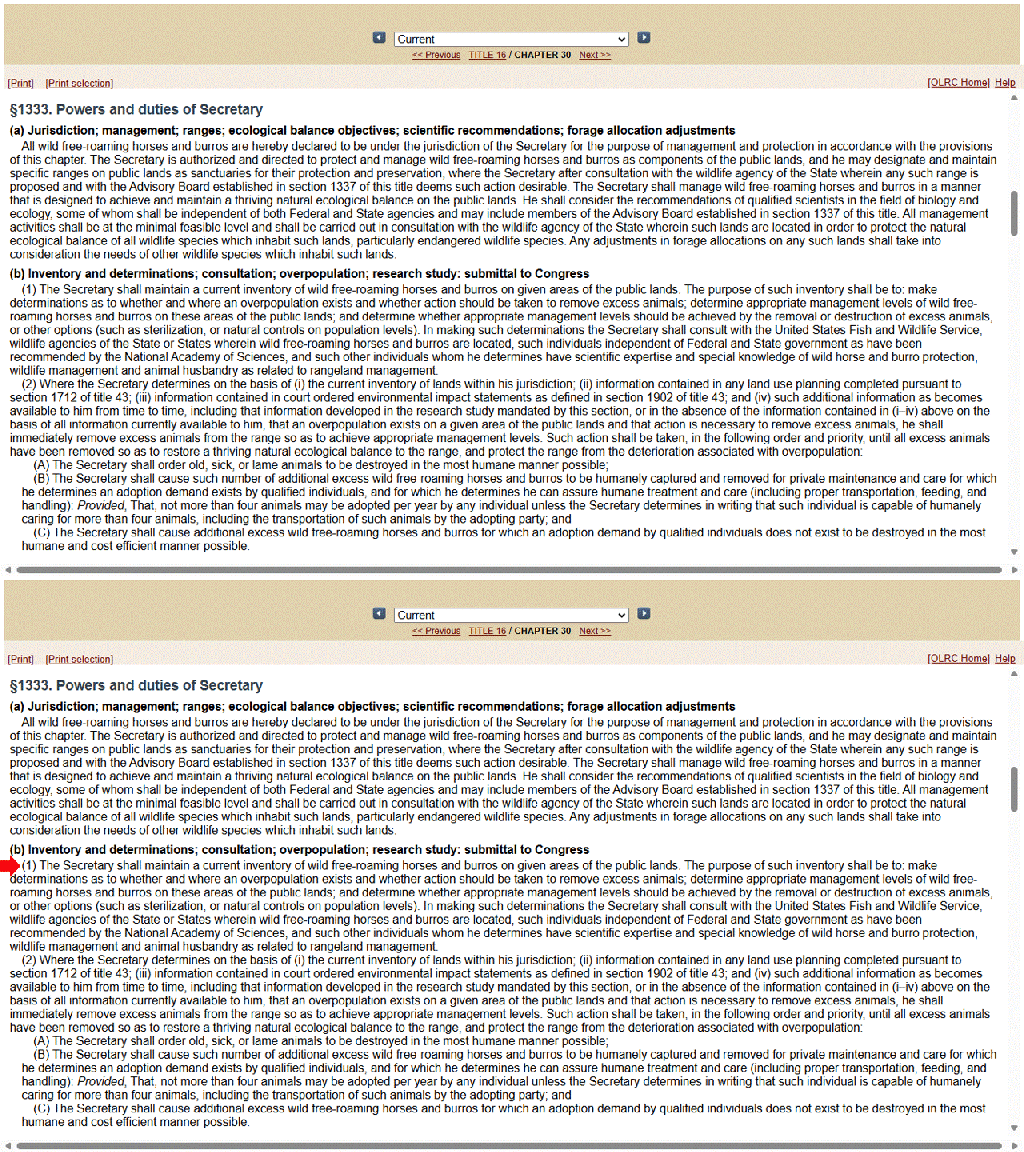
The Preliminary EA for the Antelope-Triple B pest control plan states at the top of page 169 that “The WFRHBA of 1971 specifically provides for contraception and sterilization (16 U.S.C. 1333 section 3.b.1).” [It’s actually 16 USC 1333(b)(1), a comment you can submit on the EA.]
A keyword search of the statute yielded these results:
There is no warrant for the application of PZP and GonaCon Equine unless those products are used for sterilization.
Application to slow population growth, the oft-cited reason for their use, is not covered.
In the discussion of the effects of PZP on ovaries, the EA states at the bottom of page 177 that “…if some number of mares become sterile as a result of PZP treatment, that potential result would be consistent with the contraceptive purpose that motivates BLM’s potential use of the vaccine, and with Congressional guidance that condones such treatment in the management of wild horses and burros, in WFRHBA section 1333(b),” suggesting that sterility is a goal, not an unintended consequence of its use, as stated previously.
RELATED: Antelope-Triple B Preliminary EA Out for Review.
The advocates are obsessed with nonmotorized removal, which they express several different ways:
Their allies in Congress recently formed a pesticide caucus.
Everything points to mass sterilization as a humane alternative to motorized removal with the goal of ranching superiority in the lawful homes of wild horses.

The advocates know that most of the mares are nonviable, a condition they caused, and the herd is toast.
No big deal if their contract isn’t renewed, they can go elsewhere and ruin another herd or find jobs with the legacy contractors.
The group claiming that the state’s new plan will destroy the herd is, in fact, destroying the herd.
The group that says any other contractor hired by the state will eradicate the herd is, in fact, eradicating the herd.
The group that says the herd will become extinct if they aren’t allowed to manage it is, in fact, driving it to extinction.
RELATED: As the Noose Tightens Around SRWHDG, Will CAAWH Hang Them Out to Dry?
The Proposed Action, discussed in Section 2.4 of the EA, features motorized removal, application of fertility control pesticides and sex ratio skewing.
Creation of a new HMAP is still in the project scope. Refer to Appendix XIII.
The comment period ends on June 29 according to the news release.
The project supports three tenets of rangeland management.
The Decision Record authorizes Alternative II, the Proposed Action, discussed in Section 2.2 of the Final EA.
Approximately 3,371 wild horses will be removed from Herd Areas formerly known as the Great Divide Basin, Salt Wells Creek and Adobe Town HMAs.
There are no plans to treat any of the mares with fertility control pesticides and return them to the range. The goal is 100% removal, which may take several years to achieve.
The project folder also includes a summary of public comments.
The incident is on the latest schedule with a start date of July 15.
AMLs in the affected areas were reduced to zero as a result of legal action taken by the Rock Springs Grazing Association.
RELATED: Draft EA for Rock Springs Wild Horse Removal Out for Review.
Have you ever wanted to soak in a hot tub, hang out with wild burros and camp in a BLM grazing allotment?
You can do all three at Spencer Hot Springs near Austin, NV.
The ArcGIS Viewer puts it in the Hickison HMA, which is overlapped by the Simpson Park Allotment.
This YouTube video tells you how to get there.
The news release about a public lands closure in Oregon says that dispersed camping for up to 14 days is generally allowed on BLM lands.

The 40-acre parcel straddles Highway 97 northeast of Bend, OR and has been put off limits due to health, safety and environmental concerns arising from unauthorized long-term non-recreational camping.
The ArcGIS Viewer indicates it’s SE 1/4 NE 1/4 S34 T16S R12E.
The news release did not give the immigration status of the unauthorized campers.

The Deputy Director for Administration and Programs was escorted out of the building yesterday because he opposed staffing directions from DOI’s acting chief human capital officer, according to a report by Politico.
The move punches another hole in the BLM org chart, which still includes a vacancy at the top.
RELATED: Sgamma Nomination Withdrawn.

The Decision Record authorizes the Proposed Action, discussed in Section 2.4 of the Final EA.
A new HMAP was also approved. Refer to Appendix D.
Section 2.3.2.2 refers to outdated registrations for GonaCon-Equine.
The project folder includes a summary of public comments.
The news release said there are currently more than 1,000 wild burros in and around the HMA.
RELATED: Bullfrog EA Out for Review.
Why didn’t the reporter ask Netherlands how many of the mares have been ruined by PZP?
Those who want the horses gone will likely get their wish because the advocates have pushed the birth rate below the death rate with little hope for recovery.
The Salt River Wild Horse Darting Group receives support from the Campaign Against America’s Wild Horses, a leader in nonmotorized removal, fierce opponent of principal use and servant of the public-lands ranchers.
As the truth leaks out in Arizona, look for CAAWH to distance itself from SRWHDG, disavowing any knowledge of their actions.
RELATED: Salt River RFP Cancelled.
The Arizona Department of Agriculture announced last week that the request for a new management contract had been canceled because of unauthorized conversations involving potential bidders according to a story by KJZZ News of Phoenix.
An email inquiry sent by Western Horse Watchers on Friday was not immediately answered.
Simone Netherlands, ringleader of the Salt River Wild Horse Darting Group, said the population control measures sought by the state threaten the viability of the herd, which may be true but the point is moot because her group has already done that with PZP, an ovary-killing pesticide.
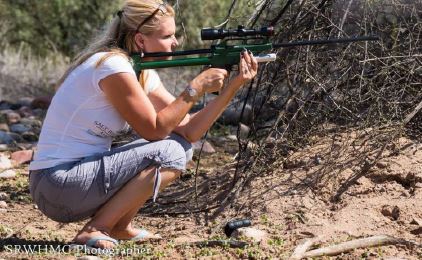
The wild horse population has decreased about 9% per year under her leadership, 50% higher than normal!
“It’s like they don’t understand how amazing that is, that the population has been going down.”
If her group loses the contract, and hopefully they will, that statement could earn her a well-paying job with one of the legacy contractors or ranching advocacy groups.
RELATED: State Not Happy with Salt River Sterilization Program?
UPDATE: Refer to AZDA news release dated May 21.
At the high end of the AML, the horses receive about 5% of the authorized forage, neglecting wildlife.
The HMA is running neck-and-neck with Little Colorado in Wyoming as one of the worst cases of resource mismanagement in the wild horse world.
RELATED: Silver King HMAP Q&A.
Gravity, not the advocates, rescued a mare who had put her head through a stepladder and was carrying it around, according to a story by The Outer Banks Voice.
In keeping with a policy established earlier this month, her name was not given, as if that will lift the birth rate above the death rate and save the herd from extinction.
RELATED: Currituck Foal Rescued from Canal.
Q. The AML is 128, which is small relative to the available resources. What will it be after the new HMAP goes public?
A. 128.
Q. The Silver King horses receive 1,536 AUMs per year. How much will they receive when the HMAP is published?
A. 1,536 AUMs per year.
Q. Livestock in the HMA receive an estimated 30,356 AUMs per year, 20 times more than the horses. How will that change when the HMAP is published?
A. It won’t.
Q. The HMA is managed principally for livestock. What is the aim of the new HMAP?
A. To manage the HMA principally for livestock.
Q. How will the resource allocations be enforced?
A. The way they are now, by forcible removal, fertility control pesticides and sex ratio skewing.
Q. The bureaucrats, ranchers and advocates view the animals as pests. Will that change when the HMAP is published?
A. No.
Q. Seems like HMAPs don’t change anything—they ratify and reinforce management practices that favor the ranchers. Why were the advocates so enthusiastic about them last year at the Save Our Wild Horses Conference in Reno?
A. They want the ranchers to win.
Q. Why does the BLM give so much forage to livestock? I can’t find a statutory warrant for that.
A. They want the ranchers to win.
Q. What is the economic impact of this arrangement?
A. For every AUM taken from the horses and given to the ranchers, the BLM receives $1.35 in grazing fees while it spends at least $150 to care for the horse displaced thereby. Nobody in the private sector would do that.
RELATED: Scoping Begins for Silver King HMAP.
Table 3 in the Management Evaluation Report gives the allotments that overlap the HMA, including the percentages therein.
The 128 horses allowed by plan receive 1,536 AUMs per year on 574,962 public acres according to the 2025 population dataset, or 0.2 animals per thousand public acres.
The Allotment Master Report provides management status, acreage and active AUMs.
In this case, three field offices are involved so three reports were run.
The figures were copied into an Excel spreadsheet as follows:

Silver King livestock receive an estimated 30,356 AUMs per year, assuming the resource is evenly distributed across the allotments, twenty times more than the horses.
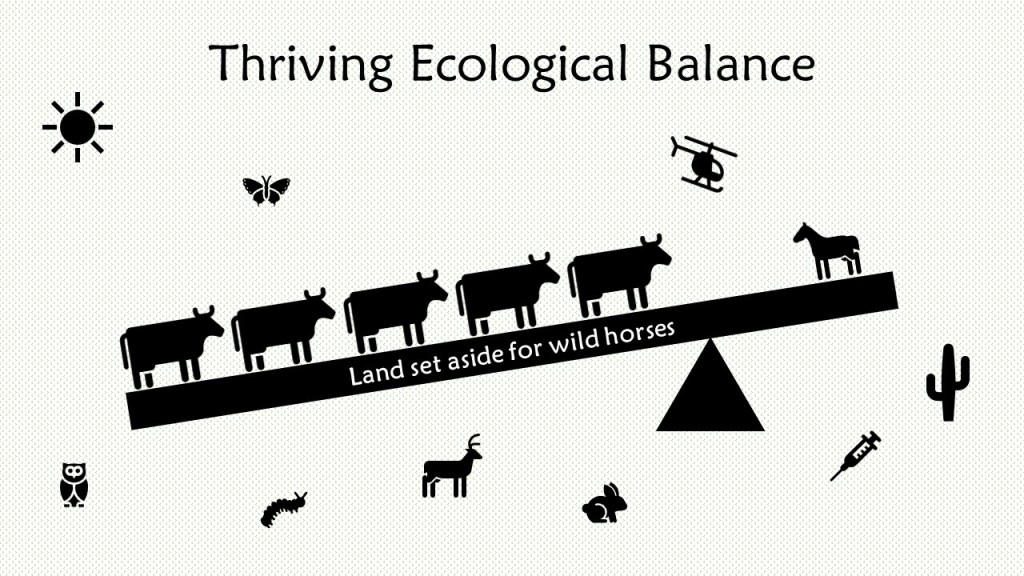
The HMA can only support 128 wild horses but it can support livestock equivalent to 2,530 wild horses, for a True AML of 2,658 or 4.6 animals per thousand public acres.
Your faithful public servants claim that public lands in the western U.S. can only support one wild horse per thousand acres (25,500 animals on 25.6 million acres).
The advocates prop up the fairy tale with their darting programs.
RELATED: Scoping Begins for Silver King HMAP.
A management evaluation report has been copied to the project folder with comments due by June 23.
The BLM intends to complete the planning process in about a year according to the news release.
Mining does not occur in the HMA but forage is shared with eight allotments.
RELATED: New Silver King HMAP?

The Campaign Against America’s Wild Horses, a leader in nonmotorized removal, fierce opponent of principal use and servant of the public-lands ranchers loves it.

The bill was based on recommendations from the Colorado Wild Horse Working Group.
RELATED: HB25-1283 Now Law.
 Western Horse Watchers Association